

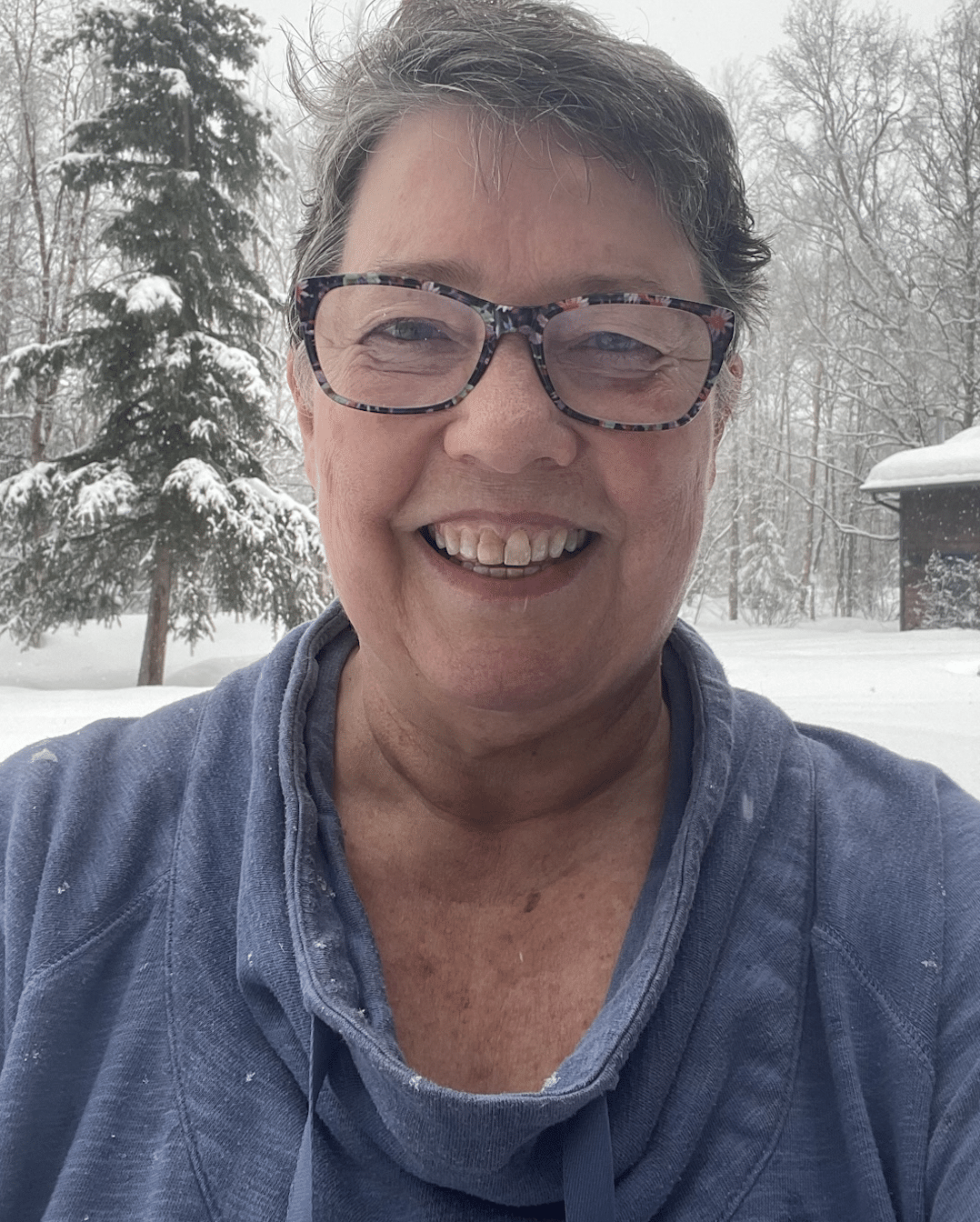
After a 40-year career as an environmental engineer, Jane Showalter Thomas did not initially plan to enter the world of health coaching. But witnessing her mother and uncle experience dementia led her to explore whether anything could be done to reduce risk. Through a family connection, she discovered functional medicine and began working with a health coach herself, making lifestyle changes that improved her own health in tangible ways. That experience sparked a deeper interest, and months later, she enrolled in the Functional Medicine Coaching Academy while still working full-time. With intentional planning and a clear sense of purpose, she completed the program and went on to earn her ReCODE 2.0 Health Coach certification, preparing for a new chapter after retirement.
“Find the intersection of what you’re good at, what you like to do, and what you learn through FMCA. And then get creative about how to make something happen at that intersection, because that’s where each person can make the most impact.”
Jane Showalter Thomas, FMCHC
Today, Jane serves as an Outreach Specialist with Alzheimer’s Resource of Alaska, where she leads education and dementia risk reduction programming across the state. She integrates her coaching skills into caregiver support groups and a “10 Keys to Dementia Prevention” course, helping participants set meaningful goals, navigate challenges, and build sustainable lifestyle changes. What began as a personal journey has become a mission to increase awareness and improve lives. Reflecting on her path, Jane encourages others to trust what is calling them and to explore the many possibilities within health coaching, emphasizing that meaningful impact often lies at the intersection of personal passion, strengths, and the skills gained through FMCA.
Watch the Interview
Watch the full FMCA Alumni interview with Jane to learn more about her inspiring journey:

Meet Jane
Jane Showalter Thomas,
FMCHC, ReCODE 2.0 Certified Health Coach
Jane Showalter Thomas grew up in Ohio and has lived in Alaska most of her adult life. She lives in Peters Creek, Alaska, with my husband, two dogs, and a tiny flock of chickens.
After 40 years working as an environmental engineer, Jane has changed directions, launching a second career.
Jane is the daughter, grandchild, and niece of people who experienced Alzheimer’s related dementia. Once she discovered that research was revealing how lifestyle factors have a big impact on brain health, her passion turned to helping people do what they can to reduce their risk of cognitive decline. After becoming an FMCA Certified Heath and Wellness Coach and a ReCODE 2.0 Certified Health Coach, Jane joined Alzheimer’s Resource Alaska.
As an Outreach Specialist with Alzheimer’s Resource Alaska, she teaches courses and leads other programs to encourage people to join her on this journey, striving to stay sharp throughout life.
Her current mission is to increase awareness about dementia and what we can do to reduce our risk of developing symptoms; to help replace helplessness with hope.
Connect
Transcript
Lisa: Hi. I’m Lisa. I’m on the admissions team here at Functional Medicine Coaching Academy. And today, I’m joined by Jane Thomas. I’m really excited to talk to Jane today because here on the admissions team, we often have prospective students who ask about health coaching as a second career or a retirement career. And Jane did just that. Jane graduated from our program and launched into that second chapter. After she graduated from FMCA, she went on to get certified as a ReCODE 2.0 health coach. That is a specialization with Apollo Health using the Bredesen Protocol to prevent and reverse cognitive decline. And now, Jane is an outreach specialist with Alzheimer’s Resource Alaska. So, thank you so much for joining me today, Jane. I’m so looking forward to our conversation.
Jane: Thanks, Lisa. Good to be here.
Lisa: Yeah. I’m so excited you’re here. So, Jane, would you share with me, what were you doing before you became a student at FMCA?
Jane: Well, for about 40 years, I worked as an engineer, mostly an environmental engineer. And I helped companies to stay in line with all the environmental rules and regulations, and reduce their impact on the environment. And in that 40 or so years, I got to work some very interesting projects, and go to some awesome parts of the world. So, it was really a fun adventure.
Lisa: Wow. That is quite different than health coaching.
Jane: Very.
Lisa: So, what brought you to functional medicine and ultimately health coaching?
Jane: Wow. It’s quite a journey. My mom had dementia, and it was so hard to watch her decline. She was so smart, resourceful, very creative. And in the end, all that was gone. And through a cousin of mine, I learned that functional medicine science was emerging, about what we can do to reduce our risk of dementia. Who knew we could do anything to reduce our risk? But there are lifestyle choices and health choices that we can make. And her dad, so, my uncle, also had dementia. And this cousin had gotten the FMCA and the Apollo Health certifications to learn how to help her dad. So, that was the journey she took. And then she launched the health coaching business as a retirement gig herself. So, I contacted her as a health coach. I thought that would be cool because I have it in my family history, might as well help reduce my risk. And so, while working with her, I made some really good habit changes, and some of which really made a difference in how I felt in several different ways. And just one example, I ate a much more anti-inflammatory diet, and it greatly reduced the arthritis pain in my knees and ankles. That was something that I could feel. I could feel the difference. And so, I felt it probably was being good for my brain health as well. So, that kind of really inspired me. Yeah.
So, one night, I thought, I wonder what…I thought maybe it’ll be kind of cool myself to increase awareness of dementia risk reduction and help people to make changes that matter to them. Maybe I could do this, too. So, that night, I was scrolling through my cousin’s…her website, and checking out her certifications, and then trying to Google to see what those meant, and just to kind of understand what her path was. And she was an FMCA alum also. And when I got to the FMCA website to really see what that was about, there was this big banner, two hours left to take advantage of the early bird discount for Functional Medicine Coaching Academy. Whoa, was that a sign?
Lisa: That’s kismet.
Jane: Exactly. But, no, I didn’t sign up that night. But it did plant the seed firmly in me. And I did sign up six months later. I had time to really think about it, make the decision in a better manner. And so, I completed the FMCA program. And then right after that, I completed the Apollo Health certification. And then I obtained those two certifications while I was still working full-time. And that was kind of a challenge. But having the FMCA cohort time options to choose from, helped me be able to find a time that aligned with my schedule. I could find a time that I could just say, this is my FMCA time, and make it work.
And then soon after that, I retired. And I started setting up my own coaching business, again, kind of following in the path of my cousin. And I did a lot of networking and business development activities, because I needed to get business, and help increase awareness. And I also needed to understand the lay of the land in Alaska, because I wasn’t familiar with, you know, elder programs, and dementia care, and things like that. That was all new to me.
And the whole idea that we have options to reduce our risk of dementia was also new. So, that took a lot of effort just to get people to even kind of know that awareness increasing. And I realized in that effort that I just loved, loved, loved the networking and awareness raising activities I was doing. And about that time, Alzheimer’s Resource Alaska had a job opening that fit me pretty darn well. So, here I am. That’s kind of the nutshell version of my path to here.
Lisa: Yeah. What a journey. That is amazing. And so, tell me, how are you using your health coaching certification in your work now with Alzheimer’s Resource Alaska?
Jane: Well, I’m an outreach specialist, is my title. And so, my mission is mostly to help Alaskans better understand what dementia is, what services we offer, what other services are out there, and how they can reduce their risk. And I’m the lead of our brand new dementia risk reduction program. So, I’m helping us expand our services into that realm. And there are two key ways that I use my health coaching skills kind of on a day-to-day basis.
I facilitate caregiver support groups, which is not a coach and coachee relationship. It is very different, the support group, but it definitely has aspects of group coaching, no doubt. And so, when appropriate, I can help participants to articulate their vision of wellness for themselves. We’re there for them as well as their care partner. Yeah. And then they can identify…help them identify gaps, you know, think about what they’re ready to make changes in, and identify their strengths and their supports and their challenges, and develop smart goals and that sort of thing. It’s coaching. There is coaching in it, which is cool. So, that’s one way.
And then the second place that I use coaching, use what I learned from FMCA, the coaching skills, is in our recently launched course, Ten Keys to Dementia Prevention. And I’m so excited about it. It’s new to us. It’s just a few-year-old program anyway. And it’s a 10-session course with one class covering a topic or two related to our lifestyle choices. So, like nutrition, and exercise, and stress management, sleep, social connectivity, all the things that we learn…many of the things we learn about in FMCA.
And then besides the educational component, so, in the class, you know, we teach some. But in each class, the participants also set smart goals in the area, whatever they’re ready to launch into making some small changes. So, I help them make sure that their goals are reasonable, that they’re not trying to bite off the whole apple, and help them identify obstacles, their strengths, supports, all of that. And then at the beginning of each coaching session, we do a little check-in to see how everyone did on their weekly goals, discuss challenges and celebrate successes. It’s group coaching, but it’s wrapped around a training program, which allows participants to get so much more out of the course.
Lisa: Oh, I love that. And I can see how you’re weaving in a lot of what you’ve learned in the coaching. And you just have such a passion for helping people. What inspires you?
Jane: Oh, wow. Well, I saw my mom, and my uncle, and some amazing people decline cognitively. And who they were just kept getting, I don’t know, kind of deeper and deeper buried under the dementia symptoms. And so, what fuels my fire is the possibility that less people will experience that decline, that lives can be better.
Lisa: Yeah. Yeah. I hear you. So, I’m curious about your experience as an FMCA student. What did you enjoy most about the program?
Jane: I loved my cohort. We were from all over the globe, literally. It was me in Alaska. We had one fellow in Hawaii, somebody in Idaho, Mexico, Australia, Canada. We had a Ugandan in Boston, a French woman in Kansas. Who else? Oh, our facilitator was in Guatemala. It was [inaudible 00:09:43]. I just look so forward to going to our meeting sessions. And we all supported each other throughout the course. And many of us stayed in touch even a couple years later, not all of us, but many. We have a WhatsApp group. And every once in a while, we have a Zoom get-together. Not very often, but every once in a while. It’s so fun to see how everybody is evolving.
Lisa: Yeah. Yeah. I love that. I had a similar experience with my cohort as well. So, when you think about your experience with the program, what fears or barriers did you have about starting the program, kind of where you are, you know, where you were in your career, and then also starting a brand new career?
Jane: Yeah. That’s a good question. I didn’t really have any fears about starting the FMCA program. I felt like I could handle it. And probably my conversations with my cousin helped give me enough insight into what was expected and what was the path there. And I just love to learn new things and meet new people. So, that fit in really well. My biggest barrier was that I was working full-time, and I’m very active in the community. So, time was a premium. But again, I blocked out time for the class and for study time. So, it was a barrier, but it was surmountable just by decent planning. But my biggest challenge came after I got the certification and started my coaching business. I had such a case of imposter syndrome. I was an engineer. What’s this coaching thing?
Lisa: Yeah. So, tell me more about that. How did you overcome it?
Jane: Well, I really got past that by listening to other people, rather than listening to the doubting voice in my head. No one else was questioning my credentials, you know, just me. It was an imaginary thing that I had going on. And a pivotal moment in that realization happened at a conference where I was networking away. Again, that’s why I was there. And after I introduced myself and described what I was doing and what I wanted to do to two different people who work for Alzheimer’s Resource Alaska, they both said…each said at two separate conversations, we need to introduce you to Kay [SP], and with excitement. They loved having met me. And that was really powerful. It wasn’t just me chasing after what I needed. I heard, we need you. And I was like, oh.
Lisa: That was validating.
Jane: But it was amazing. Yeah. And I did meet Kay. And four months after the conference, I was working for her. So, it all worked out. So, when the voices inside your head are trying to tell you, you’re not enough or you’re not ready or something, just kind of quiet that nagging voice and listen to others around you. That’s what helped me a bunch.
Lisa: Oh, I love that. Yeah. That really resonates. And so, in that vein, what would you say to someone considering embarking on this journey to become a Functional Medicine health coach?
Jane: I’d say do it. If you’re considering doing it, you’ve got a reason, something inside you that’s calling you to it. And whether this will be a career enhancement for you, a career change, like me, a side hustle or something else, there are so many directions you can go with what you learn at FMCA. And I kind of like to think about it as finding the, I guess, intersection of what you’re good at, what you like to do, and what you learn through FMCA. And then get creative about how to make that…make something happen at that intersection, because that’s where each person, I think, can make the most impact.
Lisa: Yeah. That’s really great insight. I love that. So, Jane, as we’re coming to a close here, and I so appreciate this conversation, and I know our audience will, too, is there anything else you’d like to add and tell a prospective student?
Jane: Hey, prospective students. I encourage you to find that…find what fuels your fire, what inspires you, what problems you want to solve, what kinds of problems you want to solve, why you’re thinking of embarking on a health coaching program. Just kind of really understand what that why is, what that fuel…where that fuel comes from, and then use that vision to get yourself going in the right direction for you. Again, it might not be like me following my cousin along and then finding a different path that was right for me. Find the path that’s right for you, and that vision will also help you get past those tough spots. And most importantly, I think, when you get into health coaching, know that you’re doing good in the world, that you are really making a difference.
Lisa: Oh, that’s just beautiful. Thank you so much for sharing. It’s really…
Jane: Thanks for the opportunity.
Lisa: Yeah. It’s been a pleasure talking with you. And I appreciate your time and this really insightful conversation. Thank you so much.
Jane: Thanks, Lisa.
Our Latest Blogs
-
Alumni Spotlight: Jane Showalter Thomas
Read Full Article: Alumni Spotlight: Jane Showalter Thomas -

How to Find Your First Five Health Coaching Clients: Lessons from Certified Coaches
Read Full Article: How to Find Your First Five Health Coaching Clients: Lessons from Certified Coaches -
The Future of Weight Health: A Client-Centered Approach to Better Nutrition
Read Full Article: The Future of Weight Health: A Client-Centered Approach to Better Nutrition

