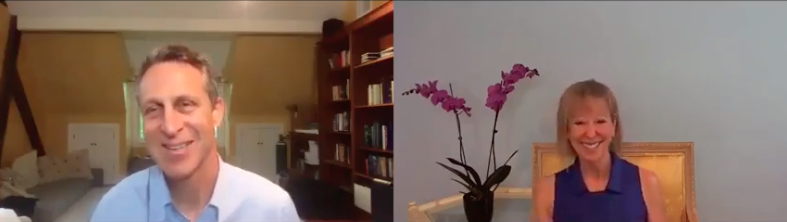

Our founder, Dr. Sandra Schinbaum, sits down with Dr. Mark Hyman, world-renowned Functional Medicine expert, for an Ask the Expert (ATE) interview. ATE is a recurring part of our Functional Medicine Health Coaching Certification program curriculum – where we’ll do a talk and Q&A with experts in the field. Dr. Mark Hyman is special because not only is he such an international thought leader, he’s also one of our faculty members! In this video, he talks about the future of Functional Medicine and the reasons that coaches and functional medicine experts are leading the charge!
Transcript:
Dr. Sandi: I am so thrilled and honored to have with us today, the one and only Dr Mark Hyman who needs no introduction. He is the director of the Cleveland Clinic center for functional medicine. He has a new role at IFM after having been involved with them for so many years where I first met Mark. He’s the Board President of Clinical Affairs. He’s also the founder and the director of the ultra Wellness Center. And also, what is it now? 11 times I lost track. It’s double digits. 11 times. New York Times, best selling author. So welcome. Thanks for being with us today. Thanks for having me so so we had so many people who wrote in, if you if we don’t get your question, we will make sure we answer it off the call and just just a word that the purpose of this talk is not to diagnose or treat any particular medical condition.
Dr. Mark Hyman: We can diagnose spiritual conditions and emotional conditions, and…
Dr. Sandi: Yeah, that’s my realm as a psychologist. So Well, thank you. Our students have written that they want to thank you for all that you do. Thank you for being such an enthusiastic, eloquent and tireless voice speaking out in support of medicine that makes sense. So yes, thank you for that. And someone has written in she would like to know what are some of your biggest lessons. What have you learned since the Center for Functional Medicine at Cleveland Clinic started?
Dr. Mark Hyman: So not not around since I started doing this 20 years ago, but just since the center started.
Dr. Sandi: So from working at that large institution, and then are there? What has that been like for you?
Dr. Mark Hyman: Well, it’s been really extraordinary, because for the first time in functional medicine, we’ve had an opportunity to get support, to do research and to create a large clinical program, to build an educational program, and to really innovate. And it’s something that never really happened in functional medicine before. We have, IFM which is focused on the education, but being part of a healthcare system has not been what we’ve done. We’ve all been sort of on the outside, and they invited us in, and it’s been amazing to see what’s going on. I mean, there are people there who are naysayers, but there are few and far between. There’s a lot of people, very curious, interested in open and I just got an email two referrals today from people who see everybody else.
They’ve seen everybody else at Cleveland Clinic. They’ve seen everybody else at University Hospital. They’ve gone everywhere to Mayo Clinic, and they can’t get better. And then they refer them to us, and they improve. And what’s really amazing is that is that we’ve having people coming out of the woodwork who are really excited and wanting to work with us. There’s a new chair in gastroenterology and another guy who’s the head of the colorectal surgery for Cleveland Clinic, and they’ve come to us to get help with their inflammatory bowel disease, with the chronic digestive issues that they’re seeing in their patients, and they want to collaborate with us and partner with us.
So we’re creating all these amazing partnerships and collaborations around gut, around brain health, around autoimmune disease, and it’s pretty exciting to see the openness and interest, because people want more data, if you like data, data, data. And I think you know we are, we are definitely bumping up against that, but we’re going to be publishing, hopefully this year, are some of our outcome data on how we see these patients getting better. We’re seeing improvements in outcomes. We’re seeing reductions in costs across the board. We’re looking at all our patients and not cherry picking them, and we’re seeing, you know, globally, there’s this amazing sense of possibility, and we’re working with insurance companies to break down those barriers, to get in reimbursed and sharing data with them to actually look at these patients so we can prove that we are doing better at lower costs. And I think that’s going to start to change the dynamic in the field.
And you know, we will always have the naysayers. There are still flat earthers out there who believe the Earth is flat, and we’re never going to get away from that, but people are really understanding that systems medicine and thinking is really the future, and then they don’t know how to quite do it, and they see what we’re doing. Some of it seems weird, but they’re seeing people getting better, sending their patients to us. So that’s very encouraging.
Dr. Sandi: Absolutely, any plans to replicate this model at other major medical centers?
Dr. Mark Hyman: Well, not personally. I think, you know, we’ve been an inspiration for other centers to start like it. And you’ll see Irvine, there was a $2 million grant to start doing functional medicine there. There are people coming in all the time from every country, from China, from India, from Turkey, to see what we’re doing. There are other medical centers sending their representatives to us to look at what we’re doing and getting inspired about it. And there’s trying this starting to kind of bubble up, and I think that’s going to happen.
Dr. Sandi: It’s very exciting to hear about that. What are your thoughts on large large companies like Amazon, getting. Into healthcare, is that something we should be cautiously optimistic about, or reason to be really skeptical?
Dr. Mark Hyman: Well, 80% of health happens outside the doctor’s office, you know. And when we think about these companies getting in this space, and can be frightening, but the truth is that most innovation comes outside of the business, right? You look at Apple, for example, they created a phone. They weren’t in the phone business. They created the iTunes. They weren’t in the music business. They’re creating a whole new digital video channel, and they weren’t in the TV business, and all of a sudden you’re seeing these traditional, you know, entities being really disrupted by innovation that’s happening in the tech space, that’s happening, you know, to entrepreneurs.
And I think, you know, it’s a challenge, because changing healthcare is like, it’s like changing the direction of an oil tanker. You know, it’s not easy, and there are a lot of challenges. And often people get stuck in the way they do things, and don’t understand that there’s another way. So I’m trying to talk to Clinton clinic. I said, you know, we need to create a really disruptive model here. We can’t just be doing the same thing better, because it’s the wrong thing.
We need to actually innovate around community based programs, around digital health care. About, you know, Cleveland Clinic without walls, and they like puzzlingly looking at me. I said, look, there was a company that started to reverse diabetes, and they reverse 60% of type two diabetes, and 900% get off the main diabetes drug, oral hypoglycemic. 97% get off or reduce influent dramatically. The average weight loss is 12% or 30 pounds, which is unprecedented weight loss studies.
And so you go, well, it was all done through a digital health coaching platform, online and right? And like, wait a minute, this is the future of healthcare. You don’t even need the doctor. And there was one doctor overseeing it, and it was designed well, and it was disruptive, and people were paying $5,000 out of pocket a year to get the support. So I think people are starting to realize that, you know, the traditional ways we do things are are not working anymore, and that we can’t we can treat acute illness in traditional health care, but we can’t really deal with this chronic epidemic of epidemic of chronic disease.
Dr. Sandi: Absolutely, and that’s where health coaches come in. Can you comment about the role of health coaching and what you see for the future?
Dr. Mark Hyman: Yeah, well, I’ve been telling the CFO of Cleveland clinic that we need to hire 10,000 health coaches there. And I don’t know if there is 10,000 health coaches and functional medicine out there, but get to work. Get to work. Sandra, Stop slacking and and I think we will move towards that. I think, you know, we are starting to do community based programs.
We’re trying to do cooking classes, shopping classes, getting people out there. We got to get out of the hospitals, into the communities. And health coaches can do that, and both virtually and in person. And I think, I mean, I believe that we’re going to prove the model at Cleveland Clinic. We’re going to show we can create great outcomes without health care providers that are highly trained, like doctors or physician assistants, and we can actually use health coaches to actually drive the change in healthcare we need by putting people in touch with with the support they need, the community they need, the connection they need.
I think, you know, I think I see this as you know, health coaches slash community health workers slash community organizers. And I don’t know how much your program teaches that, but I think that’s really the future. We have to go out into communities and really rethink how we’re how we’re working on health.
Dr. Sandi: Absolutely, and we teach the group model, the group medical visit, and going out into communities, forming groups. And can you comment about the benefits of using a group model instead of just sticking to a one on one.
Dr. Mark Hyman: Everybody likes groups but one on one can be very helpful, but we found it from the research is that the way to change behavior is through peer support. We are we are now implemented a Cleveland clinic based on this idea that people change their behavior by being together with others, who hold them accountable, who support them, who are engaged with them in the participation of the change, cheer them on, or hold them, you know, to standards that there may not be following, and then it doesn’t really need a health care provider.
And we saw this with The Daniel Plan, with the church program we did where we got 15,000 people lose a quarter million pounds by doing it in small group. It in small groups. So the science is there around the peer support model, and I think that we have then developed this program at Cleveland clinic called functioning for life, which is really a great, groundbreaking, extraordinary it’s basically a functional medicine program. So the Intel Inside is functional medicine operating system, but it’s delivered through these Shared medical appointments or groups.
Now, right now, we’re doing it with top heavy doctor and nurse and nutritionist and, you know, health coach and behavioral therapist, but it’s only because we have to do it within the fee for service systems. We have to have billing ability through the doctor. But I don’t think that’s going to be necessary for the future. We’re going to be intimidating around that and these. Groups, we’re seeing that their outcomes are almost twice as good for the group as a one on one visits with the same doctor for the same diagnosis.
So let’s say you have diabetes, you go to the doctor one on one, you get a good result. You do the group, the results twice as good, which is kind of shocking, but I think it’s if you understand the science and behavior change, it’s not that shocking. So we’re trying to build this at scale across the clinic. And I believe this will be the future, and I believe that we won’t actually need to have these high, highly trained providers. A lot of this can be delivered by health coaches in these groups, but sometimes little support. And if they’re trained properly and they have the right curriculum, I think, you know, we really can have a profound change in the healthcare system using health coaches, and it’s happening. It’s starting to happen.
Dr. Sandi: And that’s the model that we’re teaching, using an understanding of functional medicine principles, with how people can actually change their behavior. And of course, working in groups, the community becomes the medicine. And so when they’re with people who are supporting them on this journey towards change that’s so effective.
Dr. Mark Hyman:So yeah, we had, we had the other night, we had a reunion of our functioning for life groups. People have gone through the program and come back. That was like 530 at six o’clock at night after work. It was like over 50 people there, and it was almost like half of all the people have gone through the program, and we saw incredible results. I mean, people lost 70 pounds, they reversed their arthritis, they reverse their diabetes, they got off medications, and they were all cheering each other on. People were like, crying about the impact it had on them. And I was like, wow, this is unbelievable. And people came to be part of this, even though was a pan the neck to get to the main campus at Cleveland, and it was rush hour and it’s late, they’re like, people are just so hungry to belong and to connect and support each other.
Dr. Sandi: Yeah, I love what you’re saying, because we’ve been big believers for a long time in the power of group. So what about the insurance industry? Can you comment on where you see we’re going with reimbursement for functional medicine, is it good to push for insurance reimbursement and comment on that?
Dr. Mark Hyman: I mean, I think, you know, we’re looking at a third path. There’s other, there’s other, you know, the ability to restrict services or increase premiums, right? That’s sort of what they do now. And there’s a third option, which is reduce the costs and improve the outcomes, improve that model. So we partner with anthem, which is basically Blue Cross in Cleveland, which we have a significant majority of our patients, and we’ve gotten them convinced them, which taken years to convince them to share data, because nobody wants to share data, right? So the payers, the providers, don’t share data, so we don’t really know what the total cost is. But now we’re going to be able to get the total cost of what’s going on with our patients and compare it to a cohort of similar patients that they have in their database, and we’re going to show we’ve already seen this.
We’ve already shown without pharma data, which is going to be, I think, even increasing us more as people get off their medications, we’re seeing over 20% increase a decrease in costs, and we’re seeing a dramatic improvement in outcomes. So if we see this, then the insurance companies are going wait a minute, you know, we are going to pay for this, because it’s going to save us money, and that’s what they care about. So we’re really we’re playing the economic game with health care. We can do randomized trials for the next 50 years in functional medicine, and functional medicine, and they’ll people will still push it off, but we can show that we can do better and less cost and have people get healthier. It’s huge. So a lot of the movement in healthcare towards value based care.
Cleveland Clinic just established this new organization called the Community Cleveland Clinic Community Health Institute, which is designed to sort of deal with this, but they’re still trying to figure it out, and they’re still trying to map out what’s going on, and it’s very difficult for people to understand what’s happening. But I think with our model, if we’re rigorous about collecting our data, which we are, and about publishing which we point to, we’re going to start to convince people that, wait a minute, you may not understand what functional medicine is. You may not know what we’re doing, but we can see the results across large numbers of patients, and there’s something there. So why don’t we fund programs around that? So we hope to ship Medicare payments and and also big, big insurance companies as well.
Dr. Sandi: Absolutely, so Mary Ann wants to know, is there a good way that you can educate primary care providers about this model of this functional medicine coaching in groups model that we’ve been talking about?
Dr. Mark Hyman: How do you educate primary care doctors? Well, if you find out what people’s pain points are, right? So their pain points are. They have all this cohort of patients. They have chronic lifestyle driven diseases. They don’t really have anywhere to send them. They don’t have the ability to take care of them the way they need to. They’re really going to be shifting more towards value based payments. So this coaching model in groups is a really powerful model that can help and I think if, if we can share some of the data on the next year, I think it really. Help the coaching movement, because then you can use this. Hey, look, this is what we can do. Here’s a model. It’s already been proven. Let us do this with your patients. And you know, for the patients you have right now, it’s going to be, you know, the patients are going to pay, which is a little bit of friction right now.
We don’t have the patients pay, because they’re built through insurance. When you have a doctor doing the group visit, but you might be able to create alignment with doctors who are interested in this and vary up their practice and show them the profitability of doing group visits where they are actually, you know, coming in for Shared medical appointments. And then, then they can do that work with with some ease, and then end up having better reimbursement for them in the current model, and they get better results for the patients.
Dr. Sandi: Absolutely, that makes sense. So let’s turn our conversation around to nutrition and specifically to your new book food on what the heck should I eat? So questions we’re all wondering about, and it changes all the time. So can you comment we at FMCA? Teach the various food plans from Institute for Functional Medicine. How do the recommendations in this book depart at all or jive with the IFM food plans?
Dr. Mark Hyman: Well, I created some of the food plans so they’re definitely, they definitely alignment, I think, you know, it’s based on whole foods. It’s based on, you know, reducing toxic exposures, based on high quality fats and low low levels of inflammation in the food and low glycemic foods. And these are just fundamental principles of functional medicine. So detoxification, low glycemic, anti inflammatory, gut reparative foods. These are the foods that we use all the time in functional medicine, and that’s what we talk about in the book.
And I don’t frame in terms of functional medicine, but it’s really looking at, what are the things we know, what do we don’t know about various foods, whether it’s meat or vegetables or nuts or seeds or beans or grains, and how do we actually come up with a strategy to understand this in a balanced way without being so extreme, and come up with a set of food principles that are widely applicable, and yes, if you have automated disease or type two diabetes or gut issues or other problems, may modify it. You may want to eliminate certain foods or get rid of all dairy or gluten, but for most people, there’s a set of principles that are foundational, that can make a profound influence on their health. And I call this the vegan diet. It’s kind of a joke, but it was like a set of principles that everybody will agree with, right? We see a lot of plant rich diet, not plant based, but plant rich diet. We should have 75% of our plate is vegetables. We should have a very low glycemic diet, low starch and sugar. We should have lots of good fats that are healthy fats. We should eat lots of nuts and seeds that are health for you. You should avoid most processed dairies. Maybe sheep and goat were okay. You should avoid non gluten grains for the most part, unless they’re heirloom grains like einkorn or Kerns of wheat, or other things you may tolerate if you’re not gluten sensitive, if you want to eat beans, fine. Make sure you’re not diabetic or have autoimmune disease, and that you cook them in the right way to reduce selectance.
And so I go through each of these principles, we should meeting foods that have ingredients that we don’t recognize or can’t pronounce, or we shouldn’t be eating foods full of hormones, pesticides and antibiotics, right? We should be just common sense principles that everybody will agree with, right? And that’s sort of what I what I put down. And yes, if you’re having animal products, if you’re vegan, you may not want to morally or ethically eat animals, and that’s okay, but there’s really principles you have to follow so you don’t get sick. I saw a vegetarian yesterday who was so unhealthy because he was eating mostly junk food or processed food or not enough protein, and he was just really just having health issues as a result. Doesn’t mean you can’t do it. Well, you can. It just takes a lot of work.
And if you eat animal foods, you should have animal foods that are restorative to you, humane to them, and restorative to the earth and the planet through ways we grow them in agriculture, so grass fed, organic, you know, sustainably harvested or farmed fish. I mean, there’s, there’s simple principles that you can follow, and I talked about that in the book, in each chapter on different categories. You know, what? What is a way to eat this? Good for you, good for the planet, good for your wallet, good for the environment, good for the animals. You know, how do you how do you make those choices, and where do you find those foods? And how do you do that?
Dr. Sandi: So this, these are great principles, because it’s not rigid dogma. You must eat this and speaking of that
Dr. Mark Hyman:
and by the way, by the way, if there are therapeutic situations, then the diet changes. So that’s different medical nutrition. But these are just basic foundational principles for healthy eating
Dr. Sandi: Absolutely. So a couple of follow ups. What about specifically, food sensitivity testing. When you mentioned, you know, specific therapeutic diets, what are your thoughts on that type of…
Dr. Mark Hyman: Well, listen, I think, you know, I’ve been doing this for 20 years, and I’ve seen every food sensitivity testers out there, and I’ve seen the same ones done on the same people that were completely different. I think that there’s challenges to the methodology, to the accuracy to what they mean, how to interpret them. I mean 10 people see this, and they see like a one, plus sensitivity to eggs, and like never read eggs our whole life. That’s not what it’s about. It’s about how to understand their reactions. Your body has to food that can be related to a leaky gut. The key is to fix the gut and make you less sensitive. I used to be reactive to be reactive to everything when I was really sick. Now I can eat anything and I don’t have a problem. So it’s about repairing the system, not just eliminating foods. In the short term, you might have to.
And I think there are ways of using tests to guide you, but I don’t think you should be originally interpreting them, because they they can be varied. They’re blocking antibodies, or they’re activating antibodies. You can’t always tell there are signs that, you know, you have a lot of reactions. It’s often a sign of a leaky gut. And the solution isn’t moving the foods. A solution is fixing the gut. There may be, there may be trigger foods that are sort of the gateway, the gateway foods, in a sense, that are causing a lot of the problem, that make you react to other foods, like gluten or dairy or eggs or soy or other things for certain people. But you kind of, you can get rid of those, and then you can start to add the other things back. So things back. So I think it’s really personalized. And I think there’s a lot of other food issues that people have, whether it’s, you know, fructose intolerance or or maybe it’s a histamine reaction, or other there’s ways of sort of looking at how people are reacting different things, and customizing diets according to that.
Dr. Sandi: We did get some questions about gluten, should we all be gluten free? Oh,
Dr. Mark Hyman: Yeah, well, how much time do we have? I read a lot about this, but I think there’s a couple of things that are going on. And the first is that we have seen a 400% increase in celiac disease, true increase in the last 50 years. Question is, why? I think there’s a couple of reasons. One, the wheat we eat is not the wheat we ate. It’s it’s dwarf wheat, which is high in Gliadin proteins, extra Gliadin proteins that are the gluten, that are more inflammatory. It’s got much more starch and multi it’s also got calcium propionate as a preservative for all flour, which is a neurotoxin and cause autism in animal models and humans, and it’s sprayed with glyphosate at the time of harvest, which gives us a high load of glyphosate in our food.
So those are four reasons that I’m cautious about our modern wheat. There are other forms of wheat, like iron corn wheat, or current wheat, like I mentioned, that maybe tolerate it better, but the part of the other reason is not just the change in the wheat, but changing our gut. So we’ve seen the increase in C sections, lack of breastfeeding, increases, antibiotics, any inflammatory drugs, acid blockers, hormones, steroids, all these things and lack of fiber and processed foods and all these things, all these gums, for example, like thickeners that we use, like carrageenan, which comes from seaweed, sounds healthy, but leaky gut, and all this stuff is in is emulsifiers are in our processed food, they’re all leading to what we call leaky gut and gut damage, and that then creates a situation where gluten can become a problem. And I think there are probably a good 20% of the population that’s gluten sensitive. 1% is 1% is true celiac, and you know, the rest. There are other reasons to avoid the modern wheat. I think when you go to Italy or Europe, a lot of people there’s no GMO, there’s no much less use of pesticides and other things. Basically, people have less problem. I don’t I think the quality of the wheat is different.
So I think those are all considerations. I don’t think we should all be gluten free, but I don’t, I don’t think it should be something that’s a staple in most of our diets. In fact, Dr Fasano has said that even in Healthy People, the gluten causes low levels of leaky gut, and in regardless of whether you have symptoms or not, it creates a little bit of a low grade inflammation your body, which I think is concerning
Dr. Sandi: Thank you. That is really helpful. So you travel a lot, as I do. Question came in, you know what you do while you’re traveling? How can you eat healthy? You know what? What are some suggestions like, what’s your travel?
Dr. Mark Hyman: What am I what am I? What are Dr hyman’s hacks for traveling? Yeah, I bring, usually, a day in my bag. I bring high fat, high protein snacks. So I have nut butter packets, I have beef grass fed beef jerky. I have nuts. I have various bars that I found that are in my, you know, accepted bars, and I have those in my bag at all times. So I’m never in a food emergency. So as soon as I’m coming back from Cleveland, it’s late, I missed dinner. I can have a few things and my bag, and I’m fine. I don’t eat crap on the plane and when I’m traveling, also, I’m very I mean, with the iPhone or the phone, you can, it’s amazing. You can actually use all kinds of different tricks to find good restaurants, to sort of screen for what’s healthy. And, you know, I usually am in charge of picking the restaurant. I sort of say, Hey, let me pick the restaurant. People say, okay, but like, you know, you just be a little more forceful about being in charge of where you friends I want to go to, you know, McDonald and say, Well, no thanks, you know. Like, let’s pick this place, you know.
So there’s ways of doing it when you’re traveling. You said, to be a little more thought. For a little bit of planning. I mean, I was in San Francisco the other day, and I found a restaurant that was all about climate change. Like everything in there helped reverse climate change. So every food you ate, it was all grass fed. It was organically grown with no till soils. And, I mean, it was just fascinating. So, you know, you can and mostly, like, you know, sometimes if you’re in the middle of nowhere, but once, I was in Des Moines, Iowa, and it was terrible. I flew in for my PBS show, and I was like, starving, and they wanted me to go on this two hour live television. And I’m like, if I don’t eat, I’m like, I don’t have a lot of reserves. So they were like, well, here’s some lunch. And they gave me, like, this, like white bun with bologna and American slices, which isn’t even cheese, and some potato chips and a soda. And I’m like, No, I said, Is there any Asian place around here? Because we have this Chinese restaurant down the road. I’m like, great. I know I can at least get vegetables there. Might be perfect. And I went in, I went there, and it was like, they had the most amazing food. I had Chinese Broccoli, I had shrimp, I had, like, it was like, the best food. And I was like, wow. And it probably wasn’t organic, but it was, it was like, at least real food, and I was able to find, and, you know, hunt and gather wherever I went.
And I know, in airports, what are the now, there’s more and more healthy foods in airports, more and more healthy foods. There’s healthy restaurants, there’s healthier snacks, there’s always nuts, there’s a lot of great stuff there. So I just know how to hunt and gather when I go to the airports.
Dr. Sandi: Yeah, creativity. That really helps.
Dr. Mark Hyman: You have to think about it and learn what to do. But it’s like anything else, once you do it’s not that hard, absolutely, right? When I travel probably half the time, and I’m, I’m good, like, I figure out how to exercise and do my yoga. Now I get Yelp, and I go, yoga, hot yoga, and then, like, you know, it’s like, Oh, there’s one right next door, you know?
Dr. Sandi: Yeah, I travel everywhere with my yoga mat and a jump rope, two things I always have. The hotel gym isn’t great. I’ve always guessed up for the room. So this next question comes from Martha. She’s in Colombia, and she says, hope to see you soon in Columbia. She has been, she was on the 10 day detox program from your other book, and then she’s sharing this now, which is very typical for our students. So she studied with us. She is now spreading this to the community, and she’s teaching this, because there’s so many challenges. There are really no functional medicine doctors in her community. And her question is, people who are saying that they’re doing everything by the book and they’re still not losing weight and they’re just reaching this plateau, is a common question. So can you address that?
Dr. Mark Hyman: Yeah, I do. I wrote a, you know, the biology of obesity, an article about the eight causes of resistance to weight loss, right? So it’s not always the food, right? It could be nutritional deficiencies. It could be hormonal issues, like thyroid issues or adrenal over over activity. It could be environmental toxins. We call them obesogens. It could be infections that cause inflammation. It could be hidden allergens. It could be your gut microbiome. It could be chronic stress. It could be a lot of things that you have to sort of think through about why people have resistance to weight loss and and then you have to work through that with people. Or is it that they’re not knowing what to do exactly. They think they’re doing the right thing, but they might not actually be doing the right thing.
So it’s dealing with all that and making sure that you know you have honest conversations about food and what they’re doing. And it’s pretty it’s pretty easy to navigate once you figure it out, but like you read my book blood sugar solution. I talked about a lot of those pathways that are not thought of typically. But now, I mean, I wrote that book, you know, six years ago, talking about the gut microbiome and obesity, and nobody was talking about it. And now everybody’s like, Oh, it’s like, the thing and right? So I think you just have to learn how to do I’ve given someone once in any fungal and they lost 15 pounds almost overnight, you know? So it depends on what is going on with that person. That’s not just the food, absolutely.
Dr. Sandi: So another question that’s related would be specifically for postmenopausal women who are not successful on a weight loss plan. What? What are some? How would you address that?
Dr. Mark Hyman: Well, there’s a lot of things that happen in menopause, right? Often, there’s, I call it the sort of the Triple Threat of hormonal dysfunction. One is, you know, a low thyroid. Two is stress. Well, it’s a really a sandwich generation where, you know, aging parents and teenage kids, and it’s like a very stressful time marriages that tend to break down. So you’ve got all these sort of psychological issues, and then, you know, you have insulin issues. So as you age, you lose muscle, you become more insulin resistant and less more carbohydrate intolerant. So fixing those that cluster of insulin. Know, and also sex hormones can kind of play a role, but I think all those things play a role, and I think fixing those often will help, as well as dealing with all the other potential factors we talked about.
Dr. Sandi: Sounds good. So we got a question about the 10 day detox program. Should we take that literally as 10 days?
Dr. Mark Hyman: That was the way I could sell books. I call the 10 year detox. No one would buy the book. So I think, you know what I usually say to people, stay on it until you’re you’re better, right? So if you’re type two diabetic, people get off 50 units of insulin the first week. If they get off in 10 days, they’re going to go back to where they were right. But if you stay on it until you’re metabolically more resilient, until you’ve lost the weight and the visceral fat, you will actually have an improvement. If you have autoimmune disease and you’re gluten reactive, it can be really challenging to get back on gluten, for example, or to add back dairy if you’re reacting to dairy, creating inflammation. So there’s certain foods you might want to stay off of, but you know, you can actually start to add in grains or beans if you’re more resilient metabolically. So I think it just depends on the person.
Dr. Sandi: Makes senss: personalized. Can you comment on intermittent fasting? We got a question about that, and specifically for women and intermittent fasting, and coincidentally, I was having my hair done, and there was, that was the hot topic of conversation. Somebody had tried intermittent fasting, and they did really well. They were talking about it like it’s a new diet, it’s a new fad.
Dr. Mark Hyman: Yeah, so here’s the thing we know. We know that the cause of aging is in some resistance. We know that calorie restricted diets has seemed to improve, that metabolically Express genes and make you more insulin sensitive and extend your life. We know that when you do fast or have calorie restriction, you increase your stem cells, you increase your any any oxidants, you increase your immune function. You help to reverse in some resistance, you increase the muscle mass, you increase bone density. And there’s a lot of benefits for that, and we found it. We call fasting mimicking diet, or a intermittent fasting, which essentially eating in a time restricted window of eight hours or 10 hours, which is not that hard. You basically eat dinner, and, you know, early in six or so and seven, and then you finish, you don’t eat after dinner, and then you continue to stay that way until breakfast or that or even lunch. And that can what that does is it can be very effective in stimulating metabolism and increasing all these anti aging things that I mentioned. And for some people who are very thin or or who are pregnant or sick with cancer, it may not be the best thing. If you’re overweight, if you have type two diabetes or insulin resistance or pre diabetes or belly fat, can be very effective.
Dr. Sandi: Thank you. Yeah. And specifically, is there any contraindication for women in terms of endocrine health?
Dr. Mark Hyman: No, I don’t think so. I mean, I think, if, I think, if you look at historically, you know, there were periods of feast and famine throughout our history, and you know, we have very good adaptation mechanisms to starvation, so I wouldn’t worry about that. Okay, thank you.
Dr. Sandi: So you have described your issues in the past. You were affected by Mercury, and a lot of steps to improve your own health. Can you share any information about Mercury detox, or detox in general, from your own experience.
Dr. Mark Hyman: Yeah. I mean, I think, you know, we all can use to detox, right? I’m on the board of the Environmental Working Group about how environmental toxins affect human health. So I think as the baseline, people should reduce toxic care products for their skin. There’s a database called Skin Deep so you can screen your products, your household cleaning products. You know, your air. You know if you need to filter your air, filter your water, there’s some simple, basic steps that you can do to reduce your exposures. Don’t eat fish that’s, you know, full of mercury, and don’t eat vegetables or fruits that are extremely high in pesticides, like strawberries, and there’s the Environmental Working Group guides on how to do that for fish, for meat, chicken, for skincare, household products, all so I think that’s just a basic thing. And then there’s ways to activate your body’s own detoxification system, right, which is through mostly plant foods, things like cruciferous vegetables, garlic, onions, a lot of herbs and spices, the right nutrients, the methylating support you need, glutathione support, which is a sulfur containing things like endocytocysteine, like poic acid.
So supplements can really help. Saunas can help. Making sure you’re having lots of fiber and bowel movements, making sure you’re drinking plenty of fluids. Sweating irregularly is really helpful. So those are all ways of boosting butyl. Expectation, if you have a more aggressive issue, if you have heavy metals that are really high, you might need more aggressive treatment with different kinds of supports, including supplements, all those other things I mentioned, and even chelating substances. So that’s you know, you require more medical supervision to do that, but it’s something that actually can make people feel a lot better,
Dr. Sandi: Absolutely. So we have been emphasizing the importance of mind body medicine. We have a whole section in our course that is focused on mind body medicine modalities. And you have been offering a meditation course. Emily Fletcher, who is has taught for us. And so I wanted to address a question that came in about the use of meditation. So can you share your your thoughts on…
Dr. Mark Hyman: Well, meditation been around forever. I think there’s some fascinating research on this, a book you know just was, was published called altered traits by Daniel Goldman and Richard Davidson from from University of Michigan, who have done a lot of the work on researching and putting together all the research on meditations profound effects on our health. So we’ve seen improvements in immune function and pain control and still stem cell function, and it has profound effects in repairing and rejuvenating the body, I would say, of all the things that I’ve done personally, you know, starting a daily twice a day, 20 minute meditation practice has qualitatively and dramatically improved my life terms of my happiness, my mood, my focus, my energy, my sleep, and has helped me be much more productive and functional than than before.
And, you know, people go, I don’t have time like, Well, truth is, I’m probably as busy as anybody, and I don’t have time not to do it. And I’ll do it on a plane. I’ll do I mean, I, you know, we had a meeting yesterday, and so much presenting in my office. So a group, I just stepped out for 20 minutes and went to my office and meditated, because I really feel like it was going to help me, and I felt awesome the rest of the day. So I think, I think you just, you know, it’s hard to get going on it, but it’s one of the most profound things, other than, you know, eating, exercising, sleep. That’s like the fourth pillar of being healthy.
Dr. Sandi: Yes, absolutely, that’s so important and self care, because that’s what you mentioned. Him taking time out to practice that, and that’s a wonderful book, by the way, altered traits. I love that book. I had heard his presentation about a year ago at a conference, and I’ve been reading it. So we have a question. She says, besides choosing how I spend my dollars and passing on knowledge about what she calls her happy, hippie nutritional lifestyle to their kids and writing bestsellers, which you do, what are some other ways? Are there any other ways to disrupt this big food industry? What can we do? What could health coaches do? Any thoughts on that? Yeah.
Dr. Mark Hyman: I mean, I think it’s really important to realize that we all have tremendous power. We vote three times a day with our fork, and the choice we make have global impact, not just on our health, but on the health of the planet, through effect on climate change, environmental environmental degradation. If you’re only buying foods that may be a little more expensive now, but won’t be like grass fed meat or regenerative agriculture from regenerative agriculture sources, no till farming, I mean, you’re actually taking care of the planet. If you’re eating the right foods, you’re decreasing the profit margins of these big companies, which then force them into other types of food. And so I’ve been meeting with the CEOs of, you know, the heads of Nestle is in Pepsi, and, you know, fascinating conversations, and they’re they’re really seeing these trends of the decreased consumption of these processed food products.
The millennials have enormous power, and that’s shifting what they’re doing in terms of their business models. You know, one of them who’s owns, I think I don’t know KFC, and a bunch of this stuff is like, I feel like a frightened dinosaur, because they don’t know what to do. They have these products that are so bad, and people are decreasing their consumption of them. And I think it’s really important to understand that that our vote matters, so we have power, and then educating people about all the connections and working voting with your fork and even with your vote, there are policies that are driving problems. So commenting, we were trying to change the USDA dietary guidelines, and we had 1000s of people mobilized to comment on the guidelines and change the guidelines, and that has an impact. So maybe people feel like hopeless or helpless on terms of political activism. But I think it’s it’s time for political activism, and where everybody, anybody feels like plugging in makes a huge difference. Absolutely.
Dr. Sandi: What would you say to somebody who says they can’t afford a functional medicine? Doctor? Or they perceive that the costs, that they can’t see that beyond the actual costs. And this is something that people in our community hear all the time, they can’t afford doctor, and then the second questi
Dr. Mark Hyman: I think, you know, it’s a hierarchy of priorities. No, not everybody can afford, like, a $70 grass fed steak, right? So I think you do the best you can. I start with whole foods, and then look at the things that are the least contaminated, in terms of vegetables, you don’t have to buy organic. The most contaminated stay away from or don’t buy strawberries if they’re not organic. I think there are ways to get things at cheaper prices, like Thrive Market, where you can get things 25 to 50% off, even fish, chicken and meat, which they use now from regenerative sources.
There are, you know, places like Costco or Walmart, which these are some of the biggest organic sellers out there. So there’s ways of being smart about it and choosing foods that aren’t as expensive. And you know, there’s studies that show it’s maybe $1.50 more a day to eat healthy. And there are guys like good food and a tight budget from the Environmental Working Group that are awesome, that help people to understand how to buy good food that’s good for you, good for the planet, good for your wallet. So there are ways to do it, and I’ve seen this happen in many poor families I work with that they’re able to actually make the shifts. Takes a little planning and thought, but it’s not impossible.
Dr. Sandi: Yeah, absolutely. And I’m always surprised at how many more stores like Costco and while they’re offering more and more organic products.
Dr. Mark Hyman: Absolutely, yeah.
Dr. Sandi: So we have a student, or she’s graduate now in India, and says, What plans does IFM have for entering developing countries where there’s such a great need for functional medicine, and she’s
Dr. Mark Hyman: We’ve been teaching courses in Peru in in China, and in many poor countries. So we’re actually moving in that we over, I think, 100 countries where we’ve had people who’ve been trained through functional medicine. So it’s happening Brazil and and South American countries are really engaged now, and we’re working in, you know, in Africa. So there’s, there’s actually a lot of this happening.
Dr. Sandi: I love to see this. And we found when we have students who come to us from countries like this, and we have a student, this particular student in India came to us, she’s now a graduate, and she convinced some doctors who were totally didn’t know what functional medicine was, and she saw they saw the changes that were taking place. This woman’s daughter, for example, eczema cleared up. So now they’re saying, I want to train with IFM. I want to be a functional medicine doctor. Now the doctor and the coach are setting up clinics together.
So I love what you said that the IFM is going into countries around the globe to spread this powerful way of practicing medicine. So in our final time together, I’d wonder if you could talk about, I know you have, we have trained a number of people who are working for you at Ultra Wellness Center. And can, can you expand more about about coaches and what you what you can envision and the areas that you would like to see coaches trained in we talked about this earlier, but just to reiterate some of the…
Dr. Mark Hyman: Yeah, no, I think coaches are the future of healthcare without, you know, getting in the community, without dealing with the origins, which is the structural issues in our society and community that only I think health coaches can deal with. And I think we’re, we’re, we’re not going to solve this problem.
Dr. Sandi: So, yeah, absolutely. So you have been, again, inspiration to so many of us. I can’t tell you how many people have come to functional medicine Coaching Academy because they were inspired by you, and so we’re just thrilled that you are so involved with FMCA. You, you are on our our board of advisors, as well as our faculty, and we’re excited about what we were doing from from the get go, and have been a real loyal supporter. So great. And just final, any any new projects that you are excited about, any new books?
Dr. Mark Hyman: Well, I just started, yes. Well, a couple things. One is, I’m very excited about working on my podcast, which is coming out soon, called. A doctor’s pharmacy. That’s F, A, R, M, A, C, y, we’ve got some amazing guests on there, and we’re gonna be talking about functional medicine, about food and food policy, chronic disease. It’s gonna be a great set of conversations. I encourage people to subscribe on iTunes to my podcast the doctor’s pharmacy and working on another book about the food system and food injustice, and also working on policy changes with Dr Mozaffarian in Washington around foods medicine. So a lot of really great stuff, and all the stuff we’re doing Cleveland Clinic. So it’s a lot of things, but it’s all going well, and I’m excited to be part of it,
Dr. Sandi: And we’re excited to support you in all of those areas. So just, I know you’ve just picked up a lot of subscribers to that podcast. So we will, we will put the link, and we will let make sure everybody knows about that and subscribe and…
Dr. Mark Hyman: Give me, give me lots of good reviews so we get more traffic.
Dr. Sandi: Well, you know, five stars. We’re on it. We are, as Tom O’Brien says, coaches are the boots on the ground, and so we are your boots on the ground, the army of coaches that will go out and hear about your mission. And if anyone is listening today and has been and would like to study with us, you can go to our website, which is functional medicine coaching.org We are a collaboration with the Institute for Functional Medicine, where I first met Mark, many years ago. And then you can also go to admissions at functional medicine coaching.org so thank you so much again. We’re all very, very grateful that you’ve been here with us today, learned a whole lot.
Dr. Mark Hyman: Well, I’m excited to be part of the coaching movement and to support any way, and I think this great. I’ve been a believer from the beginning.
Dr. Sandi: Yes, you were not a real supporter of our program. So thank you so much.
Dr. Mark Hyman: Thank you, Sandra. You.
Our Latest Blogs
-
Celebrating 200 Episodes of Health Coach Talk: Our Top 10 Favorite Conversations
Read Full Article: Celebrating 200 Episodes of Health Coach Talk: Our Top 10 Favorite Conversations -
Labs, Supplements, and Legal Liability: Where Coaching Ends and Practicing Medicine Begins
Read Full Article: Labs, Supplements, and Legal Liability: Where Coaching Ends and Practicing Medicine Begins -
From College Student to Functional Health Coach: Maria Falcon, FMCHC
Read Full Article: From College Student to Functional Health Coach: Maria Falcon, FMCHC
