How to Use Super Microbes for Metabolic Health, With Dr. William Davis
What if the secret to lasting metabolic health isn’t about eating less, but about restoring what modern life has stripped away? This week on Health Coach Talk, Dr. Sandi sits down with cardiologist and New York Times bestselling author Dr. William Davis to discuss his groundbreaking work on the microbiome and his latest book, SUPER Body. Dr. Davis challenges conventional wisdom on weight loss, shifting the focus from the numbers on the scale to the critical balance of muscle preservation and the elimination of internal visceral fat.
“We are specifically targeting the loss of abdominal visceral fat while trying to preserve or even increase muscle. By restoring specific microbes, we aren’t just changing the body; we are improving human behavior, empathy, and happiness.”
Dr. William Davis
As a practitioner who transitioned from conventional cardiology to becoming a leading disruptor in the wellness space, Dr. Davis has spent years investigating how our modern environment, from antibiotics to processed foods, has decimated essential gut microbes. His journey into the world of “super microbes” began with a curiosity about Lactobacillus reuteri, a species nearly extinct in modern humans but vital for mammalian health. This quest led him to develop innovative home-fermentation techniques that do more than just improve digestion; they trigger hormonal shifts that can actually reshape the human body, improve skin health, and even enhance emotional well-being. In his conversation with Dr. Sandi, he pulls back the curtain on the hidden risks of popular weight-loss drugs, explaining how they often lead to a dangerous loss of muscle and a permanent drop in metabolic rate, while offering a refreshing alternative rooted in microbial restoration.
The battle against “skinny fat” and the rebound weight gain often seen after clinical interventions is a challenge that health coaches help their clients navigate every day. Dr. Davis offers insights for coaches on how to “prepare the soil” of the microbiome by avoiding common disruptors and reintroducing specific fermented microbes that act as natural antibiotics to clear out gut overgrowth. Coaches can use these strategies to help clients move beyond superficial weight goals toward a state of true, vibrant health that prioritizes muscle preservation and metabolic longevity.
Watch The Episode
Episode Highlights
- Examine the hidden dangers of muscle loss and metabolic slowdown associated with popular weight-loss medications
- Discover the “SIBO yogurt” protocol and how specific microbes like Lactobacillus reuteri can naturally eliminate harmful bacteria
- Understand the vital role of animal-sourced fibers and hyaluronic acid in supporting skin, joint, and arterial health
- Learn strategies for guiding clients toward microbial restoration to improve body composition and emotional well-being
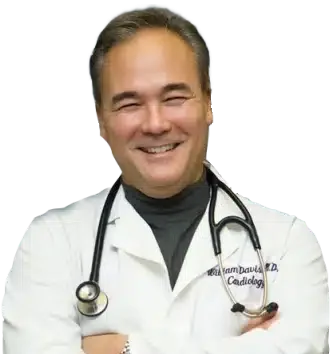
William Davis, MD, is a cardiologist and #1 New York Times bestselling author of the Wheat Belly series of books, as well as Undoctored and Super Gut. Recent human clinical trials that Dr. Davis conducted have revealed that it is possible to lose fat weight while preserving muscle, thereby preventing weight regain and enjoying improved body composition, findings that inspired the writing of SUPER Body.
Connect
Listen Now
Transcript
Dr. Sandi: Welcome everybody to “Health Coach Talk.” Today, my guest is somebody who really ranks as one of the people I most admire in the health and wellness community. Because of his groundbreaking work, his courage to go out and really be a disruptor of conventional healthcare wisdom has gone on to help so many, probably millions of people around the world are in better health because of my guest today, Dr. William Davis.
We get into discussion about his new book and how you can really create better health. You can lose weight appropriately and change your metabolic health, change your appearance, change your gut health. So, let me tell you a little bit more about Dr. William Davis. He is a cardiologist and a number one New York Times bestselling author of the Wheat Belly series of books, as well as “Undoctored” and “Super Gut.”
Recent human clinical trials that Dr. Davis conducted have revealed that it is possible to lose fat weight while preserving muscle, thereby preventing weight regain and enjoying improved body composition. Things that inspired the writing of “SUPER Body.” So, I know you are going to enjoy and be inspired by my conversation with Dr. William Davis. Welcome to the podcast, Dr. Davis.
Dr. Davis: Thank you, Sandi. Glad to be here.
Dr. Sandi: Tell us how this new book came about, “SUPER Body,” because you have a number of bestselling books that you are known for, “Wheat Belly,” “Super Gut.” Tell us what the impetus for writing this new book was.
Dr. Davis: A lot of it started, Sandi, with my efforts to cultivate a species of microbe that is supposed to be in your gastrointestinal tract but we virtually all lost because it is very susceptible to common antibiotics. Something as simple and common as amoxicillin, say, or doxycycline kills off virtually all Lactobacillus reuteri. So, I began playing with this microbe because it was available commercially, surprisingly, when I first started doing this a number of years ago, but the tablets were made for infants and so the number of microbes was essentially trivial, too small for adults. You had to take essentially the entire bottle every day. And so I just reasoned, let’s take this microbe and proliferate it. And I thereby fermented it as something that looks and smells like yogurt, as you know, that you and I made in your own kitchen.
Dr. Sandi: Yes.
Dr. Davis: All that is, Sandi, all that is for your listeners to know is a way to increase the number of microbes a thousandfold. And I began to play with this microbe and people take it and we started to witness dramatic changes in what I call shape and body composition. That is where fat is located and how much muscle you have. And this was, by the way, consistent with what was seen in mice. Usually it often happens that observations made in mice don’t translate into humans.
In this instance, everything that was seen in mice, I have seen corroborate in humans and we’ve conducted some clinical trials that also showed that this is true. So, with regard to fat, there’s two general locations of fat. There’s subcutaneous fat, fat below the skin. It could be in your buttocks or abdomen or chest or neck, but it’s below the skin. That’s relatively benign fat. It adds to weight and thereby it’s a stress to your weight-bearing joints like knees and hips. So, beyond that showing it’s an aesthetic issue, but it’s not a health challenge.
The real health challenge is fat in the abdomen that accumulates and encircles the organs like liver or intestines or pancreas because that’s very metabolically active and is a source for all kinds of problems but mostly inflammation and insulin resistance. So, if we want to focus on some, here’s one of the problems. Almost all conventional methods of losing weight, whether we call it move more, eat less or reduce your portion size or push the plate away or some branded program that provides a smartphone app or meal replacement, whatever, or it could be a pharmaceutical like a GLP-1 agonist or it could even be a bariatric procedure like Lap-Band or gastric bypass. They’re all variations of the same theme, reducing calories. And we know those methods preferentially target subcutaneous fat. You do lose some abdominal visceral fat, but it’s preferentially effective in losing subcutaneous fat. So, it limits the benefits you obtain, the metabolic benefits and effects like blood glucose and blood pressure and other effects.
Another problem with those methods of losing weight is there’s an obligatory loss of muscle. So, about 25% of the weight lost is muscle, which is a lot. So, let’s say your neighbor paid $12,000 for a year’s worth of Wegovy, or Mounjaro, one of those drugs. She loses 40 pounds. She’s real happy. The doctor’s happy, right? She’s back down to a size 10 or whatever. Of the 40 pounds lost, 10 pounds was muscle. So, think about 10 pounds of ground beef on your kitchen counter. It’s a huge amount of muscle. The trouble comes when she stops the drug, because most of them can’t afford that kind of money forever. She regains all the fat as abdominal fat and not just regains the 30 pounds, typically regains 32 to 34 pounds or more of fat and does not regain the muscle. There’s a trivial regain of muscle.
So, now she’s much more likely to have worse insulin resistance, inflammation, higher blood sugar, higher blood pressure, risk for heart disease, breast cancer, type 2 diabetes. Her risk is now greater than it was before she started this process. And because she lost that much muscle, her basal metabolic rate, the rate at which her body burns calories is about 25% lower. It means that even if she maintains a very low calorie lifestyle and an extreme exercise program setting, she will regain the weight, and it means that later in life, she’s much more prone to fractures, falls, loss of independence, dementia. And we now know with good evidence in the aggregate, about 60,000 people have been tracked, she’s going to die several years younger. This is what our FDA approved, a class of drugs that accelerates your loss of independence, disability and accelerate your death. So, Sandi, I’m waiting for the class action lawsuits to start.
Dr. Sandi: This is very scary. And the scenario you’re describing, I see all the time. And my contemporaries who are in their 70s are seeing this as the wonder drug. They’re going on it. And of course, it’s reinforcing because everybody’s complimenting them, “Oh, you look so wonderful. You lost so much weight. You look great.” And they’re particularly stuck in that mentality of weight is everything as opposed to metabolic health. And while I talk to them about they’re doing strength training and they said, “Oh, yeah, I have a trainer. I work out once a week.” And I don’t say anything. That’s not going to cut it. First of all, I know personally how hard it is. I work out just about every day and heavy weight training. And still, it’s so hard to put on muscle or preserve what you have as you’re in my age group. And I see all these women going on these medications and it is very scary.
Dr. Davis: There’s a great study from the NIH where they took people who were massively obese, BMIs of 50 or more, and they were put on a very strict low calorie diet, about eight months or so. And an exercise program, two hours a day, six days a week of resistance training and aerobic exercise. So, a heroic effort, right? They lose about 123 pounds, wow, of which 17% was muscle. So, it was less than the 25% that was expected but did not block the effect. And they still had that dramatic reduction in basal metabolic rate. And that drop in basal metabolic rate, Sandi, is essentially for all practical purposes, permanent. It does not come back. The studies have gone only six years. So, it’s persisted at six years, probably longer. No studies has tracked it longer than that. So, in other words, you will regain fat in the abdomen. So, now you have more abdominal visceral fat, you’re less healthy than you were, and all those bad things run the risk for.
Dr. Sandi: So, this is pretty scary. Something else that you talk about that’s scary and that you’re known for is the health of the microbiome and how it’s been destroyed for so many reasons. And you go into this in great detail in this new book as well. So, can you talk about what somebody can do if they say, “Hey, I really want to improve my gut health,” what are some of the things that stands out from the book?
Dr. Davis: So, that microbe we were talking about, Lactobacillus reuteri, it’s not only an essential microbe shared by virtually all wild hunter-gatherer humans, all wild mammals, so squirrels, deer, elk, elephants. They all have Lactobacillus reuteri. We do not. But its ubiquity in mammals suggests it is necessary for mammalian life. So, not only is it essential, it is unique in that it colonizes the small intestine. Most microbes can’t do that. Most beneficial microbes, a lot of pathogens can. But most beneficial microbes cannot colonize the small intestine as well as the colon.
So, I reasoned this. There’s so many people now with small intestinal bacterial overrun, we say SIBO, because of that overexposure antibiotics eradicated hundreds of beneficial species. Those beneficial species were suppressing the excessive proliferation of fecal microbes. These are species like E. coli, salmonella, and campylobacter. So, those fecal microbes overpopulated and then remarkably ascended into the 24 feet of small intestine. Small intestine is very permeable by design. That’s where we absorb nutrients.
Well, in half the U.S. population now, the small intestine is colonized by excessive numbers of fecal microbes. You might not know it. You might have some gastrointestinal symptoms like bowel syndrome type symptoms like diarrhea or constipation, or you might have joint pain or skin rashes or anxiety or depression or dementia, cognitive impairment, or increased risk for multiple forms of cancer. In other words, there may not be a sign saying this is from your small intestine, but half the U.S. population… And by the way, that science telling us that half the population has it is well worked out. It’s not my speculation. This has been sorted out. Half the U.S. population has this process that opens you to all kinds of health problems, including weight gain in the abdomen and loss of muscle.
And so restoring Lactobacillus reuteri is a big first step because it colonizes the small intestine. But even better, it’s a great producer of what are called bacteriocins. These are natural antibiotics that are very good in killing fecal microbes. So, I reasoned this. If you had this problem, which is if you have neighbors, family, friends, half the people at least have this problem, why do you get rid of it? Well, it was caused by antibiotics and other things. So, I don’t think taking another antibiotic is a good idea, though that’s what some gastroenterologists do, because that’s all they have in their armamentarium. They don’t understand health, right? We know this. My colleagues do not understand health. They know nothing about health.
Dr. Sandi: Right, absolutely. Right.
Dr. Davis: They know all about pharmaceuticals.
Dr. Sandi: Oh, yeah.
Dr. Davis: And maybe even procedures but not health. So, I asked this question. Well, if we’re going to reject the idea of more antibiotics like Xifaxan, that’s what they use, what if you took a commercial probiotic? Will this problem go away or other disruptions? No. So, probiotics are the least important. People think they’re the most important. They’re the least important thing you can do for gastrointestinal microbiome health.
So, what if we restored microbes that we’ve lost but have the specific capacity to colonize a small intestine and colon and produce those bacteriocins? So, I chose three, Lactobacillus reuteri, Lactobacillus gasseri, and Bacillus subtilis. Anybody who’s read my “Super Gut” book will see that the original formulation was Bacillus coagulans, which is a fine microbe. I like it, but it’s not reliable fermenting in dairy. So, we replace it with Bacillus subtilis, and that’s much more… And the subtilis strain, I did DNA sequencing on a strain I have, and it produces seven bacteriocins. It’s a bacteriocin powerhouse.
Dr. Sandi: Wow, that’s awesome. Yeah.
Dr. Davis: And then we ferment each one. I used to ferment them all three together, but I think it’s better to ferment each one individually and then consume each one, maybe a quarter cup of each or something like that every day. And I call the combination SIBO yogurt. It looks and smells like yogurt. It’s not yogurt, of course. And so far, this has proven spectacularly effective in normalizing SIBO after four weeks or sometimes longer. People have really bad SIBO. You may have to do it for a long time.
But I have a clinical trial that we’ll be performing sometime probably this year to validate this formally. But, you know, Sandi, if the solution is not something awful like remove your small intestine surgically, what if the solution is something that looks and smells like yogurt that you can make in your kitchen and has beneficial effects on your skin, on vaginal health, on your immune system, on energy? In other words, the bar is very low. It’s so beneficial in so many ways, but it also reduces that SIBO problem.
Dr. Sandi: Well, I can attest, first of all, how beneficial it is and how easy it is. I do it separately as well. So, I do the reuteri, the gasseri. I haven’t done the subtilis. I’m going to do that, but I have two. I don’t do them in combination. And this is yummy. This is delicious. My daughter uses it as a dessert. My three-year-old grandkids, twins, they keep saying, “More yogurt! More yogurt!” They love it. It is very easy to make. In the old days when I used to have to heat it up and have to check the temperature, get the ultra pasteurized half and half, it’s super easy. A
nd we have a YouTube video that you made in my kitchen. We demonstrate how to do it. And you have your recipe in this book as well. You also talk about the importance of fiber and how so many people get it wrong. You talk about how you should make sure you should add fermented foods with every meal and fiber. Can you talk about that?
Dr. Davis: So, I think an easy way for your coaches to think about this is to think about your backyard garden in springtime. So, if you wanted to have a garden, let’s say, in May or June, how would you do that? Well, you clear a little section, maybe a 10 by 10 section, say. You remove the stones and the sticks and the weeds. Then you plant seeds and then you water and fertilize it.
Well, your gastrointestinal microbiome is almost exactly the same. We’re going to prepare the soil, meaning remove things like chlorinated drinking water, filter your water. Choose organic foods. Minimize your exposure to herbicides and pesticides. Avoid processed ultra processed foods because they have junk in them like preservatives that are antimicrobial. In food and in you, falsifying agents that disrupt the mucus barrier. So, we’re going to prepare the soil.
Then we plant seeds. The two most important seeds are those microbes you and I talked about, reuteri, gasseri, subtilis. While they make that yogurt to clean up the SIBO, they can also start the process of re-implanting beneficial microbes. And the fermented foods, the curious thing, Sandi, about fermented foods is that the microbes in say, sauerkraut, or fermented pickles or kimchi or whatever are species like Leuconostoc and Pediococcus. These are microbes that don’t take up residence in your GI. What good are they? Well, they have this unique capacity.
This came from very elegant work at Stanford by a husband and wife team, the Sonnenbergs. And they showed, and very elegant work, that it’s consumption of the fermented foods with those peculiar microbes that don’t take up residence but somehow cultivate the restoration of truly beneficial microbes. These are microbes like Akkermansia, and Faecalibacterium, and Micrococcaceae and Eubacterium, truly beneficial microbes that nearly everybody has lost. And so the fermented foods are so helpful.
And then lastly, we got to feed them. We got to water and fertilize your garden. If you don’t water or fertilize your garden, well, you probably won’t have a good garden. You won’t have a bunch of cucumbers and tomatoes at the end of the season. So, we’re going to water and fertilize it, meaning fibers. That is fibers of the sort that microbes can metabolize. Not bran fiber. Conventional thinkers in diet have gotten it so wrong in so many ways. They’re talking about bran… That’s inert. That’s cellulose fiber. That’s about as good as saying, “Have a tablespoon of sawdust with breakfast.” So, we want things that are metabolizable by microbes. So, those are things like legumes, root vegetables, inulin, galacto-oligosaccharides, mostly plant matter that has fiber in it.
By the way, one of the most interesting fibers is a fiber source from animals, hyaluronic acid. Another big blunder in dietary advice, cut your saturated fat and cholesterol. It caused most people to abandon consumption of organ meats like stomach, tripe, heart, tongue, skin, all these things rich in hyaluronic acid. So, when you… Now ladies say this to me, they say, “Oh, don’t talk to me about hyaluronic. I know all about it because I pay $150 for an ounce and put it right here.” Well, I tell them, “What did that do for the skin on your neck and your abdomen?” Nothing, of course. It’s a spot, superficial thing. We’re going to restore it orally.
Now most modern people say I can’t eat organ meat. At the very least do things like stop buying boneless, skinless chicken breasts. That’s stupid. There’s hyaluronic acid in the skin as well as collagen, by the way. Try to get whatever organ meat you can. Maybe you fold in some liver or heart into your ground beef or something like that. Most of us end up using supplements because modern people just are too squeamish. So, use supplements, like 120 milligrams is the standard dose. And you get smoother skin. So, ladies love it because it does add to dermal collagen and dermal moisture retention, but it also increases joint cartilage that’s eroded in people with arthritis. It increases the synovial fluid, lubricating fluid.
It’s probably the most important things you and I can do for arterial health because there’s something called a glycocalyx that lines arteries, little finger-like projections that control the tone of arteries, the endothelial tone. What’s it made of? What’s that glycocalyx made of? Hyaluronic acid. And as a woman ages, especially past menopause, she loses vaginal moisture, sensations, more prone to infections, candida, etc. Well, the uterus surface in the vagina is largely made of hyaluronic acid. I’ve been up now because it’s also a fiber that nourishes those microbes like Akkermansia, Faecalibacterium. So, hyaluronic acid, a very powerful prebiotic fiber sourced from animals.
Dr. Sandi: You were a conventionally trained cardiologist, and we’ve got it so wrong. I mean, I still hear people say they’ll order the boneless, skinless chicken breast. They peel the skin off when they eat animal products and they’re so afraid of fats. And it’s really just the opposite. Who knew that hyaluronic acid is good for your heart, that we’re taking off by removing all the fat?
Dr. Davis: Sadly, the 20th century is going to go down in history as a century of incredible blunders, especially in health and nutrition. I was putting together a talk on microplastics. Remember the 1967 film, “The Graduate” with Dustin Hoffman?
Dr. Sandi: Plastics, yeah. That’s a famous line. Get it going to plastics.
Dr. Davis: Well, famous last words, right? Now look at us. Now we’re finding plastics in the gastrointestinal tract. It changes the microbiome composition. It mucks up the mucus barrier. It’s been recovered in carotid atherosclerosis. Been recovered in ovaries. Been recovered in umbilical cord blood of a newborn. And so yet another example of how many things… And so get rid of your saturated fat and cholesterol was a huge blunder. And it led to a series of other mistakes like the abandonment of hyaluronic acid, the abandonment of collagen.
So, those two things, by the way, Sandi, collagen, hyaluronic acid figure prominently in this effort to reshape your body and body composition. So, rather than just say lose weight and selectively lose subcutaneous fat and lose muscle, we’re instead going to reshape the body. We’re going to selectively target abdominal visceral fat, the most problematic. If you need to lose subcutaneous fat, that will follow. And it will follow faster because it’s abdominal fat that determines where fat is located. And there’s also, by the way, something called ectopic fat that’s become a real problem for people now. When you have abdominal visceral fat, which by the way, you can’t judge by looking. If you’ve got a big protuberant abdomen, you’ve got a lot of visceral fat. But you can have a flat tummy and still have a lot of visceral fat. That’s become clear with all these…
Dr. Sandi: Skinny fat, yeah.
Dr. Davis: Yes, exactly right. All these CT MRI studies using cross-sectional images of the abdomen showing, “Oh, these skinny people also have…” partly because of silly dietary guidelines and are exposed to the exploitative foods. But we’re going to specifically target loss of abdominal visceral fat, and we’re going to try to preserve or even increase muscle. And we’re going to reduce what’s called myosteatosis, the deposition of fat in muscle, which is a big problem. It accelerates your loss of strength, your impairment, your loss of independence.
So, reuteri, big advantage there because one of it’s… So, two effects. One is that it helps reduce that SIBO and endotoxemia problem, the antibacterial byproducts into the bloodstream, but it also sends a signal to your brain to release the hormone oxytocin. So, a lot of ladies know what oxytocin is because they may have gotten an infusion of oxytocin when they delivered their child. In other words, Mary Jane says, “I want to have my baby on Wednesday, August 23rd at 8 a.m.” So, she comes into the hospital. She gets an IV and they give her an infusion of oxytocin because it produces uterine contraction.
And so for decades, it was thought that oxytocin is nothing more than the hormone of uterine contraction. Well, it’s actually a lot more than that. I call it the hormone of shape and body composition. It’s also the hormone of love and empathy. So, the mouse work tells us that the restoration of reuteri causes an increase in oxytocin in mice, a 300% increase. We’ve been working to corroborate… Measuring oxytocin is not easy, but a lot of us experience what I believe are oxytocin effects, an increase in empathy for other people, an increase in the desire for human companionship, the intensification of affection for the people close to you, increased tolerance for other people around you. Could be coworkers, could be your spouse, could be your children, and an increase in generosity and the acceptance of other people’s opinions.
You and I are here talking about what I call shape and body composition and the microbiome, but I think the biggest thing we’re doing is improving human behavior and emotions. So, part of all my clinical trials, I have what I call wellness questionnaires. At zero to 10, I am happy with what I’ve achieved in life. Zero to 10, I’m happy with my relationships. I want to know if people with restoration of reuteri are better and happier humans. I think they are.
Dr. Sandi: I agree with you. And I want to highly recommend getting this book. If you are a health coach, you can use it. Start a book club to any client that you have that says, “I want to lose weight. I want to get in better shape,” whatever it might be, “I want to have better mood.” This is a winning formula. So, I just can’t thank you enough for being here. And where can people find more information? Where can they find you? And where can they get the book?
Dr. Davis: So, the latest thing, of course, is in this “SUPER Body” book, which is Amazon and all bookstores. So, it’s widely available. If you want to know more about the microbiome, of course, a “Super Gut” book that precedes “SUPER Body” has all these recipes, like the SIBO yogurt, at least the original recipe. The updated recipe’s in my blog, williamdavismd.com. The “Super Gut” book has all the recipes. If you said, for instance, my daughter is going to be pregnant, I want to make sure she’s got a healthy vaginal microbiome so it reduces risk of miscarriage, premature labor. Well, she’s going to make sure she’s got Lactobacillus crispatus, and she can make that as a yogurt. By the way, most tasty yogurt you ever had.
Dr. Sandi: Yes, I made it. It’s really good.
Dr. Davis: It tastes like whipped cream. Or maybe she wants to make sure her newborn is going to have proper or healthy neurological maturation so that there’s a higher IQ and immunological maturation, less risk for type 1 diabetes, autoimmune diseases, and obesity as a teenager. Well, let’s make sure that child has Bifidobacterium infantis. And so all those recipes, where to source the microbe, how to ferment it, are all in that “Super Gut” book. And of course, I have several thousand posts on my williamdavismd.com blog, YouTube channel, “Defying Health” podcast. So, I try to make all this information as available as possible.
Dr. Sandi: Well, we are appreciative of all that you do to advance health. You are really cutting edge. And you are ahead of your time, and this is continuing to be ahead of your time, advancing the science, as well as busting so many of the myths that are out there. So, thank you for taking the time to be with us today. It is always a delight to be with you. Thank you.
Health Coach Talk Podcast
Hosted by Dr. Sandra Scheinbaum
Conversations About Wellness Through Functional Medicine Coaching
Health Coach Talk features insights from the most well-respected names in health coaching and Functional Medicine. Dr. Scheinbaum and guests will explore the positive impact health coaching has on healthcare, how it can transform lives, and help patients achieve better health and wellness outcomes.

Check us out on these platforms: