

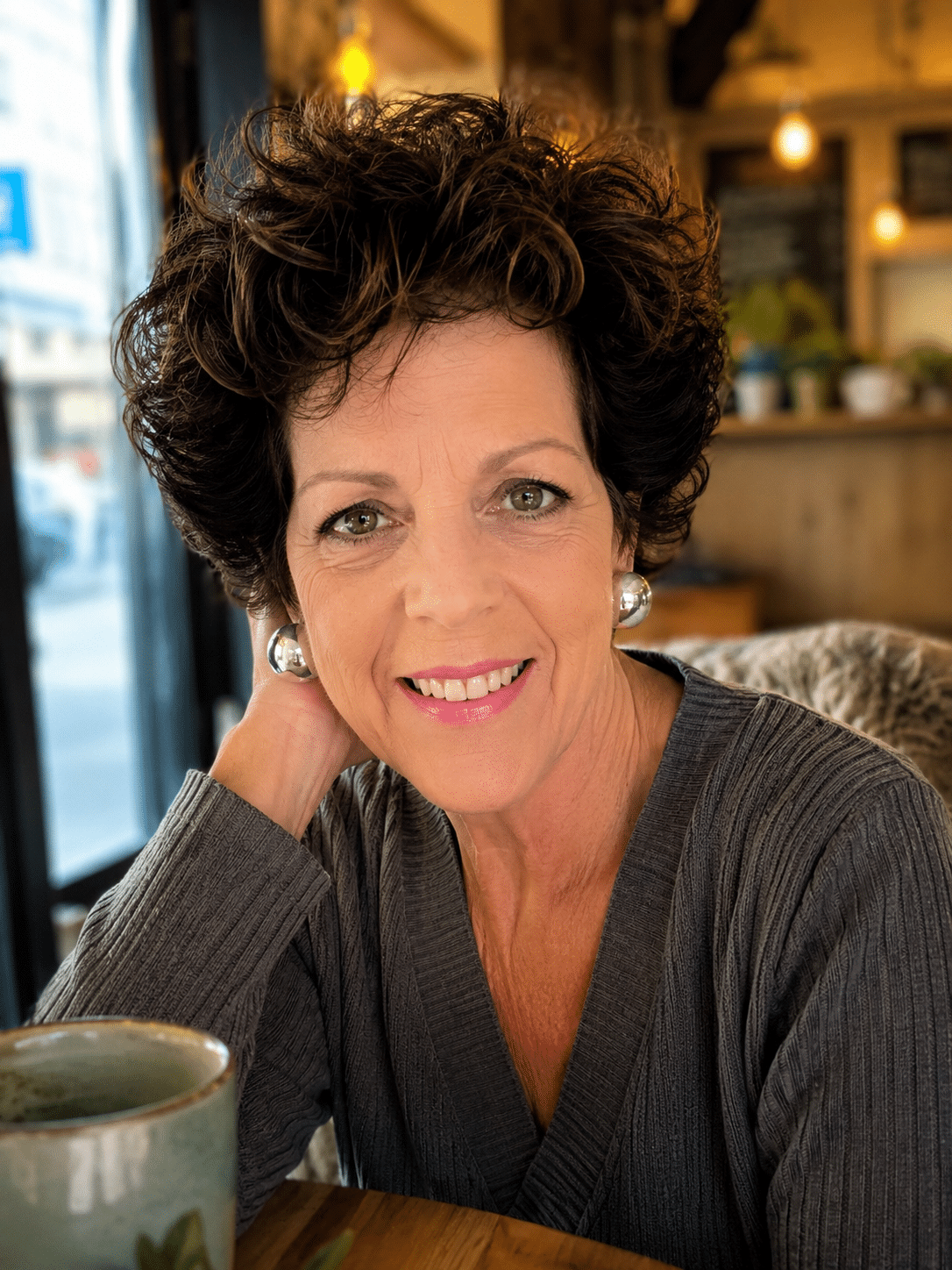
After a 30-year career in commercial construction and a decade running her own upholstery business, Bethany Wheaton found herself struggling with chronic stress and unresolved gut health challenges. Her search for answers led her to functional medicine and sparked a passion for food as medicine. As friends and family began seeking her wellness advice, Bethany decided to turn her passion into a career and enrolled at the Functional Medicine Coaching Academy (FMCA) in March 2025. Through the program, she discovered the power of positive psychology, behavior change, and the art and science of health coaching.
“I fell in love with the art and the science of coaching. That was the big reveal.”
Bethany Wheaton, FMCHC, NBC-HWC
Today, Bethany is a National Board Certified Health & Wellness Coach (NBC-HWC) building her own practice focused on older adults and individuals navigating GLP-1 medications. She has found success reaching potential clients through community networking, local advertising, and her monthly wellness column, Thrive. Alongside her professional growth, Bethany experienced meaningful improvements in her own metabolic health, weight management, and emotional well-being. She credits FMCA with providing the knowledge, coaching skills, and confidence to pursue this new chapter and encourages future students to embrace the learning experience, apply the lessons to their own lives, and experience being coached themselves.
Watch the Interview
Watch the full FMCA Alumni interview with Bethany to learn more about her inspiring journey:

Meet Bethany
Bethany Wheaton,
FMCHC, NBC-HWC
Bethany Wheaton, FMCHC, NBC-HWC, is the founder of Healthspan Wellness Coaching, where she helps adults translate health goals and medical recommendations into meaningful, sustainable lifestyle changes. Drawing on years of studying food as medicine and her own personal health journey, she brings a practical, compassionate approach to helping clients create healthier, more fulfilling lives. Her areas of interest include functional medicine, metabolic health, GLP-1 support, and stress resilience. Bethany is also a HeartMath® Certified Practitioner and writes Thrive, a monthly wellness column for Redbrook Magazine.
Connect
Transcript
Kerry: Hello, everyone. My name is Kerry, and I am the admissions manager here at the Functional Medicine Coaching Academy. And I have a special guest with me today. I have Bethany Wheaton. And Bethany and I met back in October, late October of 2024. And Bethany had scheduled an admissions call with me, and we had a wonderful conversation. Bethany, which class did you enter?
Bethany: March of 2026.
Kerry: March of 2026.
Bethany: 2025.
Kerry: 2025, yes. And Bethany has since been through the program, and we’ve circled back to talk a little bit because I really want you to hear what Bethany has to say. Bethany, you want to just take a moment and introduce yourself?
Bethany: Sure. My name is Bethany, and I live in Plymouth, Massachusetts. I have two sons who live…one lives in Massachusetts, one just moved to Los Angeles. I have two grandsons. I work another job. You know, one job that pays the bills, and coaching is my passion. So, I’m handling…managing both.
Kerry: Wonderful.
Bethany: Yeah.
Kerry: Wonderful. So, when we talked back in October of 2024, what were you doing before FMCA?
Bethany: I had a long 30-year career in commercial construction, doing project management, sales, estimating. And then when I left that, I started a custom home decor business and taught myself how to upholster furniture. And that’s what I’ve been doing for the last 10 years. I have a shop here in Plymouth.
Kerry: That’s fantastic. So, creativity is one of your character strengths, I’m sure.
Bethany: I don’t think it’s very high, but I’m more of an instructional learner and not inspired.
Kerry: Well, wonderful. So, that seems like a big shift from both of those careers coming into health coaching. So, what brought you to functional medicine and ultimately health coaching?
Bethany: Well, it was the stress of that business. You know, working by myself, not able to find skilled help, opening a retail store, which I had never done, and you know, quitting a job I had had 30 years in to do this. And that turned into chronic stress, which turned into a gut illness that I could not get diagnosed. And then COVID, the stress of COVID and running my business during that time, and just life in general. And I just sought…I had to find another way to heal myself. There was something wrong with my gut.
And I sought Chinese medicine and then ultimately functional medicine, and still do some of those practices today. But it was that experience that really launched me into what I call my food as medicine hobby. And I began listening to seven, eight podcasts a day on functional nutrition and healing. And then people, friends and family started asking me, hey, you know, what should I do for this? Or what do you think about this? It just became a hobby and a passion. And that’s what led me one day to say, hey, I think I might supposed to be doing this for real.
Kerry: Yeah, absolutely. And I’m so glad you did.
Bethany: Me, too.
Kerry: Yeah. So, when you entered the program…you know, a lot of times people expect one thing and comes out something else. What did you expect when you came into the program?
Bethany: I thought I would be learning about functional medicine and healing. I didn’t know what coaching was. I had never heard of it. And immediately, I think, before the first LTS, doing some of the pre-reading, one of the first paragraphs I read was about positive psychology. And it hit me like thunder. It was like, oh, this is really different. This is a different way of thinking and responding. And I think something cool is about to happen here. And I fell in love with the art and the science of coaching. That was the big reveal.
Kerry: Yeah. I was in the same boat as I was so unfamiliar with coaching when I came in. And gosh, was I so happy to pick a program that was so strong into coaching.
Bethany: Yeah. It’s quite a transformation within a month or so. You’re not thinking the way you used to think. You’re not speaking the way you used to speak. And it’s like, oh, something so cool is happening here.
Kerry: Yeah. Yeah. I love that. I love that. So, I want to fast forward now. I want to talk about after the program. We’re going to jump ahead because I know you’ve been doing a lot, some really cool things to build your business. So, can we talk about that?
Bethany: Yeah. I’m definitely in business building phase. I spent quite a bit of time researching and planning a GLP-1 success program. And I have launched that. And I was a little scared. I had a little bit of imposter syndrome, but I took some advanced training, including one of the classes that’s offered to FMCA alumni. And it was actually a networking, running into a woman at my son’s birthday party who owns a hair salon. And she asked me how the coaching’s going. And I said, oh, I’m rolling out my GLP-1. And she said, well, I need that information for my salon. I have dozens of clients whose hair is falling out. And they’re all on GLP-1s. And that was sort of the impetus I needed and to produce…finish the class, finish the preparation, produce a beautiful flyer, and print it, and drive it up there. And it’s getting results. So, networking, talking about your business.
Kerry: Yeah. You’re like, I have an audience here. Yeah.
Bethany: Yeah. My area, I’m in what I call a target-rich environment for my ideal client who’s an older adult. And my goal is to have a private practice in one-on-one coaching, and supplement that with some 1099 contract coaching for medical practice.
So, I shifted my marketing dollars to a magazine that goes out to a town, 5,000 homes. They did a two-page profile on me. Well, I wrote it. And I received a client call within a few days of that issue landing in people’s mailboxes. And the woman said to me, I feel like you were talking to me in that. So, getting your message out and getting it out to your ideal client, to your demographic.
And I was really happy with that. So, I talked to my friend who publishes these magazines. I said, yeah, I want to do the third one. But here’s what I want. Because I already advertised in two of her other magazines. I said, I want to write a monthly wellness column.
Kerry: Good for you. Yes.
Bethany: I do a monthly wellness column called Thrive. And that magazine is brand new. The first issue just hit people’s mailboxes in another 55 and over community this past week.
Kerry: Fantastic. Yeah. I love that. I often tell people it’s really about really defining who your ideal client is. And the closer you get to that, you’re going to attract those people. It sounds like that’s just like what you did.
Bethany: I did. I knew I was in a good environment. And private coaching practice as my goal requires a certain demographic. But I think that you really need to follow your intuition. And I was on a webinar a day or so ago. And I was in a breakout room, and a gal has a lot of…a coach, has a lot of…she has the Dr. Daniel Amen training, the ReCODE. And she said, I like working with people with dementia, but I really want to reach the people who don’t have it yet. And I thought to myself, that is the ideal client. Follow your intuition. You get that idea, and run with it. Run with it.
Kerry: Yeah. That’s incredible. Often, on admissions calls, we’ll hear from women of your same demographic. And they’re afraid because they don’t want to be on social media. They don’t want to be creating reels and posts and things like that. And that’s not what you’re doing. So, you’ve found a different way to reach your audience. Because your audience probably isn’t on social media.
Bethany: Right. Right. Social media doesn’t make the phone ring or doesn’t drive people. It can drive people to your website. That should be the goal of social media. But it’s really not engineered to make your phone ring.
Kerry: Yeah. I just love how you chose the publishing and the local magazine. Yeah. That’s wonderful.
Bethany: It had been successful for my other business, my upholstery business. There were some similarities with the demographic. So, I said, I’m going to give it a shot. And I’m glad I did.
Kerry: Yeah, good for you. Good for you. So, moving on to another topic. You passed your national board exam in July of 2026, of this year. So, congratulations.
Bethany: Thank you.
Kerry: Yeah. And you described a really interesting way that you prepared for that exam. Do you want to talk about that?
Bethany: Yeah. There are some exam prep products out there, some study groups, some free, some paid. I tried that path and just didn’t feel like I was getting prepared. And I was kind of frustrated. And then I heard Mahnaz in the back of my mind say…
Kerry: Who’s one of our course facilitators.
Bethany: Yeah. She was my course facilitator. And I think it was in the second to last live training session. She said, everything you need to pass the exam is in your course materials. So, back in probably June, I remembered that. And I said, okay. So, I had the printed out NBHWC exam content outline with the five sections and all the competencies. There’s hundreds of them across the five sections. And I just went to section one to the first competency, whatever the keyword was in it. I went to my Google Drive, where all my 12-module study materials were. And I found what FMCA had on that topic, and then more, and again and again. And I just repeated it. And I took what I had for each section and created study guides through ChatGPT. Some sections just needed study guides. Some needed simulated coaching, which I can do through ChatGPT. And I just kind of coached myself through it.
I studied for 10.5 weeks. If I couldn’t find that search word, that keyword in the 12 modules, I went to the textbooks that were recommended, and also another one called “Coaching Psychology Manual.” I was uploading screenshots of entire chapters and ultimately combined section one, two, and three, the real meat of the exam and the meat of coaching. And geez, by the end of 10.5 weeks, I felt like I had taught myself to coach. It was just an immersive process. And I couldn’t have done it without ChatGPT. And now, I have this tremendous resource of how to pass the exam. And I did.
Kerry: And you did with flying colors.
Bethany: I did. I did well. I’m happy about that. And it was just a very coach-like process, a lot of autonomy, and realizing that when I was considered myself proficient, I can move on. And sometimes there were topics that study guides weren’t great for, the know-your-numbers, the biometrics. That was straight up memorization. So, I saved that for four days before the exam.
Kerry: For that short-term memory. Let me recall. Wonderful. Wonderful. So, one other thing I wanted to talk about today is the personal change that you went through. As the person Bethany was before the program to who is Bethany now, can you describe that a bit for me?
Bethany: Well, I’m a lot healthier. I took the information I was being presented and turned it on myself, and healed within six weeks of being on the Mito Food Plan. I no longer met the criteria for metabolic syndrome. I thought, well, this is cool. So, then I started dropping weight, ended up losing 40 pounds during the 12 months.
Kerry: Fantastic.
Bethany: And then I’m like, okay, I’m going to work on my BMI. It got my BMI down to…down a section, and learned better self-regulation. I have a pretty significant complex trauma as part of my story. So, learning not only how to self-regulate and seeing improvement in that area, but learning how it influences wellness and illness. Making those connections just made me much better at healing myself.
Kerry: Wow. That’s wonderful. Thank you for sharing that. Yeah. That’s great.
Bethany: Thanks.
Kerry: As we close this out, if there is a prospective student or current student watching this video, what would you like to tell them?
Bethany: I think, three things. Save all your materials, create a Google Drive for each module, a Google Drive folder for each module, download every transcript, every slide, use AI to create study guides, show up, be present, and engaged. That’s number one. Number two is turn the program on yourself. If you have a health challenge, this is a very comprehensive functional medicine exam that we’re getting kind of on the side. Find something to work on on yourself. If you’re already super healthy, work on the pillars of wellness, work on your wheel of life. There’s always some…one of those spokes is always a little lower. Work on that, and see the process happen. And then the third thing is get a coach, be coached.
Kerry: Yes.
Bethany: I did that. I went on the FMCA Find a Coach and had a coach for about seven months.
Kerry: While you were in the program.
Bethany: While I was in the program. So, I got to experience setbacks and successes and celebrating successes and creating a vision for my life and exploring my character strengths from the client side as well as observing a pretty experienced coach as well. So, that’s what I would share. That’s what I would recommend.
Kerry: I remember my course facilitator telling me, the best coaches have a coach.
Bethany: Well, that was another Mahnaz-ism as well. Every coach needs a coach.
Kerry: Yes. Yes. Well, wonderful. Bethany, it was so nice to reconnect with you. I’m so happy for your success that you’re experiencing as a coach. And I hope your business does nothing but grow and bloom. And so, thank you for spending this time with me today.
Bethany: Thank you.
Our Latest Blogs
-

The ‘Practitioner’ Liability Trap: Health Coaching vs. Practicing Medicine
Read Full Article: The ‘Practitioner’ Liability Trap: Health Coaching vs. Practicing Medicine -
Alumni Spotlight: Bethany Wheaton
Read Full Article: Alumni Spotlight: Bethany Wheaton -
Celebrating 200 Episodes of Health Coach Talk: Our Top 10 Favorite Conversations
Read Full Article: Celebrating 200 Episodes of Health Coach Talk: Our Top 10 Favorite Conversations


