

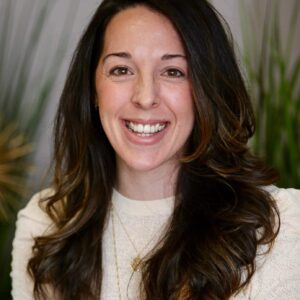
Kelly Keck came to the Functional Medicine Coaching Academy after more than 15 years as a licensed mental health counselor and owner of a thriving private practice. As she worked with clients navigating challenges like fertility, hormone imbalances, weight changes, and life transitions, she noticed that therapy alone could not always address the deeper patterns affecting their health. Wanting to better understand the connection between the mind and body, Kelly enrolled at FMCA to expand her ability to support clients through a more holistic lens. She found a program that combined evidence-based functional medicine education with hands-on coaching practice, a supportive cohort community, and communication skills that she believes are foundational to creating lasting behavior change.
“FMCA is the gold standard for learning. The responsiveness, the community, the endless amount of information… it’s just there.”
Kelly Keck, FMCHC
Today, Kelly integrates FMCA’s coaching principles into her therapeutic work while maintaining clear boundaries between counseling and health coaching. She also offers dedicated health coaching services, collaborates with functional medicine practitioners, and has built a trusted referral network to ensure her clients receive comprehensive, whole-person support. Looking back, Kelly says FMCA strengthened the work she was already doing by deepening her understanding of the brain-body connection and empowering her to better advocate for clients navigating complex health concerns. She continues to stay involved through the FMCA alumni community and considers the program the gold standard for coaches and healthcare professionals seeking to bring a more holistic, collaborative approach to client care.
Watch the Interview
Watch the full FMCA Alumni interview with Kelly to learn more about her inspiring journey:
Meet Kelly
Kelly Keck,
FMCHC, LMHC, LPC
Kelly is a Licensed Mental Health Counselor (NY) and LPC (CT & NJ) with dual Master’s degrees in Clinical Mental Health Counseling and Forensic Psychology. She takes a holistic, person-centered approach, integrating CBT, psychodynamic therapy, and EMDR to support lasting change. Passionate about the connection between mind, body, and lifestyle, she helps clients build balanced, healthier lives which lead to her interest and completion of the IFM functional medicine coaching academy as an FMCHC.
Connect
Transcript
Kerry: So, hi, everyone. My name is Kerry, and I am the admissions manager here at the Functional Medicine Coaching Academy. Today, I have someone really special with me. It’s Kelly Keck. And Kelly called in to admissions or scheduled an admissions call a few years ago. And I was lucky enough to be the one to meet with her. And we talked through her decision to roll into FMCA. Kelly is now a graduate of the program, and has been before a successful mental health professional. So, Kelly, welcome and thank you for your time today.
Kelly: Thank you, Kerry. I appreciate it. Thanks for having me.
Kerry: Yes, yes. And can you tell me and tell everyone here a little bit about your background and what were you doing prior to coming to FMCA?
Kelly: Of course. I’m a mental health counselor with a master’s degree in mental health counseling and a master’s degree in forensics. I started in the forensic field. Then I moved into community mental health and then into private practice. And I’ve run a group practice and my own practice for the last seven years.
Kerry: Yeah. And you have quite a thriving large practice, from what I understand.
Kelly: I do. Yes, I have a personal one that I’ve held on to, and then I have nine people that work for me.
Kerry: Yeah, that’s fantastic. So, tell me. Having that successful business, what brought you to functional medicine and/or ultimately health coaching?
Kelly: I’ve been working in the field for 15, 16 years now. But in the last five to eight years, I’ve seen a lot of my clients struggle with…they go through life transitions, and they struggle with things like fertility and some extra weight gain, trying to balance everything, a family, a successful career, exercise, lifestyle shifts. And I’ve just seen, with a few of my clients, they really have struggled to lose kind of some of the stubborn fat, as they call it, or not be able to reach their lifestyle goals. And it’s not that it’s completely outside of clinical mental health, but it’s adjacent to. And I was just seeing some patterns that no matter how much therapy I was able to provide, it wasn’t shifting for them, encouraging them to speak to their medical professionals, and nothing was kind of helping. So, it piqued my interest to find out a little bit more about how the entire body works with the mind and how best I can support them holistically.
Kerry: That’s beautiful. So many of our students come to us because they’re going through their own personal health journey, but in your case, it’s your clients that you saw were struggling in their personal health journey.
Kelly: It’s hard to see someone every week struggle with something and not feel like you can support them in the best way possible.
Kerry: Yeah. Yeah. So, tell me. Now, that you’re gone through the program, tell me about your experience as an FMCA student. And what did you enjoy most about the program?
Kelly: I love the program from soup to nuts. It was so structured, so easy to follow, an enormous amount of information. You will not be lacking for information. In fact, I have gone back and reread and retaught myself some things that just didn’t feel like there was time to fully absorb during the course of the year.
I love the cohort system so much. I think when you’re out of school for a long time, you forget what it’s like to be interacting with people, to have a…I was going to say professor, but to have Christina, who is my personal favorite.
Kerry: Course facilitator, yeah.
Kelly: Wonderful. To lead us and support us through learning brand new information. And some people have a relationship with the information, but they really do teach it. They break it down so that it feels bite-sized and understandable. And then you get to practice everything, which I’m very used to in my career, but I recognize for a lot of people, it was not what they were used to. And while it might have seemed scary, I think it actually built a fantastic foundation to feel very comfortable doing this work.
Kerry: Yeah. That’s wonderful. That’s wonderful. I always preach that one of the benefits of this program is community, and this cohort system really does provide that community to you.
Kelly: Oh, yeah. You deeply get connected to the people that you work with. And then you can really practice the work so that when you are done with the program, you feel capable of doing it with strangers, for lack of a better word.
Kerry: Yeah. Yeah. That’s great. So, how are you using your health coaching certification now to make an impact on your clients? Are you using it in your current practice? Are you using it with your clients in a different way? Can you describe that to me?
Kelly: Sure. I talk to Christina about this quite a bit, actually, because I was the only mental health professional in my cohort. There were a lot of medical professionals in different areas. But I didn’t want to blur the line between clinical and coaching. So, I do have a completely separate, logistically, tab on my website for people that are only interested in coaching. But I’ve certainly woven in the coaching techniques into my therapeutic work. And for anyone that…I’ve had a lot of clients that ended up finding out they had PCOS, endometriosis, and insulin sensitivity issue, I have referred them out to either other coaches or naturopaths or functional medicine practitioners that will really be able to support them in that so that I can still do the therapeutic piece. And then I’m just marketing and advertising myself locally as a coach, and trying to build some relationships with functional practitioners around me.
Kerry: Yeah. That’s fantastic. Now, did you…I get that question a lot about how to refer out. Did you have that relationship with those practitioners beforehand, or were you able to establish that now that you’ve graduated?
Kelly: I worked with one naturopath prior to my work at FMCA. And then I went ahead through the alumni referral system and through my cohort and anyone that knew anyone. I just collected everyone’s email, phone number, information, which everyone was happy to share. And it created a very large Excel sheet with a referral network. And I just sent them to anyone that I knew, but it was a real person-to-person connection. So, I’m not just sending them out to a website.
Kerry: Yes. Oh, that’s wonderful. A little white glove treatment there. Yeah. So, how did…how would you say FMCA prepared you to be a successful coach?
Kelly: I came into it thinking that it was going to be information and knowledge-heavy, and it was going to be like school, reading your textbook and taking your quizzes, and absorbing and learning the information. That was all there. But it very much starts with the foundations of communicating and connecting with people, which in hindsight, going through the process makes so much sense. The connectedness to people thing was not something that I was particularly foreign to. So, I felt very comfortable talking to my cohort. But they really do teach motivational interviewing, communication techniques, how to meet someone where they’re at, but pull them deeper with you, which is a technique you just don’t learn in regular communications, not how most of us communicate. And you’re really wanting to institute awareness and change from people. So, they teach that first, which I think is chef’s kiss, just absolutely amazing.
And then you lean in to all of the knowledge and then how to weave that knowledge through your coaching to help bring awareness. Because the client is the captain of the ship, and you are just there to support them. But the program for the better part of a year did exactly that in such a beautiful arc.
Kerry: Yeah. I like that. We do try to, you know, lay that groundwork of coaching first, because it’s so important. And as you reiterated there, we do get deeper and deeper into that functional medicine, all the functional nutrition, all that…those topics that we’re so eager to learn about, they’re in there.
Kelly: It is the thing everyone said. When we had our graduation, and we all got to chat, it’s a thing that everyone said they thought they were going to learn first, and they didn’t realize until we were already learning how to connect with one another, that that was all going to be important and knowledge that you learn and knowledge that will grow exponentially as you keep doing this. But you needed to know how to speak to one another before you could weave in all of that knowledge.
Kerry: Yeah. So, when you…we had that call a few years back. Did you have any fears about…or hesitations about joining the program?
Kelly: Maybe for some mental health clinicians, and I won’t speak for all of them, but I did worry that there would be maybe too much overlap in a way that wouldn’t feel as useful in my career. And I’m not going to say I couldn’t have been more wrong, because it overlaps in the ways that are important, like speaking to people, connecting to them, finding the depth, finding the intrinsic value and the reason they want to be there. That is, I think, actually a superpower for mental health clinicians, if you’re interested in doing this work. It’s all of the rest of the way that your body moves together, the holistic approach, the brain-body connection, the mood connection, all of the really important stuff that actually validated the last 15 years of my work. So, I actually found it not very much to be overlap as much as just an addition to everything that I’ve already learned, and then really supported and bolstered how I’m able to help my clients.
Kerry: Yeah. I get a lot of mental health professionals that call in and are exploring becoming a health coach. So, if you want to just…what would you say to someone, another mental health professional or clinical social worker that was asking, is this the right journey for me? Do you have any advice for them?
Kelly: Yes, for sure. I would say, if you are interested in understanding in a deep way how the brain and body is connected and what that means for how your client can move through their trauma, their past experiences, the blocks that are getting in their way, the cycles that they keep repeating, there is likely a connection to what is happening for them internally. If you are at all interested in women’s hormone health or fertility, I have quite a few clients on my caseload that are in their 30s and 40s that are trying to get pregnant. This is particularly important for me. And I feel like it’s been…it was a part of my career I felt very passionate about way more so after going through FMCA. Do I have more knowledge and information to help support them to advocate for themselves in the healthcare system, which has become exponentially more important to me after going through FMCA. So, depending on who you’re working with and what it is that inspires you, I would say, it’s definitely worth having a conversation with you, Kerry, and happily speaking to any of the alums and learning more.
Kerry: Yeah. Well, great. Now, we always say, once you join FMCA, you’re part of the family and you’re one of us for life or an FMCA graduate for life. What does that mean to you, Kelly?
Kelly: The day we graduated, we started a group chat with everyone from my cohort. So, they have all turned into friends. Everyone emailed each other throughout the course of the year to support in homework and quizzes and information and connectedness. I joined the alumni committee the day they told us that we could join it because it’s just a given to have a community of people around you. Especially because FMCA is so large and spans across the distance, you can really connect with people all over the place. It is very important. For me, at least in private practice, it can be an isolating career. So, it’s really important to dive into the network that was just already available for me.
Kerry: Oh, that’s wonderful. I’m glad you’re enjoying it. Yeah. Well, like I said, I appreciate your time. And is there anything else you’d like to add?
Kelly: Just that, personally, I think FMCA is the gold standard for learning and just the responsiveness, the community, the endless amount of information. It’s just there. When I started doing some research into getting an additional certification in women’s hormone health, I reached a write out to FMCA again to find out kind of what’s happening. And there are already things in the works. So, I’ll just be waiting in the wings for that to keep adding to my education.
Kerry: Yes. This community loves to learn. So, we’re always adding, always developing, and glad that we’ll be of use to you. Yeah. Yeah. Well, Kelly, I so much appreciate your time today, and wish you all the best of luck.
Kelly: Thank you, Kerry.
Our Latest Blogs
-
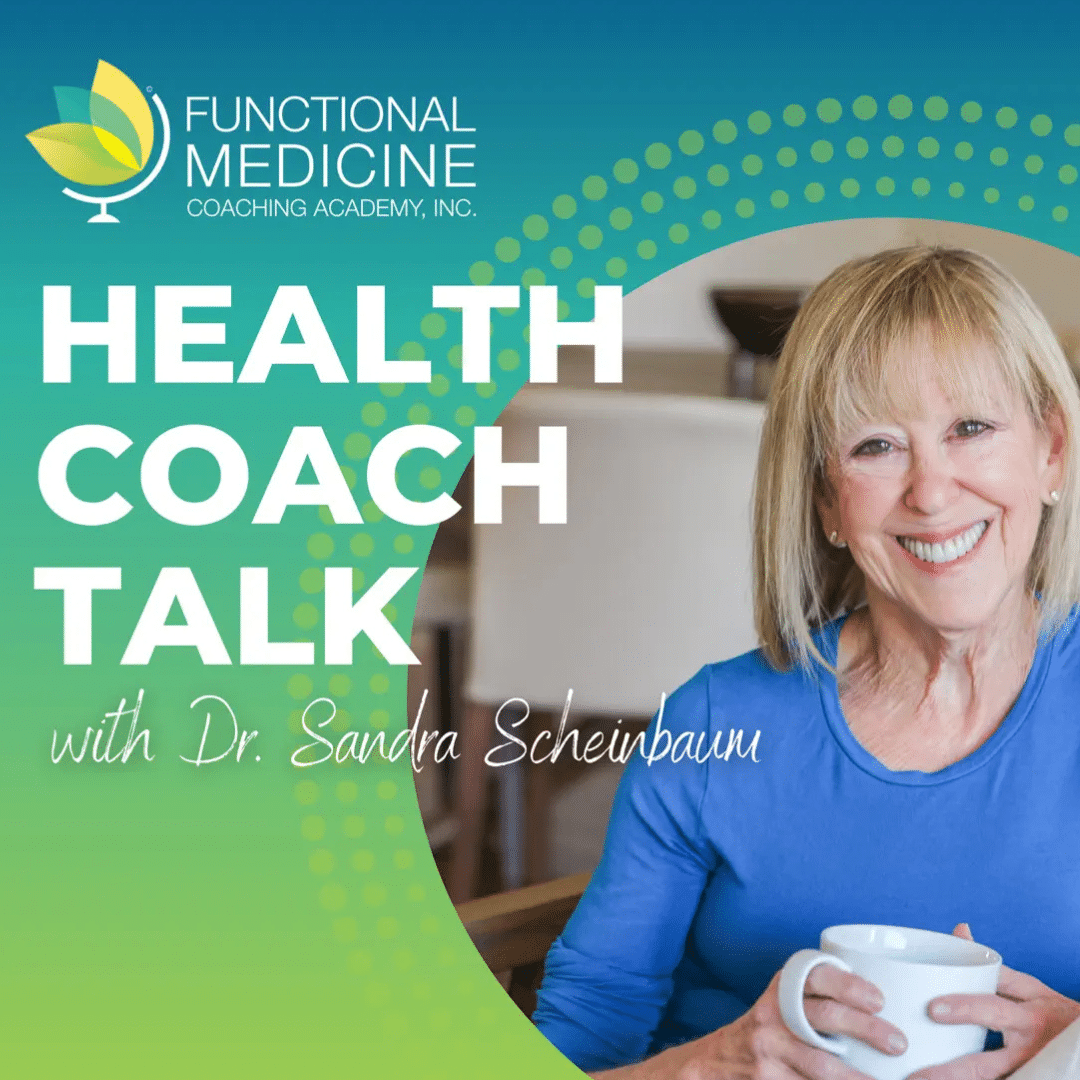
Celebrating 200 Episodes of Health Coach Talk: Our Top 10 Favorite Conversations
Read Full Article: Celebrating 200 Episodes of Health Coach Talk: Our Top 10 Favorite Conversations -
Labs, Supplements, and Legal Liability: Where Coaching Ends and Practicing Medicine Begins
Read Full Article: Labs, Supplements, and Legal Liability: Where Coaching Ends and Practicing Medicine Begins -
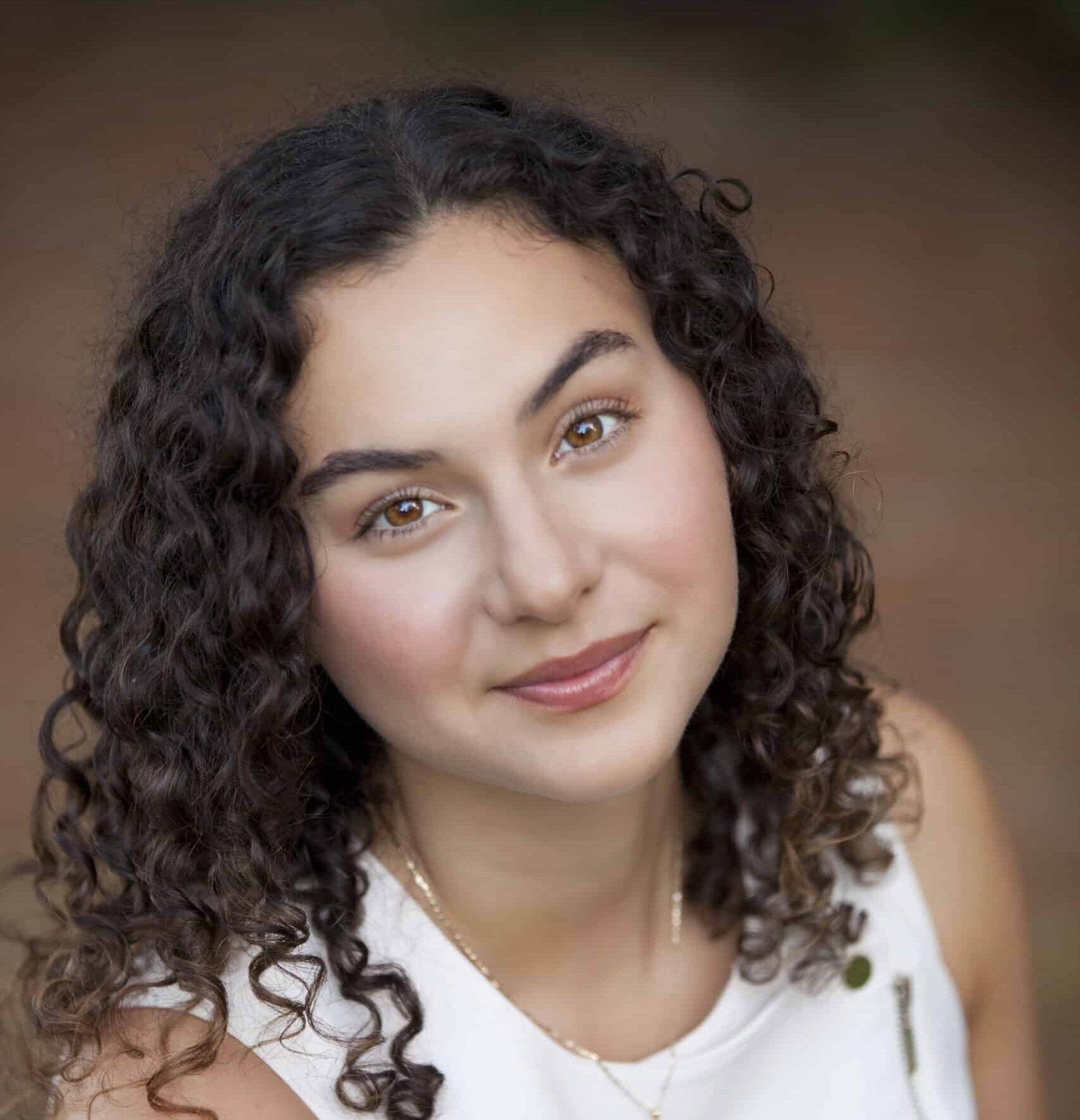
From College Student to Functional Health Coach: Maria Falcon, FMCHC
Read Full Article: From College Student to Functional Health Coach: Maria Falcon, FMCHC
