

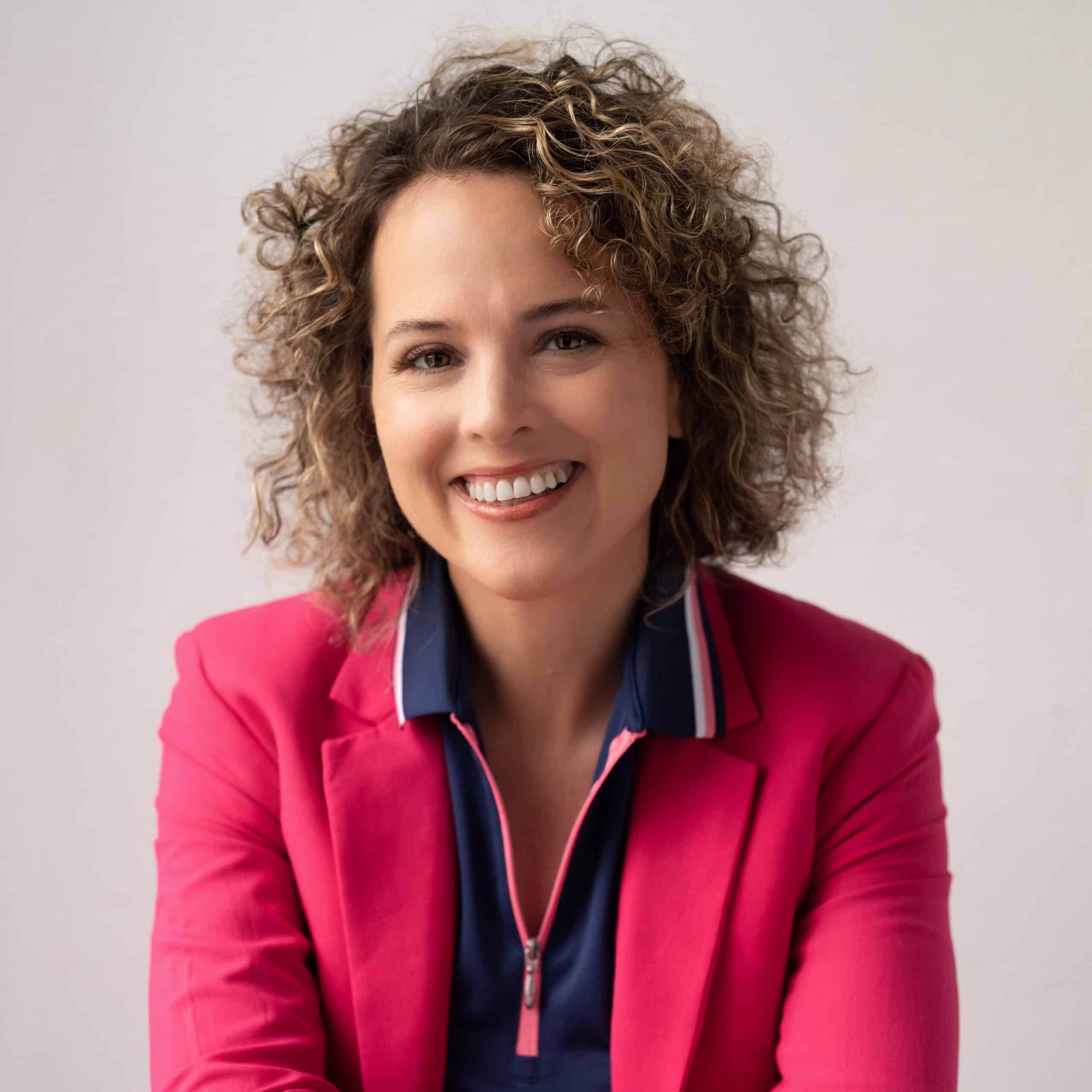
Dr. Kristi Hughes has spent more than 30 years as a naturopathic and functional medicine clinician, educator, and global thought leader. She served as IFM core faculty and as Director of Medical Education at the Institute for Functional Medicine for nearly a decade, teaching practitioners around the world the science and systems-based thinking behind functional medicine. Yet despite her extensive medical training and leadership, Dr. Hughes felt something essential was missing. When she discovered the Functional Medicine Coaching Academy, she was drawn to its emphasis on presence, mindfulness, and the art of the conversation. Experiencing coaching firsthand through FMCA transformed both her personal life and her clinical practice, revealing the depth of healing that becomes possible when clients are met with curiosity, compassion, and space for self-discovery.
“There’s just layers and layers of healing that don’t just come with the pills and the bottles and the labs and the charting. In my 30 years of experience in this field as a clinician, the real healing is actually what’s happening in the art of coaching.”
Dr. Kristi Hughes, FMCA Graduate
Today, Dr. Hughes weaves coaching into all aspects of her work, from consulting and education to immersive retreats on the Big Island of Hawaiʻi. Through group circles, time in nature, and intentional reflection, she helps participants reconnect with their values, resilience, and innate capacity to heal. She sees coaching as the bridge between medical insight and lasting transformation, and believes it is an irreplaceable part of the future of healthcare. As technology and artificial intelligence continue to advance, Dr. Hughes remains clear that healing will always require human connection. Coaching, she says, cannot be automated because the heart of healing lives in presence, relationship, and trust.
See Dr. Kristi Hughes’ FMCA Educator Page here.
Watch the Interview
Watch the full FMCA Alumni interview with Dr. Kristi to learn more about her inspiring journey:

Meet Kristi
Kristi Hughes, ND, IFMCP, FMCHC
Kristi Hughes, ND, IFMCP, FMCHC, has dedicated her career to root-cause medicine, with an early interest in nutrition and wellness inspired by her upbringing. She studied at the University of Minnesota – Duluth, the University of Western States, and graduated from the National College of Natural Medicine in Portland, Oregon. In 1997, she founded the Center of Natural Healing Arts and became Certified in Functional Medicine in 2015. To deepen her impact, she also became a Functional Medicine Health Coach after serving on the FMCA Advisory Board and Faculty.
Dr. Hughes owns DocereVita, her private practice in Mound, Minnesota, offering personalized naturopathic and functional medicine care, telemedicine coaching, and guided lifestyle workshops. For over two decades, she has traveled globally as a medical educator known for her engaging and practical teaching style. A passionate advocate for practitioner well-being, she promotes self-care, mindfulness, and purpose-driven living.
She spent a decade as Director of Medical Education at the Institute for Functional Medicine, developing educational tools, clinical resources, and implementation strategies. She continues to serve FMCA and has expanded her leadership through her role at NutriDyn as Chief Medical Education Officer, helping guide educational content and industry collaboration.
Connect
Transcript
Mahnaz: Welcome, everyone. I’m Mahnaz, FMCA’s international relations coordinator. Today, I’m interviewing Dr. Kristi Hughes, naturopathic and functional medicine practitioner. Dr. Kristi is a consultant, advisor, medical educator, and serves on various science boards for professional industry leaders. Dr. Hughes was IFM core faculty for AFMCP and advanced clinical facilitations. She served as a director of medical education at IFM for close to a decade, and for more than 25 years, her consulting business and participation in medical education events have taken her around the world, where she’s recognized for her skills in teaching the art and science.
Okay, welcome, Dr. Kristi Hughes. Thank you so much for making time with me today. I really appreciate you being here. And I thought I’ll just start off with one of my favorite quotes, and it’s by Dr. Patrick Hanaway, and it’s an article that he wrote. I’m just going to read this out because I think this just really gets everything set. “The functional medicine approach is done within the context of a therapeutic relationship. The role of connection, deep listening, reflection, presence, humility, vulnerability, trust, and gratitude are essential for healing to occur. The skills to assess a patient’s readiness to change and provide appropriate coaching are as important as understanding the underlying clinical imbalances and treating with the correct therapies.” I mean, when I read that, I just think this is coaching. So functional medicine is coaching. So I just want your thoughts on that.
Dr. Kristi: I agree completely. I think it’s one of the beautiful things that led to the emergence of the entire functional medicine paradigm, right? Because that was the beauty of the triad that was emerging, was this very unique way of engaging in conversation, right? Because what defines functional medicine is the conversation, how you’re taking the history, and the fact that you’re looking so carefully at this timeline story and looking at antecedents, triggers, and mediators. And that’s just sort of the one piece of the sort of technical ways that we engage in the conversation.
I think the other emerging factor on what made functional medicine so unique is that it’s built on a systems approach. It’s not just looking at pieces and parts. It’s really, like, pulling the whole human together into whole human wellness. And what you’re reflecting on when you say functional medicine is coaching, that is undoubtedly the third leg of the stool, right? Because it is about the art of the conversation. And what I love about functional medicine, it supersedes all other forms of healthcare in its acknowledgement, in my opinion, including naturopathic healthcare.
And that is that there is an art in connection and conversation, and functional medicine shines the light on the power of engaging the client-coach, the doctor-patient relationship, such that it is a co-creation experience that healing will emerge. It’s not just a doctor-dictator or an advising type of experience, or a lifestyle educator just telling you what to eat and telling you what to do and telling you how to sleep. It is the beauty, like you’ve just said, of the art of coaching and allowing for that piece to emerge.
Mahnaz: You know, it reminds me as well that, yes, the practitioners do the timeline, but so do the coaches. But they do it in such a different way.
Dr. Kristi: They do. And you know, that’s the thing that I love about the irony of you bringing a Patrick Hanaway quote in, is he was part of the inception of the entire FMCA model, right? And he was advocating himself inside of the medical model for the coaching and the art of this conversation to take place. And you are right, there is a distinct difference between how a physician trained in medicine is going to be leaning into that conversation compared to the art of coaching, because the coach is going to open up, use more open-ended questions. They’re going to really sit in that space. They’re going to really allow for emergence to happen. And they’re going to allow for the client or that person sitting on the other side of the screen or the desk to really arrive at their conclusions, where that’s not the natural art that’s happening in the medical exchange. And yet both are there helping support that individual moving forward in their journey. But the art of coaching and creating the space for coaching is so different because it allows for deeper depths of healing to take place in medicine.
Mahnaz: I think, you know, because as you’re describing it, I think to myself, is this why you got drawn to it? Is this why you actually decided, “I want to do this?” Because you did FMCA, and you’re a naturopathic doctor. You were the…I’m a little bit mind-blown because I think to myself, you were the medical director at IFM, a medical director for education at IFM for 10 years. And yet you decided you want to do FMCA. So it’s like, is it a fact that all of this, what you’re describing, is what actually drew you, is that you were naturally inclined towards it?
Dr. Kristi: Yeah. I think that the beauty of what FMCA had to offer, and getting to sit on the development team, some of the steering committees, to be able to recommend some of the first wave of curriculum and content that was finding its way in, right? We’re talking about 2015, ’16, ’17, ’18, right, the sort of emergence of this conversation, right? It’s kind of wild to think back. It’s been that long time, right? It’s been a 10-year window for growth for FMCA. But, like, even looking back at that time, one of the roles I had was the technical inclusion of what made functional medicine functional medicine. And the more I got to sit in the development space and come back to the advisory board meetings with FMCA and hear about how specific the techniques were, the strategies were, just the art and the skill that does not come natural when you’re trained in a doctor, dictator, or an advice-giving manner, that’s not intuitive.
That’s not natural for somebody who usually has to think a lot, be a decision-maker, find the right answers, and then be compressed to get there in the shortest window of time, which is the reality, even for a functional medicine doctor. So you’ve got patient after patient after patient. You’ve got people waiting for you. You’ve got charting. You’ve got technicalities. The art of the coaching conversation and the connection, it’s so tiny and shallow in the depth of the training that’s happening on the medical side of things.
So what I was seeing happening and emerging inside of Functional Medicine Coaching Academy’s development was not only the art but the mindfulness piece, and looking at how important these critical strategic elements are, and the balance of positive psychology with facing, like, head to head, really facing the reality that we also can’t lean in the direction of toxic positivity, right, where we’re just painting a golden light on everything and trying to cover it in a way that everything’s going to be fine. Because sometimes when you’re coaching a chronic disease patient or somebody who is really suffering, you can’t guarantee that things are already going to be just fine. But what you’re there to do is hold the space to help them find their way through it, right? It’s the developing resilience, being able to manage the stress response to the challenges that life brings.
And as much as we need to figure out root causes in a functional medicine, pathophysiology, biochemical hormone, you know, environmental medicine way, on the other side of that equation, we need to help people fall into rhythm and dance with their limbic system and their ability to do self-care and the art of self-regulation and giving them permission to know that they are worthy of their time and that inner work. There’s just layers and layers of healing that don’t just come with the pills and the bottles and the labs and the charting. The depth of healing, in my 30 years of experience in this field as a clinician, the real healing is actually what’s happening in the art of coaching.
And quite frankly, I didn’t get that experience myself in my naturopathic training, in all my nutrition training, in my nutrigenomics training, and in my functional medicine journey. I didn’t get that until I landed in FMCA, and I got to be on this side of the screen, and I got to sit in the coaching circle and appreciate what it felt like to be coached as much as learning how to coach. And I have to say, it transformed my life, and it radically, in every positive way, transformed my entire practice.
Mahnaz: Dr. Kristi, that is so beautiful to hear, and it speaks to your humility as well that you wanted to step into that because not everybody… I mean, I’m just thinking, I have conversations with potential students, okay, and they come into the call, and they express so much disappointment at not being able to be a practitioner. Like, I’m listening to everything you’re saying, and it’s giving me goosebumps. And I’m thinking to myself, they’ll say things, like, maybe, for example, maybe there was a time in their life, a dream that they had wanted to become a doctor or they had wanted to go down…or they feel that that’s the path they wanted to go down, but then it never ended up happening. And I often ask them, “Well, what was your ultimate aim? Like, what is it that you really want to do?” And they’ll say, “I just really want to help people.” And I’m like, “Well, if you really want to help people, that isn’t the only way.” It doesn’t mean you have to now spend years becoming the licensed professional, you know. Because now, I’m looking at, you know, I’m listening to everything you’ve just said. So, what would you say to that? Yeah, I’d like to hear a little bit more about that.
Dr. Kristi: I think let’s just start with the Latin word for doctor, which is docēre. And what does it mean to docēre? Docēre is the presence of being able to educate and inspire and teach someone. Docēre is teaching. To docēre is to teach and to bring somebody into an inspiration state where they can do something for themselves. And honestly, I don’t think that all of the doctors that we see today are docēre-ing, if that makes sense. They’re not teaching, they’re not educating, they’re not inspiring. They’re often telling people what to do, they’re giving them a prescription, they’re sending them to a pharmacy. And that’s just the reality. I mean, just, it is. That’s part of the reality of the world that we live in today.
And docēre-ing is really getting down to the art of healing. And quite frankly, I think that the art of coaching and giving yourself permission to have a coaching conversation is really where the healing begins. Because so much of what we can offer someone in transforming their life, transforming their health, getting them out of a pattern, getting them out of a chronic disease cycle, right? I am not talking about injury and surgery and acute infection. I mean, that sits over where it belongs. I’m talking about, like, the depths of healing. The longer I’m in this field, the more I recognize that it is really the looking inward. It’s self-regulating. It’s self-care. It’s getting into the weeds, getting into your roots, getting into the soil tending of your own tree of life. And it’s really giving people the tools and resources to nourish themselves, to nurture their roots, to bring sunlight in, to bring the right levels of hydration.
And it is so simple. And it is so hard. You know, it is the most simple concept ever. And the doctor is not trained to necessarily take people back to those unbelievably powerful principles where nature is medicine. Instead, they’re, like, reaching across the island to these levels of complexity and outside of ourselves, where there’s this tool or this molecule that’s going to make things happen. So I feel like there’s this beautiful blend. And honestly, I would love it if every doctor had to go through a docēre-ing coaching experience and learn how to coach before they ever landed in medicine, because some of them might stop there and say, “You know, I want to spend more of my time in trauma-based therapy,” or, “I want to help give my patients more mindfulness and breathing strategies,” or, “Maybe I want to teach people in my sphere how to move their bodies more and understand the difference from coming out of sedentary behaviors into movement, into developing fitness, and maybe becoming an athlete,” right? And these are just these beautiful spectrums of growth that we can bring people down.
Nature is medicine. Lifestyle medicine is really the foundation behind all the chronic diseases that walk in the door today in this mismatch with the environment. So if you’re looking through the lens of environmental care and you’re looking at the art of helping people get back to their basics with science and personalization and an understanding of what motivates them the most to get there, that is actually where the healing happens. And quite frankly, I observe so many coaches accomplishing more in their coaching relationship, changing people’s lives, and helping people heal, for truly a fraction of the cost and a fraction of the time that it takes to get all the way through 8 to 10 years of medical school, and a quarter to half a million dollars to get there. I mean, one year of your life can get you there.
Mahnaz: I know, I have to admit. I mean, I know I’ve had so many of my clients say to me, “You’ve helped me more than my doctor.” I mean, and that’s not saying anything against doctors, but it’s the fact that they found the transformation that they were looking for. And I’ve heard that time and again from coaching. What is it, then, what would you say it is that makes people feel that coaches don’t have that worth? Sometimes I wonder, is it that worth in society, or is it worth within themselves? Like, where do you think this comes from?
Dr. Kristi: No, I’m going to lean into both, because I think we are living in a society where we are rewarded for what happens above the neck. Meaning, like, what did you learn, what do you know, what is your knowledge, what is the degree, and how high did you climb the academic ladder, and how good were your grades? I mean, so much of the false imagery that we see of worth today is all above the neck. And really, healing and health and coaching, honestly, you’re going to reference what’s going on above the neck. But all that healing is below the neck. It’s like feeling, like having permission to feel again, and go into a feeling, and give it a name, and where does it sit, and what happens when I pull on it and I sit with it and I massage it and I love it. Like, what does that feeling take me on?
And in the coaching experience, that’s a guided journey inward. That is such worth, to be able to give people permission that their feelings are real, that their feelings are a message, that if you keep pulling and you go in deeper and deeper, and the coaching conversation offers that, you go in to find that, oh, that pain that you have under your rib cage that your doctor may have called a gallbladder issue, energetically and realistically, from a memory-based perspective, you know, you go down in there, and you’re looking at biliary output problems. Maybe there’s mycotoxins getting dumped and poured into your bloodstream, ending up going through your liver and to your gallbladder. But the energy that’s in there is so powerful.
Often, maybe it’s a bitterness that you’re sitting with or a suppressed anger, right? And it is manifesting itself, or it’s coming out in this interesting way. And you’re feeling pain and ache in your gallbladder and your liver. Because deep down, you are really angry and really bitter that you didn’t get to have a relationship with one of your parents when you were a child. And that’s the answer, right? And in the coaching conversation, what I think…
Mahnaz: That’s where it comes out.
Dr. Kristi: Right? That’s where it comes out.
Mahnaz: You know, so I do see parallels. Yeah, I see parallels, because there’s parallels between what the functional medicine practitioner does and what the health coach does. As in, it’s making those connections, you know, whether it’s the modifiable lifestyle factors, the systems biology. It’s all about the connections and the connection for the client in that moment.
Dr. Kristi: Yeah, I agree, totally. And I want to make sure that I really complete the thought about worth, because the client also is on that same journey that you’re coaching them to, which is to holographically find their own worth. And for the coach to know and own their worth in where they sit in this important dialogue and conversation, they’re a bridge. They’re almost like the secret sauce between the patient’s transformation success and the doctor’s decision-making and root cause approach, right? There is a space in the middle for the coach to be able to transform the doctor’s needs for that client with the actual client or their patients’ requirements to change what they’re doing and address those behaviors and find a new way of thinking and looking at themselves.
Self-worth works its way all the way through that entire spectrum of healing. And quite frankly, it isn’t only the coach that can better themselves from the coaching experience. I’m also really privileged to have gone through FMCA myself, and I advocate equally for the healthcare provider that feels like it’s not that you get bored with medicine. There’s always levels of depth and more pathways to learn and more labs to study. But you get to a certain point in your career and your maturation in healthcare where you’ve specialized so far, and then you really do come to realize the art of healing is in the conversation and being able to engage the patient.
And so, for the practitioner, who is also thinking about whether or not they should take a practitioner coaching course or program, that’s where the room for growth is. The more you mature as a healthcare provider, it’s by stepping away from all the pathways and the science and right back to what you said about Dr. Patrick Hanaway, saying the real evolution for the doctor is also in that space of learning how to be present, reflect, co-create this relationship with that patient to allow for insight and intuition to emerge. And the beauty is that’s where the coach gets to start.
Mahnaz: You know, bringing all of that together, I think you put that beautifully. I think there’s also… I think I’ll end with this aspect of when somebody has done the coaching program, and I’ll give you an example. Like, for example, when I’m giving feedback to students, and they are doing coaching, and they’ve done whether it’s their practical skills development or, you know, whatever. And I’ll say, “Hey, you missed the sunbeams.” Like, I call them sunbeams. It’s like, you have to catch what’s working for the client, catch the things that…you know, what did you have to affirm for them? What did you have to do to reconnect the client with what matters most? What brings them back to who they truly are and that ideal vision, and so on?
And inevitably, as we keep doing that, and we keep doing that, and we keep doing that, we change. We are constantly looking for all those positives. We’re looking for those sunbeams. And coaching is something we begin to embody. And it’s a journey that continues. It doesn’t even end because you’ve done FMCA. It’s like, this is something for life. Yeah, so I was just…
Dr. Kristi: I just love where you’re going with it. Because in my own experiences, it didn’t only change my practice experience with my patients and my team, but it also offered something different with every relationship that you’re in, right? Because one of the simple things that I took away from my journey in FMCA is I used to just dive right in and say, “Well, here’s what I would suggest. Here’s what I would do. Oh, well, for that problem, why don’t we do this?” And when I take off the doctor hat and I put on the coaching hat, and honestly, when I put on my partnership hat and I put on my mom hat, I found that my FMCA experience gave me the opportunity to pause a minute and change the way I lean into that feedback or comment and say, “Would you like to know what I think about that?” or, “I have had some experience in that area. Are you interested at all in hearing what I could offer you?”
It’s that permission, just stopping and pausing and asking permission before you move forward. And one of my deep coaches that I worked with for years, he was a professional speaking coach and really changed the way I communicated and gave feedback. He always had this strategy about, if you’re giving feedback to anyone, whether it’s a peer, a family member, a friend, a patient, a staff, if you’re going to give feedback to anyone, which coaching is often giving permission-based feedback and reflection and mirroring in response to open-ended conversations with them, he always used to say, feed it back in a tiny little teaspoon.
And TSP, the teaspoon that he always used to say was T, make sure whatever you’re going to say is truthful. S, be specific. Don’t be generic. Be as specific as you can about the insight that you want to deliver. And P, it’s your sunbeam, be positive. Make sure that as you are ending that conversation and you are supporting them in their growth and their journey, that what you have to say is building on the positivity of what they are doing right. It gives them the opportunity to know that you’re authentic and you mean it, that you’re speaking a level of truth, that you’re seeing them with a level of specificity, and that your goal is that the sunbeams continue to come in and pour into them so that they can pour out of them and they can continue to be the light in the world that they carry. So I love your sunbeam analogy, and I think it is one of the most beautiful aspects of coaching.
Mahnaz: And it’s something I’ve seen that what we’re doing now is beyond the actual practitioner part of it. And what you’re doing there, you’re docēre-ing as you’re giving all this education. But you’re also going beyond that as well. Doing these coaching and coaching retreats, it shows how much is possible.
Dr. Kristi: I love you’re shining…
Mahnaz: And what you’re choosing to do. What you’re choosing to do. Like, you’re actually choosing to go into coaching. I see it as that you seem to have…because I know I’ve experienced that with you, when I did Shaking Your Tree with you. And it was, like, you are choosing to go into the coaching aspect even more so, like, there’s a love and a passion for that.
Dr. Kristi: I love that you’re shining the light on that piece, and it just makes me smile deeply. Because when I came out of the coaching experience, I developed a program called Shaking Your Tree, which I ran in groups and is emerging into online trainings and such. And then what was beautiful is it dawned on me that even meeting with people once a week in Zoom wasn’t enough. And so my coaching emerged into a new program that is run as retreats. And so now I spend a whole week with patients and peers. Honestly, 80% of my retreats are nutritionists, coaches, and healthcare providers who come to spend a week with me, walking the talk together, yoga pants, no makeup, shoes off, feet on the grass, walking in the ocean, going to the volcano, zip lining together, living it, eating our meals together, mindfully spending our space together, going through the coaching activities, but literally doing it in nature.
And it is true, I emerged with a new program that I’ve been featuring retreats on the Big Island of Hawaii. I’m going into my second year of doing it. And so my coaching is now in retreat form. It’s five days, five nights, it’s food, it’s eating together, it’s circle time, and plenty of time to go reflect and work on your own story, your own timeline, and your own tree of life. And so it’s together, individual, time together, time for movement, time to eat, time to sleep, time to get up and share your thoughts, and to hold circle time and space for each other in a healthy, healing, coaching environment. And you’re right, it’s kind of fun to sort of step back and think after 30 years. I’ve ended up in circle time coaching people. And that is my most powerful space and connection to myself because I get to just show up and be me and hold the space for their emergence to come through. And the dynamic of coaching is what drives all of those programs. It’s not my doctor hat. It’s my coaching skills.
Mahnaz: As I’ve heard you mention before, we need more heart and compassion and community. I think I’ve heard you say that before.
Dr. Kristi: Yeah. I think we’re moving into an era of AI where, to some degree, a lot of the diagnostic work and a lot of the thinking and running algorithms of symptoms and patterns and labs, as hard as it is to hear and as sad as it is to say, I really do think we are going to be moving into an era where AI and medical AI is going to be taking on what used to be a doctor decision-making role. But what AI will never do, we have enough intelligence in medicine right now. We just need to organize it, and we need to sort our way through it. What AI can never do is hold that incredible space of connection, feeling, connect in that conversation, and really guiding and opening them to the next level. Like, coaching will never be replaced with AI.
Mahnaz: Yeah, absolutely. Yes, definitely. Thank you so much, Dr. Kristi. It’s been such a wonderful conversation with you. Yeah, beautiful coaching conversation, as they say. There’s communication. It’s always such a pleasure connecting with you, and our conversations always go really deep, and I enjoy every moment. So thank you so much for spending this time with us today. Thank you.
Dr. Kristi: Absolutely. Thank you for having me. And FMCA continues to be blessed by your presence. And as you know, I have deep connection to our international community. I love meeting so many coaches and graduates around the world as I travel and I teach. And if you’re ever anywhere, as you come through this program, please come find me and talk to me and let me know about your coaching experience.
Mahnaz: Yeah, I’m sure people will. We love you very much. And know that, you know, I always have been, from day one, always been inspired by you. And yeah, it’s always such a pleasure to connect with you. Thank you so much.
Our Latest Blogs
-

How to Find Your First Five Health Coaching Clients: Lessons from Certified Coaches
Read Full Article: How to Find Your First Five Health Coaching Clients: Lessons from Certified Coaches -
The Future of Weight Health: A Client-Centered Approach to Better Nutrition
Read Full Article: The Future of Weight Health: A Client-Centered Approach to Better Nutrition -

Celebrating FMCA’s March 2025 Graduates
Read Full Article: Celebrating FMCA’s March 2025 Graduates
