

On Wednesday, June 10th, FMCA hosted a special Ask the Expert webinar featuring Dr. Mark Young, CEO of Zona and a leader in preventive health innovation. With a background spanning entrepreneurship, clinical research, and functional medicine, Mark is known for translating complex cardiovascular science into practical tools people can actually use.
As the driving force behind Zona Plus, a clinically researched isometric device designed to support healthy blood pressure, Mark has been exploring how brief, consistent interventions can create meaningful physiological change. His work focuses on helping individuals build sustainable habits that support long-term health.
In this session, hosted by Dr. Sandra Scheinbaum, Mark breaks down the science behind isometric exercise and its impact on cardiovascular function. He explores how simple, consistent strategies can support metabolic and vascular health and how health coaches can guide clients in applying these tools in everyday life.
This conversation offers practical insights for health coaches looking to support clients with effective, realistic approaches to cardiovascular health.
In this webinar replay, you will learn:
- How health coaches can support cardiovascular health outcomes
- The role of simple, consistent interventions like isometric exercise
- Key links between metabolic and cardiovascular health
- Practical ways to help clients build sustainable habits
Watch the Replay
Supporting Cardiovascular Health: A Coaching Approach, With Dr. Mark Young:
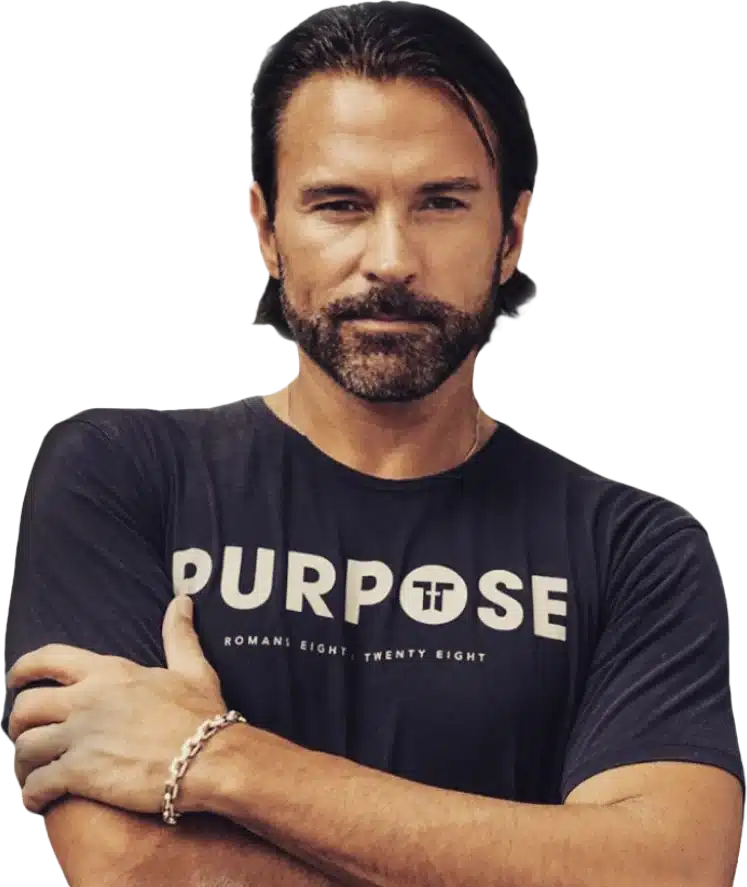
Mark Young is the CEO of Zona, the company behind the groundbreaking Zona Plus—a clinically researched isometric device designed to support cardiovascular health through brief, guided handgrip sessions. With a career spanning entrepreneurship, health innovation, and consumer education, Mark brings a rare blend of business leadership and science-first thinking to the rapidly evolving world of preventive health. His work focuses on bridging the gap between cutting-edge research and practical, real-world solutions that people can actually stick with.
In addition to leading Zona, Mark holds a PhD in Functional Medicine, where his research and clinical interests center on metabolic health, cardiovascular optimization, and the physiological systems that influence long-term resilience and longevity. He is known for translating complex science into clear, actionable insights—challenging outdated health narratives while remaining grounded in evidence. Whether he’s advising boards, educating consumers, or advancing clinical research, Mark’s mission is simple: empower people with smarter tools and better understanding so they can take meaningful ownership of their health.
Connect
Listen to Dr. Mark Young’s Episode of Health Coach Talk here: The Future fo Hypertension and Cardiovascular Care, With Mark Young
Special FMCA Zona Discount:
Zona is offering FMCA’s audience a $100 discount with promo code: FMCA100.
Go to https://zona.com/fmca100 to get your discount today.
Transcript
Dr. Sandi: I met Mark at a group. Over the years, we’ve gotten to know one another. We met at the Consumer Health Summit. And Mark is going to talk about how you can take charge of your blood pressure, talking about hypertension. And what he’s going to describe is the power of isometrics and in particular a device that can be very, very useful for getting control of your blood pressure. And again, if you have questions that come up, please use the Q&A, and we will make sure that as we get into the talk that we will respond to those questions as well.
So, take it away, Mark. You can tell everybody about your background and how you landed with Zona and what your mission is, and what you have seen as you have been with this company that is doing some revolutionary things in hypertension control.
Mark: Well, Sandi, thank you so much for the invite to be here. I’m super excited. I do have a presentation that I can walk folks through some stuff, but I want to actually start off and tell you I love Q&A, like love, love, love Q&A. That is my favorite thing in the world. So, I’m going to ask everybody to be interactive with me throughout this conversation because I’m, again, super excited to talk to you.
I am Mark Young. I am a venture capitalist who spends time doing all sorts of crazy stuff, to be honest with you, but I love the business of health and wellness predominantly because there’s so much going on in this health and wellness space that I will say that I think the last few years have led everybody on this journey of discovery. And I hate to say this, but a lot of it has been a journey of suspicion. People have been in this thing where we believed everything that was going on in the medical establishment. And then all of a sudden, that question mark has shown up multiple times. And I say that if anything good came of COVID, it was people realizing that the necessities of taking care of their own health. And it doesn’t matter what side you fall on that conversation. The truth of the matter is everybody, I think, landed in the same place. And that is my health is my responsibility, and what I ingest, what I use, what I eat, what I let myself environmentally be exposed to is 100% my decision. And I get to do that.
So, I love that. I love working with people that are in this space. And as Sandi said, my journey led me to be involved with a company called Zona Health, which is just zona.com. And what’s interesting is we all have this journey. And I laughingly say that I was not the healthiest person when I was younger. I didn’t really know too much about health. I focused in entirely other areas. My background was actually in business as well as psychology, which I absolutely loved. I worked as a college professor, also as a clinical therapist for years. And then got on this health journey, funny enough, ended up getting associated with a company called Zona, and then later earned my own PhD in functional medicine. So, I say that I work with businesses in health and wellness, but I speak your language, and that really gets me excited. And I probably need to do a hundred certification courses here through Sandi as well.
But what I loved recently… And I want to start and give credit to Sandi Scheinbaum here, because we did a podcast not too long ago. And what I loved was my conversation is always about isometrics, which is probably the most counterintuitive conversation that can possibly be had in the world of cardiovascular disease. Because when it comes to hypertension or high blood pressure or anything of the like, the reality is there’s a very — and I intentionally use the word — prescribed solution for hypertension. You go to the doctor’s office, your blood pressure is reading higher than it should be. What is the standard of care is immediately a prescription for an antihypertensive medication.
Now, in some cases, that’s a great idea because if your blood pressure is dangerously high, it needs to be brought under control. My opinion — and it has been for many years, and every time I get to lecture on this topic, this is my starting point — is that hypertension itself is a symptom of a deeper problem. And yet, we treat hypertension as if it is the problem itself. And I’m going to arguably say that by “fixing,” and I air quote that for those of you with visuals there…it’s kind of weird that I can only see me. But with air quotes, I say, “fix the problem” in so much as we mask the symptom.
And not only does it cause us problems because we all of a sudden have a reduced blood pressure, which we believe is the ultimate goal, the problem is we never really ferreted out what was causing that to begin with, which means we didn’t change behavior. We didn’t change habits. We didn’t dig deeper into our own physiology to find what else is going on that would lead us into this hypertensive state.
Because of that, I will say that we end up with fixing a blood pressure problem. And then we end up with comorbidities that we didn’t treat as comorbidities. We treated them as entirely different disease states. And now, we’re trying to fight two enemies because we stopped believing that those two things were in any way related.
That being said, what do we do? In the podcast I had with Sandi, the conversation actually was quite brilliant because as I’m talking about the science of isometrics, which we’ll unpack in a moment, Sandi starts telling me, she’s like, oh my gosh, you’re saying what I was teaching back in the ’70s and ’80s. You’re literally saying what I was trying to tell people back then. And I’m like, well, you’re ahead of your time here, Sandi. You knew the answers before the rest of us.
But isometrics really hit a peak back in the ’70s and ’80s. And I would say it ran a ramp for a while, but like most things, they end up fadding out of popular…I will say pop culture, if you will. But then the next thing is the Atkins Diet, right? The Atkins Diet also became a big thing around that same time. But then it went away. And then all of a sudden, somebody came up with the carnivore diet years later. It’s the same thing, folks. Then we came up with keto, and then we came up with paleo and then all of these things. It’s all the same. It’s all the same stuff. It’s a high-protein, low-carb diet. We get it. And there’s modifications on there, too, but you get my point.
But isometrics, specifically, I want to talk through how isometrics itself affects the physiology of the human body and how that relates to blood pressure specifically. Isometrics, to unpack that, it is obviously the literal translation of equal measurement. And the metaphor that I use, the explanation is that isometrics is the equivalent of, for instance, a plank. We’re familiar with doing sit-ups, and planks have also become a bigger thing in recent time. But we’re familiar with the concentric movement of the up of a sit-up. We’re familiar with the eccentric movement of the down of a sit-up. There’s the contraction of a muscle group. And then there’s the extension of a muscle group.
With isometrics, there is a static hold of a muscle group, and there’s several different physiological activations that take place during that isometric. And what’s little known is I call it the OG of biohacks. Because by doing an isometric, we are triggering multiple other systems in the body to do something else that we didn’t necessarily intend. But once we are able to look through the cause and the effect, I can now deliver the input for the intended output. Input, isometric exercise. I do a wall sit. I do a plank. I do some kind of squat hold. All of that is isometrics because I am taking a major muscle group, and I am holding it at a static resistance. Nowadays, a lot of this is done in yoga and Pilates. Very similar activation method.
What happens when a muscle group is held at a static resistance level? And I’m going to talk about three specific activations. The first one is going to be, when you are held at a static resistance level, you trigger nitric oxide production. Well, I’m certain everybody on here has heard of nitric oxide, the NO2 molecule. And nitric oxide is actually the most powerful vasodilator in the human body. So, when we end up increasing nitric oxide production, the way that that happens is a survival technique. When an isometric hold takes place, you’re uncomfortable. Anybody who’s done a plank for longer than 30 seconds knows exactly what I’m talking about. It is an uncomfortable position.
When you’re actually doing this isometric hold, though, your body recognizes at a subconscious level that something is wrong. Our prehistoric man, if you will, realizes that this isn’t normal, this isn’t comfortable. And the body always moves towards comfort. If I cross my leg and my leg starts to fall asleep, I almost subconsciously switch legs because your body doesn’t like being uncomfortable. When we hold ourselves in that static resistance, at a subconscious level, the body flips into that sympathetic nervous system because it triggers a fight or flight response out of the brain. The body is in danger. Something is uncomfortable. I need to make sure that I can survive.
When the brain flips to that fight or flight, that sympathetic nervous system, it releases nitric oxide. And the reason it releases nitric oxide in an evolutionary way is because nitric oxide increases vasodilation. Vasodilation provides blood flow to all of the major systems of the body, every area of the body. And because that nitric oxide is flowing to other areas of the body, all your cardiovascular system dilates, providing greater blood flow, which allows your body for a greater survival response.
When that plank ends…and most people aim towards a two-minute plank. When that plank ends, your body’s able to downregulate back to a parasympathetic state. Your brain, that lizard brain knows you’re not trying to be killed. It goes back to normal. Everything is fine. That’s the first physiological activation that takes place during isometrics. So, anyone who’s dealing with high blood pressure, I strongly encourage isometrics.
The second thing that happens during isometric exercise is actually a potassium release at a cellular level, which I find fascinating. And I say, this is the real combo shot to the corner pocket here. And it’s not about hitting the cue ball. It’s not about hitting the ball that goes in the pocket. It’s about hitting the cue ball to the ball that hits the ball that goes in the pocket, right?
What we’re talking about here is that, also, ball and muscle group is being held at a static resistance level. That static resistance is actually causing a sodium release to be released at a cellular level in the body. That sodium release at a cellular level is actually causing a potassium release as well, because sodium and potassium must always remain at a balance at a cellular level. As those two things start to move, you end up with sodium being released to stop muscle cramping and potassium gets released simply to keep it a balance. But when potassium releases, it actually conditions the endothelium, which is the lining of the cardiovascular system.
When blood pressure is high for, I’ll say, age-related hypertension, what usually is happening is the endothelium, which is like a spongy type substance…it’s like a dry sponge. Imagine that sponge loses its flexibility, and it can’t actually expand and contract the way it is. But that endothelium also functions as a sensor to the body so that if the endothelium doesn’t feel the pressure, it doesn’t expand. When the endothelium is in that dried sponge state, literally, it can’t feel the pressure, and because it can’t feel the pressure, it doesn’t respond to it. When potassium starts to move through that endothelium over time, what ends up happening is that endothelium begins to soften and that endothelium, as it softens, ends up becoming more flexible. But more so than just being flexible, it starts to sense the pressure and automatically dilate. You’re literally reversing age on your cardiovascular system.
And then the third thing that happens…and interestingly enough, I actually have a paper here that I’m going to share my screen, if that’s okay here, Sandi. This is actually a white paper that I’d written last year on this topic because this is kind of a different sort of thing that’s going on in the cardiovascular space. Some of you may be familiar with the creation…the discovery of what’s called the glycocalyx. And the glycocalyx is actually like a sugar layer inside this endothelium. And this is what we refer to as shear stress. And that is when the body is held at an isometric level, it constricts blood flow. And when that isometric is released, all of this blood begins to move in a very forceful way. And that layer, which is like a bunch of small fibers, like hairy fibers on the inside, senses the pressure at which the blood is flowing, and they call that shear stress. And the glycocalyx is actually what is telling the endothelium to respond. So, what’s happening here is you’re also creating a glycocalyx response.
All of this to get me here. And again, I’m racing through here, and I’d love stopping for questions, but tell me if there are any. But Sandi specifically mentioned this company called zona.com that I get to work with. And I’ll fill you in on this because Zona is, as we’ve just discussed, isometrics. Zona is a medical device that actually guides people through the perfect isometric.
If you’ve been to a gym, especially HIIT training — I do HIIT training — and it’s like you watch people do planks and it kind of cracks me up because you’ll see people do planks and all of a sudden their butt’s in the air and they’re fidgeting to the left and they’re fidgeting to the right. They’re on their hands, then they’re on their elbows. And it’s like, their thought is, as long as my abs are tight, I must be doing a plank correctly, when in fact, that’s not the case at all because in order for an exercise to be isometric, it must be equal measurement. Remember that definition. It doesn’t mean close to about the same resistance. It’s equal resistance throughout.
What Zona does is it actually helps guide the person through that isometric, not doing a plank because let’s face it, many adults wouldn’t be able to do a two-minute plank, particularly elderly people. What Zona does is it replicates the exact same exercise as you would be getting in that way, just using grip strength. Now, I won’t go off on a diatribe here about grip strength because many of you realize that grip strength is actually one of the indicators of longevity. So, the stronger a person’s hand grip, the longer they live. And a lot of people, we’ve speculated as to why that is such a statistic, because no one’s actually proven why. My hypothesis is that it’s exactly related to this, and that is grip strength actually is determining cardiovascular health. And cardiovascular health is one of the greatest causes of death in the United States, as well as worldwide.
That being said, how does Zona do this? Zona actually works on a few different levels. One is going to be this isometrics. And our company actually developed back in 1995. This was all based on research that was done by a doctor by the name of Ron Wiley. He was actually hired to work with the U.S. Air Force. And while working with the U.S. Air Force, the intention was to figure out why fighter pilots would go into what’s called G-Force blackout.
Now, G-Force blackout takes place when a fighter pilot actually squeezes the joystick on a fighter plane. And as they’re moving into Mach speeds, their blood pressure drops significantly. What they ended up discovering during that period of time was that all of the people who were participants in the study ended up with lower blood pressure. They’re like, wait, what happened? Why is this so not what we were studying, but so informative?
So, they ended up going back into a situation, and Ron Wiley ended up going and taking this data from the Air Force after he finished his work with them, and started doing research in this direction, and discovered this power of isometrics and its effect on blood pressure overall. He did all this research back through the late ’80s and early ’90s, ended up founding a company called MD Systems back in 1995, which later turned into Zona Health.
As you can see from this screen, Zona has had a super interesting history because the world, just like Sandi talking about isometrics back in the ’70s and ’80s, the world wasn’t ready to hear this connection, which means, throughout multiple deals here, we have tried to go to FDA protocols. We have tried to do everything without…that we can do to market a product like this. The reality is, the standard of care is a pill and we are marketing against a pill. And that’s so hard to do because the pill is approved. The pill is standard of care. The pill doesn’t get to the root cause of the high blood pressure.
When we’re talking about an isometric device, we’re talking about a relaunch. And we are currently about 100 out of 120 patients deep into our FDA clinical trial, our second clinical trial, because one of them…the first one was crashed by COVID, but the second clinical trial, and we’re super excited to get through there because we’re hoping to prove to the world that there is a better way of doing things that just uses your body’s own innate intelligence to move forward.
Here’s the reality. Hypertension affects 120 million Americans. That is over 45%, one in…four out of nine adults have hypertension. And that’s only the ones who were diagnosed. This is still the leading cause of mortality in adults nationwide. Some of the deals that are going on because of this, the financial burden, $130 billion industry is being lost in high blood pressure. This is literally just the cost of healthcare to employers and insurance companies because of cardiovascular related issues. The number one cause of death in the United States, as well as worldwide, and the treatment gap is that there are 70 million people who are resistant to medication. They have been put onto medication and they don’t respond to it. And because they don’t respond to it, there is no additional answer to them.
Now, we’ve heard all the fallacies about, well, you know, you need to go on a low-sodium diet. And then the answer to low sodium in my book is BS because what we’ve done is we’ve gone from you have high blood pressure to now you are mineral deficient. The problem is that…there was a study that was done back in the ’60s that actually demonstrated that people who were diagnosed with high blood pressure also had high sodium levels. What they didn’t know back during that study is that the people who had the high sodium levels and the high blood pressure, because they both existed, they mistook correlation with causation. And yet, every single person who was later debunked in that story also had high sugar intake.
And the metaphor I use here is if anybody who does any kind of cooking, if you make spaghetti sauce and it’s too sweet, you throw in a little salt. If you make it and it’s too salty, you throw in a little bit of sugar because sugar and salt balance each other. But high levels of sodium in the body only exist to counteract high level of sugar in the body. Because if your body does not have too much glucose or your body does not have too much raw processed sugar moving around its body, the reality is you’re never going to have high sodium levels because your body will expel it through urine.
If you do have high levels of sugar or glucose in your body, by the way, the best way to deal with that, as I’m sure you know, is actually through exercise because muscle is like a dump truck for glucose. It will metabolize glucose in a minute. We just need to make sure that we’re providing that. But clearly, there is a gap in the treatment here because 70 million people don’t have a better answer, and the wives’ tales are not getting the job done.
Cardiovascular issues, obviously, 17.9 million deaths each year. That’s 32% of all global deaths worldwide every single year, 32% are to the exact same reason. And yet, I would arguably say that the medical community thinks we have this figured out. It’s like, well, we clearly don’t because 32% of all deaths in the world are happening because of this problem. And yet, we’re treating it as if the problem’s already solved. Sorry, I get fired up about this part.
The health management challenges. There is not a good treatment plan for hypertension, and it’s leading to multiple other issues or being caused by them. Some of them being…I’ll just give an example and say, people who are diabetic typically end up with a comorbidity of hypertension. Well, the problem is we’re treating diabetes with Ozempic, and then we’re treating high blood pressure with an antihypertensive of some sort rather than dealing with the root cause problem of obesity or diet or exercise or nutrition or any of these other gaps. We’re going directly into how do we medicate a problem, and we’re causing the bigger problem.
Market gap, obviously, there’s tons of related things to talk through here, but blood pressure does not exist in a particular group of people. Typically, hypertension becomes an age-related thing and that’s all related to that endothelial function as we age, but it can be reversed. That’s the amazing part about it.
And then talking through what is that issue, well, it kind of balances out at 39% Hispanic, but 56% Black, non-Hispanic. So, high blood pressure actually also has a racial predisposition to it, but all something that we need to pay attention to.
The solution that we always provide here is the Zona Plus. And again, I mentioned this already, the way that Zona activates is by dealing with this isometric conversation. The user, for a two-minute period of time, grips the device, and in gripping the device, they hold it. It calibrates it each use. And during the calibration stage, it actually measures what we call your maximum voluntary contraction, which is your grip strength. You squeeze it as hard as you can, and then it calculates internally an algorithm and says, this is exactly where you should be when you use this. The person holds the device for two minutes at that static resistance level, that isometric resistance level. And the device itself will actually give you visual and auditory cues if you even slack a little bit outside of the ideal range.
Imagine it’s like doing that plank, but your trainer is standing right there, and every time you fidget, he kind of kicks you a little bit back into place. The exact same thing. So, using visual and auditory cues, we hold the person at exactly that two-minute range.
During that two minutes, what’s happening? Everything we already discussed. It is the nitric oxide production that’s taking place from that survival tactic, that parasympathetic to sympathetic nervous system response. It is the potassium and sodium release at a cellular level that is moving through that endothelium. And then also at the two-minute release of the exercise, it is that shear stress that’s moving across the glycocalyx as the device itself, when you release, everyone who uses it, especially for the first time, shakes their hand out because that resistance not only puts stress on the muscle, but it also causes a blood stoppage momentarily. You’re actually causing a constriction, which is constricting blood flow as well. They’re shaking it back into their hands. After that two minutes, you wait one minute, let your body nervous system downregulate to a parasympathetic nervous system. You do it again on your left hand. Then you go back into that sympathetic response. You go back to your parasympathetic.
We actually have a pretty intelligent group here because I know that the level of training that all of you have been to. And what I would arguably say there is, I don’t have data on it, but we’ve actually worked with organizations such as HeartMath to explain that this actually helps vagal conditioning, vagal tone, because the vagus nerve is actually what’s getting triggered in all of this as well. So, moving from that sympathetic to parasympathetic, sympathetic, parasympathetic, you’re actually training your body to understand how to downregulate naturally. So, we actually notice incredible results out of vagus nerve tone as well.
What we’re looking at here, how does the Zona work? Again, it’s guiding you through personalized isometric hand grip exercises. It calibrates to every user’s grip strength, which means anybody who’s using it can use it for the first time. And one device actually works for several people. Now, the device from a data standpoint holds two people’s data for up to 18 months. And you can upload that data onto our BP charting web app, which actually will store all of your results over time, and will help you overlay blood pressure measurements so that you can actually see, the more you use the device, where the blood pressure goes.
Anecdotally, I will say that, actually, my dad has ended up having an AFib situation months ago. And when that happened, we were like, oh, okay, that’s a problem. What’s going on here? His blood pressure was high. He immediately took action because that’s who he is. He started using his Zona. He started dealing with diet and exercise, but during a period of time, he went on anti-hypertensives as much as he likes staying off of medication. He went on anti-hypertensives to keep all that happening.
He called me over the weekend because he actually does…he race car drives on the weekends. Kind of funny. And when he was racing, he texted me over the weekend and was like, man, I just got out of the car and got really lightheaded. I don’t know what’s going on. It happened to him at home the other day. And he was super lightheaded. And he’s like…he called me today and he’s like, oh, I figured out what the problem was. I took my blood pressure after I got up and it was like 85 over 50. I’m like, oh, my gosh, that’s terrible. And he’s like, yeah. And I’m like, you realize that you’re still on the hypertension medication. You solved the real problem, but you’re still taking the meds. And he’s like, oh, my gosh, yeah, that’s exactly it. I’m going to start titrating off a little bit and see. I’m going to have to go talk to the doctor and get that reregulated. Because this is all taking place in a cycle, but it’s fixing the root cause problem.
We’ve had studies done by McMaster’s University, the Mayo Clinic, American Physiological Society, Johns Hopkins University, the Harvard Heart Letter, you name it. We’ve been doing this for a really long time and have thousands and thousands of people who have used this device, used it as a science, clinical trials like you wouldn’t believe. Unfortunately, none of that is enough for the FDA to say, yeah, this makes sense. We actually ended up having to spend millions of dollars to go through the FDA clinical trial. And then at the end of the FDA clinical trial, we ended up having to prove our point statistically, which I have no concerns that we will because of the repositories of data that we have already on hand.
Some of the promising trends that we’re seeing in healthcare right now is the Zona is used and isometrics in general, actually. But what we’re seeing in healthcare, and again, as I mentioned, especially over the last, I’d say, five years, has been this earlier hypertension treatment. We are jumping in when people get this diagnosis because if 34% of the world, the deaths recorded, rather, of the world, 34% of all of the deaths are related to cardiovascular issues, we need to be on top of that. We’ve got a rise in therapeutic tools and biohacking devices. Tech in the healthcare field is higher than it’s ever been before. Alternative medicine and functional medicine is getting a seat at the table, I’d argue, finally. And then we’re also seeing a lot of proactive and preventative care. The truth is, when it relates to this stuff, there’s a bunch of alternatives out there, but none of them as effective as using your body’s own innate intelligence to solve its own problems.
Dr. Sandi: I love that slide. And so, I just wanted to pop in because what that prior slide is really just showing the need for health coaches, that health coaches can be front and center in helping people find root causes. We have a question coming in about that. Earlier treatment, as well as guiding people with diet and lifestyle intervention. And you mentioned the podcast. And we did talk about the fact that the power of isometrics, and I wanted to share that I was doing this work in the ’70s, as you said, and ’80s. And it comes from a book that was written in 1920. It was called “Progressive Muscle Relaxation” by Dr. Edmund Jacobson at the University of Chicago. And these were very simple exercises, but basically it’s the same idea. You tense and you hold that tension, and then you release it. And the release is where the magic happens.
So, I want to get into…we have a number of questions. And so, I wanted to make sure that we are able to address all of your questions. So, I can pull that up. And I don’t know if you can see that, Mark. You can pull up those questions. Can you see the questions on your Q&A?
Mark: I’m in the chat.
Dr. Sandi: It’s not in the chat. It’s Q&A on the bottom.
Mark: I don’t have a Q&A button.
Dr. Sandi: You don’t. Okay. Well, let me read them then. The first one…
Mark: Oh, I see it. I’m sorry. It was hidden under the more button.
Dr. Sandi: Okay.
Mark: Now wonder I’m falling behind here, Sandi.
Dr. Sandi: Each system is a little different. Well, first, before we start, I have my Zona right here.
Mark: I love it.
Dr. Sandi: Yeah. And this is something that is very simple to do in terms of just you get a first reading of your grip strength and then you hold it. And I find it very meditative because it forces me to just be still for this period of time. And you do your left hand, your right hand, alternating. And so, this is something that people can… As health coaches, you can educate your clients about the whole range of devices. And before we get to the question, I just wanted to ask you about wall sitting because I had read a report that something…which is really great for so many reasons, but just doing that wall squat where you’re imagining you’re sitting in a chair against the wall. And is that effective? I saw that there were some data showing that that could be effective for hypertension.
Mark: Yeah. The truth is, and the answer to that is yes. And that’s why I think that Pilates and even certain types of yoga are really good in this because anything that requires that static level and anybody who’s done a wall sit is like, ah, no big deal, no big deal, no big deal. Thirty seconds in, your quads are on fire and you’re like, oh, and you start to slide up and down the wall a little bit. It’s like the problem is, as you’re sliding up and down that wall, you’re actually releasing the contraction and then contracting again. You’ve turned an isometric into a concentric and eccentric movement. You’ve gone from an anaerobic exercise to an aerobic exercise and you end up…you still get the benefit to muscle growth. You lose all of the benefit of the anaerobics though.
Dr. Sandi: Good point. Yeah. I aim for two minutes. I worked up to two minutes, but I’ll just put on a great song and just hold it till the end of that song.
Mark: The best.
Dr. Sandi: So, Karen writes, can you let us know if this is true? Please expand the feedback. Studies have found that having uncontrolled high blood pressure in midlife significantly increases the risk of cognitive decline and dementia later in life.
Mark: Yeah. I’m going to jump in on that one and tell you, yes, but there’s a cause and effect here. And that is, it’s not that one is comorbid with the other. It’s that, literally, it’s a causation. And that is any time that your body’s experiencing hypertension on an ongoing basis, as you’re saying, and uncontrolled, you’re significantly increasing comorbidity for all kinds of disease in the body. Because think about it in the terms of pressure only builds when there’s less space. So, velocity builds up behind it. And that is, if you only have 10 centimeters…obviously, that number is not accurate for blood flow. But if I have a 10-centimeter opening, but I have 12 centimeters worth of pressure moving through, the pressure is greater because there’s more flowing through than need be. And you get that bottleneck, if you will, in the blood flow.
Any time blood can’t freely flow, the entire body is being oxygen deprived, including the brain. So, what’s ending up happening? You’re ending up with systemic issues all over the body because…we use the phrase, health goes where blood flows. And that’s true of everywhere, not just the brain. But you are correct that if you end up literally causing damage to the brain through lack of oxygenation throughout your 40s to 65, the answer is, yes. And treating hypertension and making sure that blood is flowing freely through your body is absolutely accurate and essential.
Dr. Sandi: Thank you. Great response. Sandy says, from a coaching perspective, when working with clients wanting to reduce blood pressure, how would you weigh root causes? It could be many. You bring in isometrics, nervous system regulation, stress, gut dysbiosis, nutrient deficiencies, etc. Is there one possible trigger, bigger trigger than the others, or is it based on individual overall diet, nutrition, et cetera, leading to these issues?
Mark: The answer to that, Sandy, is going to be yes. And it is a A, B, C, D, or E, all of the above. And the answer is all of the above. And as I mentioned earlier…I want to point out in this question, and it may not be true for you, but I see the possibility of a misunderstanding here. And that is, when we talk about working with clients who want to reduce high blood pressure, we’re assuming that high blood pressure is a single state, where, as I mentioned, it’s a symptom of a different problem.
So, if blood pressure goes high, it could be a nutrition problem. It could be a nervous system problem. It could be a blood chemistry problem. It could be a nitric oxide depletion problem. I mean, there’s so many different reasons. And yet, we look at the numbers from a blood pressure reading and say, oh, it’s high blood pressure. And my answer is no. That’s like saying I’m having a headache. Well, what’s causing the headache? I don’t know. Let’s get deeper. I mean, for all I know, it’s just because you had a terrible day at work. It may not be a physiological thing at all. It could just be stress hormones that are leading in that direction.
So, to your answer there, to your question, Sandy, the answer in there is, yes, all of those things, diet, nutrition, gut regulation, exercise, movement, mental health, meditation, all of that stuff is important. But I would be very careful to try to treat high blood pressure as a treat. And let me fix that word. I’m going to get the FDA hand slap here. When you’re coaching someone into a better lifestyle, trying to reduce blood pressure, I would say I would do so in a very multifaceted omnichannel approach to doing so. So, again, my answer to that is, yes.
Dr. Sandi: Yes. Absolutely. And I would say that as well. And also, I would keep in mind that this is personalized. So, where is this person willing to start? Maybe they’ll say, oh, yeah, I can do this isometric exercise, but they won’t touch diet or do anything more in terms of an exercise plan or deal with their stress. So, where do they want to start? And then you would reinforce that. I also want to say that it’s really critical as a coach, if you’re seeing people are…you would always inform their provider about what you’re about to do and what you are doing. And if you’re seeing positive changes because they might be overdosed on the medication. So, this is one where you really need to collaborate with the provider.
Mark: And that was the story…I want to just piggyback there. That’s the story of my dad. The blood pressure was high. The medication was great as an intervention. But once he solved the problem, the medication became a complication, and the provider needs to know that.
Dr. Sandi: Yes, absolutely. And same with somebody wanting to go off cold turkey. That’s where you would also really work with the provider. Okay. Laurie Jean says, does working on grip strength with Zona Plus provide the same level of benefits as whole body isometrics like planks?
Mark: The answer to that is yes, because the isometric benefit that we’ve talked about is not muscle strength. So, if you’re doing a plank, you’re getting better abs. I’ll give you that. But if you’re doing Zona, you’re getting the secondary benefit of grip strength. So, the way that you exercise, if you’re doing a plank versus a wall sit, well, the plank is going to really focus on my abs being contracted. So, it’s going to help core strength. The wall sit is going to help my quadriceps grow. But all of these things, whether it’s hand grip, wall sits, isometric planks, all of it is giving you the benefit of the isometric exercise. But the secondary benefit of abs versus quads versus hand grip. The secondary benefit changes, but the primary benefit stays the same.
Dr. Sandi: Awesome. Okay. Rob is asking. He had an InBody test recently. How does Zona compare to the InBody, which is measuring weight, BMI, and skeletal muscle mass? So, how much feedback are you provided compared to the InBody?
Mark: The answer is none. And the comparison that I want to make there is an InBody is a measurement tool. So, InBody, as you stand on it, it’s like a scale that looks like you’re holding onto ski poles. And what you’re doing is it’s actually better measuring body composition. InBody is a measurement tool. Zona is actually the exercise tool. So, to draw the comparison, it would be like a scale and a treadmill. You’re doing the exercise on the treadmill. You’re measuring the results on a scale. Much the way with Zona, you’re doing the exercise using the Zona device. You’re measuring its impact using a blood pressure cuff. So, it’s apples and oranges there, Rob. Sorry.
Dr. Sandi: Gotcha. All right. Laurie Jean. Any evidence that Zona can help someone who’s had prior MI, myocardial infarction?
Mark: So, the answer to that is…and I’m going to give you anecdotal rather than clinical evidence on that. And I’m going to say, during our first stage of research that I had mentioned to you back in 2020 and a little bit further beyond that before COVID crushed my dreams, the reality is that we had some really interesting data that came out. It was never published because the study ended up ending sooner than planned. Anytime that there’s an MI or any type of cardiac event, I’m sure you’re all familiar with creatine kinase levels. And that creatine kinase CK levels are actually residual markers. So, they are trailing markers in the body that doctors will use to see if you had an event in the past.
Well, something interesting about the heart versus any other organ or system in the body, and that is the heart doesn’t repair. So, there is no fixing the heart. You get one shot at your heart. So, I suppose that, in fact, you can die from a broken heart, Sandi. But you get one shot at this with your heart, as opposed to your liver or muscles or anything else can actually regenerate and heal over time.
Our early data actually was showing a decrease in creatine kinase levels, which is unheard of. We were actually seeing a reduction in CK levels, which, again, I have to help draw that line. But it literally means that the damage that was done from the cardiac event is actually getting reversed. And that’s a pretty big statement. So, I’m very careful to phrase it correctly. But that would be the evidence that I would give you is that those types of patient outcomes, the same applies to a person using it. So, if they’ve had an MI or any other type of event, they’re still going to get the benefit of the cardiovascular reconditioning, I’ll say. But it actually is helping the damage that was done during that event.
Dr. Sandi: Okay. Charlene. Grip strength weakness associated with cognitive decline. And so, this device has been shown to help improve cognitive health and any research in that connection.
Mark: Yeah. I’ll actually link that question. I believe it was Sandy early on in the conversation asked the question about cognitive decline. And I believe she said dementia being related to people who had an uncontrolled high blood pressure between the ages of 40 and 65, if I remember that correctly. Same answer, Charlene. And that is, weak grip strength has been associated with cognitive decline. But I would arguably say that the connection is related to blood flow and not necessarily the brain and heart connection together. It’s actually the connection because the linear connection between those two things is obviously both the cardiovascular system as well as the nervous system.
Dr. Sandi: Okay. So, regarding isometrics, what have you learned in relation to timeline? So, is two minutes a sweet spot or can you do like 10 seconds on, 10 seconds off?
Mark: Yeah. That’s a great question, Sage. And the answer is, in physiological words and, I will say, exercise science, the perfect plank is two minutes in length. So, once you do a two-minute plank, you have my permission to let go. Wait at least one minute and you can do another two-minute plank. Two minutes is the exact right number.
I will brag for a moment, Sandi. I felt like I was a superhero like you. I was at a mastermind group out in Las Vegas a few weeks ago. And there was a professional athlete who’s part of the group and he challenged all of us to mind over muscle exercises on a Sunday morning at a gym. So, they rented out a gym and we all went worked out together. And he had all of these tips and tricks and music and all this stuff to get people to do planks. And I ended up doing a six-minute plank. And I was like, what in the world? I didn’t even know I could do this. That was absolutely crazy. And the only reason that I gave up is I’ve got a spinal issue and my back finally said, no more. But it was crazy. But two minutes, I was like, why would I do a six-minute plank? That’s three points I just did.
Dr. Sandi: Yeah. No. I love it. I used to do five minutes. I haven’t done it in a while. With these, you have to do it otherwise you lose it. But, yeah, this is wonderful. I think there’s someone in her 90s who can do a 10-minute. So, Chris, I love this question. I was wondering myself. Any significance that “Gladiator” poster, personal, a metaphor for your role in this health space. It’s still my favorite movie of all time. I loved it, too.
Mark: Same here. I’m going to answer that one and I can read the other one. I’m going to jump in. The answer is “Gladiator” is my favorite movie of all time as well, Chris. So, you’re in good company here. My reason for it is there’s a book called “Waking the Dead” by an author named John Eldredge. And in there, he used a lot of film and movie metaphors, which I love. And there is a scene in “Gladiator,” and I use this to encourage everybody in this space. And that is, there is a scene in the movie “Gladiator” when the other warriors and gladiators realize who Maximus is. And they go to him and they say, wait, you’re Maximus. You’re the general. You need to teach us how to survive out here. And he’s reluctant. And then he finally explains to them that the only way to survive in the arena is if we all stand back to back and cover each other’s weaknesses, because you cannot survive in the arena alone.
And that metaphor to me is a life’s mission is to never do life alone, to surround myself with people who know how to cover my weaknesses, and for me to use my strengths to cover theirs, because there is so much growth in community. And I love that communities like this exist because you are the gladiators, guys.
Dr. Sandi: I love that. I remember I used to teach a course years ago, positive psychology at the movies. And the whole course was like how you identify with movies, how they can guide you, what you see on the screen. That’s life lesson. All right. Thoughts on combining the concept of grounding, earthing with nitric oxide benefits for your isometric.
Mark: A hundred percent. I’m going to tell you, anytime that you could exercise on the grass with your feet bare and your hands, and then the grass, do it. You can do a plank outdoors, please, please, please do. You will be in positive energy and vibration, and you will not replace that through any synthetic gym foam that’s adding microplastics to your body.
Dr. Sandi: Yes. I love it. All right. I love these questions. We’re going to try and speed through them so we get everybody included. Daniela asks how does isometrics compare to HIIT exercise, for example?
Mark: The answer is, isometrics should be part of your HIIT exercise, not an alternative to it.
Dr. Sandi: Great. Okay. If someone has arthritis, would you be able to use the Zona device?
Mark: That’s the beauty is that anybody who can squeeze at least 20 pounds of pressure per square inch gets the benefit. So, if one person can squeeze at 25 and I can squeeze at 120, it doesn’t matter because the device is able to calibrate to your unique grip strength every single use. So, yes, it is perfect for elderly people because it is a full isometric cardiovascular exercise. It has the caloric equivalent of running up and down a flight of stairs twice.
Dr. Sandi: Awesome. All right. Katie, I’ll take this question about, yes, saturated fat. There’s new evidence on benefits. I would provide education. But also this is something I would be cautious about because there are some people genetically who, for them, it’s counterintuitive. They can’t have saturated fats. I think work in conjunction with a practitioner, but if someone really wants to know, you provide that evidence, but you have data. You can use somebody’s CGM, you can use biomarkers and their lab testing to see what happens when they change their diet, but you are perfectly welcome as a coach to provide that education. Okay. What is counterintuitive to use the body’s…when is it counterintuitive to use the body’s innate wisdom when working with exercises and vagal breathing?
Mark: So, the answer to that is going to be a function of integration. And I will say that sometimes in the functional medicine space, we start to become the pendulum that swings too far in the other direction. And I believe that innate intelligence is important, but we need to also balance it with science. And while it’s all science, what I would say is that I’m a believer in, yes, vagal tone is a thing, and so is the hospital. And using your body’s innate intelligence to heal is, too. And so is pharmaceuticals. The problem is when the pendulum is swinging too far in the other direction. So, I would tell you, everything in life is about balance and using that innate wisdom to also pull in multiple data points when making those decisions.
Dr. Sandi: Great. Okay. What about with some movement disorders like Parkinson’s? How can these isometrics help them enhance neuromuscular control?
Mark: So, I do a lot of work with patients with ALS. And I’m very familiar with that. The answer is, really, it’s up…it depends on the level of degeneration that’s taken place. If it were me, I would probably be having a patient take a supplement stack. Again, recommendations here. If it’s a neurodegenerative disease like Parkinson’s, ALS, tremors, tumors, and so on, I would be using L-Arginine with alpha ketoglutarate and a GABA compound, because it will actually reduce the level of fasciculations and allow the person to use a device like this, but it actually would be great for increasing neurological energy.
Dr. Sandi: Okay. So, how long would the blood pressure reduction last after using the Zona? And a similar question from data from Dana. How long do we need to use the Zona to see a significant reduction?
Mark: Results vary, depending on your physiology. But we normally tell people to expect that after four to six weeks of use that they would be able to use the device and do well. And then how long does it last? Well, the question that I would have is that you’re…something got you there and if you stop what took you out of it, you will eventually go back there. But it depends on what got you there to begin with. And did you solve the root problem? Because remember, this is just a symptom. So, take a Tylenol. How long does the headache stay away? Well, it depends on what was causing the headache. Same way, I can go down to my ideal weight by running on the treadmill every day, but how long does it take me to put the weight back on if I stopped doing the treadmill? Depends on my environment and my exercise regimen.
Dr. Sandi: Okay. So, a few more questions as we’re nearing the end. Two minutes of plank for high blood pressure. Is that what you said?
Mark: The two minutes of plank is the ideal. Otherwise, you start getting a diminishing return, and that’s blood pressure, that’s muscular, that’s everything related. So, I would tell you, a two-minute plank, take a minute off, go to a two-minute plank. And remember, part of that is triggering the autonomic nervous system. So, you’re actually triggering that sympathetic, parasympathetic response, which is half of the value you’re getting out of that isometric hold.
Dr. Sandi: Great. Okay. And then how should we use the device once a day, throughout the day?
Mark: Gotcha. The usage that we want to use on the device, I’ll sell out and tell you our clinical trials are just done on three times a week. We tell people to use it five times a day. Most practitioners tell people to just use it once a day. And the reason is because all of us on this call understand that patient compliance is the biggest problem. Because you can create the perfect plan, but if they don’t do the plan, the plan is irrelevant.
Dr. Sandi: Absolutely. Yes. We love John Eldredge, thank you for that, as health coaches. Should we think about isometric as a tool for supporting? I think it is…I’m going to answer that. I think that’s why we had this talk today. This is something…it’s absolutely within the coach zone. Even though there is a…they’ve been diagnosed with, let’s say, hypertension, you are not making that a recommendation. You are providing education. Are you aware of the benefits? And so, this…but again, you would always…if they’re being monitored with their physician for…they’re on medication, you would always let their provider know. Okay. Sheila wants to know some practical things. So, let’s talk. And so, this is a question about costs, how it’s distributed, direct-to-consumer.
Mark: Just put it in the chat. Actually, you can go to zona.com and we actually set up a coupon code for everybody here. You are welcome to use the code or give the code to anybody in your circle. It’s FMCA100, and it’ll give them a $100 discount on the device. Feel free to use that code, pass it around, do whatever you got to do.
Dr. Sandi: Okay. Sounds great. So, yes, working with clients, do you have to go to a favorite question you always ask? I think it is really…it’s all personalized. It depends who you are working with. Full-arm plank.
Mark: Arms, elbows, whatever. As long as the core is contracted, you’re good.
Dr. Sandi: In MS isometrics.
Mark: And again, at that…most muscular sclerosis is going to go back to that same neurological energy question that came up a moment ago. And that is making sure that you’re providing cellular energy and you will end up abating most of those concerns.
Dr. Sandi: Yeah. I want to just say the research Northwestern University did many years ago on just muscle relaxation, where you squeeze, hold, and then you release, and that was done for people with seizure disorders. So, many, many uses. Is it available in the EU?
Mark: We can ship to the EU just fine.
Dr. Sandi: All right. Well, this has been phenomenal. We all learned so much, Mark. I just want to thank you for being now a part of our community. I know that I just want to speak for myself personally. I always learn a lot from you. It’s always a good reminder to use this device, and it is just wonderful. Thank you again for being here. Thank you for everybody who participated. And again, you will get a copy of this talk. So, we have other Ask the Experts coming up. So, stay tuned for more Ask the Expert presentations. Thanks, everybody. Bye now.
Our Latest Blogs
-
Labs, Supplements, and Legal Liability: Where Coaching Ends and Practicing Medicine Begins
Read Full Article: Labs, Supplements, and Legal Liability: Where Coaching Ends and Practicing Medicine Begins -

From College Student to Functional Health Coach: Maria Falcon, FMCHC
Read Full Article: From College Student to Functional Health Coach: Maria Falcon, FMCHC -

Supplements 201: A Smarter Approach for Health Coaches
Read Full Article: Supplements 201: A Smarter Approach for Health Coaches
