Rethinking Thyroid Labs and Health, With Dr. Amie Hornaman
What happens when fatigue, brain fog, hair loss, weight gain, and mood changes are dismissed because a standard lab result falls within the “normal” range? This week on Health Coach Talk, Dr. Sandi welcomes Dr. Amie Hornaman, known as The Thyroid Fixer, for a wide-ranging conversation about thyroid dysfunction, hormonal changes, personalized testing, and the importance of listening when the body signals that something is wrong.
“You need to tune into your body, listen to those symptoms, and take them seriously. Even if your doctor won’t take those symptoms seriously, you take them seriously.”
Dr. Amie Hornaman
Dr. Amie’s work is rooted in both clinical experience and a commitment to helping women regain agency over their health. She explains why symptoms should be considered alongside comprehensive lab testing, rather than relying exclusively on TSH or a one-size-fits-all treatment plan. Their conversation explores the limitations of standardized thyroid care and generic hormone programs, the role of bioidentical hormone replacement, and the value of personalized support. Dr. Amie also addresses foundational lifestyle factors, targeted supplementation, and the metabolic benefits of resistance training, particularly for women navigating midlife hormonal changes.
For health coaches, the episode highlights the essential role of education, advocacy, and collaborative care. Coaches can help clients track symptoms, prepare questions for practitioners, understand when additional professional support may be appropriate, and follow through with sustainable changes involving nutrition, sleep, stress, movement, and daily routines. By working alongside qualified clinicians without diagnosing or prescribing, health coaches can help clients feel heard, informed, and better equipped to participate in decisions about their care. Listen to the full episode below for a deeper look at thyroid and hormone health through a more personalized lens.
Watch The Episode
Episode Highlights
- Examine why “normal” lab results may not reflect how a person feels
- Explore the thyroid markers Dr. Amie considers alongside client symptoms
- Learn why hormone and thyroid treatment require individualized approaches
- Understand how health coaches can support education, advocacy, and collaborative care
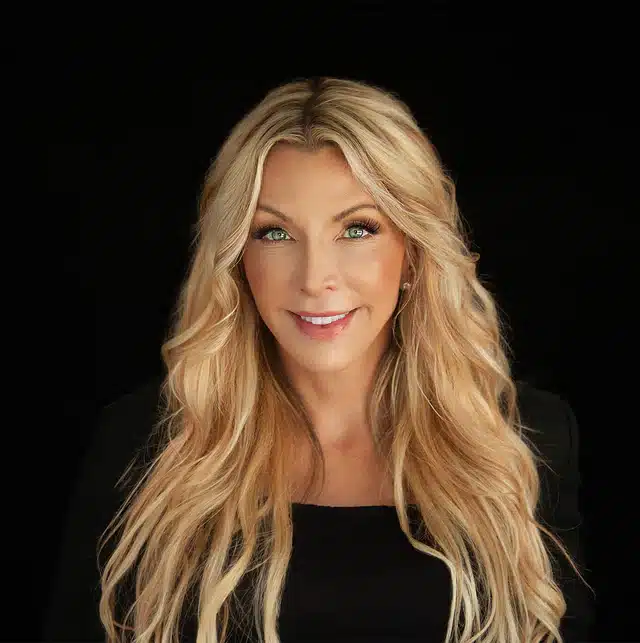
Known globally as The Thyroid Fixer, Dr. Amie Hornaman is the CEO and founder of the
Advanced Thyroid and Hormone Clinic, an international telehealth practice serving
patients across the U.S. and Canada.
She is also the host of the top-rated podcast The Thyroid Fixer, where she empowers
listeners with the truth about thyroid health, hormones, and functional medicine…
especially when conventional answers fall short.
A sought-after speaker and the author of The Thyroid Fix: The No-Nonsense Guide to
Fix Fatigue, Fogginess, and Fat That Won’t Budge, Dr. Amie has been featured in
documentaries including SHEALED (Amazon Prime), Ageless, and Hormones, Health,
and Harmony, and is a trusted expert for Forbes Health, CBS News, Fox News, and
Poosh.
Connect
Listen Now
Transcript
Dr. Sandi: Have you ever felt like you are doing everything right, you’re eating right, you’re working out, and you just feel crummy? Or maybe you’re noticing symptoms like weight gain or you’re just feeling tired and sluggish, just not like yourself. Or perhaps you’re a health coach and you have clients who are telling you this. Well, the answer might be your hormones. But then you may go to a doctor and you’re told your labs are normal, everything’s fine, or you’re just put on one synthetic hormone like Synthroid, if it’s your thyroid. Well, these are some of the things that I talk about in today’s episode, “Health Coach Talk,” with my good friend, Dr. Amie Hornaman. Let me tell you a little bit about Amie.
She is known as The Thyroid Fixer, for good reason. She is the CEO and founder of Advanced Thyroid and Hormone Clinic, which is an international telehealth practice serving patients across the U.S. and Canada. She’s the host of “The Thyroid Fixer,” top-rated podcast. She’s a sought after speaker, and she’s the author of “The Thyroid Fix: The No-Nonsense Guide to Fix Fatigue, Fogginess, and Fat That Won’t Budge.” So, I know you are going to learn a lot from my conversation with Dr. Amie.
Welcome, Dr. Amie Hornaman, to our podcast. I am just thrilled to have you. Welcome.
Dr. Amie: I’m so happy to be here, Sandi. You know I love you, love your community. So, to be of service to your listeners is a thrill for me.
Dr. Sandi: Well, we have connected at many different events, and I just always admire you and the work you’re doing. And I know that our listeners are really going to benefit from our conversation. So, let’s jump in.
So, right off the bat, you hear this, too. So many women are told they’re fine. Their labs are normal. Maybe it’s all in their head. And yet, they know that’s not true. They know that they have symptoms that are not being recognized. So, can you talk about the extent of this problem and what we can do about it? Something missing. And what do you think that is? And you discovered that early on. It’s what motivates you.
Dr. Amie: Yeah. And you know what? It’s a shame that it is so prevalent. But this really is the message that I want to get out to people everywhere that you know your body. So, when you start having these shifts starting to happen, and I’m really speaking to the women out there because we have bodies with…that have hormones that fluctuate, and we’re going to go through this midlife change. And that’s not to say that the guys aren’t. Yeah, you guys will go through andropause, too. But come on, that’s one hormone. We have three sex hormones and a thyroid that all decides to go wonky at the age of 40. So, we have much more to deal with. And when those symptoms start to come on, that’s a time where we, as women, really need to tune into our bodies and not dismiss those symptoms. We have to be careful to not medically gaslight ourselves.
And what I mean by that is I see women every single day, just like you said, Sandi, they’re being told they’re normal. They go to their doctor. They go with a list of symptoms. They can’t lose weight. Their hair is falling out. They’re tired. They have brain fog, anxiety, depression. They’re getting pushed off. They’re being told they’re normal. Maybe they’re handed an antidepressant or a statin. They leave that office and then they start circling in their mind these thoughts of like, oh, maybe the doctor is right. I guess it’s not my thyroid, not my hormones. Gosh, is this just depression? Am I just getting older? And they succumb to the feelings. It’s almost like they start shutting down their own unique sensory system that’s giving them signals and they’re ignoring it. And they’re basically passing off their own health and their body to someone in a white coat that’s telling them what’s going on with their body.
And I say, no. No more of that. You need to tune into your body, listen to those symptoms, and take them seriously. Even if your doctor won’t take those symptoms seriously, you take them seriously because, number one, it’s quality of life for you. And number two, it’s longevity. And I know we’re going to get much more into this, but things like the thyroid, when the thyroid is low and slow, yeah, you’re definitely set up for weight gain. You’re going to be carrying around excess fat that you don’t want. You’re going to be fatigued. You’ll probably lose a third of your hair. You’re going to have brain fog. You’re going to have anxiety, maybe, and depression. But what about cancer? What about Alzheimer’s? What about heart disease? All of those diseases of aging are also much more prevalent, and you are at a much greater risk if your thyroid is low and slow, and if you have no hormonal function.
Dr. Sandi: This is so common, and I can’t tell you how many women have said that they’ll…often they’re put on antidepressants or anti-anxiety meds. And they buy into that because they are experiencing symptoms of depression, but they don’t connect the dots to look at hormones. So, let’s say…and I think we’re talking also about the sense of agency of…you can take charge of your health. And if you are not being serviced by your doctor, if you feel like your needs aren’t being met, there are other alternatives out there.
So, say, somebody is in that predicament where they are not…they’re just not feeling good. They have all these symptoms. They’re told they’re normal or they’re just put on antidepressant. What is the next step? In your experience in working with women, what do you see would be the next step for them?
Dr. Amie: Testing, really. The symptoms are vital. Symptoms are absolutely important, and I have a rule that if the doctor, PA, NP, practitioner, health coach, naturopath, whoever you’re working with, if they don’t ask you these four words, then I want you to tell them that they’re fired and move down the road. Okay, here they are. How do you feel? So, we always have to start with how you feel, and then we layer that over the lab. So, next comes the lab testing and that’s the data. That allows us to pair up your symptoms with what we see in black and white on paper so that we can collaboratively develop a roadmap for you to get better, to alleviate those symptoms and to live your best life.
So, yeah, let’s test and let’s test thoroughly. We’re not talking about the testing that’s done by your OBGYN, your PCP or even your endocrinologist for that matter. That’s a whole different topic. But we’re talking about a full thyroid panel. And when I even say a full thyroid panel, when we also go to the other side of testing and say, this is not a thousand dollar test, this is not a woo test. It’s not even considered a functional medicine test like the GI-MAP or the DUTCH. It’s basic blood work that your doctor can write a prescription for, write a lab script for. He or she just doesn’t.
So, yes, insurance will cover it in the majority of cases. And it’s very simple. We want to look at TSH, free T3, reverse T3, and then the TPO and the TGA antibodies. I have that all laid out in the book. And I also have the optimal ranges where I want people to fall into. So, if you didn’t quite catch that, you can always get the book. It’s all in there. But that is the next step. It’s getting that thorough testing done so that we can overlay it with your symptoms.
Dr. Sandi: It’s so critical. And I can’t tell you how many doctors I know who just… That was my experience many years ago when I was in my 30s. But you think we’ve progressed from there. Well, today, it’s still taking place. I recently heard of an endocrinologist, a top endocrinologist in the Chicago area who said, no, I only do TSH. You don’t need anything else.
Dr. Amie: Yeah. It’s still happening. It’s still happening. I have a Facebook group. It’s called the Just Fix Your Thyroid Hormones Facebook group. It’s public. Anyone can join. And I literally screenshotted this yesterday. Someone posted in there that they went to their doctor. They read my book. They were armed with everything that they needed to do, to have this conversation with their doctor. And their doctor literally told them that, number one, free means nothing. All we need to do is test TSH. Told her that there’s no connection to liver and anything else going on in her body, including her eczema and psoriasis that she’s experiencing. Basically, completely, totally dismissed her. And at the end of it all, fired her as the patient for asking, for asking for labs. She didn’t ask for medication. She didn’t ask for some woo treatment. She asked for basic thyroid labs. And it was so offensive to her doctor, i.e. her doctor didn’t have a freaking clue what she was asking for. It was so offensive to her doctor that he fired her. Wow. That’s what’s going on still today.
Dr. Sandi: Speaking of something else that’s going on still today, let’s talk about hormone replacement, whether it’s thyroid replacement or sex hormone replacement, which is another area where many people are not getting the right information. They’re not getting the right treatment.
Dr. Amie: I guess, right now, 2026, we have a bigger spotlight shining down on women’s health, which is fantastic. We have Halle Berry speaking up and saying, hey, I’m in perimenopause, I’m in menopause and I was misdiagnosed with herpes, but what I really need is hormones. That’s fantastic as well. We have the black box warning coming off of BHRT, which is allowing women more access to those vital hormones that give us life, that protect us from the diseases of aging, that improve our quality of life.
However, what’s being missed is that nuanced personalization aspect. I don’t know if you noticed this, but what kinda happened after the black box warning was removed, all of these little telehealth, I call them, hormones in a box are popping up everywhere where you can do a telehealth appointment with a faceless doctor somewhere in the United States, and everybody gets the same hormones in a box.
Oh, my goodness. I cannot tell you the amount of patients that we have gotten from those little pop-up clinics because the hormones in a box, A, half the time they’re not even strong enough to move the needle on any woman’s estradiol. Number two, they’re not personalized to her. Number three, she can’t ask a question like, hey, if this patch is no longer available, can I change to cream? Hey, if this oral progesterone makes me anxious, can I change over to cream? There’s no handholding, there’s no personalization. Everyone gets the same hormones in a box. And that has caused us to go the other way.
So, now, we have women out there going, well, these hormones don’t work. Well, these hormones made me feel horrible. Well, it’s because you’re paying $129 a month for hormones in a box. It’s not going to work. They have to be personalized. Just like the thyroid is a nuanced art that it’s like an artist has to come in…and it’s not hard. I’m not saying this to make people think that this is a difficult thing. We can optimize your thyroid blindfolded in our sleep with our hands tied behind our back. It’s not a difficult thing to do, but it still is nuanced to you. You are a unique individual. You’re an N of one. It has to be personalized and tailored to your unique biochemistry. Same thing with hormones. It’s the same process. It has to be tailored to you and your unique biochemistry.
Dr. Sandi: It’s so important. It’s not one size fits all. And so many clinicians are out there with thyroid. Well, we just put you on Synthroid. And that’s just…that’s it. That’s the standard answer as, well, that might not be right for you. It might be, but it might not be right for you. So, yeah. And then there’s the other side. And so many women may be thinking, well, I’ll never do hormone replacement. And they’re seeking what they are considering natural approaches that are, again, not well-suited to them, but they buy into. Maybe they heard a social media influencer out there talking about, you can just do this. You don’t need hormones. You can do it on your own.
Dr. Amie: Yes. Yes. I love this. I’ve been speaking up about this much more recently because it’s becoming more and more of a problem. So, it seems to me…and I would love to get your take, too. It seems to me, when I really start looking at and dissecting who is out there telling these women that they don’t need hormones, who is out there telling people that they can just heal their thyroid naturally when they’ve been dealing with Hashimoto’s for 20 years and half their thyroid is gone anyways.
And when you look really closely, number one, usually they’re men and men do not go through menopause. And most men do not get hit with hypothyroidism. It’s much more of a women’s disease. And then number two, a lot of these guys, they can’t prescribe. So, they need an angle. And so, the only angle is let me dump you on a bunch of my supplements and take my 997 masterclass and you’ll be just fine.
It’s like, no, you’re missing the mark. Natural things, i.e. the foundations, the nutrition, the lifestyle, the sleep, the stress control. Of course, those are important. Of course, they are. But is getting enough sleep and grounding and meditating and taking a few supplements going to bring a free T3 level from a 2.3 to a 4.4? No, it’s not. Is it going to bring a woman who’s in menopause and her estradiol is nonexistent, bring her estradiol into the 80 to 100 range where she’s actually free of hot flashes and vaginal dryness and pain during intercourse and hair loss?
No. No. There’s no influencer out there yet who has figured out how to reverse hormonal decline. And that’s just something that’s going to happen. If you live long enough, your ovaries are going to shut down and you’re going to have hormonal decline. It just is. It just is. But we can do something about that now, i.e. replace your hormones with bio hormones, not a 997 masterclass, not 25 different supplements. Beautiful, balanced for you, identical to what your body makes, hormones. It’s that simple. And actually, I think replacing hormones is a more natural route than all of this bio hacking and supplementation and standing on your head that these health influencers have you do.
Dr. Sandi: I agree completely. And I’ve really seen it all because I’ve been doing this a long time. And for a while, it was like, iodine or kelp. Just eat enough seaweed, kelp for your thyroid. Eat enough Brazil nuts every day and you’ll be fine.
Dr. Amie: Exactly.
Dr. Sandi: Yeah. So, it is… I mean, there’s also an issue and I wonder if you’d comment because I experienced this. So, I take hormone replacement for thyroid and my estradiol. And I’ve been going to the pharmacy to say, well, we’re out. This is back order. And it’s very common. Or they say, well, we can only give you one. We’re rationing these for our client, our customers here at the pharmacy. So, what is going on, and what can women do about this?
Dr. Amie: Well, yeah, the shortage is the patch. So, right now, we have a nationwide shortage in the estradiol patch, which is one mode of delivery of bioidentical hormones. And so, what we’re doing with the majority of our patients is if they’re experiencing that shortage at their pharmacy, we’re changing them over to a compounded cream. I get it. The patch is easy. You put it on, you change it twice a week. You don’t even think about it as opposed to a cream that you have to apply once a day, sometimes twice a day. You have to be careful about cross contamination. If you have kids, a dog, a husband in the house, you don’t want to give them estrogen if they don’t need it. Most of them don’t.
So, what do we do? We kind of don’t have a choice. If there’s a shortage in the patch, you just have to deal with the cream. I always tell my ladies, have a special towel, tell your husband to not grab the towel and just wash your hands really well or get those little disposable towels that you can just dry your hands off with and throw it out. And the cream is not difficult. It’s easy to apply. It takes an extra 20 seconds out of your day, not a big deal. But some people are going to have to change over to the cream with this patch shortage.
Dr. Sandi: These are all areas that we’ve been talking about where I think health coaches can play a really critical role in helping people realize that they don’t have to be victims if they’ve been told something by a clinician to take charge of their health and to educate them about what’s some of the myths out there and help them really get on the right track. And one of the things they could recommend is your book, “The Thyroid Fix.” I’d love to hear you talk about this book. I think it’s wonderful. And what can a reader expect when they pick this up?
Dr. Amie: Well, I wrote this…and thank you, by the way. I wrote this book for, really, three subsets of people. Number one are the people that are walking around with these symptoms, like what we talked about in the beginning. They have the symptoms. They’re being told they’re normal. They don’t know what’s going on. So, I walk that person through their own kind of diagnostic process to figure out, hey, is this really thyroid? And then, of course, we go through the symptoms and the assessment, and then we move into labs and I help them look at their labs and go, oh, okay, hey, I never knew this. But turns out I do have a thyroid problem. I have Hashimoto’s. And then they can move into the next step of what to do about it.
For the people that are already diagnosed, they know they have a thyroid problem. They’ve been on Synthroid or levo for years, or maybe they’re even on natural desiccated thyroid and they are not feeling their best. I see this all the time. I just saw another post yesterday. Same thing. Dr. Amie:, I’m reading your book. Thank you so much. I’ve been seeing a functional provider for years. They had me on 60 milligrams of Armour and I’ve never quite felt that great. Now, I realize from reading your book that NDT is driving up my reverse T3 and that’s why I don’t feel so great. So, it’s really enlightening and teaching, educating and empowering that person that already has a diagnosis, and they’re just not feeling optimal. They’re not feeling as good as they possibly can be.
And then the third subset is the practitioner. And I’m talking about health coaches. I’m talking about doctors, MDs, DOs, OBGYNs and, yeah, even endocrinologists. Buy one for your doctor or pick one up if you are in the practice of health in any way, shape, or form, because it’s only going to help you understand your patient and your client on a much deeper level. And it’s going to help you guide them. And even if you’re in the health coaching space where you don’t want to cross over and diagnose or treat, that’s fine. But you can do things like guide that person such as, hey, Sandi, I’m looking at your labs here and, yeah, your free T3 is in the bottom of the range and your reverse T3 is an 18. And you’re telling me that your doctor has you on T4 only. Well, here’s the problem. That’s driving up your reverse. It’s literally putting your body in a survival mode.
So, what I’m going to do, we’re going to go through all of those factors that could be driving up your reverse T3, like your insulin, your nutrient deficiencies, your cortisol, your ferritin. And the coach will look at all of that and will help tremendously. They will help that person tremendously by looking at all of those factors and helping that person’s body convert T4 to T3 at an even better rate. But then they’re also educating that patient as to, like, you might want to either talk to your doctor or maybe find somebody else to work with. Because what I’m seeing here with your labs, according to this book that I read called “The Thyroid Fix” is that your reverse T3 is too high. And I don’t think this T4 only is going to work for you. I think you might need to ask about adding in some T3. Maybe you change over to Armour Thyroid and then add in a little bit of T3. But there are more options for you here, Sandi. There’s definitely more options.
That’s really where the health coaches come in and save lives because it’s like, oh my gosh, you can enlighten and educate your client to the place where they’re so grateful for you. They’re like, oh, no one’s ever showed this to me before. No one’s ever explained it to me like this before. No one’s ever helped me like this before. And it can really up-level your game and up-level your client’s experience with you as well.
Dr. Sandi: That’s such a good point. And they’re not making a diagnosis. They’re not interpreting those labs, but they’re really providing the education. And the education is based on the information that they gathered from books like this, “The Thyroid Fix,” where they’re…to say, see, this is…or often it’ll be that individual, that client who will read that book and then they will say, yeah, I’m going to go to my doctor. Now, I know.
And I think also if you comment the rise of direct-to-consumer lab testing, because now somebody is not getting the right tests from their doctor, they don’t want to order it for them. That person can really do that themselves if they…and often with the guidance of a health coach to help them create awareness that they don’t have to just be dependent on a clinician. They can get those tests on their own.
Dr. Amie: Absolutely. Absolutely. And even when I teach in the book, I’m teaching the reader how to read and interpret those labs. So, the health coach doesn’t even have to. They can just point their client to the book and the client can get in and learn it. But they can do that high-level pointing out. There’s nothing wrong with that. I’m just saying, you’re just stating the case, like your reverse T3 is too high. That means that you can break it down for your client. That means that all of that T4 that you’re taking is converting to reverse T3. Now, let’s check the factors that could play a role. Maybe we even do a genetic test to see if that’s playing a role as well, and look for that DIO1, DIO2 SNP.
And it’s a collaborative protocol being built with the health coach and the client to say, this is what you need to do with a prescriber, with a licensed prescriber, whether it’s your doctor or you seek someone else doing thyroid and hormones. But this is what we’re going to do together to improve your situation. And we’re a team. I’m going to be beside you until you get that help from the doctor. But everything that we do together based on what we see in your labs is also going to help your body improve overall function.
Dr. Sandi: Yeah. I think that is…what you’re really describing is a collaborative care model, which is the most effective. It’s not just that…like the health coaches out there on their own or the doctors. It is a collaborative care team. And I think…can you comment also about we can also add lifestyle? We mentioned before that we can’t rely totally on lifestyle or on supplements, but that they can be supplements that what they’re described, they can supplement a hormone replacement and lifestyle as well. So, can you comment on that in terms of are there any supplements out there that your experience are very valuable? And again, there’s no one size fits all with this. But in general, what are you seeing that’s…regarding supplements and lifestyle change?
Dr. Amie: Definitely. Like I always say, you can’t put hormones on a dumpster fire. So, we can bring in thyroid hormone, we can bring in bioidentical hormones. But if you’re treating your body like a circus, it’s not going to work. So, number one, of course, the lifestyle and nutrition component. We all know it. We just don’t all do it. Cleaning out the processed foods, getting rid of the seed oils, taking down inflammation, doing those lifestyle habits, go figure, sleep, I don’t know, movement. They’re so basic, except when you’re working with someone and you realize that people still aren’t doing it. That’s what they need guidance on. So, you need to build that foundation.
And then there’s the supplementation bucket, which I talk about in the book. I talk about the no duh supplements and this is absolutely dating me. I’m going back to my childhood, growing up in the ’80s with the valley girls and like no duh we’re sure going to take these every day. So, I call them…I literally call them my no duh. So, we built a bundle on our supplement store called the no duh bundle. And here’s what’s in it.
So, we have magnesium. I think we all can agree that we are all magnesium deficient and we need some help in that area. So, you want a really good multi mag, not just mag citrate. That’s just going to make you poop every day. You want the glycinate, you want the malate, you want a full spectrum magnesium. You want a really good vitamin D paired with K. We know that. And then B complex, that’s vital for over 500 metabolic processes. Iodine is in my no duh supplement list because I believe it is vital. Why don’t you believe it? The science backs it, that it is vital. It’s needed by every single cell in your body. It’s needed by your thyroid to produce thyroid hormone. It’s needed by your thyroid to convert thyroid hormone from T4 to T3. It helps your immune system. It helps with detoxification against the toxic halides. Love iodine.
And then also in that category is black cumin seed oil because the studies on black cumin, oh, my gosh, it just plummets inflammation. It reduces antibodies, often taking Hashimoto’s into remission. It’s one of the only ingredients in a supplement that we can say prevents cancer. You can’t say that there will be some three-letter alphabet tube government agency knocking on your door if you make a claim that isn’t backed by studies. But with black cumin seed oil, we can say that because it is backed by studies. So, that’s part of my no duh supplements, too.
L-tyrosine is amazing for the thyroid at helping it produce more T4 and T3. That’s an amino acid. And then, of course, I love T2 because I’ve been studying it for 20 years now. And that is the forgotten thyroid hormone, which that can really help anyone who’s looking to lose weight and improve metabolism, especially in this world of GLPs that people don’t understand don’t actually increase your metabolism. They’re not doing anything to stroke the fire of fat burning in your body. They’re just balancing your glucose and your insulin, and lowering that and lowering your A1C and killing your appetite so you eat less. They’re not actually increasing your metabolism.
So, I truly believe that in this world that we’re in right now with higher rates of obesity, even with the onset of GLPs, we still have the highest rates of obesity of any country in the world, that we need some help in the metabolic area of increasing people’s metabolism and decreasing inflammation. And T2 does that.
Dr. Sandi: Yeah. That is really a great bundle that you just described and is a basic supplement package that…and I think some of these people just don’t think about that they may be missing. And so, that’s why working with somebody or looking at what you describe in your book and that could be very critical in addition to those lifestyle change factors. And I think one of the biggest might be in…often women in this age group in midlife over-exercising or doing the wrong types of exercising. I go to the gym a lot.
Dr. Amie: Yes, you do. You’re a rock star.
Dr. Sandi: And I recently went to do the weight room and I just see so many women just doing this steady state cardio. It’s exhausting. That’s all they do. And then maybe they’ll go into the weight room and they’ll pick up some light weights and they’ll do some bicep curls and I’m done.
Dr. Amie: Yeah. For the record, whenever Sandi and I are at a conference, it’s her and I in the weight room. And everybody else that attends the conference is on the treadmill.
Dr. Sandi: Yeah.
Dr. Amie: You and I are the only ones lifting weights, and Bryce Appelbaum, he’ll be in there, too. That’s about it.
Dr. Sandi: I know. Yeah, exactly. So, can you comment on what do you see in terms of women who may be over exercising or not doing the right type of exercises that they may need critically in midlife?
Dr. Amie: I think it comes out of desperation and when we grew up. So, we grew up in the age of Jane Fonda workouts, step aerobics, buns of steel, where we learned…and I was absolutely part of that culture up till about 10 years ago is when I stopped doing steady state cardio and all I do is lift. That’s how I get my cardio. I just lift heavy. So, I was part of that culture and I get it. You get ingrained in you that you have to do…cardio is the only thing that burns fat. And that simply is not the case, but I think too many women grew up with that ingrained in their brains and it’s hard to break out of that. It really is. It almost becomes a little bit of an addiction that it’s hard to break out of that mode and think to yourself, if I go in the weight room and slow down and I’m not huffing and puffing and getting my heart rate up or taking some class that an instructor’s yelling at me, that I’m not actually going to be burning fat, when in reality, you’ll burn more fat and have a better body composition. My God, just look at Sandi’s arms. You’ll have a better body composition if you lift heavy weights.
The other thing I think happens is desperation. Sandi, when these women…when they are walking around undiagnosed, misdiagnosed, mistreated, undertreated, and they can’t lose the damn weight no matter what they do, what do they do more of? Cardio. Just, maybe I’ll do an hour, maybe I’ll do an hour and a half. Maybe I’ll take two Peloton classes in a day. And that’s not going to do it. It’s just going to be burning your muscle, that precious muscle that gives you a better metabolism. It’s going to increase your cortisol, which is going to result in more fat on your belly than less fat. The increased cortisol is going to downregulate your thyroid. So, you might be walking around with a thyroid problem that’s not being diagnosed or treated properly, and you’re making it worse by doing all of that cardio.
The benefits of lifting heavy weights, doing weight training, doing resistance exercise, it’s ongoing. You protect the muscle that you have. You build that metabolic lean muscle mass. It protects your bones. It makes you more metabolically active. It makes you more insulin-sensitive. It protects your cardiovascular system. It increases bone density. On and on are the benefits.
Dr. Sandi: This has been a wonderful conversation. It is always good to connect with you, Amie. So, where can people find you, and where can they find the book, “The Thyroid Fix”?
Dr. Amie: Absolutely. So, you can find me at dramie.com, dramie.com. And from there, you can connect to the podcast. You can connect to the store to get your no duh supplement bundle. You can also book a call if you’re interested in becoming a patient, if you’re in that area of being, or if I’m talking to you and you’re misdiagnosed, not treated properly. And for my health coaches out there, my goodness, definitely grab the book, or for anyone listening, grab the book.
So, that is at…you can go to thyroidfixbook.com and that links to Barnes & Noble, Amazon, or just go to Amazon and search for it. You can get it on Audible, Kindle, hardcover. In the Audible, I actually did add bonus tracks to the end of every chapter because you know me, Sandi, I love to talk. So, it’s one thing to read my book, but then I’m like, I got more to say.
Dr. Sandi: I love it.
Dr. Amie: So, I actually did bonus chapters for people, too.
Dr. Sandi: All right. Well, check it out. Thanks so much for being on “Health Coach Talk.”
Dr. Amie: Thank you so much for having me.
Health Coach Talk Podcast
Hosted by Dr. Sandra Scheinbaum
Conversations About Wellness Through Functional Medicine Coaching
Health Coach Talk features insights from the most well-respected names in health coaching and Functional Medicine. Dr. Scheinbaum and guests will explore the positive impact health coaching has on healthcare, how it can transform lives, and help patients achieve better health and wellness outcomes.

Check us out on these platforms: