Why Menopause Symptoms Are Cardiometabolic Warnings, With Dr. Anna Cabeca
What if the traditional medical approach to midlife is completely misinterpreting the uncomfortable symptoms of menopause? This week on Health Coach Talk, Dr. Sandi welcomes triple board-certified physician and bestselling author Dr. Anna Cabeca to discuss why severe menopausal symptoms are actually rooted in cardiometabolic dysfunction, rather than being an inevitable part of the natural menopause transition itself. Known affectionately as The Girlfriend Doctor, Dr. Anna sheds light on how addressing cellular health, insulin sensitivity, and the powerful “mother hormone” oxytocin can dramatically alleviate these symptoms and transform midlife into a vibrant growth opportunity.
“Hormonal imbalance, including any of the symptoms such as hot flashes, are a cardiometabolic problem until proven otherwise. And that’s what we’re not realizing.”
Dr. Anna Cabeca
Through her own personal tribulations and decades of clinical practice, Dr. Anna realized that simply prescribing hormones without tending to the body’s foundational health is an incomplete approach to wellness. She recognized early in her career that symptoms like brain fog, anxiety, and hot flashes are not isolated diseases, but rather downstream effects of unmanaged cortisol, adrenaline, and metabolic dysfunction. Today, her mission is to empower women with the knowledge to trust their intuition and support their pelvic, vaginal, and overall cellular health through holistic lifestyle adjustments. By highlighting the profound impact of joy, community, and personalized nutrition, she illustrates how women can emerge from the transformative cocoon of menopause stronger and healthier than ever before.
Navigating the noise surrounding hormone replacement and midlife wellness is a challenge that health coaches are uniquely positioned to help their clients overcome. Dr. Anna offers invaluable perspectives for coaches on how to guide clients toward identifying what works best for their unique bodies, emphasizing that individualized lifestyle modifications always outperform one-size-fits-all prescriptions. Coaches are able to use these insights to support clients (and even their partners through couples coaching) in making sustainable changes that honor the interconnectedness of their physical and emotional well-being.
Watch The Episode
Episode Highlights
- Discover the critical role of oxytocin in balancing cortisol and managing hormonal symptoms
- Explore why hot flashes and brain fog are often signs of deeper cardiometabolic issues
- Unlock the surprising connection between vaginal microbiome health and nighttime waking
- Delve into the benefits of couples coaching for navigating midlife health transitions together
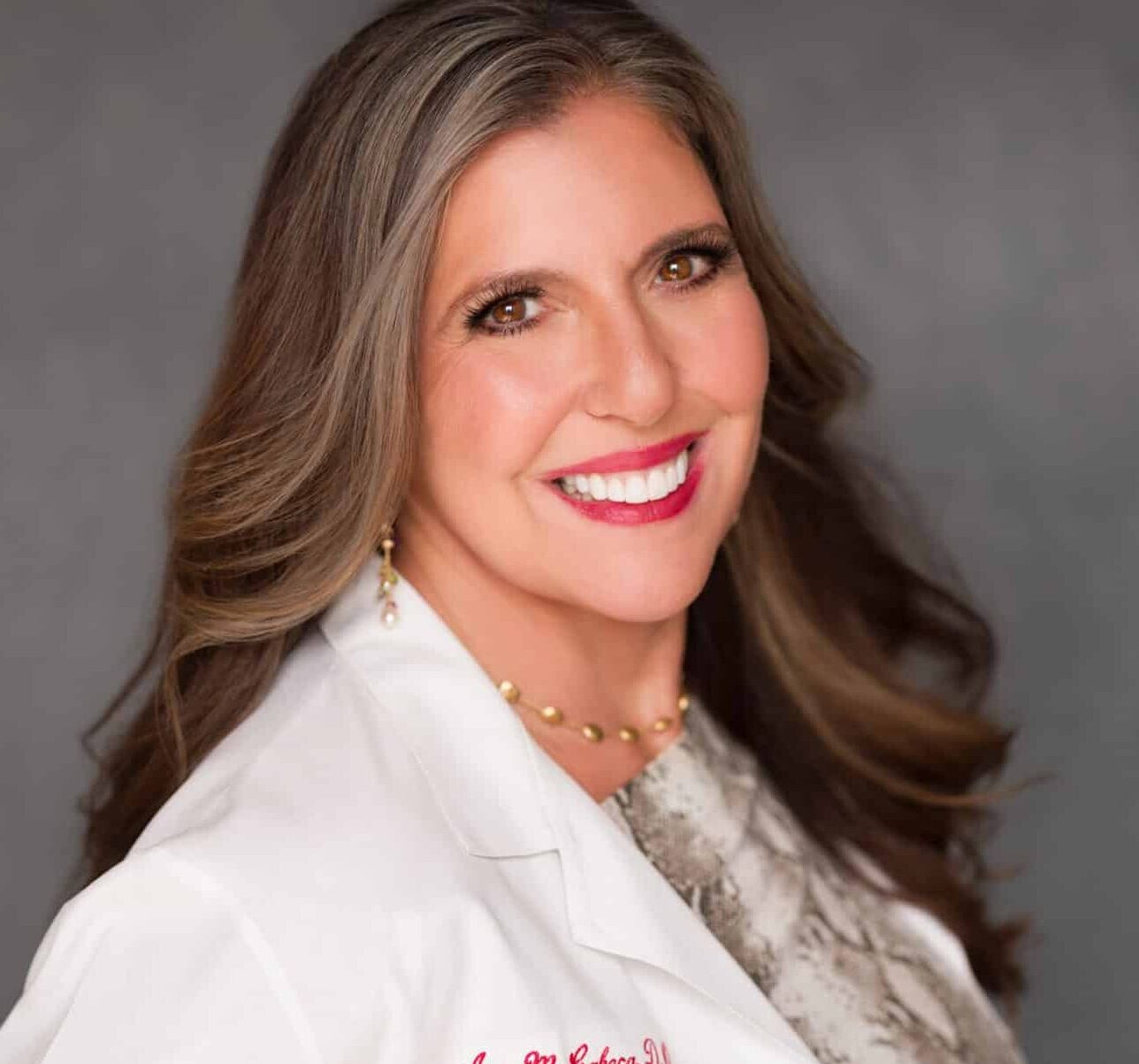
Anna Cabeca, DO, OBGYN, FACOG, is best-selling author of The Hormone Fix, Keto-Green 16, and MenuPause. Dr. Anna is triple-board certified and a fellow of gynecology and obstetrics, integrative medicine, and anti-aging and regenerative medicine. She holds special certifications in functional medicine, sexual health, and bioidentical hormone replacement therapy.
She lectures frequently on those topics and shares the secret behind the ebb and flow of intimacy as she demystifies the fascinating hormonal changes over time. She will help you discover how the “love hormone,” Oxytocin, can breathe life into your relationship, and how Cortisol can take it away, and how the delicate balancing act of those hormones can reignite your libido and support a healthy relationship, most importantly the one you have with yourself.
She is sassy, blunt, speaks from the heart, and has a wonderful sense of humor, and this is why we call her The Girlfriend Doctor, because everyone needs a friend like her!
She has personally developed natural products to help women balance hormones and thrive through menopause, including the highly acclaimed Julva® cream for the vulva, MightyMaca® Plus, a powerful superfood blend, and Velvé®, her intimate wellness formula designed to support comfort, moisture, and sexual wellness.
She lives in Dallas with her daughters, horses, and dogs.
Connect
Listen Now
Transcript
Dr. Sandi: Welcome to another episode of “Health Coach Talk.” Today, we’re talking about women’s health, specifically health in perimenopause and menopause. And we at FMCA are really committed to supporting our community in this area. That’s why we often have special presentations, Ask the Expert webinars. That’s why we are launching a course to prepare our graduates and other certified health coaches to really support women during this very critical stage of their life. And one of our faculty members is renowned in this area. And her name is Dr. Anna Cabeca. You may have heard of her, The Girlfriend Doctor.
So, let me tell you a little bit more about Dr. Anna. She is a bestselling author of “The Hormone Fix,” “Keto-Green 16,” and “MenuPause.” She is triple board certified, and she’s a fellow of gynecology and obstetrics, integrative medicine, and anti-aging and regenerative medicine. She also holds special certifications in functional medicine, sexual health, and bioidentical hormone replacement therapy.
She lectures frequently on these topics, and she is going to help you discover the love hormone, oxytocin, which can breathe life into your relationship, and how cortisol can take it away, and how the delicate balancing act of those hormones can reignite your libido and support a healthy relationship, most importantly, the one you have with yourself.
She’s personally developed a line of natural products to help people balance hormones and thrive through menopause, which she is going to talk about on the podcast. So, without further ado, here is my interview with my friend and colleague, Dr. Anna Cabeca. Welcome, Dr. Anna.
Dr. Anna: Oh, my gosh. It’s so good to be here with you, Sandra. Thank you for having me.
Dr. Sandi: I’m so looking forward to this conversation. And let’s just start off by talking about you have seen thousands of women in perimenopause, menopause, and you see all the things that they’re attempting to do during this time of their life. And often, it goes awry. And often, they’re not doing the best things that they could, and sometimes even going in the opposite direction and making things worse in terms of hormonal health. So, let’s start there, if you can talk about that.
Dr. Anna: Well, I so love to talk about this because there’s so many issues. First of all, it’s my own journey, my own trauma, tribulations, etc., that have brought me to this point, to really recognize that it takes more than hormones to fix our hormones. And hormonal imbalance, including any of the symptoms such as hot flashes, are a cardiometabolic problem until proven otherwise. And that’s what we’re not realizing. And I am a big bioidentical hormone advocate, but we have to address the foundations. We have to address the underlying issues, like what your coaches are trained to do. We got to get to the root of the root cause and the minerals the root needs, the support and the nutrition, all that that the root needs to thrive.
But it’s particularly interesting because I’m preparing for our mutual friend, David Perlmutter’s interview. I’m interviewing him on my podcast today about his new book, “Brain Defenders.” And he talks about this in the Alzheimer’s space. They have addressed just the symptom of the problem and have not got under it. Just like with neurologic issues, there’s this cascade from we look at Alzheimer’s as a separate disease. We look at MS as a…we look at depression as a separate disease.
And for me as a gynecologist, I look at all the GYN and neurologic symptoms because, first of all, you can’t separate the head from the body. You can’t separate one part. We are all connected, and that’s the true core of it. And we have to address these underlying root cause issues, the PMS, the endometriosis, the PCOS or PMOS, and the perimenopausal symptoms, the depression, anxiety, the postpartum depression. And go off on that one, too. The mismanagement of hormonal and menopausal symptoms being treated as if it’s a disease state versus a symptom of underlying issues that need to be addressed, which this is why you do what you do.
Dr. Sandi: Yeah. And so many women just will go to the primary care doctor and they’re just on the wrong track. My daughter, who is early 40s and she has friends. They went to their doctor because they were experiencing brain fog, and they were just out of sorts. And what did they do? They put them on an antidepressant. They didn’t even check hormones.
Dr. Anna: And that’s so true. Not just the antidepressants, it’s the birth control pill. And I was on a group medical interview with some leaders in the menopause space. And one’s philosophy is we’ll just put them on birth control pills through menopause, eventually take them off, but we’re not going to measure anything. And that blew my mind.
I say I practice lazy medicine, but that is lazy medicine. My lazy medicine is I want to get at the cellular level, at the mitochondrial level, the smallest changes I can make to get overall results. That’s my lazy medicine versus let me just slap on all these polypharma. We know that’s devastating. And well, we haven’t studied polypharma in women, let alone menopausal women.
I think one of the biggest issues now… Again, I’ve been practicing and using bioidentical hormones now since 1999. I trained at Emory in ’95 through ’99. So, after Emory, well, we had estradiol, but Prometrium was just coming out during that time. So, we did have some bioidentical options. But the medical education was dominated by Wyeth-Ayerst at that time, which is Prempro. So, the Women’s Health Initiative study came out in 2002, but bioidentical hormones were already part of my wheelhouse, including testosterone and DHEA for women.
And again, I’ve learned through my own patients and the care that I take for my patients as well as myself. But what I see now is, okay, now, we’re just going to give you hormones. We’re going to give you estrogen, we’re going to give you a progesterone. Hey. Let’s use this male testosterone and just use a little bit of it.
So, again, I’m concerned because if we’re not looking at the underlying issues, if we’re not supporting the body’s ability to make our hormones and use them appropriately, clean up the receptor sites so we can use what our body’s making or we’re delivering, getting exogenously through prescriptions and how it’s eliminated, we’re going to have issues. Those are the missing piece in modern day medicine.
Dr. Sandi: Yeah. And in so many ways, this is similar to the GLP-1 story because doctors are just writing a prescription and, okay, you lose weight and that’s the end of story. But they’re not looking at the role of lifestyle factor, relationship to food, what happens if they could be on it for life, what happens when you get off, what is changing? As you’re losing weight, perhaps your body image is changing. There’s so many factors involved, but nobody is really looking at the big picture except in functional medicine. And we’re training health coaches in that story, but it’s really the looking at what are some of the root causes. And I love that you’re addressing this.
So, in terms of all these factors that we are not addressing, can you talk about some of those? So, let’s say someone is just…they think, okay, HRT, that’s it. And now, I’m set, I’m fine. And I’ll balance my hormones.
Dr. Anna: And that is my optic view. That is looking at, okay, we need more estrogen or we need more progesterone, but wait…or we need more testosterone. What’s happening? What’s the reason you need more? Is it the normal ovarian aging process? Maybe not. Or is it because the puppeteers of these hormones…we think of a puppeteer holding the strings. And so, we think of all our reproductive, all the puppets.
Let me give this analogy. All the students in a university, let’s say, all the students that are part of a university, each one has their gifting, has their ability, has their own passion, purpose, and capabilities. That’s true with all our hormones. But you have professors of the university that…a good professor, leading with kindness, compassion, intelligence. You’re alert, you’re doing what you’re supposed to be doing, you’re paying attention. A not so…let’s say an out of balance professor, that one that comes in high or hung over and just turns off the light and plays a movie. The student body is chaotic. They’re not paying attention. They’re going their own directions. It’s chaos.
And so, those professors, if we consider all our hormones, really, the students and our professors are adrenaline, insulin, and cortisol. I have found that in order to manage hormones, we have to create insulin sensitivity, manage cortisol through increasing oxytocin and vagus nerves and the parasympathetic pathways and alkalinization, and all the practices that increase oxytocin, too. So, we work on that understanding what’s happening with cortisol, insulin, creating insulin sensitivity. And so, that is through intermittent fasting and more getting into ketosis in a healthy way, which for me is ketoalkaline or keto-green, focusing on the alkalinizers. And then of course, adrenaline, that’s the parasympathetic, sympathetic. Again, what are we doing there? And then the mother hormone, the queen mother, the dean of the university or president of the university is oxytocin.
So, what I’ve learned through these years, when I work with patients, either one-on-one or in my programs and groups with coaches, it’s always, okay, what are you doing for oxytocin today? How are you increasing your oxytocin? Let’s celebrate. What are you grateful for? And I work…what are you doing for fun?
I have to give you an example of a patient that I had. I was doing…she was a great patient. She did everything, the functional testing we were working on. She had issues with anxiety and hormone imbalance symptoms, mood swings. And so, we’re doing all this. And I finally…and she’s a mom of three, disorganized, couldn’t stay focused. I’m like, okay, here’s another supplement.
And then it wasn’t until about, seriously, I’m ashamed to say, six months into our therapeutic relationship, I said, okay, you’ve got a lot of stressors, but what are you doing for fun? And she thought about it. She goes, you know, everything’s a job. Everything’s a chore. And I said, well, what did you use to do? What would you like to do? She goes, there’s a dance studio on the way back from dropping my kids off at practice. I know you would love this. We love this. And dancing is in your blood. And she goes, you know what? I’ve been thinking about that. So, I said, well, go give it a try and let me know.
Six weeks later, she comes in. She’s organized. She’s feeling better. She’s dropped a few pounds. Her mood is great. She’s fine. I’m like, what are you doing? Because I’m like, I’ve been working with her for months. I couldn’t move the needle. And she goes, I started dance classes twice a week. And she’s lit up. And she was, I feel at home in my body, and my mood’s better. My focus and concentration is better. That’s the power of oxytocin. Completely free. Completely free. We can prescribe it to you, but it’s completely…
Dr. Sandi: Well, we can prescribe dance. I love that story. I’ve been dancing my whole life. Not that I’m…I still can’t master a pirouette, but I take ballet several times a week. And I just started doing tap again. Tap is incredible. And you don’t even need to invest in tap shoes. They have these slip-ons that can fit right over a sneaker now. So, it is just wonderful. And there are so many programs starting up for women…not women, people of all ages over 55. And so, in my ballet class, there’s a woman who is 95.
Dr. Anna: Oh, my God. I love that.
Dr. Sandi: She comes and she does the barre. She does the center floor work. And she was not a professional dancer. She just loves it. So, it’s community. It’s brain health. You have to remember the combinations. But basically, it’s the community. It’s the music. So, that oxytocin, you’re absolutely right.
Dr. Anna: That’s all oxytocin.
Dr. Sandi: Yeah. And yet so many women, I think…there’s so much information out there about…you can scroll through social media, and there’s all these influencers touting something. There’s fasting, high protein, less protein. There’s a contradictory story for everything. Do endurance. No, don’t do too much cardio. So, how do you help people cut through the noise?
Dr. Anna: That’s a really good question. And this is where health coaches are valuable. Because everything is individualized and optimized. And that’s the critical piece. It’s establish the foundations and what works for you. I’ve learned this in my own journey through. In 2014, I started my Magic Menopause program. And so, that’s with my keto-green, keto-alkaline philosophy. And then I found, okay, well, we need to simplify it a little bit and also focus on the neurocognitive benefits with it. So, I wrote “Keto-Green 16.” And then “MenuPause” came in. I wrote “MenuPause” because people were getting stuck all through my…after they’d been with me a year or two years. Okay. Now, I’m stuck. I experienced it myself. I’m like, that’s the pause. There’s magic in the pauses of our life.
So, I created the five different six-day menu plans that pause something. We have to carb up, we have to do a cleanse. That’s my keto-green autoimmune paleo plan. There’s a vegan plan, there’s a carnivore plan, because you have to change things up, too. And we can get stuck doing the chicken salad for lunch, for example, every single day. I’m like, oh, isn’t that…? We have to change things up. And that helps that flexibility, that movement and seeing, okay, this may feel great now, but we need to adjust it. And we have to so much empower our clients to trust their intuition and stop giving that power away.
Dr. Sandi: Oh, absolutely. And fortunately, there’s ways we can track now. So, I’ve been wearing a CGM for quite some time. And it’s fascinating because sometimes if I eat a heavy red meat dinner, my blood sugar will be worse than if I have something that is beans. And I always thought it would be the opposite. Oh, I can’t eat those carbs because I’ll have a blood sugar spike. But sometimes actually the opposite happens. And that’s personalized. So, because it’s…we tend to buy into this one size fits all, and we hear somebody describing something, oh, it must be good, then I’ll do it, too. Or there’s a supplement that I need to take.
But I love what you have developed, the products. Can you talk about that? And this is something that health coaches can definitely talk about with their clients because these are often taboo topics. But with a health coach, they see them more like a friend. And you are The Girlfriend Doctor. So, they can talk about vaginal dryness and pain during sex. And you have products to help with that.
Dr. Anna: Yes. Absolutely. And I’m really passionate about pelvic health. Blatter health, vaginal health, it is all connected. And what we know now more and more is the interconnecting of the vaginal microbiome. I’m putting these pieces together, but continuously evolving. But first, I started with, in my practice, compounding formulas prior to surgery, vaginal surgery for prolapse incontinence or whatever it may be. And using compounded DHEA testosterone prior to surgery, so I’d get good tissue for good results.
And then my patients would come in, especially the incontinent patients. I have no more symptoms, no more incontinence, ran five miles. I was like, okay. And then part of the story is I stopped…I retired, I burnt out from medical practice, the truth be known, back in 2014, 2015. And my patients were like, Dr. Anna, no one will prescribe your lotions, creams, and potions. And I was like, well, I will come up with something over the counter that’s better than anything I could write on a prescription pad.
And that’s where I came up with Julva, cosmetic preparation for the vulva, clitoris to anus, keep that tissue healthy because also that’s where the glands are. And keeping that moisture and having our bodies, empowering our bodies with pelvic floor exercises, natural secretions to occur, that makes all the difference. And what we see is an improvement in vaginal pH, which until literally the last two years, I thought, well, that’s going to be enough. But now, as we’ve been able to test the vaginal microbiome for healthy bacteria, not just the STIs, the sexually transmitted infections, we can see that even in 20-year-olds, they don’t have the protective vaginal bacteria.
And so, you know, vaginal issues, discharge, incontinence issues, and especially as we get older, being able to culture, we don’t see the good lactobacillus, crispatus, iners, jensenii, and gasseri, as well as rhamnosus. And I’d like to see some reuteri falling in there, too. So, we have to repopulate. So, adding my…now my VB probiotic that I released this year has those strains in it.
So, adding that to this pelvic floor exercises, healthy nutrition, lifestyle, all that stuff, avoiding chemicals, and really makes a difference. They work really well together, and we’re seeing that improvement. And I have 70-year-olds that say, okay, since we fixed things down there, I’m having the best sex in 50 years with my partner and my husband. And I love…I love having that conversation. First of all, they give me so much hope.
Dr. Sandi: Oh, absolutely. Well, speaking of that older generation, what I find is, amongst my friends…I’m 76. So, just this week, two of my friends said…we were talking about something else, but they happen to bring up being in a dark bedroom. I said, I get up six, seven times a night to urinate. And I didn’t say anything, but…and they’re just accepting it. Well, that’s what getting old is all about.
Dr. Anna: They don’t realize it’s increasing the risk of dementia. They’re increasing the risk of cardiometabolic disease. That disrupted sleep is affecting every aspect of our lives. And until a recent research paper that I read just published last year, looked at the urobiome. I’m like, oh, that’s a great word. Do we have vagibiome? I don’t think we have that word yet. But urobiome, the biome of the urethra and the bladder. And so, that is the same bacteria for women as in the vagina, which makes sense, of course.
So, when we start adding the VB probiotic, again, with the Julva, you got to get that, you got to create healthy soil, and you add the VB probiotic. And they’re not getting up at night anymore to urinate. That is the next lever. And the urgency symptoms, I had someone who flew in to see me just this week, who had cystitis, interstitial cystitis symptoms. So, I don’t prescribe to anyone I don’t see. I say I’m not that good of a physician. Of course, I saw her in practice, but I gave her my regimen. So, my Mighty Maca, Julva, VB probiotic. We’ve got to address these issues. We start from the inside out and the outside in, we work on that together, follow my method. I call it my Magic Menopause method. But let’s start on that. And I see her just from two months later…and she’s in my office, and she’s…those symptoms are 90% improved.
Dr. Sandi: And often they’re embarrassed to tell their doctor or they’re not given the right solution or they’re… And so, part of my mission is educating people. And it’s often my contemporaries and I might be at a social gathering and always talk about those issues. Yes, you can do something and here’s some resources and here’s the link. I’ll text you the website because there’s so many women…and we were of that generation. I was 51 when the women’s initiative study came out, right as the… And I remember my husband bringing… I was a mess. He was, well, maybe you should look into hormone. Are you crazy? I’m not doing…that’s not natural. I was at the time… was a vegan and everything had to be organic and natural. But what was I thinking? And of course, we were all scared of hormones at that time, but there were a few courageous people.
Dr. Anna: Yeah. And that’s what…it’s so important. And that’s a perspective. Again, I love hormones. And this is…I’m just putting these dots together. Every aspect of our life on our timeline brings us to another point. But in September 2006…and that’s 20 years ago exactly now, September 2006, I was hosting the first Women’s Health Summit, Southeast Women’s Health Summit. JJ Virgin was going to be one of my speakers. I was going to talk about hormone therapy. Look, the research…and this is what the Women’s Health Initiative study really showed. And look at all this other research we have for transdermal, for bioidentical, for…etc., the list goes on. And I was…that was my spiel, but God humbled me because that was the year of my son’s accident. And so, I canceled everything.
And then when I realized I’m putting on this event, September 2026, that’s exactly 20 years ago, I’m like, I have learned so much more since then. And the world is just catching up. Oh, yeah, we can use hormones, but wait, there’s so much more to it. You have to address the underlying metabolic issues. Again, it is a…when we’re having those symptoms, that’s a metabolic issue until proven otherwise. We have to get to those root causes. We have to nourish the soil, fertilize the soil, tend our gardens. And the microbiome, vaginal, bladder, skin, oral, all of these different microbiome work together in community, as we need to do with our friends, family, our physicians, our medical team, etc.
Dr. Sandi: Yeah. And it’s often…it doesn’t need to be complicated. We don’t need to be overwhelmed by what’s conflicting advice out there and different things that we’re bringing in from the biohacking world. For example, do I need cold plunges? Do I need…but it’s basically eating real food, and moving every day, and having joy, meeting, and purpose in your life.
And you talk about this time in your life when you’re in menopause and…is a growth opportunity. And I’ve talked a lot about this in terms of identity development and values clarification. And it’s such an opportune time. We think of identity development is in adolescence. That was the Erik Erikson test. Identity versus role confusion thing. Okay. We’re done. But it’s all throughout the lifetime.
And particularly, in menopause, during those times where I maybe don’t want to be that person I was. Things are changing. My life circumstances are changing. My kids are grown. I have different needs. Maybe my career, I’m done with this. I want to do something else. So much opportunity, but particularly in those values. I wonder if you could comment what you see in your experience working with so many women and as a lecturer in this field.
Dr. Anna: I think, by design, just like puberty is a transitional transformational time, so is menopause. We have a rewiring in our brain and our nervous system. And again, eliminate the cardiometabolic issues and the inflammatory issues and those things. It’s a healthy transition time period. And it is a point, like I say, you’re coming out of the cocoon and into the…come in as a caterpillar in a cocoon for a while. And then you emerge as a butterfly or a moth, depending on how well we’ve taken care of ourselves. So, this is the butterfly opportunity.
And I look at…I’m in my 60s now. And I look at, well, if I’m to live for 120, I have another half of my life to live. How am I going to live that? Perspective changes everything. Perspective changes everything. I’m here to give and to serve and say it’s…you’re more powerful than ever, more influential than ever. And it is holding that stage. And I think, the more of us midlife women and beyond keep holding that stage, then we are affecting the generations that follow, and each and every one of us. Because how many of our friends and the people we care about have we seen suffer because they don’t have this context and information and practice? Because information, you can do…
I’ll never forget. I had a patient at Emory who…she was having…she was a cocaine addict, and she was on her third miscarriage, second trimester miscarriage. And she was a graduate of NYU. And I said…a very good family in Atlanta. And I said, well, what…I know you want to have a healthy body and healthy pregnancy. What are you doing? She goes, academia does not mean common sense. We can get all this information, but unless we can apply it into our lives, it means nothing.
Dr. Sandi: Yeah, absolutely. And so, you don’t have to go it alone. And that’s why our mission to train health coaches and health coaches can specialize. They can be menopause coaches. And you have programs, and we have the training. You can be the person who is key because our medical system is often not there, particularly for women. And women don’t feel heard in the medical system, but that’s why what you are doing is such important work. I mean, you have helped thousands of women, and the coaches can carry on that legacy and support. And the research bears it up. We have over 500 studies showing that coaching works. And so, this is something that I know you and I are both committed to, to helping people.
And the other area that I wanted to touch on…and I don’t know if you’ve seen this. But there’s a study that was released that looked at…or it wasn’t a study. It was an argument for couples coaching because we tend to think of one-on-one coaching for women in perimenopause. But what about their partners? And so, very often bringing partner in…and then you change together. You get healthy together and you’re committed to supporting one another. It’s not coaching, it’s not couples therapy. This is health coaching supporting the partner.
Dr. Anna: I think that’s brilliant. I think that is so brilliant because being on the same page and understanding what the other is going through and being able to be supportive, that’s going to create healthier, longer-term lives together. And we know that longer, healthier marriages associate a longevity feature. Here’s oxytocin.
Dr. Sandi: Absolutely.
Dr. Anna: Yeah. And I have…and it’s true. I’ve learned so much, and that is creating the coaching…menopause coaching certification that I have. It is my legacy. It is my legacy to be able to…I’m not taking new patients. And again, 99% of it is without a prescription pad. I’m still an egotistical doctor. I got to claim 1%, Sandra. But it is within the individual’s own power. And so, that is…it’s so important to give that information, to relay that information, communicate and have more people in power to have access to that information.
Dr. Sandi: Absolutely. Well, we fully support your mission. And Dr. Anna, where can people find you?
Dr. Anna: So, definitely find me at…my website’s easy, at dranna.com. So, dranana.com. And for my coaching certification, it’s for the menopause course, it is dranana.com/certifyme or certifyinvite. Try both of them. Certify me. And so, we’ll put the links. You’ll get the links, Sandra. And really, if anyone has questions to the coach that is interested about my program, can email me as well. So, for your…only for your audience, give you my email. So, that’s easy, anna@drannacabeca.com.
Dr. Sandi: Sounds fantastic. Well, I think this has been always wonderful to see you. And you’ve had a special birthday. So, happy birthday. And looking forward to continuing to stay connected.
Dr. Anna: Me, too. I appreciate everything you do. Thank you.
Health Coach Talk Podcast
Hosted by Dr. Sandra Scheinbaum
Conversations About Wellness Through Functional Medicine Coaching
Health Coach Talk features insights from the most well-respected names in health coaching and Functional Medicine. Dr. Scheinbaum and guests will explore the positive impact health coaching has on healthcare, how it can transform lives, and help patients achieve better health and wellness outcomes.

Check us out on these platforms: