Sports Injury Prevention at Any Age, With Dr. Bob Weil
What does it take to stay active, prevent injuries, and support athletic performance at every stage of life? This week on Health Coach Talk, Dr. Sandi welcomes renowned sports podiatrist Dr. Bob Weil to explore the importance of foot health, injury prevention, and the connection between physical and mental well-being. With five decades of experience treating athletes of all ages, including Olympic champions, Dr. Bob shares his perspective on what it means to build a strong foundation for lifelong movement and health.
“There are two exercises all of us should include, whether you’re the best athlete in the world or their grandmother, whether you’re talking about your 13-year-old dancer, granddaughter, or your high-performance football son, those two exercises, again, strengthen feet and ankles.”
Dr. Bob Weil
As the longtime host of The Sports Doctor radio show, a National Fitness Hall of Fame inductee, and co-author of the bestselling book Hey Sports Parents: The Sports Doctor’s In, Dr. Bob has dedicated his career to helping athletes and families better understand the demands of sports. His work with young figure skaters, professional athletes, and active older adults has reinforced the importance of proper foot mechanics, strength, balance, and recovery. In his conversation with Dr. Sandi, he discusses the growing pressures of youth sports specialization, the surprising physical demands of activities like pickleball and dance, and why strengthening the feet and ankles can play such an important role in injury prevention. He also explores the mental side of athletic performance, including the influence of stress, parental expectations, and the importance of keeping sports enjoyable.
Dr. Bob’s approach to sports medicine closely aligns with the foundational principles of functional medicine and health coaching: eating smarter, staying active, and managing stress. For health coaches, this conversation highlights opportunities to support clients and families in developing sustainable movement habits, navigating the emotional pressures of sports, and recognizing the importance of a whole-person approach to wellness. Through education, encouragement, and collaboration with other healthcare professionals, health coaches can help individuals take a more active role in their long-term health. Whether supporting a young athlete, a recreational pickleball player, or an older adult looking to maintain mobility, the insights from this episode offer valuable perspectives on staying healthy and active throughout life.
Watch The Episode
Episode Highlights
- Explore why foot and ankle health are essential for athletic performance and injury prevention
- Examine the physical and emotional challenges of youth sports specialization
- Learn how strength and balance training can support lifelong mobility
- Understand how health coaches can support athletes and families through sustainable lifestyle habits and collaborative care
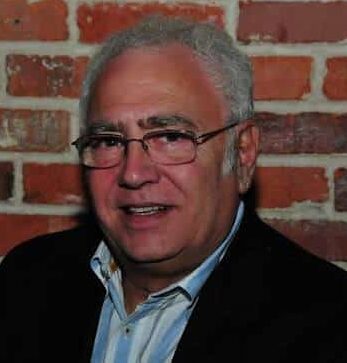
Dr. Robert Weil, Sports Podiatrist, specializes in orthotics that improve alignment, stability, balance & performance. He has practiced podiatry & sports medicine for over 40 years in the Aurora-Naperville-Lisle area and was recently inducted into the prestigious 2019 National Fitness Hall Of Fame. Dr. Bob has treated many of the world’s premier athletes from all types of sports. He is the host of “The Sports Doctor™” Radio Show.
Connect
Listen Now
Transcript
Dr. Sandi: Are you a parent or perhaps even a grandparent of a child or adolescent who is into sports or dance or music theater? Or are you somebody who is a recreational athlete yourself? Perhaps you are really into pickleball. These are some of the topics that we talk about on today’s show “Health Coach Talk” because the person who I am interviewing has been at this a long time, and he literally knows everything about this field. He knows every person involved. And he has worked with people who have gone on to be in the Olympics, for example. And I’m talking about the one and only Dr. Bob Weil. Let me tell you a little bit about him.
He has been a sports podiatrist for five decades. He hosts a live radio show, which has been going on for 45 years. It is called “The Sports Doctor.” In 2019, he was an inductee in the National Fitness Hall of Fame, and he’s the co-author of the bestselling book, “#HeySportsParents.” I know you are going to find my interview with Dr. Bob fascinating.
Dr. Bob, you have a functional medicine background. So, can you start off by telling us about how did you get interested in functional medicine?
Dr. Bob: I’ve been talking about it for 40 years. They just kept on changing the label. We’ve been talking about lifestyle medicine. And we are talking about a different type of interaction with the doctor and patient, which involves all aspects of that patient whether they are the best athlete in the world or their grandmother.
Like biohacking, functional medicine, like what was talked about years ago, the problem was it was called alternative medicine, Sandi. And it was me against you. And my namesake, he’s not a relative, but the famous Dr. Andrew Weil, he said, hey, what about the word complementary? So, now, we include various…whether we’re talking Eastern or Western medical cultures, and mixing them in with a very smart new direction which functional medicine is all about, which is again taking into account much more quality time with a patient, getting much more involved with them. I call it the new medicine, if you have your pencil out, everybody.
And the new medicine, Sandi, is very simple. Number one, eat smarter. And we can do 12 shows on that topic. Number two is keep moving. We could do 13 shows on that with choices. Number three is a big one. It’s reducing stress. So, all aspects of functional medicine now are including big time these aspects. I call it on “The Sports Doctor,” the mental game. And so, again, I integrated and talked about these with many of my guests over 45 years on live radio. How am I doing?
Dr. Sandi: Oh, you’re doing great. I can so relate to what you’re saying because I started out…I’ve been in this field coming on 50 years. And I was doing relaxation cassettes for kids and workshops for teachers feeling stressed.
Dr. Bob: That word alone, relaxation, is a gigantic topic. The late great Dr. Jim Vickery, who shared my radio show, a sports psychologist in the ’80s and ’90s with…he was a psychologist for prisons and for universities and for the Olympics. And he always had a couple of pearls for parents or the coaches, which was to try, number one, not to be a critic. And number two, don’t be analyzing your son or daughter’s activity on the way home in the car. And be a good listener. Are you enjoying yourself? Are you having fun?
So, these personalized aspects…and we pay a lot of attention to it in youth sports, which are a big business, but so is senior sports. I wrote an article in 2020 called “Pickleball is Physical.” Pay attention. Nobody knew how to spell pickleball then because we were seeing injuries coming out of our ears with people trying to get ready. So, the sports doctor’s in. How can I help you?
Dr. Sandi: Yeah. Pickleball is just phenomenal. I’m 76. All my friends, they love it, but the injuries are off the charts.
Dr. Bob: Yes. Here’s an interesting point. We just watched the U.S. Open. I was all excited. One of my former guests, a tennis sports medicine, Kovacs, Mark Kovacs, he was coaching the American, Tiafoe, who got into the semi-finals. So, there was Mark on TV talking about the whole mental game with these players and these kinds of challenges at the highest level of sports, and what a big deal it’s becoming.
And again, I acclaim functional medicine for psychologists. I’ve had psychologists on my show for a hundred years. Two months ago, from the Netherlands, Sandi, I had a Daoist specialist talking about the Dao, 2,500-year-old principles that were as pertinent today in the boardroom or in the locker room as they were points like simplicity and compassion.
But Dr. Vickery couldn’t use the word psychology in 1980, 1985. What do you mean? Is something wrong with me? So, he was a performance enhancement consultant. And all of these energy sides, chiropractic medicine, massage therapy, performance medicine, everybody and their uncle now is a coach. So, we’ve got to be very careful about all this overblow of misinformation in so many ways. And this is an area that’s very important because the word biohacking becomes such a big deal. A year or two ago, no one ever heard of it. It’s lifestyle medicine.
Dr. Sandi: Absolutely.
Dr. Bob: But it includes the mental side of things like your world, just as it does the physical side of things, maybe in my sports podiatry world. But as it does in science, where many of our colleagues now with the peptides and all these. So, we really need to be excited about the functional medicine side, but leery over, again, what you buy into, what you don’t buy into because by next week, they’ll be impersonating me with AI. So, in psychology, that’s why we always have people like yourself on who a long time ago were paying attention. My figure skaters 30 years ago were practicing visualization and professional sports thought…
Dr. Sandi: I used to teach that.
Dr. Bob: Yeah. Professional sports thought you were voodoo. What are you talking about visualization? Now, it’s well-accepted as a big deal. One of my favorite guests from Australia, Sue Williams is a sports hypnotherapist that…we’re paying a lot of sports pharmacy. We’re paying a lot of attention to now the role of the foot. Are you in the best shoe? The whole idea of foot mechanics. Almost all chronic or persistent lower extremity stuff, your back, your knees, your hips, 50% of the high performing girls I’ve seen, whether it was tennis, soccer, volleyball, you name it, were knee trouble. I’m a foot specialist.
So, that’s one of the messages. Pay big attention to the role of the foot. Gee, the kids got high arches just like his dad and grandma. Hey, Dr. Weil, I heard you operated on 75-year-old grandma for bunions. You operate on her 45-year-old daughter for bunions. And you’re seeing bunion problems in the 14-year-old. So, we need to educate big time the role of the foot.
And now, pickleball is a great example. You’re talking about a sport. If you play tennis…we just watched the great tennis. The U.S. Open was fantastic. And if you play tennis today in your 70s, you played it forever. You didn’t just take it up. Pickleball, we were throwing the same physical demands, moving in different changing direction. I’m not saying you got to be a superstar. You want to play pickleball. You got to get yourself in shape. You got to pay attention to two big things, strengthening your feet and ankles, and working on balance. That’s one of our nuggets for the day for all your millions of listeners. Viewers.
Dr. Sandi: Balance is so important. Stability, ankle stability of… Yeah. I pay a lot of attention to footwork. I’ve taken dance for years. I take ballet class and tap dancing and do footwork.
Dr. Bob: One of the finest athletes we’ve seen in topics and I have a…I have a contest a few times a year. And the question is, which sports demand the greatest athletes? I kind of started it after this kid, Evan Lysacek, who was 10 years old when I put orthotics in his figure skates. He was the Olympic gold medalist in 2010. It was just unbelievable the hoopla with that. And I asked his mother. She came on my show a week or two after he won the Olympics. I said, how did you know whose goal it was? Such a big topic. She said, Dr. Bob, we had ice time at 6:30 in the morning. I never had to wake the kid up. There he was in the car with his gloves on.
But some of the finest athletes I’ve seen are dancers. And one of our biggest problems, again, is overkill. Just too much, too aggressive, I call the terrible twos. But again, many times we see, we put orthotics in tap dance shoes. We put orthotics in any kind of sneaker for rap. And we might even put a soft device in ballet slippers because of the challenges that we see. And this is one of the big educational challenges we have, especially if you’re already specializing as a 10, 11, 12-year-old. Now, it’s very important. It’s why I co-authored the book “#HeySportsParents.” Now, the sequel is going to say “#HeySportsGrandparents.” What do you think about that, grandma?
Dr. Sandi: As a grandma. I’ll be first in line to get a copy.
Dr. Bob: Were you a sports parent or sports grandparent?
Dr. Sandi: I was a stage mom. So, my older daughter was a child actor. So, I was the mom who was…had the pager. It was, you know, in the ’90s.
Dr. Bob: Did she have a physical…was her participation physical on stage?
Dr. Sandi: Yeah. She was in music theater. So, she took a lot of dance, voice lessons. And so, she was in a lot of musicals. Yeah.
Dr. Bob: Very famous chiropractic physician, Dr. James Stoxen, who treated the Wiggles backstage. We all remember the Wiggles. But Gina Pongetti, who contributed to a book I was part of, which was figure skating and sports medicine, she as a therapist would see the stage people. And it was a huge challenge because these dancers, again, dancing all day, every day on stage, huge challenge. And when you add that it’s barefoot, then good luck to you. This is why we pay such big attention.
Now, even in the senior world and the super senior world, and one of the days I walk by my mirror, I say, holy cow, I’m one of them. But 80 is the new 60, and 70 is the new 50. But fall prevention is a very big deal. And this is why podiatry should be very important as far as whether you’re in the best shoe for you and your foot mechanics, and whether or not you really need to pay more attention. Still today, the most common injury in sports are ankle injuries, let alone if you’re coming down for rebounds every day or you’re flying through the air. When the Peggy Flemings and the other great champions of years ago were winning the gold medal in women’s figure skating, none of them did triple jumps. Today, they’re working on quads.
So, the physicality, you see it when you watch the Olympics. And we see… I was celebrating. I had my latest gold medalist in the Winter Olympics, Danny O’Shea, winning pair skater and figure skating. He was like 13 when I put orthotics in his skates, moons ago. He just turned 35.
So, I always tell my youngsters…and I still see some of these 10, 12-year-olds. There are kids in…whether it’s in what…you were a dancer, or figure skating. Now, even tennis and soccer where that young boy or girl wants to specialize. Everybody in sports medicine wants these kids to play different sports. We want them to use different parts of their body and have different experiences. That’s great. Unless you’re a gymnast, or a figure skater.
So, we treat the…I wrote a chapter in my book — it was called “The Prodigy Sports” — about the kind of attention we need to pay. Imagine a young tennis player who’s swinging the racket 1,000 times a week. And my famous sports colleague, late great Bob Gajda, who was a Mr. America, Mr. Universe in the ’60s, went on to become one of the world’s top trainers, whether it was in rehabbing something, or enhancing. That’s why the John McEnroes came to him, and the Jim McMahons, and the Chicago Bears. You remember the Super Bowl Bears?
Dr. Sandi: Oh, for sure. I remember it clearly.
Dr. Bob: Do you remember “The Super Bowl Shuffle”?
Dr. Sandi: ’86, I think.
Dr. Bob: It was ’85, but do you remember “The Super Bowl Shuffle”?
Dr. Sandi: Oh, for sure. Yeah.
Dr. Bob: Six of them were in my orthotic. I don’t want to age myself. So, that’s one of my claims to fame. Yes. But Gajda paid big attention to balance and stability. Every athlete he saw, you walked into his gym, you might see five mini trams. And you might look on one mini tram, and there’s a baseball player with a glove on playing catch balancing on the tram. And next to him might be a tennis player with their racket, swinging the racket, different parts of the tram, or the next one might have a hockey stick in their hands.
So, we called it instability training, where you create imbalance. Very simply think of balancing on one foot, let alone balancing on a soft surface. One of the most fantastic pieces of equipment that had been part of my radio show on and off the years, it’s called the sand dune stepper, and it simulates being on the sand.
Now, my co-host in the book, Sharkie Zartman, grew up and became a beach volleyball national champion. Again, every athlete Gajda worked with included barefoot work, whether it was on the grass, whether it was…he wasn’t talking about running marathons barefoot. He was talking about including being…we all think about walking on the beach, you know what a chore that is with your feet. So, you’re working the gripping power.
So, without driving yourself crazy, or getting too sophisticated, again, it’s a chapter in the book. There are two exercises all of us should include, whether you’re the best athlete in the world or their grandmother, whether you’re talking about your 13-year-old dancer, granddaughter, or your high-performance football son, those two exercises, again, strengthen feet and ankles. Learn how to use rubber bands, learn how…you can be a 10-year-old with a rubber band, and be able to benefit from it. And the best athlete in the world…you see it all over the place. When Gajda first talked about…and Jack LaLanne, who I saw on black and white television, a colleague of mine. And the resistance bands, magic. But you have to…
Dr. Sandi: …the rubber band.
Dr. Bob: You have to know… For example, if I have the rubber band around my foot, and I am attaching the band to my knee, for example, and I am pushing down against the band like the accelerator of a car, I am strengthening my calf and my Achilles. And you could be a superstar and benefit just with a comfortable 10, 12 reps. If I attach the same rubber band to my foot, but the band’s attached in front of me, and I’m pulling the foot back, called dorsiflexion, I’m strengthening the shins. All the muscles, Gajda made a big deal out of it. He invented a piece of equipment where you were doing like razors with the piece of weights between your feet.
Now, if I have the band attached, and I’m rolling the foot in, I am now working the whole ankle complex on the outside. If I change it, and I’m moving inside, I’m now working…this is a fan. You’re working every muscle you have, every tendon. Now, if you need, you go to my friends at Athletico, or one of the other physical therapists. And in one day, they can show you, or your superstar kid, a good, great program that you can do at home.
Now, the second exercise you want to pay attention to is balance. So, we would have…again, whether it was the mini tram…if I look at the tram as a clock, and I am standing at 9:00 with my right foot, barefoot, on the tram, if I had sensors all over my body, every one of them would light up. Now, Gajda called it strengthening the stabilizers, or the brakes. Think of yourself coming down from a jump, or changing direction. Every muscle, tendon in your body is on. So, if you’re simulating that in the strengthening, think of tilt boards, and like what we’re talking about, where you walk into the gym, and you have, or the BOSU, famous, the sphere.
Dr. Sandi: Yeah.
Dr. Bob: If you stand on the BOSU, and we have…again, you lit up with sensors, your jawbone will light up. Again, the idea is not to go crazy. And I’m not saying replace everything else you do. But I don’t care if you are a runner, or you are a football player, or you’re a walker, or you are whatever you are in your sport, if you add these exercises, you don’t know what you’re doing, talk to a therapist, or your sports medicine doctor.
And you can…again, you can test the best athletes in the world with bands, and with balance work. You don’t want to be overdoing it. You want to be educated. And these are the things, again, like when we talk about the new medicine. When I’m saying number one, eat smarter, you might be looking at all aspects of nutrition in your… I have guests on my show who have contributed to my book. She’s a sports nutritionist, Katie Raskin, and working with kids or teams. Now, she uses the term fueling. Now, that lights up, right? That’s a great word.
We all know you can’t watch…you know that in the United States, we’re one of only two countries that allow TV advertising of prescription drugs. New Zealand’s the other. So, if you’re not watching a commercial for drugs, you’re watching one for diets. So, when we’re talking eat smarter, be educated. Now, we just were talking about that keep moving side. You want to go to the gym, you want to be a yoga, you want to do Pilates, there’s all sorts of ways, whether you’re a runner, all sorts of ways to keep moving.
The challenge today, and the reason I try to get experts like yourself, I’m calling it all hands and feet on deck, is now we have juvenile type two diabetes. We never had it. Twenty years ago, it was adult onset diabetes, and it had to do with obesity and overeating and all these things. We all know. All of a sudden, there’s an explosion of teenagers in the word diabetes.
Now, one of the major keys of those first two keys, we need children to understand, and their parents, very early. Doesn’t mean you got to be on a team. What it means is you got to include something to try in the next generation to break this scourge of diabetes in teenagers. And again, the stress side is another big one. That’s why you as a psychologist is such a big part of the team. I’ve had psychologists on my show forever, and we would be talking about all these challenges. Are you a proponent of meditation?
Dr. Sandi: Oh, absolutely. I’ve been teaching that, but you don’t have to just sit still. You can be taking a walk and be meditating. You can be washing the dishes. You could be swimming. I meditate when I swim.
Dr. Bob: That topic that you just talked about in that sentence is one of the most newest, effective topics over this generation or two that I’ve heard from every expert in your world is mental training, psychotherapy, psychiatry, etc.
One of the contributors to my book, Dr. Denise McDermott, is an adult child psychiatrist. Gosh, 15 years ago, she was telling me, look out for social media when it comes to these kids, when it comes to these… So, the education side of like what you’re talking about, I wrote an article in 2008 and it was called…it was for school systems, “Let’s Get ‘Em Walking.” I wanted school systems to include in the curriculum. I gradually realized it’s not easy changing things in the school system.
Dr. Sandi: No.
Dr. Bob: But the education that you just mentioned, again, the whole idea that you have a responsibility for your own self-health, this is the whole point of functional medicine.
Dr. Sandi: That’s right. And that’s why we train health coaches so that they can…for the whole family, and especially kids in sports. I always thought, as a psychologist, what I focus on, what’s right with you, what’s strong with you, not what’s wrong with you. And that’s why I started a school to train health coaches so that it can be just like you have a coach in your sport. You have a health coach helping you to do all the things…
Dr. Bob: Yes. But one of the challenges today is the mixture. Everybody’s an expert. In the past, if you want, you saw a psychologist or psychiatrist, maybe a psychotherapist. You didn’t see a health coach or a fitness coach. They didn’t exist. The word coach meant you were on the sidelines maybe in football or basketball. Now, there are a lot of good systems. This is why I feature people like you on my show.
However, when I ask everybody like you in the world of expertise this question, hey, how are we doing on these challenges that you’re talking about, every one of you guys roll their eyes. They all say, man, at best, we’re treading water. Childhood obesity is as bad as it ever was. Every expert I have on internationally, depending on what their area or vocation happens to be, understands, again, these kinds of challenges. Again, you have big pharma. And again, we have the greatest medicine in the world. God forbid there’s an emergency. We have the greatest surgeons.
I have one of my favorite guests is the orthopedic surgeon of the Yankees, Dr. Chris Ahmad. I have Dr. Brian Cole with the Bulls and White Sox. We have Dr. Nick with all these Philadelphia teams. Every one of them are competitors in one regard, but they take seriously the new medicine and your inclusion. Again, whether it happens to be the first baseball player from the Yankees and White Sox that I put in orthotics in 1978, Eric Soderholm, he had a hypnotist. The late Harvey Maisel was part of his team. That’s why he came to Gajda because of his knee. And his team said, you have a hypnotist? What are you? Again, what are you, in some sort of voodoo?
So, it’s interesting how the mental game…and one of the things I wanted to ask you as a coach in that world, how do you find the cooperation in the medical world in this Wild West of coaching? And there are programs everywhere you look. How do you navigate? I call it collaboration. We need collaboration. How do you see it?
Dr. Sandi: So, the coach, the health coach is a member of the collaborative care team. And we now have over 500 studies and over 100 randomized controlled trials that are showing how effective coaching can be. And what it does is increases self-efficacy, number one. You can feel like you are in charge. So, as opposed to psychotherapy, where you often get the message, oh, I’m a victim and I had trauma and I need therapy for the rest of my life. In coaching, the sense is, what’s strong with you, and how can you use lifestyle? If you eat better, if you get out and move, if you get fresh air, if you get enough sleep and you have meaning and purpose in your life. And a lot of these kids, it’s meaning and purpose has to do with really finding fulfillment in what they’re doing. They start to feel better. And so, that’s key. But that’s how we get the doctors buy in because we have the research now. In fact, Medicare is actually going to be reimbursing for health coaching in 2027.
Dr. Bob: Yeah. That’s exciting to hear because I’ve been advocating that for 40 years, give or take a few weeks. The idea, the science…like when I’ve had on…whether it’s soft tissue…Bob Gajda was doing soft tissue therapy in areas. I’ve had the author of the book “ICED!”, which we talked about the fact what a waste of time that is in so many ways of enhancing healing. And the idea that a lot of these complementary medicine inclusions, think acupuncture, think massage. Now, the science now is backing up that this is effective and helpful. In the past, these were a tough sell in that regard.
And that’s why we need to include the…again, even if I go back to type two diabetes, and I say we need to get all hands and feet on deck, we need these general practitioners. We need these people who are coaching, we need individuals who might be involved in the traveling teams and in the club teams. We’re talking about these… There is more pressure. The more talented your son or daughter is, in this day and age, when you see an Olympian who’s 19 years old on television, you know they’ve been specializing since they’re 10.
Dr. Sandi: Sure.
Dr. Bob: Now, that’s not for everybody. This is not for everybody. But it is a impressive group of families. The last part of my book is called parents’ perspectives. And what’s interesting, the third part of my book is called the opinions of others. So, I have eight different opinions, nutritionists, personal trainers, mental coaches, psychologists like yourself, putting your two cents in. But the last group, which are six parents, I’m asking them what’s it like raising a high-performance kid? What are some of the challenges? And the perspectives many times are very interesting. Because today, again, youth sports is $100 billion a year business. Everybody’s an expert. And we’re excited about this documentary in the future called “Where Our Children Play” that I’ve been involved with for a long time, Joel Franco and Chesapeake Films, where he was a sports dad. We all can picture the overzealous parent on the sidelines.
Dr. Sandi: For sure.
Dr. Bob: Let alone the doctors who had been involved in some of the abuse. When Sharkie talks about sports parenting 101 in a book, she talks about all areas. Where do you…are your son and daughter having a good time? This is why Dr. Vickery, besides saying to parents, don’t be a critic, he would say to them, be a good listener. Are you hurting? Dr. Weil, my daughter, she doesn’t take two Advil twice a day, her shins are killing her on the volleyball team. So, overkill. Big.
That’s why it…again, hey, the book. I say it’s an essential guide for a parent with any kid in sports, because the more talented your daughter is as a dancer…she’s dancing 10 days a week. She’s doing all sorts of sports. And I can tell you, ballet has always been a big part of the training of every figure skater that I’ve dealt with over the years. You’re talking about the demand on the body. Are you coming down from a triple jump? You’re hitting the ice with six to seven times your weight. Every step you take when we walk, you’re generating 50% of your weight up your legs, hips, and spine. You start running and jogging and playing pickleball at an earlier and earlier age, you need to strengthen those areas. Gajda said, strengthen the brakes.
So, think about it, whether you’re coming down from a rebound or you are rushing the net, or you are running to first base, your body type, your flexibility, all of these things go into… That’s why, as a parent, you got to be talking to your kids, and you need to be aware of what their physical history is.
Dr. Sandi: Yeah. Such a good point. I encourage our listeners to get this book if you are a sports parent, grandparent. And this has been a fascinating conversation. I am so looking forward to being a guest on your show to continue this conversation.
Dr. Bob: I want to leave you with if people want to know about where we are…
Dr. Sandi: Where would they find you?
Dr. Bob: Yes. If they go to thesportstoctorradio.com, they can find out all about the National Fitness Hall of Fame, the radio show.
Dr. Sandi: Oh, yes. Okay.
Dr. Bob: And they can go back and listen to people from moons ago. And again, congratulations to you and what you do, because I think it’s a major key for the…I call it the three areas, which is awareness, number one, education, number two, do something about it. It’s hard to beat psychology, my friends. Thank you.
Dr. Sandi: Thank you.
Health Coach Talk Podcast
Hosted by Dr. Sandra Scheinbaum
Conversations About Wellness Through Functional Medicine Coaching
Health Coach Talk features insights from the most well-respected names in health coaching and Functional Medicine. Dr. Scheinbaum and guests will explore the positive impact health coaching has on healthcare, how it can transform lives, and help patients achieve better health and wellness outcomes.

Check us out on these platforms: