Why Beta-Glucan Matters for Immune Health, With Dr. Chris D’Adamo
Could beta-glucan be a missing piece in the immune health conversation? This week on Health Coach Talk, Dr. Sandi welcomes epidemiologist and integrative medicine researcher Dr. Chris D’Adamo to explore beta-glucan, what it is, how it works, and why it is gaining attention in conversations about immune resilience and longevity. As Director of the Center for Integrative Medicine at the University of Maryland School of Medicine and a longtime leader in dietary supplement research, Dr. D’Adamo brings scientific rigor and practical insight to this important discussion.
“I do view beta-glucan as a foundational supplement… I think a lot of it comes down to a really unique mechanism that beta-glucan has in the immune system.”
Dr. Chris D’Adamo
With thousands of studies behind it, including randomized controlled trials, beta-glucan has been investigated for immune support, respiratory infections, lipid balance, mood, and as an adjunct in cancer care. Dr. D’Adamo explains the unique mechanisms that make beta-glucan so compelling, particularly its impact on innate and trained immunity, and why it may function as a foundational supplement during periods of stress or seasonal illness. The conversation also addresses dosage considerations, cycling versus year-round use, optimal timing, and why product quality can dramatically affect outcomes. Drawing from more than two decades of clinical research, including leading the randomized controlled trial on functional medicine health coaching in partnership with FMCA and the Institute for Functional Medicine, Dr. D’Adamo shares why rigorous evidence in the supplement space matters and how it continues to evolve.
For health coaches and wellness enthusiasts, this episode reinforces the importance of research literacy in a supplement marketplace that can feel confusing and inconsistent. Clients may be skeptical of supplements altogether or, on the other end of the spectrum, adding products without fully understanding quality, interactions, or evidence. Dr. D’Adamo discusses how third-party testing, manufacturing standards, and clinical research help distinguish effective products from ineffective or even problematic ones. His insights offer health coaches a grounded, science-informed framework for supporting client conversations around immune health, foundational supplementation, and critical evaluation of health claims.
Watch The Episode
Episode Highlights
- Examine the science behind beta-glucan and its unique role in trained immunity
- Explore research on respiratory infections, immune resilience, and longevity
- Understand why supplement quality and manufacturing standards influence effectiveness
- Delve into how health coaches can support research-informed supplement conversations
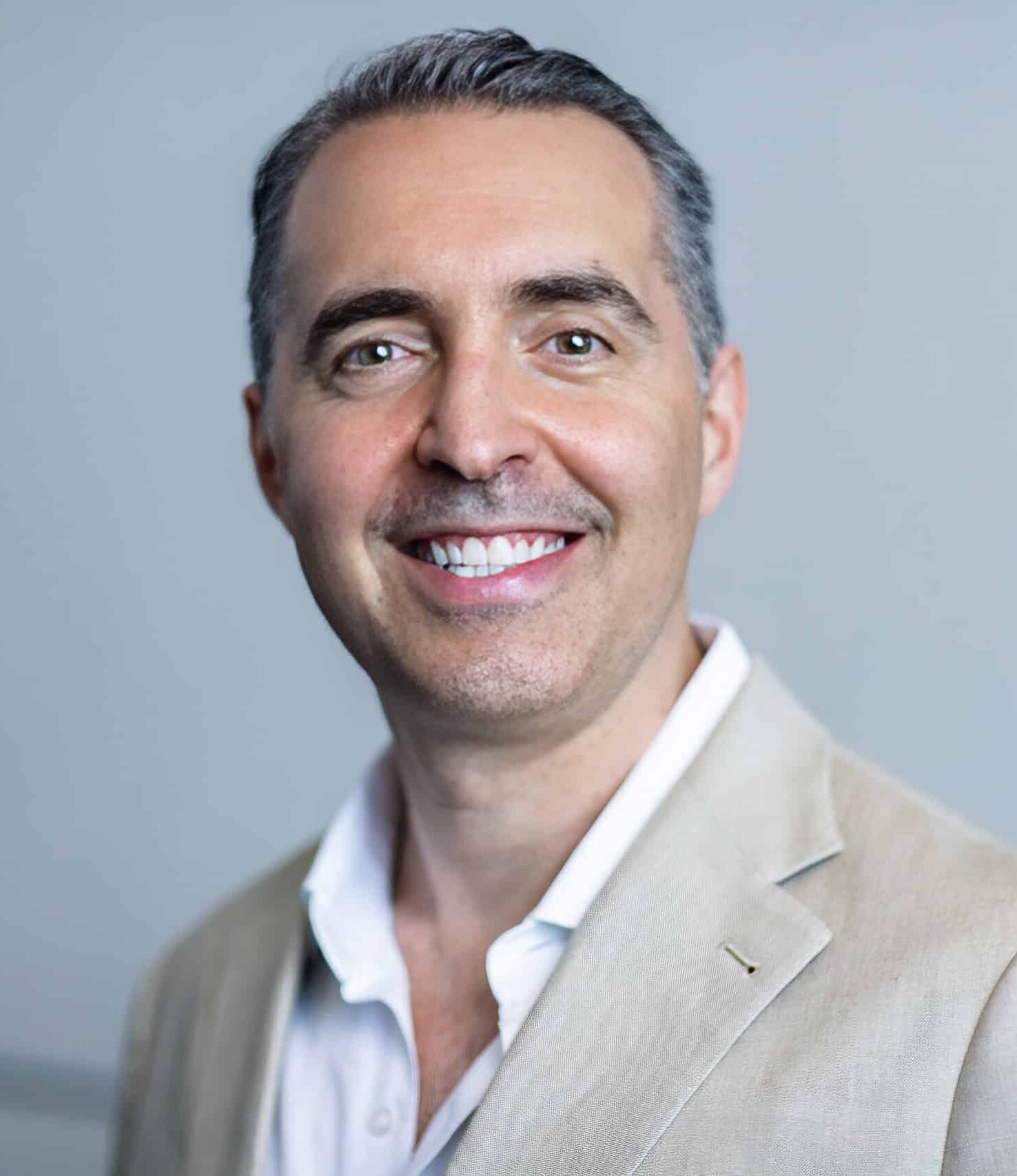
Dr. Chris D’Adamo is an epidemiologist with expertise in the relationship between modifiable lifestyle factors and human health across the lifespan. Dr. D’Adamo received his Ph.D. in Epidemiology from the University of Maryland School of Medicine. He is a partner at OvationLab and previously served as the Director of Research of the Center for Integrative Medicine at the University of Maryland School of Medicine.
Dr. D’Adamo has authored over 100 publications in peer-reviewed scientific and medical journals and has contributed to numerous medical textbook chapters. He gives invited lectures across the world on nutrition, dietary supplementation, physical activity, stress management, and other topics in functional, integrative, and lifestyle medicine.
Connect
Listen Now
Transcript
Dr. Sandi: Welcome to “Health Coach Talk.” Today we are talking all about beta-glucan, what it is, what it is being used for, and if this is something that would be beneficial to your supplement regimen. So, we also get into the importance of research and why it is important when you are exploring in the supplement world to know the research behind these various supplements and also how do you determine what is a quality supplement because it may differ from manufacturer to manufacturer. So, these are areas where my guest is a real expert, and I really value his expertise.
I’m talking about Dr. Chris D’adamo. He is an epidemiologist and a recognized expert in the impact of lifestyle nutrition and modifiable lifestyle factors on human health and wellness. He serves as the Director of the Center for Integrative Medicine at the University of Maryland School of Medicine. He is also a principal investigator leading a wide array of research projects investigating dietary supplements, exercise for chronic disease, and multimodality integrative practices. He is a senior research advisor for the Institute for Functional Medicine and sits on scientific advisory boards for several nutrition-based organizations. He is a principal of OvationLab, and I am proud to say that he was the principal investigator for a randomized controlled trial that FMCA engaged in with the Institute for Functional Medicine that was published in “Medicine” a couple years ago. I know that you will enjoy this conversation with Dr. Chris D’adamo. Welcome to the podcast, Chris.
Dr. Chris: Thanks, Sandi. Good to see you.
Dr. Sandi: Good to see you. Now, let’s dive right in. You first of all work with OvationLabs. Can you tell us what that is? And I am privileged to know the people involved with that organization. And specifically, you are doing work with beta-glucan, which I just became familiar with. I knew a little bit about, but I’ve been so excited about the potential. So, we can get into that. So, welcome. We’d love to hear about your work with Ovation and then moving on to beta-glucan.
Dr. Chris: Right on. Well, OvationLab, we do a number of different things in the functional integrative root cause medicine space, working with practitioners like those in your audience and around engagement in different…whatever it might be, whether it’s natural products or different therapies or systems. I mean, a whole variety. One of the things that makes it so exciting for me is the variety and breadth of what we do.
So, I’m a clinical researcher by training. I spent about 20 years at the University of Maryland School of Medicine doing clinical trials and other types of studies, largely on natural products but also more broadly. For example, we worked together on the functional medicine coaching randomized controlled trial with IFM and it was a great experience. So, sometimes we sort of zoom in on a specific therapy or a preventive approach like beta-glucan we’ll talk about today, and other times it’s more practice level or coaching, whatever it might be. So, it’s been a lot of fun, and we’re doing a lot of different studies and a lot of really interesting work. And I’d say one of the most interesting things we’re doing is our work with beta-glucan.
Dr. Sandi: Well, we’re excited to hear about it, and it’s so important to have research. For so many years, we have not had research because the big funding goes to the pharmaceuticals and able to have those kinds of studies, but I was always asked, “Well, where’s the evidence? Where’s the evidence that health coaching worked?” And thanks to working with you in that collaboration, we showed the effectiveness of health coaching. And now we rather than just saying, “Well, I’ve seen it work anecdotally,” but really having the data to show the effectiveness, and so the importance of that for the supplement industry.
Dr. Chris: Yeah, totally. I mean, it’s great. For the study that we did together, it was a randomized controlled trial, so that’s about the highest level evidence. And there’s a lot of that for beta-glucan too. And what I found so interesting about this working with practitioners, training practitioners, medical students, and so on is how little is known about beta-glucan. I mean, your reaction is the most common one. People go, “Yeah, I’ve heard of that.” But given the breadth of evidence, there are thousands of studies supporting beta-glucan for a variety of different use cases. For cancer alone, there are dozens of clinical trials using beta-glucan, usually as an adjuvant for cancer treatment. Then you look at the evidence, again, lots of clinical trials for respiratory infections and immune enhancement. That’s one of the most interesting things given its sort of core role in human health and longevity more generally. Then you have… You’ve got meta-analyses of clinical trials for lipids, for mood, and it’s one of those things where you sort of say, “How can this be doing so much for human health?”
And I think a lot of it comes down to a really unique mechanism that beta-glucan has in the immune system. So, beta-glucan is just…maybe to even say what it is, it’s a polysaccharide that’s in a lot of different foods and plants. So, we often think about mushrooms, and mushrooms have been used medicinally for thousands of years in traditional Chinese medicine and Ayurveda and other medical systems. It’s also in seaweed and yeast, where a lot of the best supplements are actually yeast-derived. And what they do is they bind to these receptors. There’s two in particular that are unique, one called Complement Receptor 3 or CR3, which used to be called the glucan receptor because it’s specific to beta-glucan, and then Dectin-1 is the other one. So, what happens, and I’ll sort of pause for discussion on what it all means, is this stimulates the immune system to produce cytokines, natural killer cells. It greatly enhances macrophage activity and phagocytosis, which is where the macrophages gobble up pathogens. And therein we clearly see the implications in infections, respiratory infections, in cancer, which is largely an immune system dysregulation. So, that’s kind of the main thing.
But then there’s all these other… Like the prebiotic activities that these have. And we know when we’re supporting the gut, what does that end up doing? It has obviously for digestive health, but even the gut-brain axis, we look at some of the studies on mood. So, I’ll stop there. I mean, that’s how it can be doing so much. I mean, there are a few natural products, I think of like SAMe’s, another one also involved in methylation. It’s like, wow, okay, so for joint health and depression and liver health. I think when you get to these fundamental mechanisms, the way beta-glucan does, you end up positively impacting a lot of different aspects of human health.
Dr. Sandi: Well, that was really important information. And we train health coaches who really do not… It’s outside of their scope of practice technically to prescribe supplements. But what you just went through is really so important that people understand and know about this. And health coaches can provide information. And often one of the biggest things they do is clarify myths or help people. They may have somebody who comes in who says, “Oh, I don’t believe in supplements,” or just the opposite, and they are taking handfuls with every meal, hundreds a day. They see an ad, “Oh, I guess I’ll add that to my stack.” And so I would imagine that for those people, like beta-glucan, and I am guilty of that but, “Oh, okay, I’ll order some of that and I’ll add that,” but often not realizing some of the interaction effects.
So, can you talk about that? Like, okay, if somebody is listening and they say, “Okay, I’m sold, I’m going to add beta-glucan,” what are some, first of all, some of the contraindications and anything that would be a warning that it should not be used? And of course, it’s always good, and I do want to point out that this conversation is for educational purposes. We are not prescribing beta-glucan or anything else for any individual who’s listening, to always check with your healthcare provider, and it’s not one size fits all. So, going with that, who shouldn’t be, or should be very cautious about, jumping in with beta-glucan?
Dr. Chris: Where do you want to start, right, is, yeah, that… So, you know, I do view it as a foundational supplement. It’s one I take myself, and there’s a lot of interesting reasons why. I just gave the CliffsNotes version there. But people who wouldn’t, given the immune activity, if someone is…I mean, if they’re undergoing an organ transplant or if they’re on an immunosuppressant, you know, these are areas where you would want to, at the very least, exercise caution. You know, probably talk with your provider. And I think a lot of the education we do is help educate providers to understand these things. So, that would be an area where, you know, on an immunosuppressant of some sort, that you might be a little bit concerned.
One of the classically people have been concerned about autoimmunity, it’s like, well, if this is enhancing immune function, well, then would we not be concerned about autoimmunity? It turns out there’s actually data that it can be helpful. Beta-glucan is helpful in those situations. I mean, nothing’s a panacea for everything. But, you know, one of the ways that beta-glucan works also, and not to get too technical, but, you know, in the immune system, you’ve got adaptive immunity and innate immunity. So, you’ve got your innate, sort of the first line of defense that’s been preserved through, you know, millions of years of just evolution and different things, and adaptive, which is, you know, that’s the learned, which is interesting. And that’s more like antibodies. It’s your body’s exposed to something and then it, you know, responds to that going forward.
Then there’s this one called trained immunity, which is actually training of the innate immune system. But it is kind of a memory. So, it’s one of those things where, you know, I think it’s especially interesting when you look at, because you can have a trained immunity that’s negative, where you’re exposed to certain things and the immune system just kind of goes haywire, or you can have it where it’s positive. And beta-glucan is one that has that positive effect. So, it’s one of those ones that I think makes a lot of sense especially during cold and flu season, you know, to take beta-glucan just as extra support. Again, yeah, you don’t make medical claims around it, but it’s one of those foundational ones like keeping vitamin D levels up and, sort of, zinc, vitamin C. And I put beta-glucan right into that mix, you know, especially during periods of stress, during periods of, like, you know, travel or an airport or an airplane with all these people, or taking public transportation, or whatever it is. We’re going to be exposed if someone else in the house is sick. Those kinds of things.
So, you know, again, I think that the not would be people on immunosuppressants, and the who should take it would be, you know, most everybody else should at least consider it if they’re concerned and interested in supporting their immune function.
Dr. Sandi: That is so helpful. And I had heard you on Kara Fitzgerald’s podcast talk about it. And so I immediately messaged my daughter. Okay, I’m sending you my daughter who was about to go into rehearsal for a place she’s working on, and my daughter with kids. And they, you know, get sick all the time and she’s always getting sick. You need this. I’m sending it to you. And she said yeah.
Dr. Chris: Yeah. No, that is… Yeah. Yeah. Yeah, that’s for sure. I mean, I think with that… And even, you know, it can be beneficial for kids. Again, the trained immunity aspect, where you’d be training their immune system, it would take less, you know? But a lot of the studies… So, the respiratory infection studies have been across the lifespan. So, it’s been everything from kids all the way through older adults that shows lower frequency, severity, and duration with beta-glucan. And it’s a little bit different than some of the other things where it’s like, you know, the first sign you might really go take a lot of zinc or elderberry or something. You know, it’s about a week or so with beta-glucan to kind of build up, you know, some of the activity that you went for. But that would be a classic use case is some have little kids, you’re healthcare workers, or whatever it might be where you’re around a lot of people, and especially this time of year where there’s a lot of people that are coming down with things.
Dr. Sandi: Yeah, there’s differences of opinion, not specifically for beta-glucan, whether she takes something continuously or cycle on and off. So, what are you finding with beta-glucan? Is this something that is in your regimen? Like, I’ve heard, you know, with vitamin D, I take it every day regardless. It may boost it during times when cold and flu season or if I’ve been exposed. But what are you finding with beta-glucan in terms of…
Dr. Chris: I think that that sort of cycling makes a lot of sense. So, with beta-glucan, for example, what I do and a lot of people recommend is I take a lower dose pretty much throughout the year and then amp it up, you know, to a higher dose during cold and flu season or if there’s some episodic reason, whether you’re going to where other people are sick or traveling. But yeah, there’s a lot of wisdom, especially with different adaptogenic herbs, to cycle it. I mean, that’s what people have done historically for thousands of years is to cycle these kinds of things. So, I think that same phenomenon applies here, maybe with those. And you can maybe even take some time off altogether if one was interested, like during the summer months or something like that. But yeah, I think that makes a lot of sense here.
I mean, typically, now we can also talk about, you know, some of the differences between products on the market. But a very good beta-glucan, you may do, like, 100 milligrams, you know, year round and then during cold and flu season, bump that up to 250 or 500 milligrams, something like that. That’s what I do. It’s what a lot of people recommend. And if someone’s acutely ill, maybe even a little bit more than that. We’ve seen in some studies that that can be helpful.
But the big caveat there is that the activity of commercially available products varies so much from brand to brand. And this is not just a beta-glucan thing. This is true across all supplements. Our team just wrapped up a five-arm study of different CoQ10 products, you know, different commercially available ones, and there are some differences between them. But with beta-glucan, I wish we had more studies like this. There are head-to-head studies of dozens of different products that were led by Dr. Vetvicka at University of Louisville that went and got off-the-shelf products and showed the difference in that, as I was mentioning, phagocytosis activity and other activity, and showed dramatic differences between brands, like dramatic.
So, the one that our team recently did a clinical trial, beta-glucan, actually looking at longevity, which we can talk about, too, and we use BWH Labs products because in the studies by Vetvicka, the head-to-head studies, they were as efficacious at phagocytosis at an eighth of the dose or even smaller, again, showing that supplements are not all created equally.
Dr. Sandi: Yeah, I recently met them at a conference. It was at A4M and was really impressed with that, with their work, their team. And going back to the subject of health coaches, I think that this is one of the most important roles is to educate people about what a supplement needs to be and what is out there. And I think it’s getting even worse with adulteration, with buying things on Amazon where you don’t know what you’re getting. It could be completely, you know, when they’ll empty the capsule, they’ll change the label. They’re getting very, very sophisticated about, you know, just as they have a whole business with getting fake driver’s licenses. Well, the same thing. This is a big business with supplements. And so there’s a lot of fraud going on. And so buying from reputable companies and helping people to understand why this may cost more than, you know, the discount variety, and how that discount may be very harmful. It’s harming your health or at best it’s not doing anything. And so, yeah.
Dr. Chris: Totally agree. I mean, it’s one of those things if you think about it, like I would say to you, like, you know, value shop your sponges or something like that, not things that you’re going to consume that have biological activity. And think about it too from the value proposition even, if you’re getting the same effect at one-eighth of the dose, well, is it eight times more expensive? So, I think you’ve got to think about the efficacy of what you’re actually getting, because a lot of times people are just wasting their money because it’s not doing anything, or worse, you know, because there may be heavy metals or, you know, yeast and molds or other things that you don’t want in a supplement. So, it’s an area where I’ve been passionate about, you know, having there be more clinical trials, more third-party lab testing of products. And I wish there were more studies like the Vetvicka beta-glucan ones, with the BWH Labs always coming out on top, because that’s what we need. That’s what practitioners need. That’s what consumers need to know. So, we’re passionate about doing more of those studies too on different products.
Dr. Sandi: There is an excellent book. It’s a number of years ago now. I believe it was called “Pandora’s Lunchbox,” something like that. But there were whole chapters about these vitamin factories in China that are just spitting out, you know, these vitamins and selling them here. But getting back to beta-glucan, is there an optimal time of the day to take it? Should it be on a fasted, empty stomach? I’ve heard 30 minutes before eating. What do you recommend?
Dr. Chris: Yeah, that’s a great question. I mean, I think for optimal, probably be first thing in the day, like in a fasted state. In our study, that’s what we recommended. People can take it, you can take it. It doesn’t need to be. It’s pretty versatile. Certain things you want to take with a meal because they’re fat soluble, other things you want to keep away because you don’t want them to interact with different foods. This one is pretty versatile, but it’s still probably optimally to have it, you know, kind of first thing in the morning would probably be the best time.
Dr. Sandi: Okay, so sounds like a plan. And I think that this is just really exciting, the research that has gone into beta-glucan and the potential. So, where do you see this field heading? Just, you know, in general, what I’m seeing is there’s so many new delivery methods, like there’s ads for a company with a peptide, BPC-157. It’s like, oh, it’s an oral spray. And they say, forget injections. You can do it this way. Or there’s troches. I got an old sample and I got a tiny little… You just put them in your mouth, between your cheek and your gums. And so what do you see in terms of the supplement industry and some of the new developments and delivery methods?
Dr. Chris: Yeah, I think all that stuff is pretty exciting. You get the troches… is a company that’s doing that really well. And yeah, oral peptides. OvationLab did a study of InfiniWell’s oral BPC-157.
Dr. Sandi: Oh, I just got that. That’s the one you spray. Yeah.
Dr. Chris: Yeah, yeah. So, this was a capsule one, but yeah, there’s all kinds of innovations that people are coming up with. Yeah, I mean, different delivery, liposomal stuff, of course. You know, there’s some good brands that have been doing that. So, yeah, you know, I think it’s interesting to see the new delivery mechanisms. And I think just having more research on these things so that we know how is this going to work, because sometimes the marketing gets ahead of the actual evidence or, you know, effects of things. But it is an exciting time to be in this.
I’m one of those too. I take quite a number of different things, but I’ve actually become a little bit more discerning as time has gone along. Because I think, you know, the core foundational lifestyle stuff is really where it all is, sleep, movement, diet, light, all that kind of stuff. But there are a lot of supplements that can help too. And I think different mechanisms can make it more convenient for certain people. Most don’t like taking 10 different capsules a day or whatever, so it is kind of interesting that we have these different delivery mechanisms.
Dr. Sandi: Yeah, I’ve been… The spray, the glutathione spray, where you just put it on your arm and rub it in. And so there’s a lot of new developments. And I think that it’s, again, where health coaches can provide that education and also can help people to not be tied to one product. So, certain cases like with beta-glucan, BWH is a reputable, and that’s the only one right now. But in terms of vitamin D offerings or manganese, they like to switch off companies and find the reputable ones but rotate them.
Dr. Chris: I agree. I mean, if a company has third-party live testing that shows you, all right, what is on the label is in the bottle and what’s not on the label is not in the bottle. And if they’ve got, especially, research on their finished product, then that’s a great thing. And I think we as consumers and coaches and educators, I think we owe it to ourselves to demand that. I think it is raising the bar. I think the expectation now is more than just, “Oh, research is a great differentiator,” but it’s actually something that brands should have because that’s what people want. But yeah, I agree completely.
Dr. Sandi: Yeah. What do you see in terms of acceptance in the traditional medical community? Any thoughts on… For primary care doctors, is there any increased interest in this area? If you were to present a study on beta-glucan, for example, or other products, is there more acceptance or is there still this sense of like, “Ugh, that’s…”
Dr. Chris: Yeah, sure. I know what you mean. Yeah, I think there’s an increasing acceptance, and that includes nutrition more generally. And I saw that change even with 20 years. And I’m still affiliated with the University of Maryland School of Medicine. I still teach in a couple of classes there, and I have seen growing interest. I’ve seen growing practice. So, more and more people are taking, “This is what I’m taking.” It used to be you may get a couple of people taking a gummy multivitamin, but now a lot of the physicians in training and those even in practice, I think more broadly, are accepting of this. Because usually they would just say, “Oh, it’s expensive urine,” which was a disservice because one, there was a lot of evidence for supplements, and two, actually, some certain ones can be harmful for people. So, I’ve seen that change.
I think what they don’t fully understand, but a lot of people don’t understand this yet, is that as you noted, it’s still tough to get this research done because there’s not the big financial, and so these products aren’t patentable. So, people say, “Well, there’s not a double-blind, randomized, multi-site super controlled trial of this the way there is for some other pharma therapy or whatever it might be.” Well, that’s because it’s just much harder to get it funded. So, I think that’s the thing that a lot still don’t understand is, if it’s all a level playing field, it’s not. But the good news is that there’s been enough companies that have invested in third-party research to do this, that there is now a good evidence base for a lot of it.
I think you mentioned educating the coaches. I think resources like examine.com, it’s one of my favorites. It’s free for people, so it’s a quick way to get in. And obviously PubMed is kind of your ultimate source for this, but that’s a great source, I think, for coaches to recommend to their clients as an educational thing. It’s no recommendation on a specific dosing or product, but that site’s great too because it will actually show the interactions, it will show the synergies, it will show the research that’s been done. So, it’s a nice place for all of that. And I have no affiliation with them. I just like it myself and I think it’s a good resource.
Dr. Sandi: Thank you for that resource. And can you say the name one more time and we’ll put it in the notes as well.
Dr. Chris: examine.com.
Dr. Sandi: Very easy to remember.
Dr. Chris: Yeah, easy to remember.
Dr. Sandi: So, that’s a really good resource. If you’re a health coach, you can use that to support your clients in providing critical education. So, I am curious about, if you were to say there’s…you know, you can only take a handful of supplements and now you’re on a desert island… I know this question has been asked before. Dave Asprey asks it all the time. He takes hundreds of supplements. But if there were… You know, just what are the most critical if somebody says, “Eh, I don’t believe in supplements,” and you were to say, “Oh, well, you know, this stack would be most critical for good health to supplement your food…”
Dr. Chris: That’s a great question. And so it seems so simple, but it’s actually complex. But I would say, if it’s somebody who’s relatively healthy and just looking to perform better and perhaps prevent illnesses or other things as best they can, I’d say vitamin D is one of those ones, especially if you are… I’m in Maryland and I know you’re in the northern latitude too. So, that to me is kind of a no-brainer. A good multivitamin, I think, is a good insurance policy for a lot of people, not a substitute for a good nutrient-dense diet but just never know what the depletion for soils and stress and so on.
On that note, I think most people benefit from magnesium because of stress and other things in our environment, EMF, these things that deplete magnesium levels would be another one. I really like creatine, which has become… It’s become… Like, in vogue now, it’s become a really hot one, but I’ve been taking that for a long time and not just for strength and body composition but actually more just to produce more energy. During these colder months in particular, you produce more ATP. That’s a good one. Beta-glucan for certain for the immune system would be another one.
Then there’s other things too. Like, I’m a big believer in glucosamine chondroitin, which is kind of an oldie but goodie. I think you look at the data for that, not just for joint health, for someone who’s interested in either preventing joint problems or dealing with them but also for all-cause mortality, surprisingly, a lot of these studies have shown that that’s like number one in reducing all-cause mortality, and these studies are lower all-cause mortality. And then for many people, a good fish oil would be another one. I mean, I think you’re always better off getting that from your diet because there’s a lot of not so good fish oils that can be rancid and so on. But I think that’s another good one, cod liver oil, those types of things. I’m sure I’m forgetting some, but there’s other things that I take. But I think foundationally, those are some of the key ones.
Dr. Sandi: Well, you’ve met a lot of the ones I take as well. Urolithin A. I just keep hearing more and more things about from timeline and…
Dr. Chris: CoQ10 as well. I mean, I take both of those things. I take a good CoQ10. So, that’s it. So, I guess with aging, there would be other things to think about supporting mitochondrial function. That’s been really big these days. So, you would likely throw in a CoQ10. But, again, magnesium is quite helpful for mitochondrial function. PQQ, some of these other things that you could put in, Urolithin A. So, there’s a lot there if you really want to optimize things. But I think those kind of foundational things cut across the lifespan. I’m sure I’m probably forgetting something too, but those would be some of the key.
Dr. Sandi: Well, those match mine as well. And I think that you can do this without feeling overburdened and again, without having shopping bags full of bottles of supplements. But knowing…
Dr. Chris: You see those Santa Claus socks with these huge things. But yeah, you don’t need to take a whole bunch of different things. You can and maybe it works for you. But yeah, I think there’s a lot of foundational things and then there’s specific needs depending upon what you might have and what you’re looking to accomplish.
Dr. Sandi: Absolutely. Well, this has been so, so informative. And where can people find you and learn more?
Dr. Chris: Sure. Our website is ovationlab.com and you can join the mailing list. We’ve got all kinds of things going on. Podcasts. We have study opportunities. We’re actually going to start, particularly for practitioners, those interested in participating, you can contact us for study possibilities too that are in natural products and other areas where you can participate in these, get the product, get whatever else, testing and that goes along with it. So, ovationlab.com is the best place to reach us.
Dr. Sandi: Well, this has been great, and I really trust the work of OvationLab. I know Tom Blue and Laurie Hofmann, who was instrumental when she was CEO of IFM, to partner with us to create Functional Medicine Coaching Academy. So, I always have a warm spot in my heart for Laurie, and Tom, and Andie Crosbie, and the work we did together on the study, which is published in “Medicine.” Thanks to your great work on that study.
Dr. Chris: It was a great team effort. It was a great team effort. But yeah, I’m really blessed to get to work with Tom, and Laurie, and Andie, and others at OvationLab. We’ve got a great team. It’s been a lot of fun.
Dr. Sandi: Well, thank you so much for being on “Health Coach Talk” today.
Dr. Chris: My pleasure.
Health Coach Talk Podcast
Hosted by Dr. Sandra Scheinbaum
Conversations About Wellness Through Functional Medicine Coaching
Health Coach Talk features insights from the most well-respected names in health coaching and Functional Medicine. Dr. Scheinbaum and guests will explore the positive impact health coaching has on healthcare, how it can transform lives, and help patients achieve better health and wellness outcomes.

Check us out on these platforms: