How Gut Health Shapes Menopause and Midlife Wellness, With Cynthia Thurlow
What if many of the symptoms women experience in midlife have as much to do with the gut as they do with hormones? This week on Health Coach Talk, Dr. Sandi welcomes nurse practitioner, author, and women’s health expert Cynthia Thurlow for a conversation about the profound connection between the microbiome and women’s health during perimenopause and menopause. Centered on Cynthia’s new book, The Menopause Gut, the episode brings fresh attention to a topic that has often been overlooked in conversations about this stage of life.
“Most of the symptoms that women experience in perimenopause and menopause are an absolute indicator of the health and the vibrancy of the gut microbiome.”
Cynthia Thurlow, NP
Cynthia shares how her own personal experience sparked a deeper investigation into the gut-hormone connection and eventually helped shape her concept of “middle pause,” a term she uses to describe the broader transition through perimenopause and menopause. In her conversation with Dr. Sandi, she explains how declining estrogen, progesterone, and testosterone can influence digestion, immune function, mood, motility, and even vulnerability to autoimmune conditions. She also widens the lens on midlife health, touching on the effects of stress, sleep, movement, nutrition, identity shifts, loneliness, and community, all of which can shape how women experience this transition and how supported they feel while moving through it.
For health coaches, this episode offers an important perspective on the many layers of change clients may be navigating in midlife. Cynthia makes a compelling case for looking beyond symptoms alone and understanding the interconnected roles of lifestyle, mindset, physiology, and daily habits in women’s health. Her insights speak directly to the kinds of conversations health coaches are already having with clients around sleep, stress, nourishment, exercise, and self-identity, while also offering a more nuanced understanding of the gut’s role in the process. It’s a thoughtful and energizing episode for anyone supporting women in this season of life, and a meaningful reminder that positive change remains possible at any age.
Watch The Episode
Episode Highlights
- Explore the connection between declining hormones and gut microbiome changes
- Understand how gut health influences digestion, immunity, and mood in midlife
- Consider how stress, sleep, movement, and identity shifts shape the menopause experience
- Learn how health coaches can support clients through midlife changes with a more holistic lens
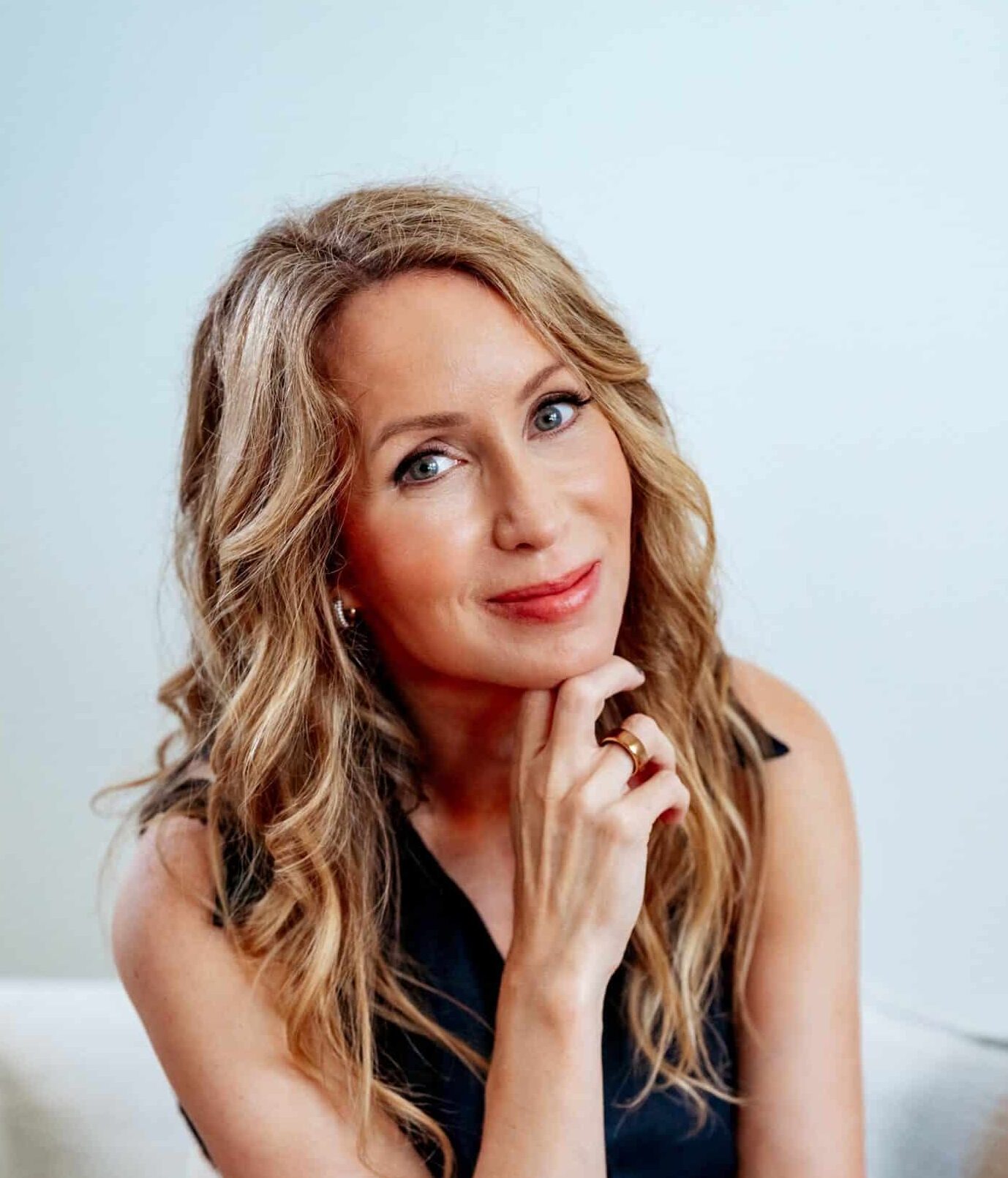
Cynthia Thurlow is a nurse practitioner, host of the Everyday Wellness podcast, author and international speaker, with over 15 million views for her second TEDx talk (Intermittent Fasting: Transformational Technique).
With over 25 years experience in health and wellness, Cynthia is a globally recognized expert in perimenopause/menopause and intermittent fasting, and has been featured on ABC, FOX5, KTLA, CW, Medium, Entrepreneur, and The Megyn Kelly Show. Her mission is to help empower women to live their most optimal lives in perimenopause and beyond.
Connect
Listen Now
Transcript
Dr. Sandi: Welcome to “Health Coach Talk.” Today, I am interviewing someone who is very special to me. She is a close friend and colleague, and listened to her podcasts, and really blown away with her integrity. And I want to share about a new book that she has that I think is so cutting edge and introduce concepts that are really not talked about in other areas. And I think this is a must-read. It is called “The Menopause Gut.”
But first, let me tell you about Cynthia Thurlow. She is a nurse practitioner, the host of “Everyday Wellness Podcast.” She’s an author and an international speaker with over 15 million views for her second TEDx Talk about intermittent fasting, transformational technique. She has over 25 years of experience in health and wellness. She’s a globally recognized expert in perimenopause, menopause, and intermittent fasting. And she’s been featured on ABC, Fox News, KTLA, Medium Entrepreneur, and so many others. And her mission is to help empower women to live their most optimal lives in perimenopause and beyond. And she is the author of this great new book, “The Menopause Gut.” So, I know you are going to enjoy my conversation with Cynthia Thurlow. Welcome, Cynthia.
Cynthia: Thank you, Sandi. Thank you for your friendship and all your support. It means the world to me.
Dr. Sandi: So, I read this book, and I was telling Cynthia before we started recording that I’ve just been blown away. I’ve read thousands of books over the years because I’m old. I have a big library. And this one really stood out to me. And typically, these days, when I read these books, there’s not much that’s new that I’m learning, but I learned a lot. Plus, it has great recipes, and I always love a book that has recipes. So, we’ll talk about that. But you start off by telling your own personal story, and you talk about new way of phrasing this, which you describe as middle pause. So, can you share with our listeners what is middle pause? And what was the impetus for you to write this book? You put some story.
Cynthia: Such an important conversation. Middle pause really came out of being tired saying perimenopause and menopause over and over again. So, my editor and I talked, and I said, I’m going to coin this new phrase because it just allowed me to encompass both times in a woman’s life and to be able to do it in a little more concise manner. But I think my own podcast really gave me the insights into how our bodies are changing at a gut microbiome level as we are navigating this hormonal decline and these neurotransmitter decline, and how that makes us so much more susceptible to opportunistic infections, bone health issues, mood disorders. And I start the book off talking about this very romantic trip that I took with my husband in 2018, where we ate the same exact food, and I got sick and he didn’t. And I always was wondering like, why did that happen?
And so, as I started speaking to more gut health experts and more researchers, I was like, oh, my gosh, this makes so much sense. I think we tend to think about the impact of perimenopause and menopause solely through the lens of bone health, and heart health, and neurocognitive health. And I’m here to share with your community that we need to think more broadly because the gut microbiome is 40 trillion bacteria, viruses, fungi, and protozoa that interface with every single cell and organ system in our bodies.
So, as you can imagine, the reduction in progesterone, and estrogen, and testosterone have profound ramifications on the gut. And because it interfaces with every other organ system, did you know that one of the things that drives ovarian aging is how healthy our gut is? So, how many of us experienced a lot of stress and trauma as children or maybe had very stressful jobs, and find ourselves going into menopause earlier than a lot of our colleagues and peers?
And so, the book really is making the science around this accessible and actionable, and really bringing in a lot of research around things like nitric oxide and other signaling molecules, and just helping women better understand their bodies. Because anyone listening that thinks successful menopause is just navigating with an estrogen patch, is really mistaken. There’s a lot more nuance to the conversation. And the really exciting thing is, even if you’ve been doing all the wrong things, the gut is incredibly malleable. It is incredibly fixable. So, it’s really designed to be a roadmap of how to get our health back on track and support our bodies in middle pause and beyond.
Dr. Sandi: It’s such a good mission and so critical. And I think back to when I went through menopause, it was 25 years ago, 26 years ago. That wasn’t a thing. We didn’t talk about the microbiome. What’s that? There was nothing available at that time. And now, it’s just everywhere. And you go into great detail about the connection between estrogen, that there’s estrogen in the gut. Who knew?
Cynthia: Yeah. Well, it explains why a lot of women will say things to me like, I just feel like, in perimenopause, my food sits in my stomach a whole lot longer. And so, what’s fascinating is estrogen is a potent immune modulator, which means, essentially, it interfaces with our immune system. But it’s intricately interwoven into motility. It’s important for nitric oxide signaling, and that’s a particular signaling molecule. It’s important for dilating arteries. So, as we are going into perimenopause and later menopause, we’re at greater risk for heart disease. One of the reasons is the impact on nitric oxide.
Conversely, progesterone plays a role in smooth muscle contractility. So, when a woman says to me, I feel like food doesn’t move as easily through my gut, I’m like, it’s a function of progesterone, and estrogen, and nitric oxide. And so, I’m a nerd. I am a nerd. And I like to explain the science so that it allows women to better understand their bodies because, oh, that makes sense to me. That explains why I feel like my food doesn’t move as quickly through my digestive system, why I’m more prone to leaky gut.
I always explain that estrogen acts as, if we think about our small intestinal lining as a brick and mortar, the mortar in between the bricks is estrogen. So, as estrogen declines, those little tight junctions open up and then we can leak food particles into our bloodstream, which triggers an immune response, which explains women are four to five times more likely to develop autoimmune conditions like celiac, Hashimoto’s, lupus, etc. There’s over a hundred autoimmune conditions now, but it helps us better understand our bodies because I think for anyone that’s listening, we can tangibly understand what a brain looks like or what the heart looks like, but the gut microbiome seems very nebulous.
And so, I think we have to do an even better job explaining some of these connections and how this decline in hormones impacts the functionality of our gut in a way that shows up as common symptoms like bloating, constipation, diarrhea, just more reflux symptoms, things that we take for granted at this time in our lives. I cannot tell you how many women will say to me, I don’t know what it is. I wake up with a flat stomach and then I go to bed looking six months pregnant, or persistent symptoms, like why am I suddenly sensitive to dairy or gluten or grains, or why am I no longer tolerant of alcohol? And we can talk about it from a physiologic perspective so that we understand the science and then we’re like, oh, this makes sense.
I find, for a lot of my patients, as I’m sure your listeners are as well, the better I understand something, the more I can understand why I need to eliminate something or I need to eat less of something. And so, when I humbly sit back and I say all the time, for so many of us who’ve been so myopically focused on heart, bone, brain health, we also need to be myopically focused on the gut because I’ll be the first person to say that most of the symptoms that women experience in perimenopause and menopause are an absolute indicator of the health and the vibrancy of the gut microbiome. But most people aren’t talking about it. And in fact, most people don’t even acknowledge the importance of the gut.
Dr. Sandi: So true. And I like the way you describe the microbiome as a vital organ. That’s what we need to be thinking about it, as a vital organ, and address how everything impacts it, stress or a poor night’s sleep. You go into sleep and, really, you talk about all the modifiable lifestyle factors, the importance of nutrition, and exercise, and movement, and sleep, and dealing with stress, and how critical that is that we can really impact our microbiome. All of these factors play into it.
And it occurred to me because we…and Cynthia, you’re faculty for this course. We have a course coming out on menopause for health coaches because health coaches can play a critical role in supporting women to help them with that education about the critical role of the microbiome.
And one of the talks that I give for this course is about values-based coaching on all of the issues that women are struggling with during this time because it’s not only the loss of estrogen, but it’s the loss of their identity. They may have seen themselves as a certain way, being able to work out a certain way, as somebody who is a mother, and now, they’re empty nesters or their relationships are changing, they’re worried about their career. So many things are going on in terms of their identity. I’m no longer young. And that’s stressful. And then that’s impacting…that’s a vicious cycle impacting the microbiome.
Cynthia: No, it absolutely can. And I would actually make the argument that majoring in the majors is how I depict it. But those lifestyle pieces that you talked about, how many women think it’s normal to not sleep well in middle age and accept it, and don’t realize that at the basis of that poor sleep is very likely not just not managing their stress well, but the health of their microbiome as a proxy of how well they’re managing their stress.
And to your point, it’s the sandwich generation. As women are navigating these changes, they have older kids. If they have children, their parents are getting older. Suddenly, they may have more job responsibilities. And on top of that, they’re trying to navigate this time in many instances with less hormones to buffer GABA, serotonin, etc., but they’re…depending on the individual. And I think this is… I say this non-pejoratively, but women that have not had an identity outside of being a wife and a mom… And this is not pejorative. I’m just stating the facts. You have to have an identity outside of those roles. And those roles are very important.
I love being a mother, and I love being a wife, but I have always had to have identity outside of that. I think some women that are navigating middle age with…I’m not saying they make it easier per se, but maybe with less bumps, are people that have already had a hobby or an interest or an occupation that has allowed them to pour that additional time that they suddenly have into something else other than those primary roles.
And I think that… I lived in Northern Virginia for almost 20 years, and some women worked some full-time, some people worked part-time, some people didn’t work at all. And they used to always say, it doesn’t matter where you are. Everyone needs to have outside interest. It’s so, so important. And I think it really gets magnified this time in our lives. In fact, we have an 18-year-old who will go to college in August, and we have a 20-year-old who’s already in college. And I was saying to my husband, I was like, oh, my gosh, can you imagine if we didn’t…like, he has…he loves to golf. So, that’s become his new thing. If I’m doing a lot of work, he’ll go golfing. We have needed to identify other ways to have fun together, to have relationships with people outside of our family unit because otherwise it becomes incredibly…I would imagine it would be an incredibly harder adjustment without a support system that you’ve created for yourself.
Dr. Sandi: Yes. It’s just such a challenging time because so many things are critical to who you’ve identified with. Your physical body may not look the same. You have muffin tops, and this isn’t me, and difficulty, and you try on clothes and they don’t look the same, or you’re concerned if you are in a career, am I still vibrant, how…do I have to start over again? And there might be issues, sexual changes, vaginal… And now, the lake that’s impacting your relationship and fearing… And many people turn to plastic surgery and external factors that are going to help them.
But I think it’s… You really touched on something, and that is the importance when you have a hobby. What often happens is now you have a community. Oh, I’m going to learn to play pickleball, or we… I’m fortunate in our community. We have a social club. It’s available for all women who live in this community. And they have just a wide range of activity. It’s just, they have women’s night out. And it’s just getting together and talking about these issues. And so, it’s feeling like you’re not alone. And so, community is so, so critical.
Cynthia: Well, I think people forget that loneliness is akin to smoking. So, I remind people all the time that sometimes we think, oh, that’s what the elderly are dealing with. And I’m like, no, you can be middle-aged and be dealing with loneliness issues, either not feeling a connection outside of your job, or not feeling a connection within your neighborhood or your church or whatever organization you’re affiliated with. And it really speaks to why it’s important to have these conversations so that we are normalizing some of what women are experiencing and pathologizing it.
I think that’s the unfortunate thing. It’s both good and bad that we’re talking so much about middle-aged women and this perimenopause and menopause transition because I think, for many years, it was shrouded in shame and secrecy. Like, I know my mother has never had a conversation with me ever about menopause, not one, never. And so, my mother just turned 80. And I do think that perhaps that generation was much more age-focused. I think my mom’s running joke was she told me she was 30 years old until I think I was 25. And then I said, okay, the math isn’t mathing here, but just how society traits women.
I use an example. I was watching something last night, and they were talking about Demi Moore, who’s obviously a beautiful 60-ish-year-old woman. And someone made a comment about her physical appearance. And I said, here’s the thing. I don’t care if people are pro plastic surgery, not pro plastic surgery. They want to exercise every single day, they don’t want to exercise. I think we can all agree that we’re all navigating on our own kind of power of the end of one, whatever that looks like for each one of us. But there are some consistencies that I think we can all agree on are super important that you’ve identified, like the sleep, the stress, the exercise, the nutrition, are clearly critically important. And if we’re not having those conversations regularly, no hormone therapy or GLP-1 is going to fix all those other problems. We still have to make adjustments. And so, the word pause becomes very important in terms of our language to understand this is a time it’s a litmus test to say, are things working for me or not? And if they’re not, how can we course correct?
Dr. Sandi: Yeah. I think that’s such a good point. So, you start there. You always start with those lifestyle factors, and coaches can support you, can coach you on all of those areas. And then look at if you feel like, yeah, you need some external support, then that’s great if that works for you and if that’s what you want. But it’s focusing on doing it not because you feel an emptiness inside and a fear of getting older.
And what can be really helpful, I would love to see book clubs read this book, and talk about it together because I think that it’s really critical to bring it into the conversation. My mother, I remember her on the phone with her sisters and friend, they would talk about the change. We’re going through the change. And that was it. It was okay, get your period. That’s what I knew when I was a teenager and I heard my mom talk. Well, okay, you don’t get your period anymore. That’s the change. That’s it. And you get hot flashes and people joke about it.
And one of the talks that I give for a new course on menopause is the history of menopause and looking at it through popular culture. And it really wasn’t until in the ’60s, there was…actually, in the ’70s. It was Edith Bunker was called “Edith’s Problem,” “All in the Family.” That was the first time that menopause…she was going through the change, and women could identify. And then what really broke barriers was “Menopause The Musical,” which is still going. I was just in Vegas and…for the A4M Conference. And I took a picture. There it is. It’s still running, and…around the world. I think we need an update of “Menopause The Musical.” I think we need to talk about the menopause gut in that musical as well, because what you have presented is such new, groundbreaking information. Talking about things like the gut ovary access. Who knew that they are so intertwined and connected?
Cynthia: Yeah. And I think, for many people, they probably don’t make the connection that what we experience as children and young adults can actually impact not just the health of our microbiome, but also how our ovaries age. So, our ovaries set the pacemaker of aging in our bodies. Not surprisingly, they’re the most mitochondrial dense organ in the body. And I think, for a lot of women, they may not know that whether it’s big T or little t trauma, which I’m sure you probably have talked about on the podcast before, those things influence in how our nervous system is wired, and can actually accelerate the aging of our ovaries, and put us at risk for things like autoimmunity, disordered relationships with food, poor metabolic health.
But let me be clear, again, even if those things happen to you, it’s not your destiny. There are absolutely things we can do. As I mentioned, the gut is so malleable, and our bodies are incredibly forgiving of the choices that we make when we’re younger. I would say, like, all those pizzas I ate when I was 18, 19, 20, 21 years old, my body’s been pretty forgiving over the years. But I think, for a lot of people, it’s helping them understand, like, even if you weren’t doing a lot of the right things when you were younger, you can course correct at any point.
Dr. Sandi: I think that’s such a good point. And I know I course corrected. I never did strength training. I never ate well. And in terms of strength training, I’ve put on muscles starting when I was 70. So, I see a huge difference. So, I would like to inspire people that it is possible at any age. There are studies of 90-year-olds where they are engaging in resistance training. They’re doing jumping. They’re improving their bone health, their muscles. And as our mutual friend Gabrielle Lyon says, muscle is the organ of longevity. And you address that in the book as well, the importance of movement and exercise, and the right type of exercise.
Cynthia: Yeah. And I think the other side of that conversation around muscle is muscle helps you avoid frailty because frailty leads to falls, and falls leads to a loss of independence. And that is the other side of it that I think many people may not realize. I mean, I certainly was in traditional allopathic medicine for 20 years. I saw so much of it, people that were relatively young that couldn’t get off a bedside commode, or people that fell and broke a hip and then they never went home again.
And so, I think that it really speaks to this evolving awareness of how critically important muscle is, not so much for the physicality piece, but for this longevity marker, why it’s so important to avoid frailty. I mean, the point of what I was mentioning about Demi Moore was that the first thing I thought when I saw her, because she’s very thin, I was like, wow, she really looks frail. And so, she’s probably not even thinking about that. But when I see someone that is that age, that’s that thin, I’m like, they don’t look strong. They look very frail. And that’s what we want to avoid.
Dr. Sandi: That was my exact thought when I saw Demi Moore because I had watched her in a television program, and she was healthy looking. And all of a sudden, I just…yeah, she looked frail. And that is the big risk of sarcopenia. I have talked about a lot. And I see this a lot with my friends and contemporaries that they are very excited because they’re on GLP-1s, and they’re losing weight often for the first time successfully. But they’re not aware, or they may be aware, I should say, that they are losing muscle. But to prevent that or reverse the course is so difficult. And even if they’re working with a trainer, the trainer is not pushing them hard enough. They’re using the lighter weights or they’re just…they’re afraid because their doctors have been telling them, oh, you’ll hurt your knees. You’ll have whatever it might be that they’re just scared of lifting heavy.
Cynthia: And I know, psychologically, when you’re afraid of falling, you’re more likely to fall. So, it’s like that fear can set into motion. Stronger likelihood that you actually will fall. And it’s interesting. My personal trainer that I work with, she’s in her 60s and she’s amazing. And she trains women in their 80s and 90s, who are still skiing, which I think is incredible. But she said, I think the biggest issue is people just stop moving. Whether it’s they’re retiree age, but people just stop moving. And she said, one thing I tell my clients all the time, I want you on and off the floor throughout the day. Like, she’s all about functional exercise, which is that a lot of women will say, oh, you’re making me get on and off the floor too much. She was like, no, this is functional exercise because this is what you need to be able to do.
But to your point about people being fearful of falling, if the alternative is I work with a personal trainer, someone who’s accustomed to working with middle-aged people, and they help me strengthen my body so that I avoid becoming frail in the first place, that’s the antidote. Because I would imagine there’s a slippery slope that starts to happen is that people get less physically active, they get more frail, they get more fearful of falling, so they become less physically active, so they get more frail. And it just becomes this…for a lot of women, they talk about the marginal decade. We live longer than men, but the marginal decade kind of kicks in where we suddenly have poorer health. And I do think that lack of locomotion, that lack of movement worsens the likelihood that you’re going to have poorer health.
Dr. Sandi: Yeah. It’s really been a rude awakening for me because in the last few months, I keep hearing more and more people who are friends and relatives, cousins, who are going into assisted living. And it’s, oh, I will fight tooth and nail just to be independent, which is why I do what I do, which is following those lifestyle factors you outlined in your book.
And you have another chapter, and I don’t think…it would be remiss if we didn’t talk about hormone replacement therapy. And of course, I was the generation of baby boomers scared off by the Women’s Health Initiative. But it is talked about so much now. In fact, I heard…my daughter called. She said, oh, I just heard on the news that there’s a shortage of estrogen patches because there’s so much demand. So, what would you say to women of perimenopause, menopause regarding hormone replacement? Where are we at today?
Cynthia: Yeah. I mean, even 10 years ago, there wasn’t a lot of conversation. So, I’m of the generation where we weren’t told to start HRT before we’re in menopause. So, now, we know the benefits are improved upon if you are starting HRT in your 40s before you go into menopause, whether it’s a week or two of oral micronized progesterone, plus or minus a patch, plus or minus testosterone. And so, I think that the movement is coming that it’ll help alleviate a lot of suffering that is needless, plus or minus vaginal estrogen, which everyone can be on and you can start at any age. I think that’s the exciting thing.
But I think, for a lot of people, it’s realizing there’s a degree of customization based on symptoms. But we also know, like, as an example, progesterone is going to help you with sleep, with mood. If you have a uterus, but we have progesterone receptors throughout our body. Same thing with estrogen. We know it’s primary prevention for osteoporosis. It is also primary prevention for heart disease, which is the number one killer of women. And the research is still evolving around neurocognitive health, but it certainly sounds like it’ll be beneficial. We know women that have…before menopause, what their microbiomes look like is very different than what they look like in menopause. If you use estrogen, it starts to return the microbiome to looking more like a younger microbiome. And this is not about the physicality. This is the actual changes that occur as we have declining hormones.
And so, I think it’s really exciting that we’re starting to see more and more research coming out that is certainly suggestive that it’s more than just bone and heart health benefits. It is systemic. And think about it this way. We have estrogen receptors, testosterone receptors, progesterone receptors throughout our bodies. It is not just a bikini medicine fertility conversation. It is a larger conversation than that. My hope is, by the time we have another conversation, there’ll be FDA-approved testosterone. That would be nice for women. And that all women will have insurance coverage for HRT.
The thing that I find fascinating, and I’m going to just divert to another topic very quickly, I am confident that Viagra is covered by insurance, and there’s no shortages. But I think it’s criminal that we’re having conversations around estrogen patches not being accessible. I mean, to me, it makes zero sense. But I understand the system at large is largely patriarchal. So, what women would put up with, men would likely not. And I’ve interviewed enough male physicians that have said that. I feel comfortable saying that. But I think it goes back to now we know better and we can do better for women. And hopefully, younger generations are going to know even more than our generations ever did.
Dr. Sandi: So well said. Absolutely. I could not agree more. So, as we draw to a close, anything that perhaps I haven’t asked you that you would like to impart to our listeners?
Cynthia: Yeah. I think that when we talk about physical changes, physiologic changes that are occurring in this middle age years from late 30s into early 50s and beyond, it’s really understanding the more that we can understand about our bodies, the more changes we can make. I find for myself, I’m a little stubborn. Sometimes if I understand what is happening physiologically, I’m like, oh, now that makes sense why I need to prioritize eating more fiber, as an example. Now, I understand why I need to eat more protein. Now, I understand why it’s so important to lift weights.
So, I think, understanding a little bit about the science, not so that it’s overwhelming, but that so you can take away and be able to not only educate yourself, but educate your customers, your clients, your patients, is really key. So, knowing that, number one, understanding is foundational. And then number two, translating into personal practice is certainly important. And number three, the gut is really malleable. So, don’t worry what you did in the past. There’s a lot we can do to help heal and seal the gut, and work on autoimmune conditions, and all the myriad of things that kind of come out of this middle-age transition, and be able to put things in remission. It’s not a death sentence. Just because you didn’t take care of yourself when you’re younger, does not mean you can’t change those habits now.
Dr. Sandi: I love it. And hoping that’s the single most important factor for health going forward. And so, you can have a clear pitch, I’m going to do this. I will get better. So, you can get this book. What I love in the book is that not only is it full of science, it’s understandable, but it also…you outline where to get tests, stool tests, and food sensitivity. And also at the end, which I love, it has recipes, I’m all for it, and the dark chocolate recipes and the smoothies. So, this is something that I’m anxious to try some of these yummy recipes. Well, Cynthia, this has been just wonderful, my friend, talking with you. And where can people find you, and where can they get this book?
Cynthia: Well, Sandi, I always love our conversations. Thank you again for carving time out of your very busy schedule. I would say, probably easiest to go to my website. So, www.cynthiathurlow.com. At the top of the banner, you can click on “The Menopause Gut.” It’ll take you to any fine retailer. I always say, if you have a local retailer, try to give them your business because I think brick and mortar businesses have really taken a hard hit. As much as I love walking around a bookstore, there seems to be less and less of them these days.
I’m active across social media. I have an amazing podcast, Sandi’s been a guest, “Everyday Wellness Podcast,” one of my favorite things I do in my business. And then on top of that, I would say, my passion project right now is Substack. I’m really enjoying connecting with my community in a different way than I do on the podcast or in the book or on social media. So, if you’re a reader, you definitely want to check that out because you’ll get to see a whole other side of my writing and how I communicate in kind of a deeper, more profound way.
Dr. Sandi: Well, check all those out. And congratulations on this book. It is groundbreaking.
Cynthia: Thanks, Sandi.
Health Coach Talk Podcast
Hosted by Dr. Sandra Scheinbaum
Conversations About Wellness Through Functional Medicine Coaching
Health Coach Talk features insights from the most well-respected names in health coaching and Functional Medicine. Dr. Scheinbaum and guests will explore the positive impact health coaching has on healthcare, how it can transform lives, and help patients achieve better health and wellness outcomes.

Check us out on these platforms: