How to Use Scent to Heal Your Mind, With Jennifer Pressimone
What role does your sense of smell play in your health and well-being? This week on Health Coach Talk, Dr. Sandi welcomes clinical aromatherapist, educator, and JennScents founder Jennifer Pressimone to explore the fascinating connection between scent, memory, emotions, and healing. With more than 23 years of experience in aromatherapy education and practice, Jennifer shares how essential oils can influence emotional wellness, cognitive function, and self-awareness through their unique connection to the brain’s limbic system.
“The most powerful sense we have is our sense of smell. And when you can integrate aromatherapy into a healing program or a protocol, it’s so special because it activates your limbic system, which is your system that connects with memories and emotions, which is a huge part to our healing journey.”
Jennifer Pressimone
Jennifer’s journey into aromatherapy began with her own health challenges, including Crohn’s disease and colitis. Drawing on her background in psychology and decades of client work, she developed the SCENTMAP Method, a personalized approach that uses scent to uncover emotional patterns and support the healing process. In her conversation with Dr. Sandi, Jennifer explains why aromatherapy is about much more than pleasant fragrances, discussing the science behind smell, the importance of choosing high-quality essential oils, the growing research on scent training and cognitive health, and the powerful ways that certain aromas can evoke memories, emotions, and personal insights.
For health coaches, this episode offers a thought-provoking look at how the senses can influence behavior change, emotional well-being, and client awareness. Jennifer shares perspectives on personalizing wellness strategies, approaching clients with curiosity and compassion, and helping individuals better understand the connections between their emotional experiences and physical health. Coaches interested in whole-person wellness will find valuable ideas for incorporating conversations about scent, self-awareness, and emotional health into their work with clients.
Watch The Episode
Episode Highlights
- Explore how the sense of smell influences emotions, memories, and overall well-being
- Learn why scent training may support cognitive function and healthy aging
- Understand the role of essential oil quality, safety, and personalization in aromatherapy practices
- Examine ways health coaches can use scent and emotional awareness to support client wellness journeys
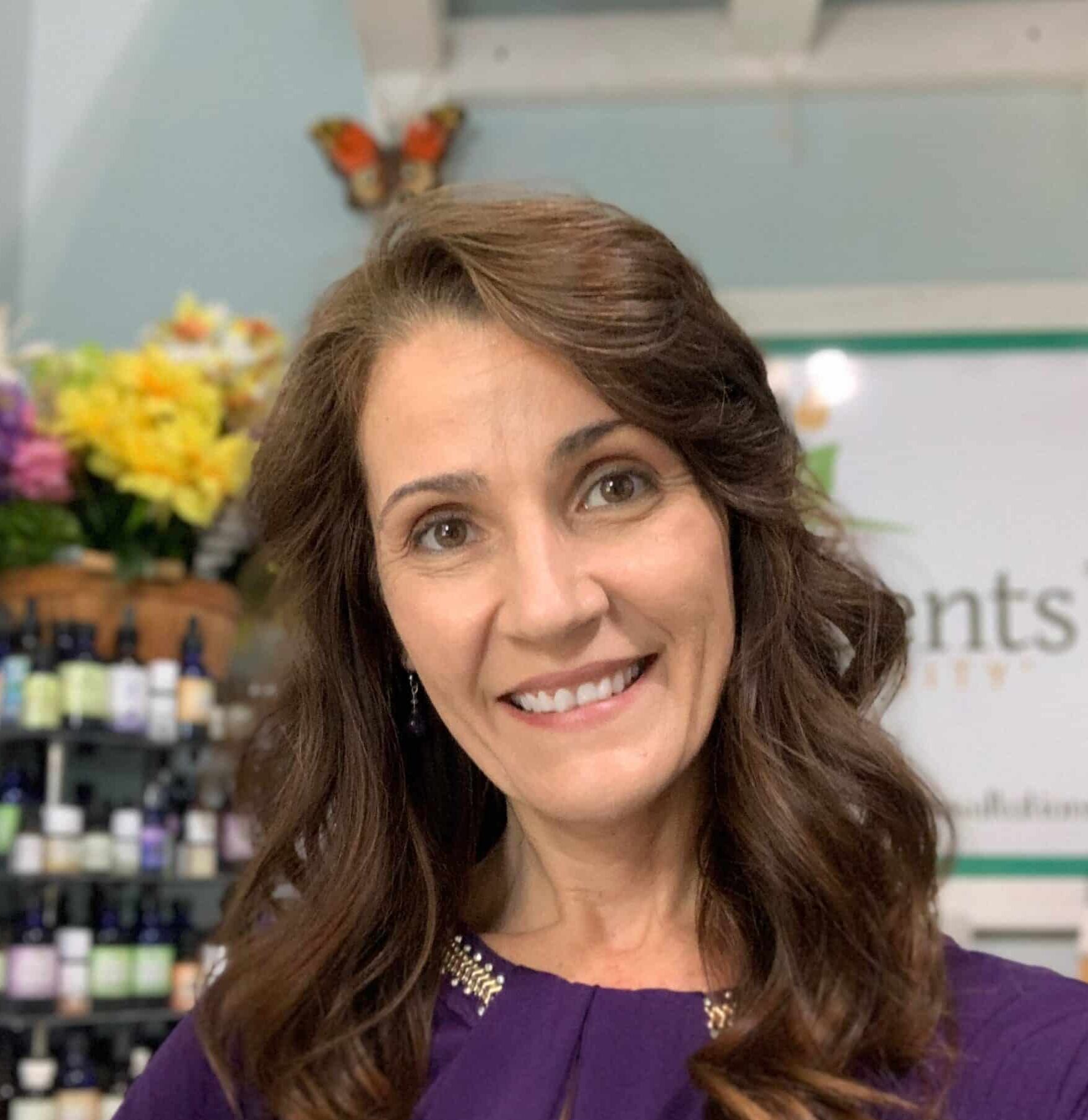
Jennifer Pressimone has been CEO, formulator & educator at JennScents and JennScents Aromaversity for 23 years. She’s a clinical aromatherapist & intuitive holistic healer helping others clear emotional & energetic blocks to boost mental clarity, emotional balance, and rewire thought patterns through personalized holistic products, intuitive scent readings and mentored aromatherapy training programs. She is author of several publications, including the JennScents Holistic Aromatherapy Comprehensive Guide.
Connect
Listen Now
Transcript
Dr. Sandi: How much do you know about aromatherapy? What is it? Is it for everybody? Are there people who are good candidates? How would you describe aromatherapy to a client if you’re a health coach? These are just some of the topics that I get into with my conversation with our guest today. Let me tell you about her.
Her name is Jennifer Pressimone. She has been the CEO, the formulator, and educator at JennScents and JennScentversity. That’s Aromaversity. She trains people in aromatherapy for 23 years. She’s a clinical aromatherapist and intuitive holistic healer, helping others clear emotional and energetic blocks to boost mental clarity, emotional balance, and rewire thought patterns through personalized holistic products, intuitive scent readings, and mentored aromatherapy training programs. She’s the author of several publications, including the “JennScents Holistic Aromatherapy Comprehensive Guide.” I know you will enjoy my conversation with Jennifer.
Welcome, Jennifer. It is great to have you here.
Jennifer: Thank you so much for having me. I’m excited to be here.
Dr. Sandi: So, you developed something that is called the SCENTMAP Method. Can you explain what that is and how it helps people?
Jennifer: Yeah. For me, personally, I got into natural health, like many people, from my own personal story, having Crohn’s and colitis. And working through that, I discovered the power of aromatherapy. And this journey over the last 23 years, having a psychology background, I was able to merge the physiology side with the psychological side of healing using aromatherapy. Of course, according to me, and with some science, the most powerful sense we have is our sense of smell. And when you can integrate aromatherapy into a healing program or a protocol, it’s so special because it activates your limbic system, which is your system that connects with memories and emotions, which is a huge part to our healing journey.
And helping thousands of clients over the years, I discovered that there were certain patterns. There was a certain way to smell. So, I’ve mirrored the map to how we smell with the limbic system. So, we can follow this journey, but then we can map out the journey because everybody’s different. We’re made up of different events and different experiences, and they leave patterns in our body. So, we need to have a way to go back and find out what are we ready to heal right now, what’s on the surface, maybe what’s below the surface that we can keep on our radar, and what path is our body ready, willing, and able to work on to do an emotional release or release these culprits, as I call it, the emotions and energy behind the root culprits keeping them in place.
Dr. Sandi: Gotcha. For those of you who are listening, you might not know exactly what aromatherapy is. I’d love to address that because I think there’s a lot of myths, a lot of misunderstanding of what it is. So, can you describe…if someone were to say to you, “What’s aromatherapy,” how would you answer that?
Jennifer: Yeah. Aromatherapy is so much more than just having a pretty scent. I think a lot of people have the idea that, oh, it’s a perfume or it’s a soap or it’s a candle, and it just…it’s a smell-good type of feeling, but it’s so much more than that. And whenever you do true aromatherapy practices rooted in our ancient philosophies, we have a lot of cultural medicinal methods that have brought us to where we are today that we still follow today to show us emotions hide in different organs, and different emotions are attached to physical issues.
And using aromatherapy brings in essential oils. And so, we’re using essential oils, tapping into our olfactory system. You’re smelling an essential oil that’s going to elicit a response in the body, a physiological, psychological, and biochemical response in the body. And it can help you think better, focus better. It can help you work through grief and anger, different emotions, and then just help you feel whole and help you feel connected to yourself, especially when you feel lost or there’s a lot going on or you feel overwhelmed with daily tasks.
Dr. Sandi: There’s a range of essential oils. Can you describe what those are?
Jennifer: Yeah. So, we get essential oils from plants, from nature. And so, we’re getting them from fruit coming off the trees. We’re getting them from the leaves, the branches, the trunk. We’re getting the resin from the trunk in the case of frankincense and myrrh. And we’re getting it from the rhizome, such as ginger. So, we’re using different parts of the plant, and it’s going through an extraction process, and it’s giving us an essential oil, this liquid form that’s coming from these plants.
And so, when we’re able to use that, we’re gonna have different categories, different odor classifications that we can work with. Citrus oils, flowers, herbs, such as lemongrass and thyme and oregano, our spices such as fennel and cinnamon, to our tree oils that are gonna help us feel rooted and grounded.
Dr. Sandi: So, for some people, I think it’s overwhelming, and that’s why, in coaching, if you’re a health coach, you can help people, first of all, by letting them know that they might wanna try using essential oils, but also helping them be discerning consumers. Because in my experience, and I’d love to hear your opinion, there’s a lot of products on the market. There’s a lot of… You just don’t know. And is it actually the pure oil? Do they have additives? Then again, there’s warnings that it might be too harsh to apply something directly to your skin as an essential oil, so you need a carrier oil. And by that time, most people just get confused and don’t know what to do.
Jennifer: Aromatherapy is a beautiful discipline. It’s a beautiful tool that you can add into a health coaching practice, into a wellness practice, and it can be overwhelming. But as with food, we choose our food carefully. We should choose our food carefully and wisely, and know where we’re getting that from.
Same thing with your essential oils. So, quality does matter. It’s not governed by the FDA. There is a different set of standards, and there’s good, bad, and ugly with everything. And so, you do wanna make sure, number one, that aromatherapy works. It’s great. We just wanna follow some safety guidelines. We wanna use quality oils. So, knowing your suppliers, knowing that you’re getting it from where there’s been testing done, and we’re getting it from good crops, and there’s no adulteration or chemicals in there.
So, very similar process, choosing your oils like you would choose your food, making sure that they’re the best that they can be. And then following the safety guidelines, I am a big proponent to make sure that we do dilute essential oils in a carrier. There’s some that like to use it undiluted, and there’s a time and a place that you might be able to do that. But we have to understand skin sensitivity and emotional sensitivity. So many people are emotionally sensitive or in this heightened state that too much, creating a very strong blend or undiluted blend can be too much and can actually do the opposite effect that we’re looking for.
And there are certain oils, like cinnamon has blood thinning properties, wintergreen has blood thinning properties. So, there’s some safety guidelines we wanna follow But as you’re being introduced to the oil, know your quality, know your supplier, know what you’re getting, and then just review the safety guidelines with the oils that you’re choosing to use. Don’t try to do 20 oils. Just learn a couple and use them well, and then you can build from there.
Dr. Sandi: We have it in one of our courses, a scent expert, she’s a professor. And she talks about the benefit of smelling, and many people just don’t smell. And as we get older, this could be a real risk factor, and we can lose our sense of smell. And so, we can train our sense of smell. And what she’s recommended, and I’ve heard this also people who lost their smell after COVID, sense of smell disappeared, and they got it back by alternating. Smell lemon and rose and clove and peppermint. So, I had those oils in my cupboard and it’s amazing. Close your eyes, and this is just running it under your nose. So, what are your thoughts on actually training your scent have to be applied to the body, for example, in a carrier, but you get benefit if you just smell the oil.
Jennifer: Yeah. There’s a lot of science. We go back to our ancient practices of how they used it before, too, science that we have today to support those findings, is the most beneficial way we can use essential oils is to smell them. Because when you smell an oil, it goes right to your limbic system. It activates your body faster than you can snap your fingers, faster than you can blink, and it bypasses your logic region. So, it’s very important.
The other thing is, even if you can’t smell, we have scientific studies showing that even if you cannot smell, smelling an oil, whiffing an oil will still work. And so, in the sense with COVID, with neurological, with people advancing with dementias and different diseases, we know our smell starts decreasing, and it’s actually an indicator that’s used to detect the progress of the degeneration of a disease, to see this connection between our nose and our brain, our smell brain. And so, yeah. If you don’t have a sense of smell or you have, which is anosmia, but if you have hyposmia, a lack of smell, doing these olfactory training exercises.
The study that you’re talking about produced 226% increase in cognitive performance by smelling these different oils in the nighttime. And we do see that if you can do olfactory training, smell training, you’re smelling different oils throughout the daytime. I like to do single essential oils instead of blends. You can retrain your smell. It’s like a muscle. If you don’t use it, it becomes atrophied, but the more you use it, you’re building this muscle. So, we are using it as a tool to increase cognition and increase brain performance even as we age, even if we can’t smell, as we’ve learned post-COVID.
Dr. Sandi: That’s fascinating. So, tell us about what you discovered in this SCENTMAP Method. What exactly do you do with that, and can you perhaps share an example of somebody who has been helped?
Jennifer: Yeah. So, the SCENTMAP Method, as a holistic health practitioner myself, I’ve worked with a variety of different clients. It can be overwhelming seeing, oh, wow, you have 20, 30, 40 different symptoms going on. Where do we start? And having my psychology background and going through this myself and helping other people, I find there’s always an emotional component to that. There’s always some emotional residue that’s just staying there, that’s lingering, that’s keeping these same patterns of behavior over and over, and there’s certain patterns that repeat in everybody. And then, of course, there are certain patterns that are very unique to the person. And so, having this SCENTMAP, it walks you through the process.
So, for example, we smell an oil. So, we’ll take an oil, and we’ll smell an oil. And then we rate it. Before we even think, before we go anywhere, it’s the very first thoughts that you have. So, we’re teaching ourselves how to connect to ourselves because we have all of the answers, and the answers are ready to be heard. We just have to hear them. So, the first step is to rate the oil on a scale of 1 to 10. You just pick a number between 1 and 10. And then we look at what feelings just popped into your mind. And this works across the board, no matter what they’re coming in to see you for. So, we’re gonna do this upfront because it’s gonna tell the story. It’s letting their story unfold as to what you can do with this.
So, then we find out what feelings, emotions, thoughts, person, place, thing just popped in your mind, and where are you feeling it in the body. And so, what that process does is it follows how we’re taking in a scent, whether it’s through the nose or even the energetics of the oil, to hit with the olfactory bulb, where we can identify where we hit the amygdala, the hippocampus, and the hypothalamus. So, it’s following our limbic system.
And so, by doing that, you know whatever emotions came up is the emotions that are ready to be handled right now. It might be the very first emotion that you have to work on before you get to the main emotion they came in to see you for. And where they feel it in the body is telling you where that emotion is hiding. Where is it buried and trapped?
So, if they’re feeling it in their throat, they’re not speaking up for themselves. They’re not using their voice. They’re hiding their voice. They’re not being vocal about their truths or what they need and what they want. And maybe you don’t say that to your client, but you knowing that as the practitioner, you’re able to understand your client a little bit more to go, “Wow, maybe they have a harder time articulating.” So, it gives you insight into who they are and where they are, as it relates to healing.
And so, the SCENTMAP is the process as you go through smelling of these different oils, like you’ve experienced smelling the rose and the peppermint and the eucalyptus, and you’re smelling the different oils. You can map your journey. You’re rating it, your feelings, your emotions, and where you feel it. So, by the time you’ve done this, say you’ve done this with five or six oils, you can see why is everything showing up in their throat, or why is everything showing up in the chest where we hold grief, or right-sided or left-sided. You can take this information and dive deeper, but it also is gonna help you work on the emotions that are attached to those physical challenges that you’re helping them with.
Dr. Sandi: Wow. That’s really fascinating. And I think that there’s so much power, and it’s…in oils or in scents to evoke memories. So, I can think of…and if I would just smell lemon, so I’m immediately in my kitchen. And not only am I smelling the lemon scent, but I’m picturing a lemon or I’m picturing making a lemon meringue recipe or something like that. So, it’s cinnamon and cloves and memories of fall and pumpkin pies. And so, it’s a rich experience. But can it backfire? Can somebody have a scent and then it evokes a memory that might be linked to something very negative, traumatic, and how would you handle that? Or perhaps a health coach is in that situation where a client is experimenting with oils and shares that experience.
Jennifer: Yeah. And that is… Working with something like that’s more of a trauma-informed approach that we take with aromatherapy. Because, you’re right, just as lemon can put a smile on your face, it can also take you back to an unhappy memory. It can also take you back to a person maybe attached to that memory. So, when doing trauma work or trauma work that maybe steps forward that you didn’t know was there or the client didn’t know was there. So, scents certainly can do that. And I know, through this process, I have had clients go, “Oh, wait, that scent reminds me of my…a really bad situation I had with my grandfather, and he was mean and made me feel unworthy and not good enough.”
And so, all of these emotions come up. And so, we gently walk through that conversation if they’re ready to work on that and say, “If it’s okay with you, can we just go lean into that for a moment?” And I look at the oil that provoked that. So, say if it was lemon, all your essential oils have different personalities. Lemon helps you find your way when you feel lost. And so, now, the story’s really unfolding of, wow, so this memory has made her feel lost on her journey. She’s not shining her light brightly, and that’s where the rating comes in. If she rated it a two, it tells me she’s not ready to go there. But if she rated it a nine, then it tells me she’s open and receptive and willing and able to work on that right now.
So, we gently go through that of, how does that make you feel, and how has that impacted your life? And, “Oh, I really don’t wanna talk about it,” then you can stop there, but if they start opening up, you’re gonna usually discover and uncover some golden nuggets that might be the reason why they’re struggling with weight or they’re struggling with food or they’re struggling at areas in their life.
So, we wanna walk gently when an unhealthy response comes up. Find out what emotions are attached to that, how they feel, where they’re feeling it in the body, and that will give us insight as to are they ready to work on that? And if so, then you can use your training to gently navigate that conversation and open…allow them the space, this non-judgmental space to talk about it, because it, usually in my experience, leads to the biggest breakthroughs.
Dr. Sandi: That’s great. Thank you for describing that. So, Jennifer, what is it about your method? Can you describe what makes your approach to aromatherapy different? People might say, “Just follow that recipe or pick a scent that appeals to you.” But what’s the difference in what you do?
Jennifer: This is taking a very personalized approach. And not everybody is the same. And recipes are great. I share recipes. So, recipes are great, but they should be used maybe as a base, and then we should personalize them. So, my way of using aromatherapy and my methods are to match the essential oils to the person.
So, we look at what makes you your best self? What makes you happy and full of joy and filled with comfort and peace and strength? And what doesn’t? And how far away are you from that? Because some people have a little bit of self-doubt, and some people, they’re like, “Oh, no, it’s been ingrained in me my whole life and unworthy. I can’t even believe in myself. I would never go after a goal because I’m not good enough.” And so, there’s a degree in that difference.
And using the SCENTMAP, number one, there’s no judgment, there’s no comparison, there’s no recipe. We’re looking at the person in… It’s like in kinesiology and muscle testing. Your body’s not gonna lie to itself. And so, when you’re smelling an oil, because you’re bypassing your logic region and going right in to just an honest answer, you’re gonna know, wow, okay, this emotion comes up. I didn’t even know I needed to articulate that to you. Often a client will tell me, “Wow, that smell provoked this. I don’t even know where that came from.” And they didn’t put it on their intake form because it wasn’t top of mind at the time, but the scent triggered that memory and that emotion.
And so, we’re going on this journey of telling the story. We’re not following a recipe. We’re not following this, it’s A, B, C, and D. It’s, here’s the steps, but then you read the answer, and the answer is different per person because we’re made up of different experiences and different conditionings and different environments. And then it’s what you do with those answers. So, being able to match them up to the oils, knowing your essential oil personalities, and then creating a very personalized blend that continues. Because it’s not about bringing you to this place. It’s about continuing and reinforcing this place because we wanna release the negative emotions, but then help you recalibrate to who you are without it. And that’s the biggest difference.
Dr. Sandi: What are your thoughts on over-interpreting an emotion? For example, and I’m going back to the days when I wore perfume, which has been, like, over 50 years ago, I used to wear perfume. But I just would like a scent. Just, “Oh, that smells nice. It smells like roses,” or, I don’t know, I like Chanel No. 5. I can still remember the scent of the heavy Shalimar, those real intense perfumes. But, of course, then I learned the toxins in them, and now I look at them as poisonous as opposed to “Oh, that’s nice.” But I can’t believe I had a whole perfume tray on my dresser at one time. But what would you say to somebody who is very skeptical and just thinks, I like it, just like I like wearing the color blue?
Jennifer: The difference is the color blue isn’t necessarily detrimental to your health as smelling synthetics or chemicals. And especially as someone who has had multiple chemical sensitivity, I’m very sensitive to smells. Even as an aromatherapist, I have to protect my nose and be careful with… People say, “Oh, can you duplicate this scent?” And then they’ll try to show me their perfume, and I’m like, “Whoa. No. I gotta protect my nose.” Because it causes symptoms in my body. The headache, the allergies, the runny nose, and just congesting of the lymphatic system.
And most people put the perfumes on the thyroid and the lymph areas, which is like, oh, my gosh. So, for somebody who’s skeptical, because I was one of them, just like you, I wore the perfumes, and then I learned, wow, they actually are detrimental to my health because they’re putting toxins in, and they’re hurting my health. So, then you switch to a more functional botanical perfume that’s made just with essential oils.
And so, what I learned early on in my own journey of healing myself, I was in a life-threatening situation with Crohn’s, and they gave me six months to live. And I went to the local herb shop just to get a little bit of help at the time, and this whole world opened up. And, obviously, I’m here 23 years later, but it’s because one of my first classes was how to clean green and upgrade your personal products. So, we’re not using perfumes anymore, we’re making an essential oil blend to help.
And so, you start with one thing. And so, for people that are skeptical, what I tell them is, “If you’re up for it, I’m gonna give you a challenge. I’m gonna ask you not to use your perfume for 30 days, and I’m gonna ask you to use an essential oil roll-on, and you tell me if you notice any difference. I’m not gonna tell you what to expect. I don’t wanna put words in your mouth. You tell me how you feel after 30 days.” They usually sell themselves because they feel the difference. They notice the difference of, wow, I sleep better, I have less allergies, my eyes weren’t runny. I didn’t have to clear my throat as much. Their energy is up.
So, there’s a lot of different aspects that we can monitor. But I want people to have a real experience. I want you to eliminate chemicals, and let’s do something more natural and organic just for a little bit, and you tell me the difference that you have. Because, 100%, everybody has always had a positive experience in one way or another.
Dr. Sandi: Absolutely. Are there people who just should not use essential oils? So, I have somebody I know who has multiple chemical sensitivities, and she won’t go near…she left a spa because they had essential oil there. And, of course, we know that often there’s a psychological component of anxiety. But what would you say, is there somebody out there who, for example, if you’re a health coach with clients where you should be really careful about recommending aromatherapy or essential oil use?
Jennifer: I think it’s always important to ask for permission. So, as a health coach, and even as an aromatherapy, I ask for permission. I’m using 100% pure essential oils. I do not use synthetics or chemicals, number one, because I’m sensitive to them, and number two, it’s not healthy for us.
And I was very nervous in the beginning. I wasn’t as nervous as some people are now because I didn’t…I came from corporate America, drinking two pots of coffee and doing unhealthy habits into this world that I was thrust into, and I didn’t know any better until I learned more. But I will say, we ask for this permission, and then we say… And I do assess, do they have a true plant allergy? If you are allergic to pine trees or you’re allergic to cinnamon, then you do not smell those essential oils. So, we have to do our due diligence on the intake form and contraindications.
I’m very careful with certain oils if someone is pregnant or if they have kidney disease or in kidney failure or kidney distress, because your body, even through smell and through application, has to metabolize that through the kidneys. For liver distress and liver failure, we have to be careful, like with our organs. So, on a physiological level, if there’s a lot of distress, we wanna go in gently. More is not better. We pick one scent, we work with one scent, and we see how they do. And if they’re uncomfortable or they’re overly anxious and you still wanna incorporate essential oils, then you just move to the energetic side of using essential oils, which I’m sure could be a whole different talk.
But there’s an energetic way of working with the oils. But for the physical scent smell, we just wanna find out their comfort level and just say, “Smell this oil.” But also talking to them. So, when you smell the oils, what happens? Oh, I get an instant headache. And that’s a very common… And I help certain people at different events, and that’s one of the big questions is how do we make this for everybody? It’s about purity. You have to do a pure oil, because I find if you smell a pure oil, not adulterated, not cut, you don’t have that same effect as if you have the chemical-laden candles.
And so, I do an education. I ask for permission. And then when they’re ready, we start with one oil, and we smell one oil, and we work with that. And I slowly build up their trust in the oils. I give them homework to read about the oils and to read about the plants. And so, now, we’re in it together, because it’s not my choice, it’s their choice. I’m just bringing a solution to the table and educating them that this is the one I would choose. Do you wanna choose it? Here’s why I would choose it, but where do you feel that you’re ready?
And when they’re ready, then we can bring the oils in as an anchor scent to help them feel safe during their consultations and through their coaching. Maybe they get to a point where it brings up anxiety. Oh, smell your oil. Let’s come back to base. Let’s bring it down. Let’s calm the anxiety. And then there’s times when you’ll be able to make them a custom blend and integrate that into their whole wellness practice.
Dr. Sandi: Sounds good. Well, this has been just a fascinating conversation, Jennifer. If people want to know more, where can they find you?
Jennifer: Yes. If you want to reach out, if you wanna work with me or learn with me, you can do so at jennscents.com. I have lots of information on the blog, specifically about how scent works and multiple chemical sensitivity and resources as well.
Dr. Sandi: Well, thank you so much. I know our listeners have really enjoyed this conversation.
Jennifer: Thank you so much.
Health Coach Talk Podcast
Hosted by Dr. Sandra Scheinbaum
Conversations About Wellness Through Functional Medicine Coaching
Health Coach Talk features insights from the most well-respected names in health coaching and Functional Medicine. Dr. Scheinbaum and guests will explore the positive impact health coaching has on healthcare, how it can transform lives, and help patients achieve better health and wellness outcomes.

Check us out on these platforms: