Rethinking Brain Health and Fatigue, With Dr. Ken Sharlin
What if fatigue is more than a lack of energy and is actually the brain trying to tell us something important? This week on Health Coach Talk, Dr. Sandi welcomes board-certified neurologist and functional medicine practitioner Dr. Ken Sharlin to explore fatigue, neurodegenerative conditions, and his Predictive Energy Allocation Model, or PEAM. Their conversation offers a fascinating look at how the brain manages energy, responds to stressors, and works to protect survival.
“We actually need to embrace fatigue, not fix fatigue in the sense that it’s a signal. If you’re stepping on something sharp, you pick up your foot. If your body is talking to you, pay attention.”
Dr. Ken Sharlin
Dr. Sharlin distinguishes persistent fatigue from ordinary tiredness and explains why he views fatigue as an adaptive signal related to the balance between available energy and the demands being placed on the body. Drawing from more than two decades in neurology, functional medicine, clinical research, and brain health, he connects this framework to conditions including Parkinson’s disease, Alzheimer’s disease, and multiple sclerosis. He also shares the thinking behind his Brain Tune Up approach, which uses systems biology to consider factors such as sleep, nutrition, movement, mitochondrial function, inflammation, toxins, hormones, relationships, and resilience rather than viewing neurological symptoms through a single lens.
For health coaches, this conversation reinforces the importance of foundational lifestyle support and paying attention to the signals clients bring into a coaching relationship. Dr. Sharlin emphasizes behavioral change, adaptability, and whole-person care as essential pieces of a collaborative model, with health coaches helping clients translate health goals into sustainable changes around sleep, movement, nutrition, stress, connection, and other modifiable lifestyle factors. His perspective offers a thought-provoking way to consider fatigue as information that may help guide deeper conversations about health, resilience, and how people respond to the demands of everyday life.
Watch The Episode
Episode Highlights
- Explore why fatigue and ordinary tiredness may represent very different experiences
- Examine the Predictive Energy Allocation Model and how the brain anticipates energy demands
- Consider systems biology approaches to fatigue and neurodegenerative conditions
- Learn how health coaches can support foundational lifestyle change, resilience, and collaborative care
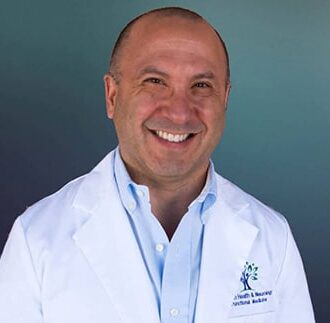
Dr. Kenneth S. Sharlin is a board-certified neurologist, researcher, teacher, author, and speaker, dedicated to transforming the landscape of neurological care through functional and regenerative strategies, advanced diagnostics, and emerging treatments that go beyond symptom management to achieve true disease reversal.
With over 25 years of experience in neurology, Dr. Sharlin seamlessly integrates conventional neurology, functional medicine, and cutting-edge regenerative therapies to provide a patient-centered approach to conditions such as Alzheimer’s disease, multiple sclerosis, Parkinson’s disease, ALS, epilepsy, and chronic migraine. His work is informed by a deep commitment to scientific innovation, clinical research, and evidence-based integrative medicine.
Connect
Listen Now
Transcript
Dr. Sandi: How many times do you hear people talking about being tired? They talk about fatigue, about just not having any energy, even though they may have gotten a good night’s sleep. We talk about fatigue with my guest today on ‘Health Coach Talk,” and he has an approach to neurodegenerative conditions that takes into account the importance of fatigue. And his model is really something that is on the cutting edge, and it is referred to as the Predictive Energy Allocation Model, PEAM. We get into this today on the podcast with my guest, Dr. Ken Sharlin, who I have known for many years. He’s a wonderful friend and colleague.
And let me tell you about Dr. Ken Sharlin. He is a board-certified neurologist, and he is an Institute for Functional Medicine certified practitioner. He has spent over two decades at the intersection of conventional neurology, functional medicine, and brain health innovation. He’s the founder of the Brain Tune Up. This is an integrative program for the prevention and reversal of cognitive decline delivered through the Sharlin Health and Neurology Center in Ozark, Missouri. He’s the number one best-selling author of “The Healthy Brain Toolbox” and the co-author of “Neurishment: The Brain Tune Up Food Guide,” and a contributing author on multiple peer-reviewed clinical publications. He’s a frequent keynote speaker. And he has also been involved in many studies as a principal investigator, more than two dozen pharmaceutical and device clinical trials. So, I know you are going to learn a lot from my interview with Dr. Sharlin. Welcome to “Health Coach Talk,” Dr. Sharlin.
Dr. Sharlin: Thank you for having me.
Dr. Sandi: You have really done groundbreaking work with degenerative conditions. So, let’s talk about this model that you have been exploring, and it has to do with fatigue. Fatigue in neurological conditions. Can you talk about that and what this PEAM model is?
Dr. Sharlin: Yes, certainly. First of all, we all have this experience of fatigue at one point in our lives or another, or for some, unfortunately, a daily struggle. In my world as a neurologist, fatigue is one of the most common complaints, whether that’s the patient with Parkinson’s, multiple sclerosis, Alzheimer’s, MS. In fact, our dear friend, Dr. Terry Wahls, when she began to explore her protocol in the context of clinical research, fatigue was actually the first thing that she looked at. That was for multiple sclerosis. We found that the Wahls diet, for example, did improve fatigue. It didn’t fix the problem entirely, but it had a positive impact. And I think, just that observation alone can teach us an awful lot.
Fundamentally, it is important, first of all, to distinguish fatigue from simply being tired. Tired is also something that we often experience, or at least it’s a human experience that we’ve all been through at one point or another. But generally speaking, feeling tired is like if we’re a battery, the battery power is low, and then you rest, maybe take a nap, sleep overnight. Ideally, you’re recharging your battery, and you wake up and you’re not tired anymore. You can even understand this in terms of circadian rhythms, the pressure to go to sleep, pressure to wake up as the sun is rising, the accumulation of adenosine as we use the packets of energy, ATP produced by mitochondria, and that buildup of adenosine leaves that feeling of being tired, and then again, we go to sleep, wake up, recharge, we’re good.
Fatigue is a much more pervasive phenomenon. You can have…in fact, it’s probably not even uncommon, the person might say, I don’t understand it. I had a really good night of sleep, and I woke up and I am still worn out. So, I think that’s a really important distinction. And please interrupt me because I certainly want this to be a conversation.
That really begs the question of what is fatigue? And in fact, how does the brain… This asks really big questions. How does the brain actually work? What are our brains ultimately doing for us? And that goes back to the idea. The brain is kind of the control center. I’m an old “Star Trek” fan and Captain Kirk and the other various captains and admirals that sat in that famous chair. That’s not necessarily where all the action happens, but it’s what controls all the actions. The command deck, it’s sending out signals, it’s talking to Scotty down in engineering or Dr. McCoy in the sick bay. It has to send out signals. We do that in the human brain by way of things like hormones, neurotransmitters, and our immune system.
In the end, while the starship certainly has a mission and we can translate that into the human experience, maybe our mission is first and foremost survival, but our mission is reproduction, the sharing of genetic information, the exploration of optimizing survival. The captain is doing the exact same thing with the ship. There’s a mission that they’re on, but the mission really can’t take place without the ship being able to defend itself through the darkness of space, through the potential for various types of attacks, whether it’s an asteroid cloud, what have you, or it’s the enemy itself.
So, what I’m really saying is that the brain has a primal directive, and that is survival. And then we have this element that is consciousness. That gets into another sort of rabbit hole, but it’s important to understand that experiences like fatigue, pain, hunger, the drive to be intimate, these are all in fact survival mechanisms or survival responses of the brain.
So, pain, if you step on something sharp, naturally, you want to pick up your foot. You don’t want to push your foot into that sharp object. Some people have pain and we might call it central pain, and they don’t really…they’re not stepping on anything sharp. They haven’t burned themselves. But there’s a projection of pain onto some part or maybe multiple parts of the body that is created by the brain. So, false signal, in a sense, because we’re not actually doing anything. It isn’t maybe in the truest sense of false signal because the brain is still sending out that signal for a reason. But let’s look at it that way.
Then we can draw a parallel to fatigue because what happens when we experience fatigue is you don’t really want to get out of bed or off the sofa or maybe just view…maybe there’s a family activity you want to participate in and just like, I don’t have the energy to give to that family reunion, that big holiday dinner that you both sort of love and hate. It’s like, I love my family, but it takes a lot of energy. We can draw on these very common phrases and common experiences. It takes a lot of energy to actually understand fatigue from a scientific perspective.
So, in the end, fatigue becomes a bank account of…you put money in, you take money out. You want to buy something. Do you have enough money to purchase that thing, car, what have you, a house? The brain, in fact, does things in a predictive manner, which is the P for the Predictive Energy Allocation Model. So, we’re not reactive. We don’t, say, suddenly find ourselves on the car…the new car lot at the automobile dealership. And then after the fact, trying to figure out how we’re going to pay for it. Maybe often that does happen in reality, but ideally, we go in saying, this is my budget. This is what I can afford. I’ve already kind of done my research. I’ve decided which car makes the most sense and so on and so forth.
The brain is doing the exact same thing. It’s taking data in, but it’s actually predicting the next step, even as it receives data, because that is actually a much more efficient survival response to the brain than being reactive. We have this thing called learning. So, in the end, fatigue is a way of your brain saying, the amount of energy, the capacity that I have balanced against the demand for energy, the cost for energy just doesn’t add up. It’s a warning sign from our unconscious to our conscious brain to say, no, no, not doing it, do it, not doing it, won’t do it. And then we experience that fatigue and that leads to decision-making and social impacts and all kinds of other things.
So, that’s a very long winded way of explaining how fatigue might be different than, say, just simply being tired. We have to look at it as an adaptive response. They have to look at it in terms of energy currency and energy demand and the cost of that exertion. And we have to understand it in the context of a brain whose primary mission is our own survival.
Dr. Sandi: This is so fascinating. So, what you’re actually saying is that fatigue is protective. It’s the brain’s way of protecting you. And this is often though so misunderstood because let’s say you don’t have the energy to go to a family event and you’re maybe described then as depressed and settled with a mental health diagnosis, for example, or that this common just tiredness is again not seen as this protective mechanism to look further into what’s really going on. So, you also talk about this being one of the first indications that this might be the development of one of these conditions like Parkinson’s.
Dr. Sharlin: Yeah. And really all of this begs some very deeply philosophical sorts of questions of the very meaning of human existence. I want to just share on a personal note that when I…I think I knew I wanted to be a physician from a fairly early age, certainly by the time I was in high school. I went to a liberal arts college in Central Ohio called Kenyon, and Kenyon was very famous for its English department. Many great American writers had passed through the halls of Kenyon College and published in the famous Kenyon Literary Review.
So, although there were certainly a diversity of focuses and majors, if you will, the math major, the chemistry major, so forth, the overwhelmingly popular focus at Kenyon was to be an English major. And I was an English major, and I was trying to, in fact, come to terms with an interest in being a physician, the scientific requirements that it took to, say, go to medical school or the perceived scientific requirements that it took to be a physician in the first place. And this interest in the humanities, in liberal arts and the deep questions. I don’t know about you, Sandi, but when I was in college, there was an expression that was used to say truth with the big T. Really, we’re in search of truth.
Dr. Sandi: Yeah, absolutely.
Dr. Sharlin: And I was fairly well read. But one day, sitting around at the local hub, as college students do, and we…I was…my cohort, my group, my people, if you will, we were the nerds. And so, over a beer and pizza, I’m sorry, it wasn’t gluten-free or anything.
Dr. Sandi: Who knew that then?
Dr. Sharlin: Certainly not at that time. But you know, we did…we had some pretty deep conversations, pretty intellectual conversations. And I didn’t always…I had some really smart friends, some of them were probably smarter than me. So, I didn’t necessarily instigate all of that or understand all of it, but I understood enough of it and certainly had my own perspective. And someone pulls out a book and said, I just read this fascinating book. And, Sharlin, I wanted to share with you because I think it would particularly resonate with you.
The title of the book was, or is, “The Man Who Mistook His Wife for a Hat.” And the author was Dr. Oliver Sacks. For those of you who may know his work, Dr. Sacks was a neurologist. He was English by birth, practiced in New York City, I think, at Albert Einstein. He was a clinician, but he was a great writer and wrote many fascinating books, some of which were turned into movies. For example, I always quote “Awakenings” with Robert De Niro and Robin Williams. And there was even a television series that was a biopic. It may even still be…it may be in its second, third season. It may still be produced.
But the point is that did in fact resonate with me. And somehow I find myself stumbling into similar rabbit holes, if you will, of coming to this from being, I don’t know, an English major, sort of a philosopher at heart, someone interested in the human experience and the hero’s journey, Joseph Campbell, and then asking big questions about what is consciousness and what is fatigue and all these things that we deal with.
So, to your point, I think, in the end, really fascinating way to look at…and I don’t in any way…when I say this, I want to be clear that I’m not in any way diminishing the seriousness of Parkinson’s or Alzheimer’s or MS or ALS being an absolutely terrible disease. But maybe we need to be rethinking what we call a disease and why is it a disease. It’s a disease because it changes the trajectory of the life that we expect to have. It’s a disease that perhaps shortens our lifespan, limits our ability to function. And certainly, these are things that none of us wish upon ourselves or others.
But on the other hand, could it be that diseases, whether they’re ALS or Parkinson’s, MS, Alzheimer’s, other conditions, Lewy body dementia, I could go on and on, are they in fact simply adaptive responses of our biological cells, of our biological brains? We are this unique mix of genes and environment and lifestyle and all that stuff. That’s our toolbox. That’s what we have. That’s what, pardon the expression, God gave us to survive.
So, we are different. We all experience similar pressures, hunger, nutrient depletion, energy depletion, hormonal imbalances, toxin exposure, things like that. And we react to them differently for a whole variety of reasons, some of which are more superego. They’re more intellectual. They’re more this is how I’ve learned to adapt. And some of them are very biological, very primal, if you will. And in the end, I think it’s very easy.
And again, I want to give credit where credit is due. I would even say that aside from the per se Bredesen Protocol that…what Dale Bredesen really brought to the table over many years of bench research and establishing the Buck Institute and his early publication is really this idea that Alzheimer’s disease is an adaptive response of the brain. It doesn’t serve us, but it’s an adaptive response to the brain to a multitude of signals.
Dr. Sandi: Yeah. And that leads us into functional medicine and the systems biology approach, which you were trained at IFM and I was as well. Can you talk about what this means that in terms of the concept of systems biology and how this may then be a way of looking at these neurodegenerative conditions?
Dr. Sharlin: Yeah. I will say, I would hope and I suspect you would agree, Sandi, that when we go to meetings, whether it’s IFM and reference the American Academy of Anti-Aging Medicine, and I love them all, don’t get me wrong, but from the perspective of simply attraction, go to their biggest meeting in Las Vegas in December and track the attendance from year to year. I think you probably were there this past December. I mean, it’s an OMG experience. I have never…I mean, there’s very few meetings I’ve ever been to that were that absolutely huge.
And what I mean by that is, thank goodness that this concept of systems biology is coming into the main, whether it’s forced because doctors are sick and tired of the current model, whether it simply, to quote Mark Hyman, just makes sense. But when we start to look at these conditions from a very different way, from moving away from the silver bullet approach…and by the way, sometimes…maybe not as much functional medicine because it’s inherent, although it has its own weaknesses, but especially I think regenerative medicine, which tends to use more targeted approaches. I’m going to fix somebody by putting them in a hyperbaric chamber. I’m going to fix somebody by putting a photobiomodulation helmet on their head.
And these things have value, to be clear, but when we move away from the single bullet, the silver bullet approaches, in Alzheimer’s disease now, it’s anti-amyloid therapy, and either the mature amyloid plaques, i.e. donanemab, also called Kisunla, where we’re going to target what are called the toxic protofibrils of LEQEMBI or lecanemab that we’re going to somehow fix this problem. And in reality, the history of anti-amyloid therapy is, it doesn’t really work, and we only have two candidates that made it through phase three clinical trials, and ultimately were FDA approved. And I’m not against them, and I do use them some in my clinical practice.
But on the other hand, the reality is, at best, they only slow cognitive decline. They certainly, for a whole variety of reasons, including the foolish idea that memory is somehow the same as amyloid, or is equated with amyloid, if we remove this protein, arguably toxic, fine, yeah. But somehow that actually improves this very complex construct we call memory. It might be the last hose, the fireman’s hose, it puts the fire out, but the house still burned to the ground.
So, we need systems biology, we need functional medicine. I would say, regenerative medicine is…we’re just…those who subscribe to that, and I certainly do, we’re just the outside of the box thinkers, and what kind of tools can we bring to the situation to help, but that we’re not married solely to the…just the traditional FDA approved drugs, or their primary indications at least.
But systems biology, really breaking things down to embrace, again, just borrowing from our friend Dale, the 36 holes in the roof, the trophic signals, the toxic signals, the metabolic disruptions, all of which contribute to this thing globally that we…in this case, our discussion, called fatigue, fatigue, that conscious experience, or Alzheimer’s, or Parkinson’s, or MS.
So, the functional medicine coach and a functional medicine practitioner, who had been taught through IFM, through Functional Medicine Coaching Academy, to start looking at gut health, to start looking at defense and repair of the immune system, mitochondrial function and energy, the role that toxins play. We do live in a very toxic world, but also we have to embrace a capacity to manage those toxins. And if you’re not pooping, peeing, sweating, if you’re not hydrating, if you’re not supporting methylation, glutathione production, things like that, then you can’t manage the toxins that we should all expect to encounter on essentially a daily basis and so on and so forth, and hormones and transport and structural integrity.
But what we want to teach, I think, is that fatigue sometimes throws us a curve ball as practitioners, and our patients complain of fatigue. But in the end, I would argue… And I tend to use the same analogies over and over. So, I apologize. But this is the end of “The Wizard of Oz” when the good witch Glenda tells Dorothy, you have the ability to go home the whole time. What does that mean? It means, if you have really learned functional medicine, what it’s really about, functional medicine isn’t really about how to match a test result with a supplement. We all know that no one is fixed with their list of supplements that can be a mile long.
That’s not to say there isn’t a role for targeted supplementation. But in reality, beginning with foundational health, sleep, movement of nutrition, of the energetic work that needs to be done and our connection with others, as well as embracing environmental factors, of hormones and external environmental exposures. And that could also mean, of course, toxic relationships, not just mercury. Then we begin to have this…we go, oh, wait a minute. I have that framework. I know this stuff. And understand that fatigue absolutely applies…that this framework applies to fatigue as it does to Alzheimer’s, Parkinson’s, as it does to inflammatory bowel disease, diabetes, Hashimoto’s, thyroiditis.
Dr. Sandi: Yeah. That’s the beauty of functional medicine. It doesn’t matter what you name it. It is the cause and looking under the hood. And you do that with your Brain Tune Up. So, can you talk about that? And also that you…I really…as long as I’ve known you, you have been a big proponent of health coaching and a collaborative care team model.
Dr. Sharlin: Yes. Brain Tune Up is the name that I gave to what I do, to the framework, as you put it, that when I hung a shingle as an independent practitioner in 2015 and really did it for the sole reason of being able to mainstream these principles, be more than the pill for the ill doctor. And I do, again, want to emphasize that I’m not anti-pharmaceutical industry. There are times just as a targeted supplement makes a lot of sense, where a drug makes a lot of sense. The problem is that, too often, it’s the end of the story. Sandi, I have bad news that you’ve been to my office several times and every time your diastolic and systolic blood pressures are quite high and I need to recommend that you get on a blood pressure medicine and your response is how long should I do that? And too often the answer is, for the rest of your life.
We don’t give people the rest of the tools that they need to say, let’s do this for 6 to 12 months, but I’m going to focus. We’re going to do some work. We’re going to look at your sleep and make sure you don’t have sleep apnea. We’re going to get you with my dietician and work on nutrient optimization. We’re going to create a movement program that is customized to you and your needs, your abilities, your limitations, and what excites you. All of those things. Let’s make sure that we’ve, again, addressed that energetic self, that you’re really just taking time to be, to breathe, which is too often something that folks don’t even realize how that they’re not even breathing. That’s a whole other discussion. But in the end, what happens is that blood pressure actually gets better, and it can get, in some cases, better remarkably quickly. And then there’s no longer a need for that blood pressure medicine.
So, that’s my complaint of the system. Brain Tune Up addresses things in a different way. It is, at certain levels, a multidisciplinary behavioral change model that focuses on foundational lifestyle factors. It is a deep dive into systems biology, meaning we do those labs that…and I’m sure your listeners who are coaches or other practitioners, you have a similar experience where the patient says, why doesn’t my doctor do…this is…people love the labs for a whole variety of reasons. But you know, the labs focus on drivers of inflammation, oxidative stress, toxins, hormones, and so forth.
So, looking at things from a mechanistic perspective. What are the drivers of disease? And then having that system in place. I always say, you’ve got that 5,000-piece jigsaw puzzle. It doesn’t build itself. You dump those puzzle pieces onto the table. Some of them are not even right side up. So, that’s often the first thing we do. And then we start looking around like, okay, this piece looks like it goes with this piece. And that’s the…what we call the integration piece of our model. They start out with identifying the problem and investigating those root causes, and then bringing this into more of a restorative whole picture, whole person perspective.
And then by the way, we can bring in those tools of regenerative medicine for those interested in stem cells and peptides and hormones, and like I said, the cool technologies. And they are cool, and they are wonderful. I definitely geek out over that stuff. But who is going to be the most successful with those types of interventions? Certainly not the person who’s had four hours of sleep last night, who is swinging through the McDonald’s drive-through window.
So, we have to look at this from a systems perspective, scientifically and clinically, and again, understand that we are mortal. We’re not going to fix everything. We actually need to embrace fatigue, not fix fatigue in the sense that it’s a signal. If you’re stepping on something sharp, you pick up your foot. If your body is talking to you, pay attention. The disease comes from tomorrow, the manana. I’ll do it tomorrow. I’ll do it tomorrow.
And then we have pioneers like Selye and Walter Cannon, the general adaptation syndrome or an exhaustion phase or understanding that, in fact…and I would say this is an epiphany for me recently, because we learned this and you learn this in becoming a psychologist, but I learned it mostly in functional medicine school, if you will, that while we embrace homeostasis as that’s our goal, to be in balance, to be in homeostasis, that in fact, our true strengths, Sandi, is allostasis. Because this means that life is dynamic. It’s a river, it’s moving. It has a temporal plane to it. And if we do strive to be in homeostasis, but we can’t manage all those perturbations, our survival depends on our allostatic adaptability, not on homeostasis. In the end, if you’re not adaptable, if you’re not resilient…and we all have limitations.
So, working with your patients, your clients, is really about saying, first of all, this is a signal and we can break it down and we can understand the factors that contribute to it. And we can definitely improve it. But we also have to embrace it in the end and say, once we get it to a point where you’re functioning much better than you are now, you still have to…it’s like hunger. Your body’s talking to you. And that’s, I think, where the true survival and fulfillment and quality of life is going to come.
Dr. Sandi: This is such a hopeful message and such a fascinating discussion that we’ve had. And I hope that we can continue the conversation. It seems like just about everybody I know is being diagnosed with Parkinson’s. Just the last week, I found three more people were diagnosed. And so, this is an epidemic and you are out there doing such good work. Dr. Sharlin, where can people find you?
Dr. Sharlin: Oh, we do have a website, which is functionalmedicine.doctor. So, not dot com, dot doctor, spelled out. I have a podcast show, “The Healthy Brain Toolbox” podcast. I have a brand new website, drkimsharlin.com, where you can learn about me personally. We’re on Facebook, Instagram, all that good stuff as well. But for those who want to connect clinically, certainly, functionalmedicine.doctor is a great place to start, and books, too. So, it’s all out there.
Dr. Sandi: All right. We will post all of that. And again, it’s just a pleasure. We’ve connected many times at conferences, and looking forward to continuing to connect. And you inspire people with the good work that you are doing. Thank you for being with us today.
Dr. Sharlin: Thank you. It’s been my pleasure.
Health Coach Talk Podcast
Hosted by Dr. Sandra Scheinbaum
Conversations About Wellness Through Functional Medicine Coaching
Health Coach Talk features insights from the most well-respected names in health coaching and Functional Medicine. Dr. Scheinbaum and guests will explore the positive impact health coaching has on healthcare, how it can transform lives, and help patients achieve better health and wellness outcomes.

Check us out on these platforms: