The Hidden Link Between Diabetes and Stress, With Mark Brezzell
What happens when the clinician becomes the patient? This week on Health Coach Talk, Dr. Sandi welcomes executive health coach and former cardiovascular perfusionist Mark Brezzell to share how a life-altering diagnosis of type 1 diabetes reshaped his career, his mindset, and his mission. With decades of experience in acute care medicine and medical industry leadership, Mark now uses both clinical expertise and lived experience to educate individuals and organizations about metabolic health, stress, and prevention.
“I talk about eight key health principles: fresh air, sunshine, drinking water, and rest. All of these components are necessary for optimal health, whether you’re dealing with a chronic condition or trying to prevent one. Everything is interconnected.”
Mark Brezzell
In this conversation, Mark breaks down the differences between type 1 and type 2 diabetes, clarifying common misconceptions and explaining why early awareness matters. He also connects the dots between chronic stress, blood sugar regulation, and long-term vascular risk, emphasizing that stress is not just mental or emotional, but it is physiological. Drawing on decades of experience in medicine and industry leadership, he now works with executives, corporations, nonprofits, and individuals to highlight how metabolic health influences performance, productivity, and quality of life. His message is clear: acute care can save lives, but sustainable lifestyle change is what keeps people out of the operating room.
For health coaches, this episode reinforces the power of lived experience and the growing need for advocacy in an increasingly complex healthcare system. Mark speaks to the importance of helping clients ask better questions, understand their lab numbers, and recognize how sleep, hydration, nutrition, sunlight, movement, and stress all intersect. His work reminds us that coaching is often about helping clients step back, shift perspective, and see the long-term consequences of daily habits. If supporting clients in becoming confident CEOs of their own health resonates with you, this conversation offers both inspiration and practical insight.
Watch The Episode
Episode Highlights
- Understand the critical differences between type 1 and type 2 diabetes and why that distinction matters
- Explore the hidden physiological impact of chronic stress on blood sugar and vascular health
- Examine how metabolic health influences executive performance and organizational ROI
- Learn how health coaches can support clients in navigating complex medical systems with confidence
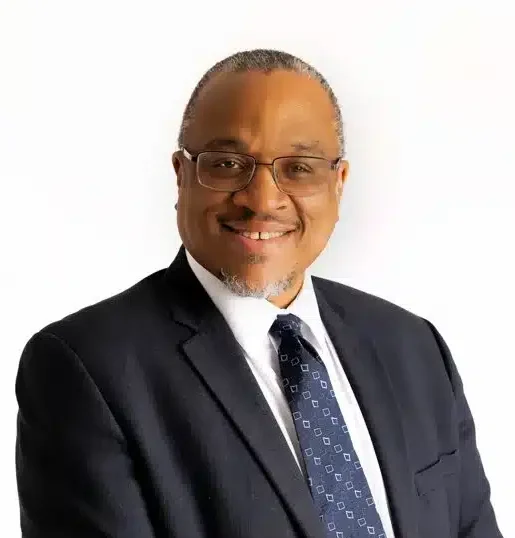
Mark Brezzell is an executive health coach, educator, and keynote speaker with over 30 years of experience spanning clinical medicine and medical affairs leadership in the healthcare industry. A former Cardiovascular Perfusionist who participated in more than 2,000 open-heart surgeries, he later transitioned from hospital-based care into industry leadership, bridging patient outcomes with strategic healthcare innovation. For almost three decades, he has lived with Type 1 Diabetes, bringing lived experience to his work at the intersection of stress physiology, diabetes management, and vascular risk. Today, he equips leaders and organizations to optimize performance, manage stress, and protect long-term health — because metabolic health is a leadership advantage.
Connect
Listen Now
Transcript
Dr. Sandi: Welcome to another episode of “Health Coach Talk.” My guest today refers to himself as a health motivator, but he didn’t always start out as a health coach. He had a long career in traditional acute care medicine, and he then developed a chronic medical condition, type 1 diabetes, which he is going to talk about and talks about this journey to eventually become a coach and the very, very important work that he is now doing.
So, let me tell you more about my guest, Mark Brezzell. He is an executive health coach, educator, and keynote speaker with over 30 years of experience spanning clinical medicine and medical affairs leadership in the health care industry. He’s a former cardiovascular perfusionist who participated in more than 2,000 open heart surgeries. And he later transitioned from hospital-based care into industry leadership, bridging patient outcomes with strategic health care innovation. And now for almost three decades, he has lived with type 1 diabetes, bringing his lived experience to his work at the intersection of physiology, diabetes management, and vascular risk. Today, he equips leaders and organizations to optimize performance, manage stress, and protect long-term health because metabolic health is a leadership advantage. Absolutely. Well, I know you are going to enjoy my conversation with Mark. Welcome, Mark.
Mark: Thank you. Glad to be here.
Dr. Sandi: Well, I’m so glad to talk with you. Let’s just start out. You have a really amazing background and your journey being diagnosed with type 1 diabetes. Can you explain how that all came about and what that led in terms of the transformation in your life?
Mark: Well, it’s actually very interesting. As I shared, I’m clinically trained as a cardiovascular perfusionist. So, I was a part of the heart surgery team at Toledo Hospital in Toledo, Ohio. And a year prior to my diagnosis, one of the anesthesiologists approached us about updating and maybe revising and putting some protocols in place for patients that were diabetic undergoing cardiopulmonary bypass. That was an initiative where we started to review. I started to get into a little bit of the diabetes and just trying to develop ways of improving overall outcomes in this patient population. And it was something, we got it off the ground.
The very next year, I got married the beginning of that year in 1999. I got married. And within six months or even less, three to four or five months into my marriage, I started exhibiting weird things. I noticed that I started losing weight, unexplained. I was very active at that time, so I attribute it to just my activity level but still continue to lose weight. And it just progressed to other manifestations. I remember I had an insatiable desire for drinking soda pop. My wife would even say, “Why do you drink so much of that stuff?” And I’m thinking, “I just have a sweet tooth,” not thinking anything of it. And I was just drinking this stuff like water.
And I remember one day I was post-call, and I was laying on my couch. And the phone rang and I jumped up. And it was like a glare in my eyes, like somebody’s just shining a flashlight. And it just subsided. And I knew that was odd, but it went away and I’m thinking, “What was that about?” And so it was just a progression. And it wasn’t until I was, again, one day post-call, I was driving home, changed in the car, and I had to use the restroom. And I’m thinking, “I haven’t been drinking a lot, I don’t understand.” But when I got there, I went to a drug store and when I got into the drug store, I said, “Something’s not right about this.” And that’s when it dawned on me. And so I went and bought one of those over-the-counter glucose tests. I took it and it came back positive. I was floored. It just blew me away. So, I contacted my doctor and said, “Hey, I suspect that this might be going on.” And he tested it, he confirmed it, and I was just basically floored.
And when you think about diabetes, we so often focus on the pathophysiology of it, but we don’t necessarily discuss the psychological impact and emotional impact it has on you. When you get a condition that has so many tributaries, potential complications of challenges, it affects your mood. It affects your thought process on top of everything else that you’re at risk for. I felt compelled. I spent years in the industry. I transitioned out of the hospital and I spent years.
And so I think I bumped into a friend of mine a couple of years ago and he was telling me about how he almost died. He spent about two or three weeks in a hospital and he was in a acute renal failure. And he just was like, “Wow, I almost died. And I found out when I got there, I had diabetes.” And that was the call of action for me. I’ve been in industry all those years, and I decided that maybe now is the time. I have experience in a hospital. I have experience in the industry. Maybe now’s the time for me to be more of an advocate and educate because even for me as a clinician in the back of my mind, I’m thinking, “It couldn’t be that. That’s not my story,” but indeed that was indeed my story.
So, that’s why I share my story to let people know that it can affect you at any time, any demographic, doesn’t matter your zip code. It doesn’t matter who you are. And doesn’t matter your age that you can become stricken with this condition. And I just want people to be more aware of their bodies because you have to always tell people all the time, “You better than anybody. If something’s not right, get it checked out.” There’s so many times we sit on symptoms, and we allow things to escalate, out of control. And when we do present, sometimes they say if you come months ago, weeks ago, or years ago, if you come, we could have done something more for you. So, that’s my mantra now is that when I educate, not only do I discuss the condition, but also try to emphasize to them that if something’s not right, at least I’d rather them tell me nothing wrong with you, than for you to go and for them to say, “I wish you’d come here sooner.”
Dr. Sandi: Yeah, such an important message. So, for those who are listening, who may not know, there’s a lot of confusion, type 1 versus type 2 diabetes. Can you explain?
Mark: Absolutely. And that’s part of my education. Well, type 1 diabetes is an autoimmune condition. Many people talk about autoimmune. That’s basically… They may not understand the mechanism behind it, but basically your body attacks itself. And for type 1 diabetes, your body, there’s some trigger that decides that your pancreas is not part of its own and it attacks the very cells that produce insulin. They call them beta cells. And so it could be genetic. It could be lifestyle on top of genetics, but mostly it’s usually genetic. But even with that, they found that there’s been triggers, but that’s what type 1 is. And it’s not something that’s reversible. Usually the function of your pancreas will go down to minimal. And as a result, you have to give yourself the hormone insulin to control your sugars at that particular point where your body is no longer producing the insulin necessary for that.
Whereas type 2 diabetes is a little bit different. It’s more around, we call it, insulin resistance. And for a type 2 diabetic, it is reversible depending on when you actually begin intervention. And there’s various components of that. Even the insulin cells, they’re not producing enough insulin, or the body’s not absorbing the sugar that’s in your body. It’s just not being absorbed properly. Or the insulin that is being produced isn’t being utilized properly, which is driving sugar to the cells. So, I mean, there’s a lot of little sub-components to type 2 diabetes, and it’s actually the most common presentation of diabetes as well. Most people, when they become diabetic, usually become a type 2 diabetic.
And like I said before, your pancreas sometimes is overloaded trying to compensate for the highs and the lows for your sugar not being controlled as well. And eventually it gets tired. And usually if you can catch yourself in that period before the pancreas completely lapses or is severely damaged, then you can, by proper diet, by exercise, or even some medications for some people, you can actually reverse that course if the cells have not been totally damaged. But that’s usually the difference. Type 1 is autoimmune. There’s no way of reversing it outside of some of the new technical advances out there. Type 2 is reversible or is easily controlled. It can be controlled by diet, by exercise, and medication. And it can be reversed if your body is able to recover from the early stages.
Dr. Sandi: Yeah, well, thank you for that explanation. And I think it’s exciting that there are… We tend to think that there’s nothing you can do, but becoming the CEO of your own health, the importance of lifestyle changes. And so it’s really… That’s the role of a coach, and that’s where you came in. You have become a coach.
Mark: Yes.
Dr. Sandi: Correct? Yeah.
Mark: That’s right. I’ve tried to help people… They ask me all the time. They say, “When did you get into coaching?” I said, “Well, when I acquired a condition that I live with every day, it gave me a certain level of experience that I didn’t ask for.”
Dr. Sandi: Yeah. And so many people come to our school, FMCA, because they themselves or a loved one has been diagnosed with a condition and they now want to support others to take charge of their health and find that they are now finding meaning and purpose in this work.
Mark: And there’s nothing more powerful than a testimony.
Dr. Sandi: Yeah. And you work with a wide range of clients. You do some corporate coaching. Can you talk about that?
Mark: Again, because I spent years in corporate, my last company was a medical device company, and we were developing, actually ironically, devices in what was a carotid stent that we could put in a carotid artery, open it up to prevent strokes. And then also devices in the lower legs as well that could open up the vessels to prevent further limb damage or injury from ischemia, what we call peripheral arterial disease. But I try to help people understand all that. But yes, the focus of… I reach out to companies, I work with executives, because I think what people don’t understand is that when we focus on one condition, we miss the whole picture. The cardiovascular system, particularly the vascular system, is a whole system. The same process causes the same issues. It’s just a different location. In the head, you can have a stroke. In the heart, you can have a myocardial infarction. In the legs, you could have limb ischemia, which leads to potential amputations, if it’s not corrected. That sort of thing. But it’s the same process that generates these blockages all throughout the system.
So, what I try to help companies understand is that stress, and that’s where the foundation of my interactions with the companies now is around stress, the vascular impact of stress, and how people understand stress is just more than just a state of mind. It’s a physiologic event. And so I hope people understand that if you undergo prolonged stress, that even precludes you from getting a condition like diabetes, because that in and of itself causes your body to react a certain way where your liver exudes extra glucose, which rises to a level and then your pancreas is just trying to compensate for all these things. Again, that cycle can generate certain manifestations of diseases in your body. So, I try to help them understand that when we’re in our zone, the last thing we pay attention to is us. And you can’t have a productive workforce if half of your workforce is out sick or being treated in the healthcare delivery system. This is an expensive condition. I mean, you have medication, you have therapies. It tells more than just… Productivity is availability. And if you don’t have a healthy workforce, you won’t have an available workforce, and your productivity declines. So, that’s one of the focuses.
Another is for nonprofits where I educate the community and help people understand the benefit of health. We all know that our healthcare delivery system may not be… It might be a little bit broken. But even with that, we know that if we take better care of ourselves, then we won’t be as exposed to the system. We can do that. It’s very simple. But health is more than just a pill. It’s a lifestyle change. And that is something, I guess, the reason why I share with passion is because with years of interventional surgery, interventional techniques, we did open heart surgery. And what I discovered over the years is that, okay, we have the technology to prolong life. But if you don’t change the lifestyle, then you’re going to be right back to where you started from. What can you do to minimize that repeat of the onslaught that you dealt with initially?
So, I meet with organizations, I meet with churches, I meet with businesses from executive level to help understand the impact of employee health. I meet with public health organizations, just sharing the information regarding what are they developing, what is diabetes, trying to clarify the myths. Like you said, there’s so much misinformation out there with social media that I try to help clarify. And then also talk on the impact of stress, how stress has such a subcomponent term, and what can we do about it? What are ways that we can reduce our stress? So, yes, I meet so many different levels. In law, because they’re very high-stress areas, and finance, very high-stress areas. So, I target areas where people, as a way of life, endure an exorbitant amount of stress. And when you talk to them and you let them know, “Listen, this is what’s going on in your body,” that kind of shakes them out of that doldrum where they have the blinders on. I just got to do what I have to do, what I have to do. And maybe you have to take a pause, a time out. What can I do to improve my situation? Maybe instead of on my lunch break going and getting the burger, maybe I just go for a walk around the building or walk around in the parking lot, or just get some fresh air and some sunshine and just reset myself for the latter part of the day. Or, when I get home from work, how can I take this load of my day off where I can not damage my body so much by just permeating and working and then eventually eating and going to bed and then getting up and starting the same cycle all over again?
So, I think a lot of it is clarity. A lot of it is perspective. And a lot of times when you’re in it, you don’t see what you’re doing to yourself. But when someone can at least talk in your ear and say, “Hey, this is going to cause problems down the road. Are you sure you want to go down this road?” it makes you balk a little bit. That’s my focus. Yes, all the different organizations, particularly that deal with a high amount of stress, because everything’s all interconnected. It’s all intertwined. And we’re really good at keeping things separate.
Dr. Sandi: Well, you are speaking my language and the impact of stress. And it’s so encouraging to hear you address that. I don’t think it’s focused on enough.
Mark: It’s not focused.
Dr. Sandi: And it really has to do with mindset. And many years ago, before founding FMCA, I was a health psychologist. And I saw a lot of people who were coming out of cardiac rehab and what we would say is, “Is this worth dying over?” And they’d get all upset about something… Take it to that level. Is this so important it’s worth dying for? Because that’s an understanding that stress response and the wear and tear, especially on the cardiovascular system. And absolutely, it is prevention. It is looking at the effects of what you’re eating, and how you’re moving, and sleep, and managing your stress, and relationships. And those are things that you can control so that, as you said, you don’t end up getting your open heart surgery and returning. Because in Western, acute care medicine is the best in the world. You were there. You saw what’s possible, but you want to prevent that. You want to stay out of that operating room as much as you can.
Mark: That’s right. When I left the hospital, I told my colleagues, “I don’t want to see you guys again on this side.”
Dr. Sandi: That’s right. Yeah. No, it is really critical. And there’s an old saying, “You can’t see the label when you’re inside the jar.” And that’s what coaching is about, so helping you to see the label, because when you’re in it, you often can’t see the bigger picture, the perspective. And perspective is so critical, and a coach can guide you to zoom out, have a broader lens, and have some perspective on what really matters to you.
Mark: That’s right. It’s interesting when you talk about perspective. One of the things I share with an audience is that I talked about how a lot of times you want an example of perspective. When you buy a new car, isn’t it interesting that when you buy that new car, then all of a sudden, even on your way home from the dealership or wherever you bought the car, that’s all you see. You see that car. Like, wait a minute. I’ve been driving in this area all this time. I didn’t realize so many people had this type of car. It’s all about perspective. When you’re zoned, you’re laser-focused on what you want to do. But when you can step back and broaden your horizons a little bit, then you maybe start to recognize, “Maybe this is not a good thing. Maybe I need to make some changes.”
Dr. Sandi: Yes, absolutely. Yeah. So, what do you find when you go and talk to these companies? Are they receptive? Do they get it in terms of what they understand the ROI? Because really what your coaching about is improving their ROI.
Mark: On the employee level, even on the corporate level, I think they’re starting to get it more because I think when you… On the corporate level, when you start putting it in dollars and cents for them, thinking, okay, this is what the average expenditure is for this particular condition. And for them, when they see the numbers, and sometimes that’s where the red flags pop up, it’s like, “Wow, I did not know that. I didn’t really pay attention to that.” But from an employee level, it does resonate because many of them have friends, have family, have people within that sphere of influence that are dealing with some of these challenges. I’ve talked to people. They call diabetes a three degrees of separation. Somebody who knows somebody that’s dealing with diabetes. It’s not that so far removed anymore because it’s so prevalent and it’s growing in almost epidemic proportions.
So, I think that when you heighten that and help them understand that it is preventable, unless you’re obviously in type 1. But even with that, with type 1, you can still have a good life and you can prolong yourself because I was even told by one of my doctors, an endocrinologist, says that if you’re able to keep your A1Cs within good, safe ranges, all the years of his practice, he’s never seen a lot of complications for individuals who kept their A1Cs within targeted ranges. He says, “They’re always the ones that are dealing with complications.” So, it doesn’t really matter where you are, what you’ve been stricken with, whether you have type 1 or type 2, just educating them that changes can have a lasting impact on outcomes in health. And you have to have a change in mindset.
And I do get a fair lot of questions and people are very interested because I don’t just talk about the condition. I talk about what you can do, like you said, prevention. And so I talk about eight key health principles: fresh air, sunshine, drinking water. Are you getting rest? All of these components are necessary for premium health and also help you whether you deal with a chronic condition, prevent you from getting a chronic condition. All of these things are interconnected.
Dr. Sandi: So true. Yeah. That’s the premise behind functional medicine. Everything’s interconnected. So, when you are doing coaching, is this one-on-one consultations or do you have groups? Is it both?
Mark: Mostly it’s been presentations to groups.
Dr. Sandi: Okay.
Mark: But I’m branching off. In fact, I’m now willing to do one-on-one consultations because I’ve done it for years without it being a business. People approach me and wish to share their story or the challenges. And I’ve always been an advocate in that regard where, even within my family, if someone’s sick or someone’s in the hospital, they’ll call me, “Mark, this is what’s going on.” And I try to explain to them what’s going on and what this means, why are they doing this test. And so from that, I’ve had a lot of one-on-one outside of the auspices of my business. I’ve been doing that for years. Now I’m just doing it as a foundation for part of my platform. And yes, I’m willing to talk to anybody. It doesn’t matter who you are. It doesn’t matter where you come from. Health is wealth. And if anyone’s interested in talking to me about their health, I’ll be happy to give you guidance and direction to the best of my ability.
I have resources for the work that I’ve done, and I spent time as a medical science liaison. So, we were a face of the company. We would go and talk to the physicians about our products and the research potential and that sort of thing and educate them in that regard. And so I have a huge network. So, when people do come to me and they say, “Well, Mark, even if this is outside my area of expertise…” I say, “Hey, I know people that may know people,” and point them in the right direction and sometimes even bypassing some of the weeks and months of getting seen by certain clinicians. I reach out to them and they say, “Yeah, I’ll see them.” But I just try to help people understand how to navigate the system, to understand what types… They’re asking. If they do certain kinds of tests, explain it to them, helping them to be an educated patient. What type of questions to ask the clinicians? Because you need to know what they’re doing to you. I mean, they’re your medical team, but you still need to have an understanding of what’s being done to you. And so that’s my focus.
Dr. Sandi: Well, I’m so glad you brought that up because I think it’s critical and growing in importance because our system is increasingly impersonal. And as we’re going more towards AI, but even getting an appointment, and especially an older generation… My husband was trying to get an appointment. He’s used to the old days where you just call the office. The receptionist would pick up the phone. You talk to them. “Hey, can you get me in today? No problem.” And then you have to go online, if they don’t respond back, and it’s often confusing. And seniors have the most chronic health conditions where they’re in the medical system quite a bit. And that alone is stressful. Trying to get an appointment with a cardiologist, “Our next opening is two years from now.”
Mark: Exactly. What do I do now?
Dr. Sandi: So, it’s often frustrating. How do you ask the right questions? You’re nervous when you go into an appointment. And I think that’s a really key role for coaches, to be that advocate, to help them feel prepared. And there’s somebody who is one of our graduates that she even requested to accompany clients to a visit, if they don’t have a caretaker or somebody who is with them to help them or talk about it after the visit, prepare before the visit, and also sometimes communicate with their doctors when they have signed permission to do that as well.
Mark: No, that’s perfect. That’s exactly what’s needed. A lot of people are fearful for the lack of information. So, they’re like, “Well, what do I do?”
Dr. Sandi: There’s a lot of things you can do.
Mark: Yeah.
Dr. Sandi: Or the medical system is typically people get 7, 10 minutes with a doctor and wait a minute, they’re out the door already. And, “Oh, I had so many questions and I didn’t ask.”
Mark: The paperwork has all of these descriptions.
Dr. Sandi: Yes, I like to say that coaches bring back bedside manner because we know that is the key, when in healing, it wasn’t so much the… It’s that connection and a physician really having that and so many in the modern medical systems. So, we have the great technology, but we’ve lost a lot of that.
Mark: So, even with AI, I think one of the biggest challenges that I see is sometimes you don’t know what you don’t know. And yes, you can read certain things, but sometimes it’s very difficult for you to have connectivity where, okay, there’s one thing to have information. But if you don’t really know how to apply that information, it still leaves you at a deficit. And so that’s where I try to help people understand that connectivity piece.
Dr. Sandi: Yeah, that’s so important. Wow. Well, this has been such a great conversation, Mark. Where can people find you?
Mark: Well, my website is mdbliveconnext.com. So, that’s my website, so you can reach out to me anytime. I do have a book where my website is listed on, that you can get at Amazon or Barnes & Noble, “A Matter of the Heart: My Unexpected Journey with Diabetes,” because it was truly unexpected and it completely caught me by surprise. I was angry for years. I’m thinking I was always a healthy guy. How did I come up with this? Again, trying to fight through the stigmas. But one of the things I do in my book is I expose myself so that people can understand that you’re not alone in this walk. And I try to help people understand… I think the biggest challenge that I have is helping people understand it’s not just about you, because what I also try to do is educate their caregivers and those connected with them. If you see them, they’re normally talkative, but they’re just quiet one day and you talk to them and they’re not responsive. Check on them, make sure the sugar’s not low. Or if the sugar’s dropping and they’re normally a happy-go-lucky person but they start snapping at you, don’t get upset. The human part of you is like, “Why are you so upset?” But it could be that these things affect your brain and your brain affects your emotions. A lot of times all of this is impacted by this condition.
So, I try to help people understand that it’s not just you, it’s also your tribe, your network, your foundation, I call it. And everyone needs to be educated because this is not just about you, because you could be in a life-threatening situation and it may be someone else that discovers you need intervention and that they could be there to help you out. So, it’s a big picture with a lot of moving parts, but I just try to help people understand their own personal condition but also help the support staff to understand, “Okay, this is what they’re dealing with. If you could be more sympathetic, more patient, these are little tools that I can give you to help just to be aware of their situation.”
Dr. Sandi: Such important work that you’re doing. Thank you for being with us today. It’s been a pleasure to talk with you.
Health Coach Talk Podcast
Hosted by Dr. Sandra Scheinbaum
Conversations About Wellness Through Functional Medicine Coaching
Health Coach Talk features insights from the most well-respected names in health coaching and Functional Medicine. Dr. Scheinbaum and guests will explore the positive impact health coaching has on healthcare, how it can transform lives, and help patients achieve better health and wellness outcomes.

Check us out on these platforms: