Supporting Metabolic Health Using CGMs, With Michelle Doel and Alicia Harding
What if seeing your blood sugar change in real time could make healthy habits easier to understand and sustain? This week on Health Coach Talk, Dr. Sandi welcomes Functional Medicine Coaching Academy graduates Michelle Doel and Alicia Harding, co-founders of the Metabolism Mastery Method, to explore how continuous glucose monitors, or CGMs, can support greater awareness of metabolic health and meaningful behavior change.
“I like to refer to that CGM as this behavior change magic trick… it allows our clients to become their own personal health detective. And by seeing that in real time, and making these changes in real time, it empowers them, it improves their self-confidence, their self-efficacy.”
Alicia Harding, NBC-HWC, FMCHC
Michelle and Alicia found their way to this work through different coaching specialties, with Michelle focusing on teenagers and teen athletes and Alicia working with adults around hormones, healthspan, longevity, and metabolic health. Their shared interest in the role of blood sugar and insulin eventually inspired them to create the Metabolism Mastery Method, a group coaching program as well as a training program that helps other health coaches incorporate CGM education into their practices. In their conversation with Dr. Sandi, they discuss why the value of CGMs extends beyond observing responses to food. Sleep, stress, movement, hormones, and other factors can all show up in glucose patterns, giving clients an opportunity to connect everyday behaviors with what is happening inside their bodies. Michelle and Alicia also share how real-time biofeedback can create accountability, encourage curiosity, and help clients become what Alicia calls their own “personal health detective.”
For health coaches, the episode offers a compelling look at how CGMs can fit within a behavior-change-centered coaching model while respecting professional scope of practice. Michelle and Alicia explain how they approach education without diagnosing or prescribing, why group coaching and co-facilitation have become central to their work, and how relationships with physicians, naturopaths, physical therapists, and other local providers have helped their practice grow through referrals and collaboration. Their experience also illustrates the possibilities for coaches who want to develop a specialized niche, serve more people through accessible group programs, and translate complex health information into greater client awareness and self-efficacy. For coaches curious about the intersection of metabolic health, technology, and behavior change, this conversation offers plenty to consider.
Watch the Interview
Episode Highlights
- Explore how real-time glucose feedback can influence everyday behavior and accountability
- Examine the surprising connections between glucose patterns, sleep, stress, movement, and hormones
- Learn how health coaches can incorporate CGM education while remaining within scope of practice
- Discover how group coaching, professional collaboration, and community referrals can support a growing coaching practice
Meet the Guests

Alicia Harding is a National Board-Certified Functional Medicine Health Coach and wellness expert specializing in the profound impact of metabolic health on longevity. Through her private practice, Bloom Health Coaching, she helps clients bridge the gap between complex physiological data and sustainable lifestyle shifts that foster long-term vitality.
As the co-founder of The Metabolism Mastery Method with Michelle Doel, Alicia focuses on removing the guesswork from wellness. By utilizing continuous glucose monitoring and functional lab reviews, she provides clients with the objective data needed to stabilize blood sugar, optimize hormonal balance, and reclaim their energy levels.
Alicia’s clinical approach is rooted in the belief that when people understand their unique internal data, they are no longer dependent on generic trends. Her mission is to provide the high-touch support and expertise necessary for clients to master their physiology and thrive at any stage of life.
Connect
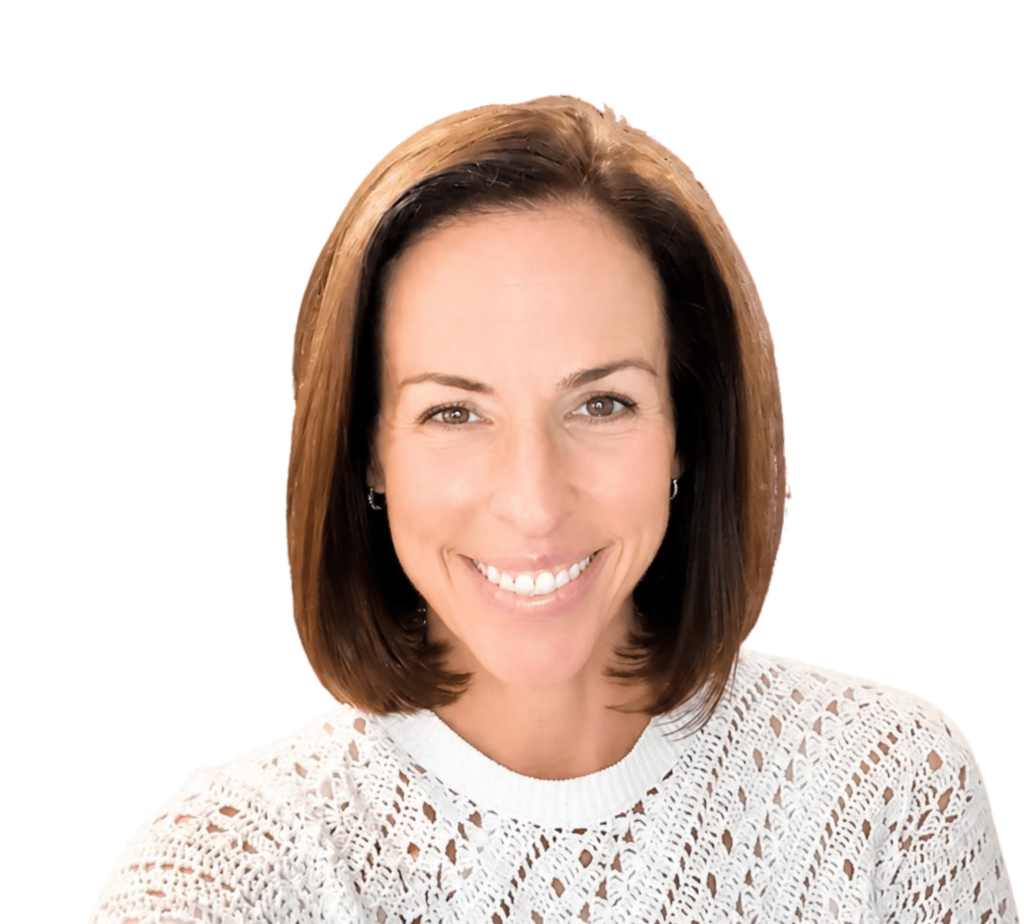
Michelle Doel is a National Board-Certified Functional Medicine Health Coach and educator dedicated to helping individuals understand how their bodies truly work. She is the founder of Vertical Horizons, where she coaches teens in building strong foundations in nutrition, mindset, sleep, stress, and movement so they develop the confidence and autonomy to navigate life with resilience.
Expanding her work into adult metabolic health, Michelle co-founded The Metabolism Mastery Method alongside Alicia Harding. Together, they deliver data-driven programs that leverage continuous glucose monitoring, lab analysis, and personalized coaching to help clients optimize insulin sensitivity, energy production, and long-term metabolic health.
Across both teens and adults, Michelle’s mission remains the same: empower people with the knowledge and awareness to align their daily habits with how their physiology is designed to function.
Connect
Listen Now
Transcript
Dr. Sandi: I was speaking to someone recently who said that she pricks her finger twice a day to register her blood glucose levels. And I was telling her that I wear a CGM, a continuous glucose monitor, and she said, “Why would you want to do that? Why do you need to track this in real time? Just do it twice a day. It’s so much easier and so much faster.” Well, I could not disagree more. Who wants to be pricking her finger twice a day? Well, I certainly don’t.
And that’s why I have been wearing a CGM for many years on and off, and why I am delighted to bring to you this episode of “Health Coach Talk” because I am speaking with two graduates of the Functional Medicine Coaching Academy, and I always love to speak with graduates. And these two women are on a mission. They are training health coaches to use continuous glucose monitors because they have developed a course in this subject matter. And they also are working with clients, and they are co-leading groups. Let me tell you about these two women.
It is a pleasure to welcome Michelle Doel and Alicia Harding, and they co-founded the Metabolism Mastery Method, which you are going to hear all about on today’s podcast. Michelle and Alicia, this is going to be a great conversation. I love speaking to our graduates. So, welcome, both of you.
Michelle: Thank you.
Alicia: Thank you.
Dr. Sandi: So, the reason we asked you to come on “Health Coach Talk” is because you have taken the initiative to create a course, and it is focused on CGMs, which are continuous glucose monitors. So, what inspired you to create this program? First of all, how did you get together? You were students of FMCA. But how did you find each other? And then how did you decide to collaborate?
Alicia: Yeah. It’s such a good question. I will say, Michelle was a year ahead of me in the FMCA program. It was something that I had been considering, had been looking at. We just lived about a half a mile from each other. We knew each other through other friends. And I really considered Michelle to be a mentor to me, and inspired me to pursue going through the program and becoming a health coach. So, that’s how we met.
Dr. Sandi: I love that.
Michelle: Thankfully, you know, the next piece after graduating is what is our niche going to be? What’s the population we’re going to work with? And so, I…with a background in education, I ended up working with teenagers. So, I run a teen wellness program. And Alicia took a different direction and started working with women, actually works with men and women in hormones and metabolic health. I’ll let her talk about that more. But we both took interest in the role that blood sugar and insulin plays in overall health, mental, physical, emotional. And we love to share podcasts, and talk back and forth, and share research articles. And I just said one day, I was like, Alicia, why don’t we just create a program with continuous glucose monitors to tell people really understand their own physiology, what’s going on in their bodies to help them actually create this behavior change that they all want. So, then we came together and here we are.
Alicia: Yeah. The reality is, even though we had different niches, where maybe I was working with optimizing healthspan, lifespan, longevity, in the middle aged individual, Michelle working with the younger group, the teens, the teen athletes, metabolic health affects everybody. That was the common thread between us. So, that’s why we decided to collaborate on this project.
Dr. Sandi: First of all, I love the power of collaboration. And I love that you got it as you graduated, that you specialize so that you dig deep into one area so that you can serve the people that often you’re most passionate about serving. And you grow your business by narrowing down who you are serving. That’s worked again and again. You’re focusing now on continuous glucose monitors. So, we have a big problem. Only 7% of adult Americans are considered metabolically healthy. So, disorders of metabolism, blood glucose issues, it is something that is a big problem with type 2 diabetes, used to be called adult onset diabetes. And now, we’re seeing it in a younger population. So, how did you land on this area of continuous glucose monitors?
Alicia: The bottom line is that metabolic health and blood sugar dysregulation, and thereby insulin dysregulation, hyperinsulinemia, chronically elevated insulin, there isn’t a specialty in which…of a chronic disease in which high insulin is a part of the root cause.
Michelle: Yeah. And the other part of it, we both know, because we’ve worn these and I like to joke, I’ve been wearing a continued glucose monitor for five years off and on for my own health. When you have that extra accountability, when you actually see real time, what’s going on in your body, it really creates that pause. As a matter of fact, we were at our workout this morning, and one of our clients that’s in our group coaching cohort right now for a group…I think this is our, what, fifth cohort, Alicia, for our Metabolism Mastery group? She was just talking about how her goal was to not snack in between meals, to eat that nice, robust meal, eating real foods that she didn’t have to snack in between. And so, she’s like, just having that CGM on my arm, I look at it and I see that it’s nice and level. And that tells me, I don’t want to ruin that right now. Why am I going to snack? So, it’s that little extra accountability coach, just right there on your arm, right there on the bump.
Alicia: Yeah. I like to refer to that CGM as this behavior change magic trick that comes from real-time biofeedback. It just provides, as Michelle just alluded to, this additional level of accountability that perpetuates momentum and change. And it’s where it allows our clients to become their own personal health detective. And by seeing that in real time, and making these changes, and seeing the changes happen in real time, it empowers them, it improves their self-confidence, their self-efficacy. So, all of that is what has just continued us to want to continue to grow this program.
Dr. Sandi: Oh, for sure. I’ve been wearing a CGM for many years as well when they first came out. And I just thought this is going to revolutionize healthcare because it does help people to be honest and to say, oh, I get a spike when this happens. And one of the greatest insights I’ve found is how many things can cause elevated blood glucose readings that have nothing to do with what you ate. It can be stress, it can be poor sleep. So, those are the kinds of things that also can help people’s awareness of maybe having a different approach to how they can deal with stress and transform it.
Michelle: Absolutely. And one of the reasons we created this program is because people will put these on, and we’ve encountered people who will be like, oh, yeah, I put it on, I wore it, like whatever. And once they’re in our program and then we do teach on the hormones, the stress, all those different environments that are not necessarily food-related sleep, and there is these huge aha moments. They realize all of those things were connected.
Alicia: That is probably what takes people most by surprise. I think people may come into the program thinking this is going to be primarily about nutrition. But again, what we want them to take away at the end of the program is that everything is connected. It’s like a spider web. So, this holistic approach to one’s physical, mental, and emotional wellbeing. And just as Michelle said, how sleep, how movement, how stress, how your hormones, how all of that plays into this blood sugar and therefore insulin regulation.
Dr. Sandi: It is so true. You mentioned movement. When I wear my CGM and I notice, oh, it’s getting high after dinner, every single time. If I take a walk, I have seen it drop precipitously, and you can see it in real time. It is amazing how that works. Or doing air squats. It’s the same thing. So, making those connections, really critical.
Michelle: Yeah. We call it gamifying. You have the thought of gamifying it. Like how could we bring that glucose down? What are the different things that we can manipulate? I would say, everyone in our group loves doing it. The reason that people might not come into our group or be a part of the program is the fear of having that biofeedback. I think that’s real also. But, yeah, everyone that’s there, if they’re knowing that they’re going to have this on, they’re going to be looking at this and learning from it, and they enjoy it.
Dr. Sandi: So, you are running coaching groups, which I’m assuming you are co-facilitating. And I love that model. And then you also chose to create a course for health coaches. Now, health coaches may want to work with CGMs. They may be intimidated by that. And maybe they have fears that they’ll be going out of the scope of practice into the medical acting as a medical clinician with this. But can you share why they need to allay their fears, and that’s just not so?
Michelle: I love that. I just got an email from a coach last night that said, “Hey, I really want to teach this course, but I am worried that I’m going to need another certification. Do I need a doctor present when I’m teaching this?” And we feel very confident that we can say, absolutely no. We’ve designed this course to be behavior change focused so that the coach coming in, helping their clients understand that they are setting their own outcome goal. We are weaving in their why throughout this entire program, where every session is focused on little behavior goals that are going to connect that outcome goal. So, it’s very behavior change focused.
And then the content, Alicia and I have spent years researching the most up-to-date metabolic research. We have had subject matter experts in our cohorts. The last, actually, five cohorts, we’ve had functional medicine doctors, naturopaths, physical therapists, nurses, because we want their feedback. We want to say, hey, is this content that we’re teaching actually the most well-researched content? And so, we get that validation verification from them.
And then we help the coaches understand that you’re not teaching to tell them what to do. You are taking them through the stages of change. This is information that they may not have ever contemplated before. So, now, we’re bringing them into contemplation with all of this newfound knowledge. We’re guiding them through the stages of change, the behavior change, so that they can create their own body awareness and understand what to change, when to change, and how to change it on their own. So, it’s very difficult to go outside your scope.
Even though we are pairing with Rupa Health and we’re ordering labs through Rupa Health because we want our clients to have their most current metabolic health markers so that when we talk on that, they can do their own comparison. But we’re very quick to say, we are not here to diagnose. We’re not here to interpret. If you have any questions, we highly suggest you go talk to one of these naturopaths or these functional medicine doctors or your primary care physician to get all of those questions answered. And not that we’re coaching the coaches in this CE class, we’re coaching to them to coach their clients so that they can stay in their scope.
Dr. Sandi: And now, with these devices being direct-to-consumer and like Lingo by Abbott, you can just get this yourself as a consumer. And it’s always best practice as a coach where you don’t get into that problem with being out of scope and acting as a doctor without a license, whereas you have the client, they’re ordering the labs, they’re ordering their CGMs and you are just informing them that this is possible.
Alicia: Yeah. And as long as the coach is always making that pre-clarification before they’re presenting some of this education, whether it’s lab interpretation, as Michelle said, we are not here to diagnose. We’re here to share with you what the latest metabolic research says is considered to be optimal metabolic health values. As long as it’s presented that way, the coach will be protected.
Dr. Sandi: Yeah. It’s just like when you write a book and you have a disclaimer, this is for educational purposes only. It is not a prescription, it is not direct medical advice for any individual participant.
Alicia: Absolutely.
Dr. Sandi: And I love that you have the group program. Can you share the power of the group dynamics? As people are changing together, they’re all wearing their CGMs, I bet they’re sharing stories of things that have…as they’re tracking their glucose reading.
Alicia: Yeah. The group dynamic has been such a joy to be a part of and for us to coach together. I do think that in this age of AI and everything being digital, people are craving and therefore thriving from being part of a community, bringing back the human element, which you get in this group setting, even if it is over Zoom. And all of that just adds to that additional level of accountability, which enhances the growth. Further motivation comes from announcing or sharing because, as Michelle mentioned, the behavior change and goal setting, smart goals, all of this is built into our program.
And so, when you are sharing or announcing your intentions or your actions or your goals to your community, that just fosters more self-efficacy and momentum and confidence. And also, sharing wins. And also, there’s so many learning moments that come from sharing the struggles. And I think that, also, another big advantage to the group model is that it really makes it more affordable to the masses, which is really important to both Michelle and I. Health coaching shouldn’t be reserved for just the well-off. Everybody should be able to afford to have the benefit of a health coach. And doing it in this format allows from that, from a financial perspective. And then for the coach, when you are able to serve more clients, the math is math-ing. It’s better economics. So, there’s more potential to grow and scale simply from more referrals alone.
Dr. Sandi: Exactly. And I think, what is unique in your model is that you co-lead. And I did that for years. I was a health psychologist, and I had a co-leader in the group. And it was wonderful because then if something…if you can’t make it one night, you have your partner, but also it improves the group dynamics, as somebody may bring up something and the co-facilitator might be better equipped to handle it. So, you support one another. You can also process what’s going on after the group. So, it is a win-win. And it’s such a great way of coaching.
I love what you said about the affordability. Absolutely. Groups are accessible. And it is social proof. It is somebody in the group saying, well, if she can do it, I guess I can, too. It’s encouraging. They will think, I can’t disappoint the group. I said I would do this. And one of the big advantages of groups is that you can be of service to others. So, a group participant thrives because maybe they are helping out someone else in the group, and that’s very rewarding once they have greater meaning and purpose now in their life.
Alicia: Absolutely. You touched on something, Dr. Sandi, that also was, I think, a surprise to Michelle and I. One of the elements that we bring to our program is that every participant also gets a private two-on-one because it’s Michelle and I. This isn’t something that was ever taught to us, but as you mentioned or as you alluded to in your practice, we have found these two-on-one coaching sessions so incredibly impactful for the reasons that you just cited. While one of us may hear something different or catch or has time to process, it just brings so much more to that session that has been rewarding for the client, but for us as well as coaches.
Michelle: I remember the first time Alicia and I did it, we got off the call and we were both like, oh, my gosh, that was beautiful. Having this, the same night, just kind of feed off of each other, and like Alicia said, listen in here. All of our brains process differently. We all have different strengths. And to be able to bring those together and to really listen and hear that client on the other side in different perspectives, it was beautiful.
Dr. Sandi: Yeah. Can you share how you get referrals into your program? Because many coaches listening struggle with that. They don’t like being salesy and don’t know…they’re not savvy with social media. Can you discuss the potential for working with providers, with clinicians, and getting referrals? So, how do you do it?
Michelle: That’s such a good question. Yeah. We do the Instagram route. Social media. We’re trying to do LinkedIn, but the last couple of cohorts, we really tried to go old school. We are going into the gym. We are right now pairing with, collaborating with Lake Oswego Health in Lake Oswego, Oregon. It’s a clinic run by three naturopaths. And they’re doing some of the blood work with us. We can refer patients to them. They have been in some of our cohorts, been there to kind of answer some questions for us just to be present because they’re curious what the program looks like. If they’re going to recommend this program to their patients, they want to know what it is their patients are actually getting.
And so, that really helped bringing them into one of our cohorts. They could see the whole process. And so, we have them recommending patients come to us. We are collaborating with physical therapist. He’s been sending a lot of patients our way also. So, we’re just trying to network in the community because there’s also something beautiful. Everybody wants to reach the masses, but there’s something beautiful about reaching the people in your community and then linking each other and then just spreading like wildfire.
Alicia: Yeah. In addition to that, we also do have a referral program within our program. So, any alum, any graduate from our Metabolism Mastery Program, if they share the word, if they refer somebody to us and that person registers for the next cohort, we offer them a free or a discounted two-on-one session with us. The bottom line is, to all coaches out there, it’s all the things. It’s all the things. We’re doing our best.
Michelle: Be consistent.
Dr. Sandi: I love what you said about starting regionally with your own community. And it really grows. And that old school method is best. And having that network and then people will start referring friends and family, colleagues, and it will grow from there. And also by staying in your lane as coaches, you are earning the respect of…you mentioned you’ll send to that office for labs. Well, that’s going to guarantee that they will reciprocate, and they will think of you when they have patients to refer. I did that for many years. It’s a foolproof formula as opposed to thinking you can do it all or it all has to be social media and reaching out to strangers, but it’s really with your community.
Michelle: Yeah. Well, Alicia and I have been saying, slow and steady wins the race. Believe in yourself and in your program. Keep on going.
Dr. Sandi: Absolutely. And you have, within your course for coaches, templates so that they can create their own metabolic health program and run these groups. Yeah.
Alicia: So, we’ve got the national board certified CE accredited version for anybody that needs those credits. But for any health coach, even if you’re not board certified, we have a turnkey version of this program where it’s all of our slides. It is all of our research citation. Even this would come with a script in terms of how to present the education, how to talk through the behavior change process. It is all the years of our research, our passion, our blood, our sweat, our tears, and just turnkey ready for you to implement into your own practice. Whether you’re a registered dietician, a nutritionist, a physician, or even personal trainers and athletic trainers, they’re understanding the importance of working within all aspects of all pillars of health to optimize the work they’re doing with their clients in the gym.
Dr. Sandi: This is such a great model and you’re providing templates so that it is plug and play, so to speak. And you are co-leading the group, but for listeners that…it doesn’t have to be finding another coach. You can find a physical therapist, a dietician, a nurse practitioner, a doctor. I led a sugar detox workshops years ago. It was a group and I had…it was an oncologist. And he was referring a lot of patients, and he loved the subject. And so, he was…we shared. We basically co-taught. And he brought in the medical aspect, and then I was doing the more behavior change and coaching aspect.
Alicia: I love that, Dr. Sandi. You were so ahead of your time.
Dr. Sandi: There is nothing like leading these groups. Well, you are really out there making a difference. Not only are you serving your community, helping people create better health, metabolically healthy, but you are also serving the community of coaches and helping them to thrive. So, I could not be prouder of you as FMCA graduates. So, tell me, how can people find you?
Michelle: One way they can find us is at our website, which is metabolism-mastery.com. The other place they can find us is on Instagram, metabolism_mastery_coaches.
Dr. Sandi: All right. We will include all that in the show notes. Thank you so much for being with me. And again, I just applaud your mission. You are helping so many people. So, thanks for being with us.
Alicia: Thank you, Dr. Sandi. It’s been an honor.
Health Coach Talk Podcast
Hosted by Dr. Sandra Scheinbaum
Conversations About Wellness Through Functional Medicine Coaching
Health Coach Talk features insights from the most well-respected names in health coaching and Functional Medicine. Dr. Scheinbaum and guests will explore the positive impact health coaching has on healthcare, how it can transform lives, and help patients achieve better health and wellness outcomes.

Check us out on these platforms: