Why The Value of Health Coaches Is Growing, With Amanda Grabot
What role do health coaches really play in today’s healthcare system, and why is that role becoming more essential than ever? On this episode of Health Coach Talk, Dr. Sandi sits down with Amanda Grabot, a leader in functional medicine coaching and business development, to explore how health coaches are helping bridge the gap between clinical care and real-life behavior change in an evolving integrative health landscape.
“There’s a missing piece in health and that’s the care part of it… You need a collaborative care team in order to make very impactful, significant differences for people. Otherwise, it’s these providers who are relying on doing it all by themselves.”
Amanda Grabot
Throughout the conversation, Amanda shares how health coaches support both patients and providers by reinforcing care plans, offering accountability between appointments, and creating continuity that traditional healthcare often lacks. Drawing from her work at Forum Health, she explains how integrating coaches into collaborative care teams leads to stronger outcomes, reduced provider burnout, and a more sustainable model of care that honors the human side of medicine.
For health coaches, this episode speaks directly to the questions many are asking about career viability, niching, and staying relevant in a rapidly changing field. Amanda offers perspective on the skills that matter most, including communication, curiosity, confidence, and connection, and why technology can never replace the relational work coaches do every day. Whether you are building an independent practice or exploring opportunities within integrative organizations, this conversation highlights where health coaches fit now and where the profession is headed.
Watch The Episode
Episode Highlights
- Explore why health coaches are becoming a critical part of collaborative care teams
- Examine how coaching improves patient follow-through and provider sustainability
- Understand what organizations look for when hiring health coaches
- Consider how health coaches can position their skills, confidence, and focus to build sustainable careers
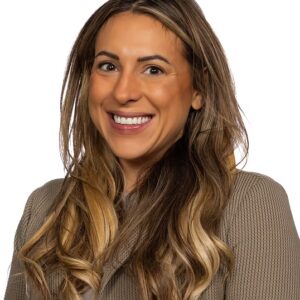
Amanda Grabot is a leader in functional medicine coaching and business development, dedicated to building bridges between traditional healthcare and personalized, lifestyle-based care. As Director of Business Development at Forum Health, she has help build a team of nationally certified health coaches, and works alongside clinicians to integrate behavior change, accountability, and whole-person support into patient care. With a background in chemistry, biomolecular science, and clinical experience in hospital and functional settings, Amanda combines evidence-based coaching with systems thinking to drive measurable health outcomes.
A passionate advocate for collaboration and innovation in healthcare, Amanda mentors coaches and practitioners on creating meaningful, sustainable careers within functional medicine. Her work focuses on redefining the role of the coach — from accountability partner to essential care collaborator — helping both patients and professionals thrive in an evolving, integrative health landscape.
Connect
Listen Now
Transcript
Dr. Sandi: In today’s episode, we talk about a subject that we get a lot of inquiries about, and that is what is the landscape like for hiring a health coach? How do health coaches work, specifically how do functional medicine health coaches fit in? Well, that’s what we talk about with my guest today. Her name is Amanda Grabot, and let me tell you about her. She is a true leader in functional medicine coaching and business development. She’s dedicated to building bridges between traditional healthcare and personalized lifestyle-based care. As Director of Business Development at Forum Health, she has helped build a team of nationally certified health coaches and works alongside clinicians to integrate behavior change, accountability, and whole person support into patient care.
With a background in chemistry, biomolecular science and clinical experience in hospital and functional settings, Amanda combines evidence-based coaching with systems thinking to drive measurable health outcomes. She’s a passionate advocate for collaboration and innovation in healthcare and mentors, coaches, and practitioners on creating meaningful, sustainable careers within functional medicine. Her work focuses on redefining the role of the coach from accountability partner to essential care coordinator, helping both patients and professionals thrive in an evolving, integrative health landscape. Welcome to the podcast, Amanda.
Amanda: Thank you so much. It’s so great to be here.
Dr. Sandi: Can you just start off sharing a little bit about your own journey towards functional medicine? What led you there and then into coaching?
Amanda: Yeah, so I had always wanted to do something with medicine. I grew up with my mom who worked in the ER. And so I was one of those ER babies, one of the bay babies. We would always just go to the ER, visit my mom, hang out in the ER bay and stuff like that. And so I grew up watching all the Grey’s Anatomy and stuff like that. So, when I went to college, I did chemistry. I did all my pre-med requirements on my way to med school. And I just… Something just didn’t feel right about going there. So, I was like, first, I’m going to work for a few years. And I had done my thesis in college on the Chinese traditional benefits of the fungal genus cordyceps. And I compared that those different extracts to pharmaceuticals and lo and behold, the natural substances always won out.
And so I started working and just doing sales, and I ended up at Ortho Molecular Products, because I just could not wrap my head around getting into medical school paying for it while I was applying to medical school because I got into a few. I was working at an emergency department and an ICU at the same hospital I grew up in with my mom . And all these providers were like, “You’re not going to like this. Don’t do this.” And I was like, “What are you talking about? I just got a four-year degree in chemistry. Petri dishes do not talk back to me. What am I going to do?” And so I landed a position with Ortho Molecular Products and I became a sales rep in functional and integrative medicine. I never saw myself as a salesperson but somebody who helped functional integrative practitioners get the resources and tools that their clinics and their patients needed.
And when I felt like a salesperson, that’s when I left that career. I got certified as a health and a life coach, and I became a business coach for functional and integrative practitioners. After six, seven years in the field building a territory in Wisconsin, I partnered with those functional and integrative providers that I met during that portion of my career. And I partnered with them as a health coach and a life coach for their patients, but I also partnered with them as a business coach so that they could have healthier, more sustainable businesses because that’s just a struggle in functional and integrative medicine and independent clinics too.
Dr. Sandi: Absolutely. And then your path led you to Forum Health. So, from that vantage point, what do you see as this critical role for health coaches in today’s healthcare landscape? What is this about health coaches that’s so important?
Amanda: It gets more and more important. Every time I talk about it, I feel there’s a missing piece in health and that’s the care part of it. In traditional medicine, the portion of health that’s missing is the care part of it. The listening and the time you spend with patients. And it’s beautiful that integrative and functional medicine providers in this specialty, they do spend time with their patients, but they’ve got a patient roster of 1,000, 2,000 patients and they’re taking all this information in from the biology standpoint of it. They can’t do it all. They can’t do everything. You need a collaborative care team in order to make very impactful, significant differences for people. Otherwise, it’s these providers who are relying on doing it all by themselves. And I can speak from interviewing these providers, evaluating their clinics, working alongside them, that burns them out. And they need just as much balance in their life as their patients do.
And so the importance of these coaches is to full circle these care plans, is to help be their accountability partner, to be that person in between appointments with their providers on are they staying consistent with their care plan, are they taking the right supplements at the right time of the day, or do they have the right mindset. Are they eating something that they thought was gluten-free and they still have all these things and they just need to talk to somebody in between them? It’s been huge at Forum Health, watching coaches and providers come together, because that’s what I did. When I found Forum and I joined Forum Health, I closed down my private practice of coaching and consulting and started doing that with Forum Health. I was able to connect providers with coaches and start this communication of, “All right, here’s the patient, here’s their care plan. Their highest priorities right now are sleep and stress. I need this and this to be the third and fourth priorities by the time that patient comes back for a follow-up to those providers after partnering with a coach strategically.” Those patients have gotten two to three times the results if they’d been doing it alone.
Dr. Sandi: So important to have a coach. So, tell us a little bit about Forum Health. I became familiar with this wonderful organization that I think is revolutionizing the practice of functional medicine, making it so easy for clinicians. And you’ve supported health coaches since the get-go. Just say a little bit about what Forum is and what it does.
Amanda: So, Forum Health is an organization of functional and integrative medicine practices around the country. We started about six, seven years ago, and we today have 29 physical locations. And by the end of this year, we’ll be available either with a physical location or virtual telehealth in probably 30 to 40 states by the end of this year. We started and why I joined is because there’s this vision and there’s this mission that we can’t gatekeep functional and integrative medicine from the public any longer. They need to know about this. We need to be a national presence. This needs to be something that communities and the public see on a much larger level.
So, that’s what we’re really on a mission to do is to grow integrative and functional medicine that is accessible to people and patients across the country. And from the provider perspective of it, you don’t have to be on an island by yourself. There is this big giant movement that’s happening. We’re helping local communities because we do grow our physical footprint currently through acquisitions. So, we acquire integrative and functional medicine practices and bring them into… One of the things we’re able to do for communities is we all have to retire someday. And taking over a functional integrative medicine clinic in a small local community can be really challenging because all these providers have their own special sauce, their own special rhythm and what they’re doing. So, we also help those communities who have grown and have functional and integrative medicine clinics. We allow that transition period. So, that structure and that offering maintains in those communities as well. So, I’m super happy that we can keep this going in the communities that all these beautiful practitioners have built these independent clinics in.
Dr. Sandi: Wonderful. And it’s the future really of functional and integrative medicine. And one of our earliest faculty members who signed on when FMCA… We had no students yet. And Dr. Shilpa Saxena, who has been involved with Forum and is a prime person who really has driven your mission. Let’s talk about… You work with a lot of coaches. Well, first of all, how do coaches fit in at Forum?
Amanda: Yeah, in so many different areas and in so many different ways. One way we do is our providers have the opportunity to add a follow-up appointment with their new patients with a health coach. I absolutely love that. I think that is such a great best practice for any provider out there. If you have a trusted coach in your community or something, that’s what I used to do is I would do a free 60-minute consultation with patients post initial appointment with a provider. Been such a game changer for our patients and our providers for several reasons. One, patients get so much in that first 60-minute appointment or in those first appointments with their providers that you only retain so much. So, having that follow-up visit three to five days after the initial to review and re-solidify, “Here’s what your provider said. Here’s what we’re going to focus on first. Here’s the first step that we’re going to take next week, and we can work on the second step because it’s an overwhelming care plan.” And that has been incredible. I would say 90% of our providers opt in for that initial, “Let’s add on a coaching appointment afterwards.” And so that’s like the first step of a provider and a coach establishing their relationship at Forum Health, because then you have to communicate with that coach and that provider when you’re sharing that patient.
The other ways, we have different programs like our BrainRx Program and our GDRx program that include coaching support in it. So, our GDRx program, that’s 10 days includes two 30-minute coaching appointments. Our five-week one includes three or four. And similar with our BrainRx. Our weight loss program also includes coaching appointments as well. So, there’s different programs that just have that built in. And then we also have our providers who have like complex chronic illness or patient specifics that really do want to partner with a coach at another level. They’ll build out programs with those coaches, they’ll sell packages of those coaches and things like that. I know in our Tampa office with Dr. Saxena, the coaches are so integrated into her care plans, they’re part of her memberships. They are part of the collaborative care team that meets with the patients after that initial visit and in-between visits. So, a lot of our practices fit them in and work with the coaches on what that looks like, but there’s also some standardized ways to include the coaches as well.
Dr. Sandi: Wow, I love that. I love how they’re such a critical part of the collaborative care team. So, you have built a lot of coaching teams, departments. And what would you look for? What qualities if you’re looking to bring on a coach into a collaborative care team, if somebody is interviewing, what would be some helpful tips?
Amanda: Communication is a really big one, as well as organization. In an organization like Forum Health where we’re growing and we have over 100 providers in our network, there is a lot of organization because you’re going to be working with multiple providers, different patients in different areas and things like that. So, there’s some of those just foundational skills in general. But I would also say ego has to be gone out the window. And that goes for providers too, because everybody has a place here. And I think that’s one of the biggest things that I’ve learned throughout my career in medicine.
I explored going to med school. I’ve been the health coach. I’ve been on the side of interviewing and working with MDs and PAs and all these beautiful people. But nobody replaces each other. And so get your ego out of the door. Be ready to ask questions, be ready to be curious, and do it scared. It’s that fearless type of a mindset because medicine is always changing. The providers that you’re working with all have different nuances and things like that. You have to be confident. And you have to be able to communicate, check in and have a conversation. Don’t assume things but also the confidence. Don’t be scared.
Impostor syndrome is real. I have it too. I can’t believe I’m podcasting this year. At the end of the day, you went through the training. You know what you’re doing. And health at the root of it is the diet, the lifestyle, the stress, all of those basic things, you’ve got this. So, just go into it confidently.
Dr. Sandi: Yeah. Oh, my gosh, that’s so spot on. And you talked about the poverty complex as well. And many coaches are stuck in that place.
Amanda: Yeah, I was too.
Dr. Sandi: Yeah, they don’t know enough. They don’t feel their worth. And my friend and colleague, JJ Virgin, says if you’re not feeling imposter syndrome, that means you’re not playing on a big enough stage. It means you need to go further and take more risks. Yeah.
Amanda: You just can’t let it freeze you. It’s there to help. So, same thing with jealousy. If you’re looking at somebody and being like, “Oh, I wish I could have what they had, they built something.” They’re just paving the way for us, right? That’s not jealousy. That is the vision of what you’re looking for. If you make it into a negative, and that jealousy starts to freeze you or hinder you or, “Oh, they already did it. I can’t do it,” no, go do it. There’s so much room for all of us out here. We forget how big our world is when we’re in our little bubbles. It’s a big world.
Dr. Sandi: Absolutely. Similarly, so many beginning coaches struggle to find their niche. They’re told they have to have one. What’s their path? How would you speak to those coaches? They’re asking like, “Where do I fit? Is there a place for me?” or even like, “Are there any jobs? Can they have a career as a health coach? Is it going to be a viable profession for me?”
Amanda: That, 100% yes. And the thing is we need all sorts of coaches. So, it’s what’s going to bring you joy and what’s going to bring you passion. For me, general coaching, getting too broad, burns me out. And so I need to niche down my patient avatars because I need this to be… I know I can bring benefit to a wide range of people, but I also have to think about myself and my peace and what brings me joy and what areas I can deliver the most value.
We have all of this really beautiful knowledge. And yes, we can help anybody from the autoimmune to the hormone to whatever. But when you sit down and think, “Who do you want to fill your schedule with? Who do you want to sit down and see eight hours a day? Who do you want to have back-and-forth conversations with? What kind of impact are you looking to make?”
I truly think that my life is easier when I niche down. It’s also different if you’re going to be an independent coach and you’re going to do your own thing, or if you’re going to partner with an organization. We need a little bit more of that general, or at least like we have hormone, women’s-focused health, weight loss, and stuff like that, functional and stuff. But we still need the gut, the detox, and stuff.
So, we need a combination of somebody who’s willing to do the general stuff because we’ve got an organization to support, but we also want to know what your niche is so that we can pair you with the right providers. So, we’re getting more of your best-case scenarios on your schedule, because we know those are the results that are going to be that much bigger and that much better because they’re in your niche.
Dr. Sandi: Absolutely, that’s so true. And sometimes having that niche just, you’ll fall into it. And often it will just come to you, or it will come to you in a way you least expect. So, when I was a health psychologist and I had just moved into a new space, and there was a knock on my door, “Hey, I’m a neurologist sharing the same complex and office space, and I’ve got a lot of patients with headaches. You specialize in headaches. I saw you do biofeedback.” I did not specialize in headaches. But I said, “Of course,” because the approach to working with people with headache was the same as whether they came in with IBS, with panic, whatever it was.
Amanda: We’ve gone through it. We know what to do. We get to the root, reduce your inflammation, get the nervous system regulated, know what to do. It’s just when you start talking to those people, who are the people you want to be guiding? And I do think that it’s really important, and this could be controversial. But if you’re going to be doing it by yourself and you’re going to be starting your own health coaching business and doing it, bravo. I loved doing it when I was doing it. Niche. I think that niching and partnerships, because when you are doing this and you are like, “Oh, what should I do? I’ll just do everything,” that’s a place to start. But when you cast your net that wide, you don’t actually catch anything. And you’re going to sit there and you’re going to be so frustrated, being like, “Why isn’t anybody coming to see me?” because you’re asking for everybody, and people aren’t asking for everything. They’re asking for what they want and what they need. And so you have to know who you’re attracting if you’re doing it on your own. So, I do think that you need to niche down if you’re going to be an independent coach.
Dr. Sandi: Absolutely. So, if you’re working for Forum, your niche will be their patients. But if you are independent, in my experience, soon after I started taking this neurologist’s patients, I niched down even more because there were doctors who were pediatric neurologists. And it wasn’t like I turned away the adults with headaches. I still saw them. I still saw people who didn’t have headaches. But my calendar was filled. I had a waiting list because all the pediatric neurologists were sending people. They were driving in… We were in the Chicago area. They were coming from other states because their doctors were saying, “You have to see this woman for your child. She does miracles,” not miracles but, “she helps people and she knows how to help kids with headaches. And I’ve had so much success with my patients, referring them to her. So, that was a specialty because doctors would think of me in that specialty.
And as a generic psychologist doing psychotherapy, they were struggling to make ends meet, whereas I had a thriving practice because I was known as that psychologist who is this pediatric headache specialist.
Amanda: Yeah, I think, too, that niching is even more important nowadays with all of the technology that’s coming out there. And that’s another skill set that I think is really important. You have to have the mindset of embracing technology right now as a tool, as a resource, because it’s not going away. But it also does not take… It does not give you a human experience at all. And so these are things to complement and support your clients and your patients, not hinder you and your business, or it’s not here to be your competition. That being said, there are plenty of those general health and wellness style apps out there right now, that I think niching down and being really specific with who you’re working with, what your offer is, and the benefits, clearly communicating that becomes more important today.
Dr. Sandi: Absolutely. So, talking about the future you mentioned, what skills or traits you think would be really important for coaches to stay relevant? And it’s freaking out a lot of people because almost every day there’s an announcement. Fitbit is rolling out an AI health coach.
Amanda: Oh, yeah.
Dr. Sandi: And Samsung, Apple.
Amanda: No, no. The thing is I get so frustrated with those fricking AI support chats and stuff like that. I need a person. And here’s the thing, is that there’s going to be a lot of us out there. A lot of people who… It sounds really good and we get really excited about this AI but, oh, my gosh, it’s too much. Now it’s just like, “Where is the human? Where is the person?” But I think, again, technology, embracing it is going to be important, communication and education. But the skills, it’s always going to be going back to motivational interviewing and how to connect with your clients. And how when they come to you and they say, “I just want to feel better,” like that’s a good goal. But how important is that to you? Why do you want to feel better? “Oh, I want to feel better because I want to have energy for my kids.” Why is that important? Being able to connect and drive emotion and to get that behavior change from people is a skill that no AI and no app is ever going to be able to replace. You have to have that intuition, and that just comes from continuing to educate yourself, surrounding yourself by the people that are walking the walk, doing the stuff, and keeping yourself immersed in this world. Educating yourself and keeping up with your CEs and things like that. Medicine is always changing. I think that if you’re in functional integrative medicine, you’re already a lifelong learner.
So, outside of that, it is really the interpersonal skills, because I think a lot of interpersonal skills are… Common sense interpersonal skills and communication are things that a lot of people struggle with right now because of the technology that’s coming out. So, keep those skills honed in. Don’t let technology take away skills of communicating and interacting with people, because this is a people business, and AI and tech can’t replace us.
Dr. Sandi: Yeah, so well said. And I would say, if you’re looking to the future and you’re a health coach or thinking of becoming a health coach, keep an eye on Forum Health because I think this is a company that has already grown tremendously since I was first introduced to it and is poised for future growth. And this is a model that is going to grow. And if you are listening because you’re thinking, “Maybe I should work for a health coach or a functional medicine doctor,” again, check out Forum Health and the wonderful things that they are doing in growing functional medicine, which really functional medicine, I believe, is the future of medicine. It is good medicine. And having a health coach, it’s no question. It’s an integral part of the collaborative care team. So, it has been a pleasure to get to know you, Amanda, to see Forum Health grow. And where can people find you?
Amanda: You can find me on LinkedIn. You can also find me on Instagram @amandamarie_coaching. So, those are the two primary platforms. I’m also getting a YouTube channel started right now as well.
Dr. Sandi: Oh, fantastic. All right. Well, watch for her on YouTube as well. Thank you so much for being with us today.
Amanda: Thank you so much. I appreciate it. Have a great day.
Health Coach Talk Podcast
Hosted by Dr. Sandra Scheinbaum
Conversations About Wellness Through Functional Medicine Coaching
Health Coach Talk features insights from the most well-respected names in health coaching and Functional Medicine. Dr. Scheinbaum and guests will explore the positive impact health coaching has on healthcare, how it can transform lives, and help patients achieve better health and wellness outcomes.

Check us out on these platforms: