Medicare & The Next Era of Health Coaching, With Deanna Fournier and Nicole Pope of NBHWC
Could health and wellness coaching be approaching one of the most significant turning points in the profession’s history? This week on Health Coach Talk, Dr. Sandi welcomes NBHWC leaders Deanna Fournier and Nicole Pope to discuss the proposed CMS reimbursement pathway, growing recognition of board-certified health coaches, and what these developments could mean for the future of the profession.
“The significant piece of this is it demonstrates the growing awareness of the health coach profession, including at that policy level, which is just a milestone achievement after so many years of advocacy work by so many leaders across the field and the coaching community as well.”
Deanna Fournier, Executive Director of NBHWC
The National Board for Health & Wellness Coaching has played an important role in establishing clear standards for a rapidly growing field, and those standards matter more than ever as coaching gains visibility within healthcare. Deanna and Nicole discuss a proposed CMS rule for 2027 that recognizes health and wellness coaching and qualifying credentials, including the NBHWC credential, in connection with a potential Medicare payment pathway. They also explore questions around reimbursement, supervision, telehealth, employer demand, and their vision for making health coaching a more familiar part of healthcare and community wellness.
For health coaches, this growth brings exciting opportunities alongside greater responsibility to maintain a clear scope of practice. The conversation explores why distinguishing coaching from activities such as interpreting labs or prescribing treatment is essential as healthcare providers, employers, and policymakers become more familiar with the profession. Whether or not a coach plans to work with Medicare patients, greater recognition could strengthen confidence in qualified health coaching and open new opportunities for coaches to work alongside healthcare professionals. This episode offers a timely look at the momentum behind the profession and where health coaching may be headed next.
Watch the Interview
Episode Highlights
- Explore what the proposed 2027 CMS rule could mean for health and wellness coaches
- Examine why scope of practice is becoming increasingly important as the profession grows
- Learn how Medicare recognition could influence employers, healthcare providers, and demand for qualified coaches
- Hear NBHWC’s vision for health coaches as integrated, respected members of the healthcare ecosystem
Meet the Guests
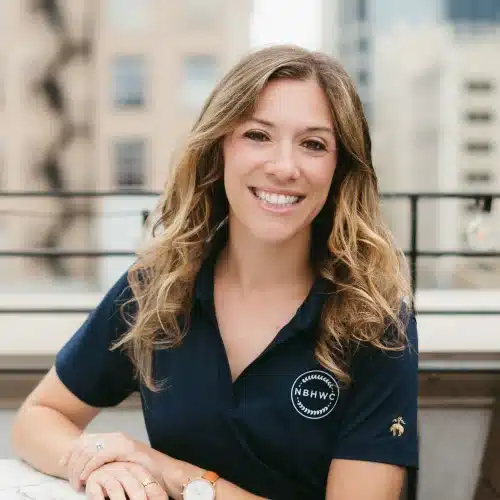
Meet Deanna
Deanna Fournier, Executive Director
Deanna Fournier serves as Executive Director of the National Board for Health & Wellness Coaching (NBHWC), where she leads efforts to advance professional standards, education, and healthcare integration for the health and wellness coaching profession. Her background spans nonprofit leadership, healthcare advocacy, corporate learning and development, and talent strategy, bringing a cross-sector perspective to the evolving role of coaching in healthcare and wellbeing.
Throughout her career, Deanna has worked across healthcare and mission-driven organizations, developing expertise in behavior change, leadership development, patient engagement, chronic care support, and interdisciplinary collaboration. Her experience provides insight into how coaching is being integrated across healthcare systems, workplace wellbeing initiatives, and prevention-focused models of care.
As a health coach herself, Deanna is passionate about supporting the credibility, accessibility, and long-term impact of the profession while fostering collaboration across the broader healthcare and coaching ecosystem.
Connect
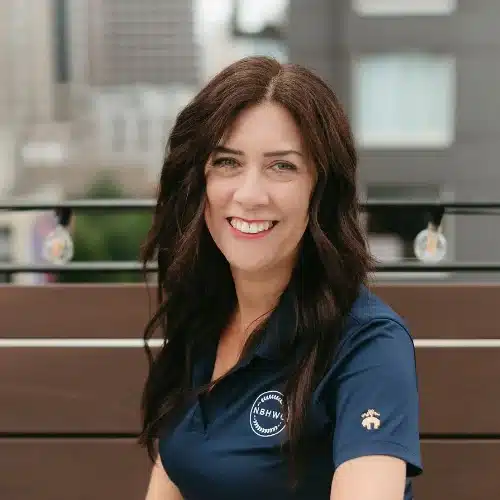
Meet Nicole
Nicole Pope, CAE, ICE-CCP Director of Certification
Driving excellence in credentialing, operations, and professional standards. I’m passionate about building credentialing programs that elevate professionals and strengthen the organizations that serve them. As Director of Certification Operations & Engagement at NBHWC, I oversee certification operations for 15,000+ professionals and lead the development, administration, and continuous improvement of the NBHWC Board Exam.
As both a Certified Association Executive (CAE) and a Certified Credentialing Professional (ICE-CCP), I operate at the intersection of credentialing expertise and association leadership. I align certification strategy with psychometric integrity, governance best practices, financial stewardship, operational excellence, member engagement, and long-term organizational growth. This integrated perspective allows me to serve not only as a certification leader, but as an executive partner advancing mission-driven impact through defensible, fair, and meaningful credentialing programs.
Connect
Listen Now
Transcript
Dr. Sandi: We have groundbreaking news in the health and wellness field, and that is we are just on the brink of getting reimbursement for health and wellness coaching through Medicare. This will transform the profession, and that’s why I am bringing to “Health Coach Talk” two special guests who are involved with where it all started, which is the National Board for Health and Wellness Coaching. So, let me tell you about my special guests today.
Deanna Fournier, she serves currently as the executive director of the National Board for Health and Wellness Coaching, NBHWC, where she leads efforts to advance professional standards, education, and healthcare integration for the health and wellness coaching profession. Her background spans nonprofit leadership, healthcare advocacy, corporate learning and development, and talent strategy.
Nicole Pope, who I’ve known for many years, she is driving excellence in credentialing operations and professional standards. She’s both a board certified association executive and a certified credentialing professional, and she is currently serving as the director of certification operations and engagement at NBHWC. She oversees certification for 15,000-plus professionals and leads the development, administration, and continuous improvement for the NBHWC board exam. I know you are going to be inspired by my conversation with these two wonderful women.
Welcome, Deanna and Nicole. This is very special for me because I remember when there was no National Board for Health and Wellness Coaching and you were just getting started and setting standards. So, I’ll just throw this first question out. Why is it so important to have a board with standards or certification for health coaches?
Nicole: I’ll take that one first, Deanna. I also, Sandra, came on right at the beginning of NBHWC. So, I’ve been here for almost a decade now. So, I also remember the very beginning of the board and when the standards were getting established. And seeing the growth of what’s happened in the field from that time back in 2016 to now, really reinforces why the standard is important, even just from seeing the progression of the field. So, having those guardrails in place that say this is what coaching is, this is the evidence base of the results you can see from it, all of that requires standardization, not to limit the profession, but so that we’re all working from the same starting point and talking about the same thing. So, that’s a big piece of it.
Prior to the National Board for Health and Wellness Coaching existing, coaching was just like the Wild West out there. Everybody was doing it differently. So, the National Board is adding that framework and that structure to it so that we’re all speaking the same language and be able to move the field forward together in a synchronized fashion.
Dr. Sandi: It is so important to have standards. And you really put the profession on the map when the board was established, and especially because the board exam is administered by the National Board of Medical Examiners, which is highly recognized.
So, let’s say that you were at an event, a party, a gathering, and somebody says, oh, tell people what you do. What is health coaching? Because there might be a coach out there. Many people have never heard of health coaching or have misconceptions. So, how would you define health and wellness coaching?
Deanna: So, health and wellness coaching is a profession where a individual is highly trained and then gets credentialed to be able to take people through behavior change, essentially, meeting the client where they are. We’ll walk with that individual to meet their goals and really help them to apply…take it from a healthcare setting perspective. If you are looking to improve your health outcomes, you have maybe a diagnosis or something, you’re looking to move to a better lifestyle with, the coach will help you with those lifestyle changes and be that person that holds you accountable to eventually getting to your goal through the behavior change process.
Dr. Sandi: Which is so powerful. And your training was as a health coach.
Deanna: Yes.
Dr. Sandi: So, it’s a very powerful process, I like to say. Helps people go from where they are to where they want to be. Help people change when change is hard. And it’s so hard to make these changes.
Nicole: It is. And I think, from the…people know the knowledge piece, for the most part. You can get the knowledge piece of, well, yeah, I need to do this, or this change in my life would get me closer to where I want to be. But the change part is where people get stuck. And so, it isn’t…in today’s age, we have all the information we can handle at the tip of our fingers all the time. I mean, you can come up with a plan in seconds now. You can get a plan delivered to your computer screen that doesn’t result in behavior change. So, the actual modification of, okay, yeah, I know that, but how do I get from here to there? That’s where the coach can come in.
And we say that change happens between appointments. So, you see your doctor and you know…they tell you, here’s what you need to do. Great. Now, I’m at home sitting with my family. How do I actually do that? And that’s where a health coach that’s trained in behavior change can come in and walk alongside you to, okay, what does that actually look like on an individual basis for you to make that change? And it’s really magical to watch it happen. It’s something that I wish everybody could experience because it’s hard to explain. It sounds really basic, but when you go through that relationship and have that behavior change, it is really magical how you can incrementally change your life.
Dr. Sandi: Oh, yeah. A few years back, we did a survey of graduates. What is rewarding? What brings you joy in coaching? And hands down, the most popular response is, when you’re with a client and they have that aha moment. Maybe you’ve asked that wonderful question, like what do you want your health for? What matters most to you? What do you want your future to look like? And they have this aha moment, and you just sense that they’re ready to start. They’re ready to then, okay, what goals? Where should we start? How can I help you? And it is such a powerful process that’s transformative for both coach and the client when we see it again and again. And the research shows. The research shows self-efficacy. No matter what’s being studied, self-efficacy is boosted when you have a coach.
Nicole: One of the most important things that I’ve seen out of coaching as well… I’m not a trained coach. Everything I’ve learned has been through NBHWC in my time here working closely with the board certified coaches. And I think that the nonjudgmental piece that a coach brings to the relationship is so important because I think that a lot of times somebody will say, well, you should be doing this, and why aren’t you doing this? And the coach comes in and is able…with that nonjudgmental, what matters to you? Like what you just said, Sandra, about why does your health matter? Why do you want to do that? And you can’t make that assumption for somebody else. And I think the NBHWC coaches are so great about not being judgmental and finding out what actually matters to their client, and then using that as the base for where they start their change. So, I think that’s a piece that isn’t talked about a lot, but is one of the real differences between a health coach.
Dr. Sandi: Such a good point. It’s fundamental. You check your biases, your ego at the door as a coach. And that comes from humanistic psychotherapy, which I trained in back in the ’80s. And the idea that you are really there on a bad person’s journey, it’s like a dance, and your client is taking the lead. And you follow and you support them wherever they want to go. And we’ve lost that in many ways in psychotherapy. And there’s some professions where people come in and just tell me what to do and they are expecting that expert. And that never works well unless that individual has buy-in. And that is what coaches do. It’s so profound.
Speaking of profound, there’s some profound changes about to take place. And so, one of the reasons I wanted to have you on the podcast is to talk about this process that going through CMS, the Centers for Medicare and Medicaid Services, and what’s proposed for calendar year 2027. So, I’d love for you to share that. My, it’s going to be so significant.
Deanna: Absolutely. This is a milestone moment for the profession and also for lifestyle medicine as well. There was also a conversation in the rule about the shared medical appointment. And it’s just very exciting times. Health coaching is a part of that, an important part of that model.
So, CMS specifically recognized not only the health coaching profession, but nationally board certified health and wellness coaches. So, that credential linking to reimbursement alongside to other credentialing organizations, which I’ll talk about in a moment. And I think the significant piece of this is it demonstrates the growing awareness of the profession, including at that policy level, which is just a milestone achievement after so many years of advocacy work by so many leaders across the field and the coaching community as well. Jumping in to submit public comment and really share their perspective and how engaging with patients and being able to reimburse through the Medicare, Medicaid structure has been powerful and led to better health outcomes. That really validates the importance of the nationally recognized standards. And it reflects years of work. So, we know there’s researchers, healthcare organizations, educators, coaches, all involved in driving this momentum. And it’s just a really, really exciting time.
So, what it speaks to and essentially what the rule is proposing is conditions of payment and national validation for those three coaching codes that currently exist in the American Medical Association. They’re CPT III codes. So, it named the national standards of the qualifying credentials for coaches who furnish these services.
What’s really exciting is that during the public comment period, we have an opportunity to thank them for their proposal and then also to potentially clarify a couple of the areas where we’d like to see them consider how these coverages are seen, the conditions of payment, what the valuation of the health and wellness services are under those codes. And then, hopefully, we will see some sort of permanent pathway for a payment under Medicare.
And then, typically, what we know happens is Medicare leads the way, Medicare aid will follow shortly thereafter, and private insurers will also start to take more awareness. So, I think, what it nods to is, certainly, regardless of the outcome, a win that if they adopt what they’re proposing, regardless of any clarifications that we’re able to, as a field, kind of encourage, that it’ll still be a successful moment. So, it did recognize that coaches who hold an appropriate certification would be from the National Board for Health and Wellness Coaching, the National Commission for Health Education Credentialing, or NCHEC, and then the American Holistic Nurses Credentialing Corporation. So, really fantastic to see that breadth. And we’re really thrilled for the nearly 15,000 health and wellness coaches that are NBHWC certified, and that this is a huge opportunity.
Dr. Sandi: Absolutely. It is really groundbreaking. And as you said, this will be a game changer. And what I think is that even if you have no intention of ever taking Medicare, this elevates the whole profession so that you may be speaking to a doctor who may have hesitated. What’s health coaching? It’s just, you know, you’re doing this as a hobby. How are you training? They’re very skeptical and don’t understand what coaching does. But now, when it is under this umbrella of reimbursement, and then they’re more likely to say, oh, yeah, I do have some patients who might benefit and I can refer them to you even if they are outside of the insurance system.
Deanna: Absolutely. It builds that confidence in the profession, which we all already have. And so many institutions that have implemented health coaching have seen the power and what health and wellness coaching can do. And so, this really helps to build that confidence. And it’s really encouraging that it will also build demand for coaches.
Dr. Sandi: Yeah. So, can you speak more to that demand? It’s a commonly asked question if there’s listeners thinking, oh, should I get into it? Should I become a coach? Can I make a living out of coaching? What have you seen since the start of the board and the rise? What’s the trend in terms of the number of people coming to you for wanting to hire coaches or what you just see in the landscape of hiring out there?
Nicole: Great question. We get that one quite frequently as well. And the market for coaching has changed pretty drastically, again, since back in 2016. I think that NBHWC, one of our big initiatives going…in the past year and then moving forward in the next couple of years really is educating employers on the credential and on the need for standards, as we started off talking about. Coaching is a broad term that isn’t clearly defined out in the employment world. So, you’ll see job listings with various descriptions of what they’re looking for. So, we spend a lot of time reaching out to employers directly when we see those or when it comes to our attention to say, you know, here is what the scope of practice for a national board certified health wellness coaches. We can only speak to ours since it’s not licensed. So, we’re speaking to the credential holders.
And I feel like there’s been movement. We’ve had good response from employers on that. We’re very passionate about getting the pay rate up for coaches. So, there’s a lot of education we’re doing with employers around the value. I think there needs to be some research done. So, NBHWC is looking into that about the effectiveness of coaching. We have the compendium that was released and updated recently. So, we have that. And really just continuing that work to show the effectiveness of properly done health coaching so that employers can have the confidence to hire their coaches with that.
I think the reimbursement model does help with that. As you both mentioned, if you’re not working in a medical practice, just having that verification and validation at the policy level of what qualified coaching is and the results of it will help as well in that. So, the job…we’re passionate about that. We know that the pay rate for coaching isn’t where we want it to be right now. So, we’re continuing to really push towards that.
I feel like we spent the first part of my time at NBHWC, we were all really focused on building the workforce. We have that now. It’s growing steadily. The credential is strong. We have the evidence behind it. Now, it’s the making sure everybody is aware of it and it becomes a household name that it’s if you’re going to work with a coach, it’s going to be a qualified coach, a board certified coach. And so, that’s a big push that since Deanna came on board, we’re really working towards that constantly.
Dr. Sandi: In terms of the advocacy, opening for comments regarding the proposal for 2027, let’s say there’s a listener help with this in terms of the call for comments. And what are you going to recommend going forward?
Deanna: Absolutely. So, NBHWC is currently finalizing its letter, which we’ll be posting before… Actually, if I don’t mind, Sandra, just pausing really quickly. When do you think this will be published? Because I’d like to speak in the proper tone in case we already submitted.
Dr. Sandi: I will take that from you. When do you think it would be…because we have leeway. We might have others in the queue, but we can shift those around because I think this is a very important topic.
Deanna: Absolutely. So, NBHWC is circulating some guidance around our public comment letter and the opportunities that we see to not only thank Medicare for their acknowledgement of the health coaching profession and the proposal of the national payment pathway.
In addition, we have some clarifying points that we’d like to express to them to help…as Nicole just mentioned, part of it is that valuation of coaching services and what that reimbursement rate will look like. In addition to a couple of other aspects, likely around the difference between direct or general supervision, opening up some more opportunities for coaches. Obviously, also we’ll acknowledge and thank them for the certification pathway. And so, just reinforcing that as well as thinking about that establishment of permanent codes under Medicare, which would be called G codes, and they would parallel the existing AMA CPT codes.
So, what coaches can do is take a look at that guidance. We’ll have some key messages that you can draw from as well as template letter that you can refer to. And then we really are looking to not only have more public comments — obviously, support is fantastic — but we really want individuals who are passionate about getting involved in advocacy to draw on any relationship that they have in working with patients or clients with Medicare and how this has impacted health outcomes and so on. So, being able to really bring in that personal experience and show that this would be a beneficial step and here’s why will really, I think, speak to Medicare and to CMS. And so, being able to jump in and provide those comments will be incredibly helpful.
So, if anyone has any questions, welcome to reach out. We are having a town hall as well of our own. We’ll be explaining a little bit more about these pathways. So, if you’ve missed the town hall, we can always circulate a recording. So, really just wanting to make sure that coaches and employers and healthcare systems feel supported if they’d like to comment in how NBHWC is looking at this opportunity and being able to use that guidance to help them feel like we have a coordinated message.
Dr. Sandi: This is so good that you are having this initiative and providing guidelines for the public comment so that people will feel confident that they can be part of this. So, you mentioned something I wanted to circle back to and that is supervision. What you think that will look like in terms of direct or more of the general supervision. Because we mentioned that this could be community centers where coaches can be affiliated with. But I’d love to hear from you how that might work.
Deanna: Sure. So, currently, the proposed rule mentions direct supervision, which would mean that you would have to be directly supervised by a provider in order to utilize these reimbursement codes where general supervision would allow more flexibility for individuals that are working under the umbrella of providers to then be able to use the codes. So, that does, to your point, open up more opportunity for community health and other places where coaches might be used as a consultant. When we’re thinking about the shared medical appointment, for example, these are all opportunities where we would be able to offer more places for coaches to be integrated and implemented. And this is just really based on how the coaching models currently exist. And so, one, make this accessible, and general supervision would do that.
Dr. Sandi: That’s great. And I have always been such a big proponent of groups. I ran all kinds of groups in my years as a psychologist and saw how active they were. And the shared medical appointment has been around since, like, 2011. And it’s so effective and it’s affordable. It makes coaching accessible. And that’s the community becoming the medicine. And so, I was delighted to hear that that is part of this because I am just such a firm believer in the power of groups.
So, this is really exciting times for the field. And with this momentum, what are some of the things that you would say could go wrong? I’m an optimist and I think this is going to… But what are some of the objections or…so that people can be prepared, whether we’re hearing it from a provider of wellness, someone who wants to bring wellness coaching to their company or just people who are thinking about working with a health coach. What would you say are some of the things that might be obstacles so that we…and how we can respond to this?
Deanna: Fantastic question. So, obviously, this rule is proposed. It’s not finalized. So, CMS could make any decision that they’d like between now and when they publish the final rule. Usually, that’s in November. And that’s where the public comments are so powerful is they do review them, and they are looking for two examples where health and wellness coaching is already integrated and utilizing Medicare and/or working with Medicare patients in addition to other pathways, but to see how this will impact.
And so, being able to show that evidence to them while they’re reviewing will only help to support them maintaining what they already have in the proposed rule, and then hopefully clarifying some of those aspects as well to just broaden the opportunity. So, anything can happen. And in this instance, the good thing is that every year they propose a new rule. And so, there’s always another opportunity to reopen the conversation.
However, it’s not likely given that they’re already at this stage and it’s in the proposal that they would walk back so much that it would take it out completely, but just wanted to call that out. So, if they were to retain the recommendation into the final rule and not take any clarification or modifications, then it opens that opportunity next year to have a conversation on things such as the valuation, the conditions of payment, clarifying the coverage, and then also with that supervision. Those are some opportunities, preserving telehealth access, just things that we can go back to them and have a conversation around.
And to be fair, that’s likely going to be the advocacy journey anyway, is that we’ll continue to have conversations with CMS as the profession continues to advance. So, we may not see this land in the dream space, if you will, when we come to the final ruling this year for 2027. But instead of looking at it as what can go wrong, it steps in the right direction for the profession.
And then there’s this opportunity to continue to have that dialogue. So, I think it all feels really fantastic because the fact that they not only specifically named the profession, but also those credentialing pathways is very unique and really exciting. It’s more around how can we continue to stay coordinated as a profession, to stay unified and to keep that message going, keep integrating, keep bringing the evidence, and then continue to have those conversations with policymakers. And that will just maintain this momentum.
Dr. Sandi: Yes. This is really, as we’ve said at the onset, putting health coaching and wellness coaching on the map. It’s the respectability factor that I think we’ve been missing for so long. And I’ve talked to many healthcare providers, and they really don’t know the value of health coaching. And it’s a hard sell to patients. I’ve seen that change. So, just, again, wonder your experiences that you’ve had where you’re out there and people are really thinking, yeah, health coaching is effective or it is…I want a health coach.
Nicole: Yeah. I think I’ve definitely seen a major shift in that. I think the VA’s model and the results that they’re seeing there has been really big for that as well. They have some great resources that they put together. And one of the conferences I was at last year, they were presenting…had this really great video talking through how they’ve worked with veterans and had that…just the results that came out of the health coaching. And I think there’s been a big impact from organizations such as that, such as the VA. And I think that we’re going to…we’ve seen more of that coming forward.
So, I’m in it so much that I think it’s easy for me to say, oh, there’s been a huge shift in that. But when I talk to people like my friends and family…and again, I’m not a health coach. And so, when I’m talking to people about coaching, it feels like it is much more accepted or not…there isn’t as much resistance. So, I think, generationally, there’s a shift towards that.
I have college-aged kids. And I think when we talk about behavior change, and setting goals and habits that are attainable, and how you’re going to take incremental steps to get there, that’s more a part of just how they are forming when…their lives and what they’re doing. So, it’s not as much of a leap to then say I’m going to work with a coach the same way that mental health is so much more accepted in the younger generations than it was previously. I’m seeing the same thing for behavior change and how to change lifestyle to come up with the result then that you can have and that you’re trying to strive for. So, I feel like that’s been really exciting.
And again, from the beginning of no standards, I came on board with NBHWC as it was forming to where we are now. It’s really miraculous. And when you look at healthcare changes in the policy, in healthcare system, the distance that we’ve covered in 10 years is…like I said, it’s pretty miraculous how much has changed. And then even when it feels slow, it’s pretty quick for how our healthcare system tends to change.
Dr. Sandi: Oh, yeah. And speaking of our healthcare system, which so many people will describe as broken, we have primary care doctors retiring in droves, new doctors are not choosing primary care, the wait for an appointment practices are closed, they’re going concierge, it’s unaffordable for so many people. And they’re just…people are feeling increasingly frustrated. And my position has always been that health coaches are the key to solving this if every primary care alone, every primary care practice had a health coach. Think about what that would mean in terms of lives saved, cost savings, and better quality of life, even for the people, for the doctors who…we know that burnout is less when they have a coach supporting them in their practice. I mean, it’s just a win-win all around.
And there are so many studies. We have a compendium, a growing list. And every year, we have an addendum to…I mean, it’s just huge the amount of studies that are showing the value of health coaching. And it often boils down to self-efficacy. And what’s the one thing that’s measured again and again and again? Self-efficacy that you can make these changes to influence your health. And these small daily habits can matter. And health coaches are just so, so powerful. So, it is just wonderful to see all the great work that you are doing at the board and pushing for this advocacy for CMS.
So, as we draw our time to this interview to a close, where…if you have a magic wand, where would you like to see this profession considering the growth since the start of NBHWC? Where would you like to see it into the future?
Nicole: For me, the dream is just in that healthcare system that the natural next step is that you work with a coach so that you go to your primary care doctor no matter what it is, whether it’s…you’re getting a scary diagnosis and needing to make some drastic changes, or it’s just your annual checkup and you want to adjust a little bit. The next step in that model would be that you then meet with a health coach, that it’s affordable, that it’s attainable. So, that’s from the patient side. I think that being just the household integrated into what healthcare is, that’s the dream on that side.
And then on the flip side, having that be a living wage for the coach, for them to be able to be a respected part of the medical team, the healthcare team, that’s my dream on that side. So, it’s kind of on both sides as a user of healthcare and then as a supporter of the health coach themselves, I want to see those things be married. And that’s why these developments are exciting because they…as Deanna mentioned, steps in the right direction. And starting to see those steps snowball on top of each other to have some real momentum is really an exciting time.
Deanna: I will build on what Nicole said because you captured part of my vision as well. And where I hope the profession continues to grow is obviously the integration into the healthcare system where a coach is a part of that interdisciplinary team. And I love the way that you put it, Nicole, of the next step. I also think there’s so many opportunities when you think about community wellness, you think about schools, universities, from a young age all the way through. I think behavior change can be so incredibly powerful. And so, I just…I think board certified coaches integrated into just the…our health and wellbeing atmosphere, our environment, is really what I see.
And for it to be, you know, as well known as some of the other incredible professions that are out there to the point where if everyone wants to have a health coach, that they have that access to a board certified health and wellness coach. So, that’s what I hope to see in the next, hopefully, five years. But we’re working really hard to get us there at the pace that we can with all the little hurdles along the way that, hopefully, as Nicole said as well, will continue to snowball and keep that momentum really going.
Dr. Sandi: So beautifully said, both of you. This has been a wonderful conversation. So, if people want more, where should they go?
Deanna: Sure. So, you can visit our site, nbhwc.org. We’ll also have a landing page specific to everything that’s going on with the advocacy work for CMS that we can have the link available to you as well. And then you’re always welcome to reach out to us. If you have any specific questions and we can help address those, follow us on social media. We’re on all of the major channels. We’ll also be at a variety of different conferences throughout the year. So, we hope to see you there as well. And we share where we’re going on social media. So, just follow us and keep us apprised of what you’re doing as well. We love hearing stories from the coaching community and employers.
Dr. Sandi: Love this. Thank you so much for being with us. And these are big, big changes in the growth of this profession. And just hats off to you and the wonderful work that you are doing, both of you at NBHWC. And stay tuned, everybody, because this is just the start of more communication with bringing to you when we get more developments about this wonderful groundbreaking news. So, thank you to Deanna, and thank you, Nicole.
Deanna: Thank you.
Nicole: Thank you.
Health Coach Talk Podcast
Hosted by Dr. Sandra Scheinbaum
Conversations About Wellness Through Functional Medicine Coaching
Health Coach Talk features insights from the most well-respected names in health coaching and Functional Medicine. Dr. Scheinbaum and guests will explore the positive impact health coaching has on healthcare, how it can transform lives, and help patients achieve better health and wellness outcomes.

Check us out on these platforms: