Why Your Diagnosis Is Not Your Destiny, With Jennifer Germain
What if a chronic diagnosis did not have to define the rest of your life? This week on Health Coach Talk, Dr. Sandi welcomes FMCA graduate Jennifer Germain, functional medicine health coach, certified personal trainer, and founder of Compass Health Coaching, to share her powerful journey from inflammatory bowel disease to empowered healing. Jennifer opens up about how functional medicine, nutrition, and lifestyle change helped her reclaim her health and inspired her to help others do the same.
“You are not defined by your diagnosis. You have the power to change your health and your life.”
Jennifer Germain, FMCHC, CPT
After being diagnosed with Crohn’s disease and ulcerative colitis in 2020, Jennifer was told she would likely need long-term medications. Instead, she began working with a functional medicine health coach and started the autoimmune protocol diet, which led to major improvements in her symptoms, inflammation markers, energy, and overall well-being. In her conversation with Dr. Sandi, Jennifer shares how that experience became a calling, eventually leading her to FMCA, the launch of Compass Health Coaching, and a full-time career supporting individuals and businesses through one-on-one coaching, group programs, seminars, and corporate wellness initiatives.
For health coaches, Jennifer’s story highlights the power of client-centered support, education, and self-efficacy. She speaks to the importance of helping clients understand their bodies, make small and consistent changes, and realize that genes are not destiny. Her work also points to the growing need for health coaches in corporate wellness, where stress, chronic illness, absenteeism, and presenteeism affect both individual well-being and company culture.
Watch The Episode
Episode Highlights
- Explore how nutrition and lifestyle changes can support chronic illness transformation
- Understand why genes are not destiny and diagnosis does not have to define health
- Learn how health coaches can support employees through corporate wellness initiatives
- Discover how small, consistent changes can create powerful long-term results
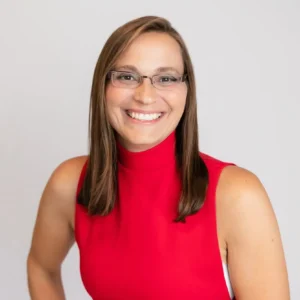
Jennifer Germain is a Functional Medicine Health Coach, Certified Personal Trainer, and the founder of Compass Health Coaching, LLC in Carlisle, Pennsylvania. Her journey into health coaching began in 2020 after being diagnosed with inflammatory bowel disease following months of illness. Determined to take control of her health, Jennifer pursued lifestyle and functional health strategies that significantly improved her well-being and ultimately inspired her to help others do the same.
She later trained and became certified through the Functional Medicine Coaching Academy and launched Compass Health Coaching in 2022. Today, Jennifer works with individuals one-on-one, delivers health and wellness seminars, and partners with businesses to support employee wellness initiatives. Her mission is to empower people to take control of their health and create lasting change—because genes are not destiny, and no one should feel defined by a diagnosis.
Connect
Listen Now
Transcript
Dr. Sandi: I am so proud of our FMCA graduates. That’s why I love to feature them on this podcast. So many have absolutely inspiring stories, and they also share about what a health coach does. And that is what Jennifer did in this episode. She is a graduate. Let me tell you a little bit about Jennifer Germain. She is a functional medicine health coach. She’s a certified personal trainer, and she’s the founder of Compass Health Coaching. This is in Carlisle, Pennsylvania.
Her journey into health coaching began in 2020, for she was diagnosed with inflammatory bowel disease, following months of illness. She was determined to take control of her health, and pursued lifestyle and functional health strategies that significantly improved her wellbeing and ultimately inspired her to help others do the same. She trained and became certified through FMCA, and she launched Compass Health Coaching in 2022.
Today, she works with individuals one-on-one. She delivers health and wellness seminars, and partners with businesses to support employee wellness initiatives. She has a mission to inspire and empower people to take control of their health. She believes that genes are not your destiny, and no one should feel defined by a diagnosis. So, I know you will enjoy my conversation with Jennifer as much as I did recording it.
Welcome, Jennifer.
Jennifer: Thank you so much for having me today, Dr. Sandi. Appreciate it.
Dr. Sandi: We love to support our graduates. And I always love to hear the stories of people who came to FMCA and why they chose to become a health coach and what they’re doing now. So, let’s start there. What inspired you to become a health coach? What was your journey like?
Jennifer: Yeah. So, my journey actually began probably in May of 2020. So, as we know, at that time, it was a hectic time for everybody, very stressful time for a lot of people. And in May, I got sick. At first, I thought it might just be like food poisoning or something like that. And here, it just continued on. So, I’d be running to the ladies’ room quite often and then started feeling a lot of fatigue, not feeling myself, pretty rundown. And then as the months continued, it just grew into something even larger. So, I actually developed erythema nodules and stuff on my body. And finally, because of the stubborn person that I am, waited to go to the doctor. And went to the doctor in August for what I thought was an issue with my ankle, but here, it actually stemmed from what would later be diagnosed as inflammatory bowel disease.
So, I had an emergency colonoscopy in September. And they found that I had Crohn’s and ulcerative colitis. And I knew I didn’t want to be on medications the rest of my life. And I went to my rheumatologist in October because I was in quite a bit of pain. They did put me on some medications to help bring down the flare. But I knew I didn’t want to be on medications or have multiple surgeries and stuff the rest of my life. My rheumatologist said, oh, no, you’ll probably be on biologics and all of this the rest of your life. And I really just said to myself, I don’t want to do that. I want something better.
And I’d been following an individual on Instagram who talked about functional medicine. She was a cancer survivor at the time. And so, I didn’t really know about functional medicine. The funny part was that my mom was actually a nurse for conventional medicine for 30 plus years. And so, I dove into functional medicine and went to a functional medicine health coach myself in November of 2020. It was actually on Veterans Day. And she talked about me going on the autoimmune protocol diet and went through what that would all entail. And I decided, yes, I want to take control of my health.
And so, I did that. I started that over the weekend and started the six weeks for the AIP. And what I discovered when I did that was that I lost brain fog I never knew I had. My body started feeling better. I lost 20 pounds while I was sick because I was sick. And then on the AIP, I actually lost another 25. And a lot of that came from…I was a candyholic, a sugar addict my whole life. And I had to give it up for AIP, which was okay for me because I was in so much pain. I didn’t really care.
And so, when I went through the AIP, I started feeling better. I started feeling more clarity. My joints didn’t hurt. My body didn’t hurt. And at the end of that six weeks, when I could start bringing ingredients back in, I also went for blood tests. And my sed rate and my CRP, which are both inflammatory markers, were within normal range, which before, they were triple what they should be. So, they were all within normal range. My anemia was gone, and everything was seemingly normal. And I couldn’t believe that it really came from changing my nutrition. And that’s all I did at first because I wasn’t able to exercise or anything else. Nutrition was my focus. So, my goal was to get off the medications.
And so, I did. I got off of all of my medications within nine months. I’ve not been back on them ever since. No flares, nothing in over five years. And when I was going through that process of coming off the medication, I knew I couldn’t keep the secret to myself. And I was emboldened to say, you know what, I want to be a health coach. I want to help other people figure out what works best for them in the medical issues that they have, whether it’s chronic illness or maybe it’s just weight loss or whatever else that they’re working through.
So, I did some digging and decided on Functional Medicine Coaching Academy because it was the gold standard to me and from what I could find. And plus, you guys are partnered with Institute for Functional Medicine. So, I really saw that as a strong foundation for me to get started with my health coaching.
Dr. Sandi: What a remarkable and inspiring story. For those who may not know, can you describe what that autoimmune protocol might look like?
Jennifer: Yeah. Sure. So, autoimmune protocol, it is a very strict elimination diet. So, it’s actually even a little bit stricter than a normal elimination diet. So, it really takes you down to grass-fed meats and certain vegetables and certain fruits. And it really takes out any of your spices. So, it might be like some salt, but really no pepper or any other seasonings, and very light on even drinks. So, it was really just water at the time and maybe a little bit of cranberry juice or something, but had to be…everything had to be organic.
You were looking at creating an environment for your body to heal so that it could actually take a break from everything, and removing certain things that could be seen as a trigger. So, there was no dairy. I was even off of eggs for six weeks, as well as, obviously, the sugar, no candy, no alcohol, nothing like that. But, really, what it helps you to do is your body to start healing. So, it gives it a chance to recoup itself. Now, you can do it, I think, for four weeks as well, but they wanted me to do it for six just because of the inflammation that I had.
And then after that six weeks, then you can start reintroducing different foods that you would like to start bringing in and see what may trigger you and what won’t trigger you. And the first thing I chose was eggs. I was like, I want to bring my eggs back in. So, I brought those back in and you do that for three days, and then you do start bringing in other things. And one of the things that I found for myself was that a trigger for me were some of the nightshades, especially tomatoes seem to be a bigger trigger for me. So, that’s something that would be more depending on avoidance or just occasional intake.
Dr. Sandi: Thanks for explaining that. And I think that’s where many people misunderstand. So, they may go on this type of AIP program or similar, and they think that has to be for life. And that’s where a health coach can play such a crucial role in helping people, guiding them, supporting them, because this is challenging to do this initially, but then help them to see that this is not forever. And it’s a way to give…it’s like a pause on those…any food that might be doing you in, so to speak. So, yeah. So, then you became a health coach, functional medicine certified health coach. What happened then? What did you… First of all, let me back to it. Did you have any background in healthcare? Because you don’t need that. Yeah. I want to point that out. You did not need to be in healthcare to be a health coach.
Jennifer: No. Yeah. It was funny because when I was growing up, I wasn’t a fan of going into the hospital with my mom because she was a nurse and she would either be in the hospital setting, then she was in a clinical setting. And the funny thing was, I never really wanted to go into any kind of healthcare. And then when I told my mom that I was like, yeah, I want to become a health coach. She was just like, I’m glad I was sitting down because I had… But I wasn’t planning on leaving my career or anything like that until I felt called to help other people figure out and really empower people to make better healthcare choices for themselves and realize that they have the power to create better health for themselves.
Dr. Sandi: You said the keyword, calling. We hear that over and over again. People are called. They feel like this is a calling to serve others. And it is a career that is just…you get paid with meaning and purpose. And that is so important to wellbeing, to physical health, emotional health, to your community. So, okay. You graduate. Now, you’re a health coach. What’s next?
Jennifer: So, what happened then, I graduated in August of 2022, and I launched my website in September of 2022. I was still technically working at my day job, doing health coaching on the side at first because, you know, trying to break in and tell people what I do. Fortunately, for me, at that time, I was working at a chamber of commerce. So, it helped me build connections and stuff like that and building up a little bit of a rapport and telling people what I do. But, really, it was getting out there, creating the website, and networking with people so that they understood what health coaching is. Because most people think, oh, well, you’re just going to tell me. I’m like, no, I’m not going to tell you what to do. I’m here to help you get to the goals that you have for yourself.
So, part of that was trying to get over the hurdles of what people may or may not know what I would do. So, I would go to a lot of events to try to explain that. So, I would go to maybe some community events, be a vendor at different areas so that people could start to learn what exactly a health coach does and how I can help them gain better awareness of what they can do for themselves. So, did that for about two years and was able to resign from my day job, which I was very grateful for and loved as well. It wasn’t like I was even looking for another job, but health coaching, it just is my passion and helping people figure that out. So, I left there in 2024, December of 2024, and then I have been full-time as a health coach ever since.
Dr. Sandi: What a beautiful story. So, you’re seeing clients now. And I love the idea that you telling everybody what you do, because that is the way that you can grow your business. And it is because people want to have better health. And often there’s a lot of myths about health coaching. They think someone’s just going to tell them what to eat, how to exercise, what to do. And it’s such a magical process when that is client…what we call client-centered, and helping them, as you said, meet their goals. It’s not about your career goals for them. So, what are some things that maybe surprised you when you were working with clients?
Jennifer: I think one of the biggest surprises — it might be two — would be people don’t realize how their body works. I think that’s one of the biggest. And I think education is one of the biggest parts of my job is to help them understand how their bodies work and then…and that they can. And the other thing, the biggest thing was that them realizing they really can take control of their health, because so many people are under the misnomer that it’s just all genetics and you’re destined for this and destined for that. And genes are…they’re not your destiny. And you are not defined by a diagnosis. And I’m living proof that works. And there are other people that have that same story, that they have gone through different things, and they are not defined by their diagnosis. And I think people to understand that, it takes a little bit of talking to them and helping them to understand they are in control. They really can change their life, but they have to want to at the same time, too.
Dr. Sandi: Yeah, really having that realization that they can take charge. Study after study, there’s been a lot of studies about health coaching and whether it’s effective, and they all come out typically with one of the primary conclusions is, yes, it works. It can change…people change their health. And the reason is what changes is it boosts their self-efficacy, this idea that what they do matters, that they can play well, that they are in charge of their health. And it’s an empowerment process that health coaches facilitate. So, do you see people mainly one-on-one? Do you have groups? Is this virtual? Do you go into an office? Tell us about how you work.
Jennifer: Yeah. So, I actually do both. I do private and then I do corporate. So, my private is pretty much virtual. I do one-on-ones through that. But I also have some…launching some group coaching programs as well to help those that might not want the one-on-one and maybe have a little bit more of a support system and the group dynamic. But I also do corporate wellness. I have gone on corporate sites and done one-on-one health coaching there, but I’ve also done seminars. And I’m actually launching an app as well to help with digital education and things of that nature in the corporate wellness space to help bring some… People might not always want you coming on one-on-one. So, this offers another way for them to look at a preventative measure for their employees and invest in their health in a different way.
Dr. Sandi: I think this is an area that’s so overlooked because we tend to think of health coaching as that model where you have an office or you’re doing it virtually, and it’s just one person at a time and you go out and recruit clients. But, really, companies are suffering right now because the cost of healthcare is probably skyrocketing, and chronic diseases. Not only is this causing physical issues that are…but all the high rates of using the insurance system, but also presenteeism. And that is people will come to work and they’re falling asleep after lunch, they’re brain fogged, they’re not really there because of their lifestyle habits that are hijacking their brain and affecting their productivity.
Jennifer: That is absolutely 100% correct. I actually did a presentation for a group of HR individuals. And one of the things that was astounding to them was when I brought up some of the numbers, it’s like $250 billion worth. Now, these are numbers from a couple years ago, but $250 billion worth of lost productivity for companies in the U.S. We spend over $5 trillion a year on healthcare, and we have the worst outcomes of the developed world. And I think I just saw a newer number where it was around $14,000 per capita per person in the U.S. for healthcare. And again, we’re not getting the results that other places are.
And when you look at most people have at least maybe four prescriptions. Four out of 10 people have at least four prescriptions or more. And then just looking out from a standpoint, like you said, the absenteeism rate. So, there’s so many ways to look at productivity. And it’s not just not being there, but being there and not being able to focus, not having clarity, not have good cognitive function, and not having a good company culture. Because if your culture…if people are sick and not feeling well, how’s the company going to respond? How is it going to grow? What are the depths that it has? And I think we need to look at it from a different perspective because the old model that we’ve been using hasn’t been working. It’s not getting us to a better place.
Dr. Sandi: Absolutely. A few years back, we did a study with a company and they had…we partnered with them so that they were offering five coaching sessions to employees. And we did outcome surveys afterwards. And one of the things that stood out was that people were saying, I really felt now that…this company wellbeing. And back in the day, I did corporate wellness fairs. And it was…but that was the thought that, okay, a couple of times a year, we’ll do a wellness fair and bring in local healthcare providers, or we’ll put a gym facility. And, really, it’s the health coaching part that is going to make the difference.
Jennifer: Absolutely. You hit it spot-on with that… It feels because it is…because health coaching is different. It’s not just somebody coming in and saying, okay, here’s your nutrition plan and walk through this, or here’s this and you can come for our services. But when you go in and you learn about what their goals are, what they’re dealing with… And you’re meeting them where they are. And I think that’s the most important part for a company to understand is that when I go in and sit on one-on-one, they know I care. They know that I’m there to help them, to assist them, and to get them to a better place for themselves, even if it’s not taking the claims down right away. That’s something I would say to a company as well. You’re not going to see the results immediate, but you will see that ripple effect as you continue to implement more preventative structure for your healthcare benefits. And health coaching, to me, just brings that personal touch, and really gets them thinking and be more self-aware of the choices that they’re making.
Dr. Sandi: Absolutely. So, in talking to you, I mean, you really stand out. You have mission, you have a defined population. What do you think in terms of the importance of standing out from other coaches? And there are coaches out there who may have gone through programs where they’re told they are telling people what to do. They’re interpreting labs and doing supplements. And that’s not really health coaching. But what would you say to that to stand out?
Jennifer: Because the market itself for health and wellness can be very overwhelming for a lot of people. And I think, to stand out and say, you know what, I’m different, because I’m putting people ahead of…when people look at me, they can see the passion. And they can see that I really genuinely care about their overall wellbeing. And I think that is the difference between me and somebody who has a program. And again, the program may be very good. But they’re just giving you maybe a cookie cutter program, whereas with a health coach, they’re sitting down and they’re listening to where you’ve been. What was it like when you were growing up when you’re talking about nutrition? Because we all say, oh, diabetes runs in the family. It doesn’t run in the family. It starts because it’s in the environment.
So, what does that look like? What did that look like growing up? And how are you using food? And really digging into more of the psychological aspects, because that’s going to create the sustainability, and really create that behavioral change. Instead of just saying, oh, here’s a program and do it, this is creating life-altering change that they can start building on so that they can…my biggest goal is that they can wake up and feel amazing every day, and live very long and healthy lives so that they’re in their 90s and they can still go around and enjoy and do what they want to do.
Dr. Sandi: Yeah. I just can see that passion. It’s in your voice. It’s in your face and how much you are making a difference. So, tell people maybe one thing that they wanted to get started on their health journey. What would that be?
Jennifer: The first thing that I would say is it doesn’t have to be drastic changes. It can be the smallest of changes and you just have to do them consistently. Consistency will always be your key. So, if instead of the New Year’s resolution where everybody chucks everything out the window is to say, you know what, maybe instead of that candy bar at 3:00 that I eat every day, maybe I swapped that for an apple and some nut butter. And making those small little changes will compound over time.
And the second thing that couples to that is finding your self-worth and knowing that you are worth making the changes for and loving yourself because that is one of the biggest keys to a health journey is you discover who you are. I discovered who I was even more when I could get more intimately knowing my body and saying, okay, my body doesn’t like this. It doesn’t like that. It responds better to this. And you really understand how your body functions and what it loves and what it doesn’t love. So, when you love your body and you’re consistent with the changes that you’re making, you’re going to see so many big differences in your health journey.
Dr. Sandi: And speaking of a big difference, I really think that health coaches are the key to solving our chronic illness condition. And so, we hear a lot, and there are good initiatives about removing additives and better hospital food and all those things are great. But if, still, there’s demand for ultra-processed food, if people are sitting all day and new sittings, the new smoking or…and most particularly if they are stressed and if they are upsetting themselves about everything and worried about the future. So, it’s going to work to their detriment.
But health coaches more so than even in mental health, there’s been so many studies out that show people prefer working with a health coach. People who are anxious, depressed, of course, we’re not talking about severe depression, but if they were to work with a health coach who would help them get moving and clean up their diet, but also help them to see that they have control over those thoughts, they can modify, they can change them and they can have more meaning and purpose in their life and more community, helping people with loneliness, which is such a big problem.
So, the health coach, all those lifestyle factors, that’s their zone. And then acute care, the demand on the acute care system would go way, way down. And, of course, I want to clarify. We’re not saying health coaches rather than doctors. We need our acute care medicine. If you’re having a heart attack, you don’t call your health coach.
Jennifer: They don’t want to be calling me on those moments.
Dr. Sandi: So, it’s that combination, but health coaches is part of that team. So, I’d love to hear your thoughts on that.
Jennifer: Yeah. I do think it’s very integral. I think, just when I went to a health coach myself, just from that perspective, and I think that is what makes me… When I work with my clients, they know I’ve been on that other side. I’ve sat where they sat. And I think they can understand that I’ve had my own journey. And for people to see that and realize that a health coach… Really, think about it like a sports coach. They’re there to lift you up, to help encourage you, but also in those moments where you’re not sure what to do, it’s okay, let’s look through this. What’s been going on? Let’s work through this.
And like you talked about with anxiety, depression, and stress, one of the biggest things that I saw when I was working with people, especially in a corporate environment, were the stress levels. So, I would ask them, what are your stress levels like? Because, truly, the statistics show that stress is the cause between 80% and 90% of doctor visits alone, because the stress that we have today on our body was not what we had 100 years ago.
So, to understand that mechanism behind, and educating people on where it starts so that they can understand it and say, okay, what are some stress management techniques that we can work through, which is going to be different than when they would go to a doctor because a doctor, they might have 10 minutes and say, here’s this, oh, here’s a medication for that. Whereas with health coaching, we can say, okay, let’s pick this apart a little bit. What can we do to really start to look at what techniques are going to work best for you? I could tell you to do this and this, but if it doesn’t work for you, it’s not going to matter.
We want to find what works best for you so that we can sustain it. And then we can say, okay, how are we going to build that out in your day? How are we going to build that out in your week? And then help them so it’s not so overwhelming and that they don’t have to do it alone. Because a coach is there to help get you to where you want to go, and to be that person that when you feel that overwhelmed is that you connect with them and say, okay, Jen, I’m not sure what exactly I should do here. What would you suggest? Or maybe next session, can we brainstorm some things? And then we go through that process and work through it so that they don’t feel so overwhelmed because it can be very overwhelming when you try to change.
Dr. Sandi: And that’s why the health coach is there. Because, often, they’ll go to the doctor and the doctor will say, oh, you just…you need to eat less, exercise more, or they’ll say things like, oh, you’re so stressed. Just go meditate, take a vacation. That might not even be right for them. Health coaching is really personalized. It’s not one-size-fits-all, but also people feel overwhelmed. So, a doctor may have good intention to recommend something. People don’t know how to do it or how to personalize it. So, then they just give up. But that’s often the rare physician who even addresses that. And often they’re just quick to put on medication.
And for example, even there are…people are losing weight with GLP-1 medication, but so many studies are coming out now to show that unless you have that lifestyle component, you’re going to go right back unless you’re on this for life, but maybe losing muscle mass, you are not changing your eating habits at all. You’re thinking of that like the old fashioned going on a diet and then you just go right back. You’re not changing in any way. So, health coaches plus GLP-1 if necessary, that is the best combination.
Jennifer: Yeah. And honestly, I had a couple of…when I was in the corporate setting, working with a few clients, they were put on GLP-1s and I said, what did your doctor tell you to do? And many of them weren’t told to change anything. And I said, look, from these studies… And I would show them the studies. I have a private chat feature with my clients and I would send that to them and say, here are the studies. I said, protein, you have to do it and you have to strength train because we do not want to lose that muscle mass. And I’d show them why so that they can understand because, again, the more informed they are, the more empowered they are to take control of their health.
And then we talk about, okay, how can we switch around that nutrition lifestyle? And how can we make those shifts so that you won’t have to be on those for life? We want to try to shift those behaviors because, like you said, the studies are even showing, if people come off of them for maybe insurance reasons or whatever, the hunger comes back and almost with a vengeance. And they’ll gain it right back. And then there’s a couple of doctors that even with some of the studies show that the fat tissue differentiates and actually multiplies so you get more. And then you don’t have the lean muscle because I have seen it. I do bring a scanner and stuff for my clients to get on so that they can see their muscle breakdown and their fat and their lean muscle mass. And I could see the muscle mass decrease. And I’m like, look, you got to make sure you’re getting this protein in, and just help them and say, okay, how can we build that out for you? Because it is really necessary.
Dr. Sandi: Yeah. Absolutely. It’s so necessary. And health coaches are so necessary. And so, even though you had suffering with your condition, and that was not fun, but the end…the result, the…what that brought you to was a field that is you are…have had that calling, you are fulfilling your mission, purpose, you are serving people at the highest level. So, I applaud you. I’m glad you found FMCA and I could call you a graduate. I just love to support our graduates, to hear their stories. You are so inspiring. We need millions more health coaches and health coach in every business, every doctor’s office. And so, where can people find you, Jennifer?
Jennifer: Yeah. So, they can find me on my website at compasshealthcoachingllc.com. They can also go on to Facebook, Instagram or LinkedIn with the hashtag or the @compasshealthcoachingllc. And they could always email me as well. But I’m happy to talk with anybody. Everybody gets a free consult. That is my thing. I want to make sure everybody has access so that you can have a free consult. And if it’s something that you’re interested in, then we can start working on what works best for you.
Dr. Sandi: Awesome. This has been wonderful to have you here talking about your story and about what you do as a health coach.
Jennifer: Thank you so much for having me, Dr. Sandi.
Dr. Sandi: Thank you.
Health Coach Talk Podcast
Hosted by Dr. Sandra Scheinbaum
Conversations About Wellness Through Functional Medicine Coaching
Health Coach Talk features insights from the most well-respected names in health coaching and Functional Medicine. Dr. Scheinbaum and guests will explore the positive impact health coaching has on healthcare, how it can transform lives, and help patients achieve better health and wellness outcomes.

Check us out on these platforms: