

After beginning her career in psychotherapy with a Master’s in Counseling Psychology, Alexis Bernstein stepped away from clinical work to focus on raising her two daughters. While she found fulfillment as a stay-at-home mom, a personal health crisis ultimately reshaped her path. Facing debilitating chronic back pain and a scheduled spinal fusion surgery, a chance encounter with a health coach led her to explore a different approach. Through targeted lifestyle and dietary changes, her pain resolved completely—eliminating the need for surgery and sparking a new sense of purpose. Inspired by her own transformation, Alexis trained as a health coach and began working with clients, later gaining experience in a functional medicine clinic where she discovered a desire to deepen her knowledge and confidence in the field.
“Honestly, just do it. It’s a year, but it really goes by so quickly, and you learn so, so much about yourself, about how functional medicine works, how you can help in a functional medicine capacity as a health coach.“
Alexis Bernstein, FMCHC, NBC-HWC, INHC, MS
That drive led her to enroll in the Functional Medicine Coaching Academy, where she found the depth, structure, and community she had been seeking. Through FMCA, Alexis refined her coaching skills in motivational interviewing, clarified her niche, and built lasting connections with peers and mentors. She went on to become a National Board Certified Health and Wellness Coach and now supports clients in areas such as gut health, metabolic health, sleep, and stress, bringing a trauma-informed, client-centered approach shaped by both her clinical background and lived experience. Reflecting on her journey, Alexis encourages others, especially those who have trained elsewhere, to invest in continued learning and trust the process, emphasizing that the right program can provide not only deeper expertise, but also the confidence and community to move forward with purpose.
Watch the Interview
Watch the full FMCA Alumni interview with Alexis to learn more about her inspiring journey:
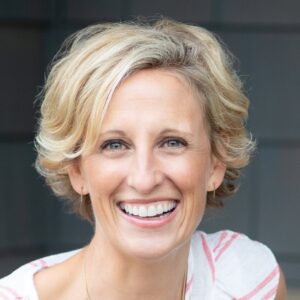
Meet Alexis
Alexis Bernstein,
FMCHC, NBC-HWC, INHC, MS
Alexis lives in the San Francisco Bay Area and is a National Board Certified Health and Wellness Coach (NBC-HWC) delivering functional medicine–informed coaching support within collaborative and virtual care environments. She has been in the Health Coaching world since 2017 and finds she really enjoys partnering with clients whose primary focus is on gut health and management of chronic disease risk factors, such as metabolic dysfunction, digestive health concerns, sleep dysregulation, and stress-related lifestyle challenges. Her work focuses on readiness-to-change assessments, helping clients discover their own strengths, clarifying values and focusing on the positives in their lives. With a Masters Degree in Counseling Psychology and over 2,000 supervised clinical hours delivering psychotherapy, she brings a trauma-informed, patient-centered approach her coaching.
Outside of health coaching, she’s been married for 23 years and has primarily been a Stay-At-Home-Mom for their two daughters, with her eldest leaving for college this Fall. In her free time, she enjoys travelling, being with friends, playing on a womens Master’s water polo team, hiking, yoga and spending time at her local Buddist Monastery, where she takes classes and volunteers in the kitchen.
Connect
Transcript
Lisa: Hi, everyone. I’m Lisa, and I work on the admissions team here at FMCA. And I’m really excited to be joined today by Alexis Bernstein. Alexis is a graduate of our program, and I invited her because we often hear from prospective students who’ve completed programs before ours, and are wondering if FMCA is a worthwhile next step. And Alexis has some great insight into that path.
So, Alexis is a nationally board certified health and wellness coach, based in the San Francisco Bay Area, with a background in functional medicine informed coaching. She’s been in coaching since 2017, and focuses on areas like gut health, metabolic health, sleep, and stress. She also brings a really grounded real life perspective as a long-time stay-at-home mom along with a master’s in counseling psychology and extensive clinical experience which shape her trauma-informed client-centered approach. So, Alexis, thank you so much for being here. It’s really great to have you.
Alexis: Thank you, Lisa. My pleasure.
Lisa: Yeah, really looking forward to this. So, tell me, what were you doing before you became a student at FMCA?
Alexis: So, to give you the brief background, my career really started in psychotherapy. So, after I got my master’s in counseling psychology, I was working on my clinical hours, finishing up for licensure when my first daughter was born. So, I had to make a decision, do I continue, do I stay at home? So, I did decide to stay home, which was great for me. I have no regrets. So, I’ve been home primarily 18 years now with my two daughters, but I decided I wanted to look into doing something at some point. Besides, I knew I’d be an empty nester at some point.
Anyway, so, a little bit about the backstory of how I landed into health coaching. I was a stay-at-home mom and was having a great time with that, and I loved my job, but I was really struggling with a lot of back pain. I have scoliosis, and I have arthritis, and degenerative disc disease, and nerve compression in my spine. So, my back was kind of a mess, and it was getting progressively worse. It had gotten to a point where I really was having a hard time getting out of bed and walking. So, even though I was active and an athlete, it just was really, really debilitating. So, I was scheduled to have spinal fusion surgery, which is a really, really major, major surgery without guarantees of it really making everything better. So, it was at an inflection point in my life, and I knew I’d have to stop doing a lot of the things I loved to do.
And I believe in serendipity, but one night, I got invited to a dinner party that I actually didn’t really want to go to. But I thought, I better go, I’ll meet some new people, blah, blah, blah. So, I went and I was seated next to a woman who I didn’t know. And I was telling her I have my surgery coming up, which I did about two weeks. And she told me she was a health coach and she said, work with me and I can pretty much guarantee you’re not going to need to have that surgery.
Lisa: Wow.
Alexis: So, I’d never heard of a health coach before. I knew nothing about what a health coach was, but I was so desperate to not do the surgery, and I had tried everything under the sun to get better, short of the surgery. So, I thought, well, I’m just going to try it. And I worked with her and, honestly, she changed my life. And I don’t want to sound hokey, but it was a miracle.
So, she changed my diet, she changed my lifestyle a little bit, and just made some fine tweaks. And this was over a decade ago. And I never had the surgery, and I don’t take any pain medication. I’m still super active, very physically active, and without any pain. And I honestly…it was life-changing for me. So, I was so inspired by this turnaround in my own life that I wanted to help other people who are also suffering with chronic pain or chronic illness. And so, I decided to follow in her footsteps, and I enrolled in IIN, which is the Institute for Integrative Nutrition. And I got certified as a health coach through them.
And so, I started my own business, and really was loving it actually. It was a really great opportunity for me to still be at home with my children but to also have my own little business on the side. But then COVID hit, of course. So, that was a hard time for everybody. And I needed to just go back to being a stay-at-home mom and taking care of the young kids, and they were online learning, and it was just a hard time for everybody. So, I took a break from coaching for a bit and stayed home. But then I guess I’ll tell you the rest of the story, how I got into FMCA after.
Lisa: Well, that is so inspiring, though. I mean, just amazing to have that serendipitous moment that sort of changed your trajectory.
Alexis: Yes, it really did.
Lisa: Thank you for sharing that.
Alexis: Yeah, absolutely.
Lisa: So, my follow-up question, how did you get to functional medicine and ultimately functional medicine health coaching?
Alexis: Yeah. So, after COVID settled down and we all got a little bit more back to normal life, I actually decided I really wanted to work in an office and be around other people. And for me, it was a little bit lonely having my own private practice because it was just me. And I missed that camaraderie of coworkers. So, I got a job at a functional medicine wellness clinic near my home, and I loved it. I absolutely loved it. It was an amazing group of practitioners. And we had acupuncturists, and health coaches, and functional medicine practitioners. And it was just a really great environment.
But to be honest with you, I felt a little bit underprepared to work there because I had had no functional medicine training at that point. And as wonderful as IIN was, and I really loved it, it didn’t really touch on functional medicine too much. So, I felt a little bit of imposter syndrome when I was working there. And I liked…really, the clients were fantastic. I love the exposure to the upstream process and how everything is connected and integrated. And I just decided that I really wanted to learn more. I wanted to understand more about functional medicine. So, I started doing a lot of research and all the different schools, and there’s a lot of them out there.
Yeah. But FMCA just rose to the top, and it was a no-brainer for me. So, I stopped that job and went full-time FMCA student for the year. And I just had a wonderful experience there. And then I ended up going on to get board certified after graduating from FMCA.
Lisa: Wonderful. So, when you look back, how has choosing FMCA after attending a different coaching program, how has that influenced your direction now compared to where you were before?
Alexis: I think one of the biggest things that it’s helped with for me is it’s allowed me to focus more on…like a niche, and really figure out what I love and how I want to work with it, and the type of clients that I want to work with and support. And there are a lot of really great health coaching programs out there. But for me, my initial certification was, like I said, an inch deep, a mile wide. It was a little too general in that sense. And I really wanted to do a deeper dive and really gain a lot of knowledge.
So, I think FMCA really gave me that courage. And also, I…obviously, through my psychotherapy, I had a lot of training in client-centered approach, and active listening, and rapport building. But I hadn’t used those skills in a while. And so, so much of the work at FMCA is really working on those and becoming proficient. And with motivational interviewing, which I think is just such an important part of connecting with the client and genuinely helping them and meeting them where they’re at. So, I was really grateful for that, dusting off of those skills that I think are really important. So, yeah. I’d say FMCA has been really helpful for me in that sense.
And then, lastly, I will say, I think the network and the connection to people in your cohort, for example. My cohort was really wonderful. We ended up becoming like a family. You see each other every single week, these people from around the world. And you just really develop friendships, and you get to know each other personally as time goes on. And even though our program has ended, I’m still in touch every month with several people from our cohort, and we have an ongoing Zoom. And it’s just a really wonderful program that supports you, and you feel safe. And even if you’re being vulnerable and trying new skills that maybe you’re not really good at yet, I always felt very supported. And our facilitator was fantastic at that as well, our biggest cheerleader.
Lisa: Oh, that’s great.
Alexis: Yeah.
Lisa: So, as you’re thinking about your experience at FMCA and sharing a little bit, what did you enjoy most about the program?
Alexis: I’d say I really…I think the people is probably what I enjoyed most. My other program was all online. And so, I never really met anyone else, except they did have one in-person event when I graduated. But I loved really getting to know the people, and seeing faces, and practicing in front of other people. It really, like I said, became almost a family. And in fact, one of the girls from my cohort, she and I became study buddies for preparing for the national board exam. And we worked together every week for months, and we both passed the exam. Yeah. So, that was great to meet such a good friend. And we’re still very good friends. So, yeah, I think that was probably the best part, was just meeting these really curious, smart, gifted health coaches through this program.
Lisa: Yeah, making those connections. That’s great. What were your fears or barriers about enrolling as an FMCA student?
Alexis: That’s a good question. I don’t think I had any fears per se or barriers. I think my biggest concern, though, was I wanted to make sure, if I’m leaving my job and I’m giving up a whole year to be a student, that this is really worth it for me. Because at that point, I was already a certified health coach, and I already had my own business, and I had worked as well. And I just didn’t know if it was necessary. And my husband actually asked a few times, are we sure we need to do this again? But he quickly came to understand how important it was to me and what I was learning. And, of course, he learned so much because I would share so much about what we were studying.
And so, that was really my big thing is that I wanted to make sure that it was going to be different enough, and it definitely was. It was a very different approach, and what we learned was different. Some of the basics are the basics, it has to be touched on. But, really, the deep dive into motivational interviewing, I think, was probably the most important for me to really hone my skills on, especially for the board exam as well. That’s a big part of it. And I think, FMCA, I was excited about the networking as well because it’s such a well-known program and connected to the functional medicine world that I wanted to be a part of it.
And in fact, I went to the AIC conference in Las Vegas, which is the Functional Medicine Annual International Conference. And I went when I was enrolled as a student, a health coaching, functional medicine student. And it was incredible to be with thousands of like-minded people who are all in the functional medicine world. And I got to meet FMCA’s founder, Sandi Scheinbaum, and one of our instructors, Monique Class, in person, which was really fun. And I got to meet Dr. Mark Hyman and Dr. Jeffrey Bland. And it was just a really neat environment, and I would never have been there… I was there for a week, almost a week. So, I would never have attended if I wasn’t at FMCA. So, just the doors it will open for you in your career and in your mind is just really important, was important to me. And I’m really grateful for the experience.
Lisa: Yeah. Thank you. And that’s so inspiring, I think, to some prospective students who might be listening to the story as well. So, what would you say to someone who’s considering embarking on this journey, especially someone who’s maybe already been through another coaching program and is considering coming to FMCA and being a functional medicine certified health coach?
Alexis: I would say, just do it, honestly. Just do it. It’s a year, but it really goes by so quickly. And you learn so, so much about yourself, about how functional medicine works, how you can help in a functional medicine capacity as a health coach. And it’s just very well-organized. I just really, really value the experience, and I can’t encourage people enough. Just do it.
Lisa: I love that. So, we’re coming to a close on our conversation, which has been a pleasure. Is there anything else that you would like to add?
Alexis: I’m just really grateful to FMCA. And I’m grateful to that health coach that I met a decade ago, and how she changed my life, and how I’ve just grown so much in the last decade with my coaching, and my business, and my experiences. And I’m really grateful to have FMCA as part of my experience. And I just look forward to continuing to learn more and to get deeper into the world. And once I am an empty nester, which will be soon, I’m looking forward to really doing this more full time. And that’s something else that’s really great for people who are either a stay-at-home parent or doing another job is you can do this part time. You can make it your own schedule. And then if you have more freedom, you can eventually do it full time. So, that’s something else that I would really encourage people, not to be afraid to make the leap and be okay to start a new career.
Lisa: Thank you so much. And I love that you ended on gratitude. It’s so wonderful. And it’s been such a pleasure talking with you. I loved hearing your story. I really appreciate your time.
Alexis: Yeah. Absolutely. Thank you for having me today.
Our Latest Blogs
-
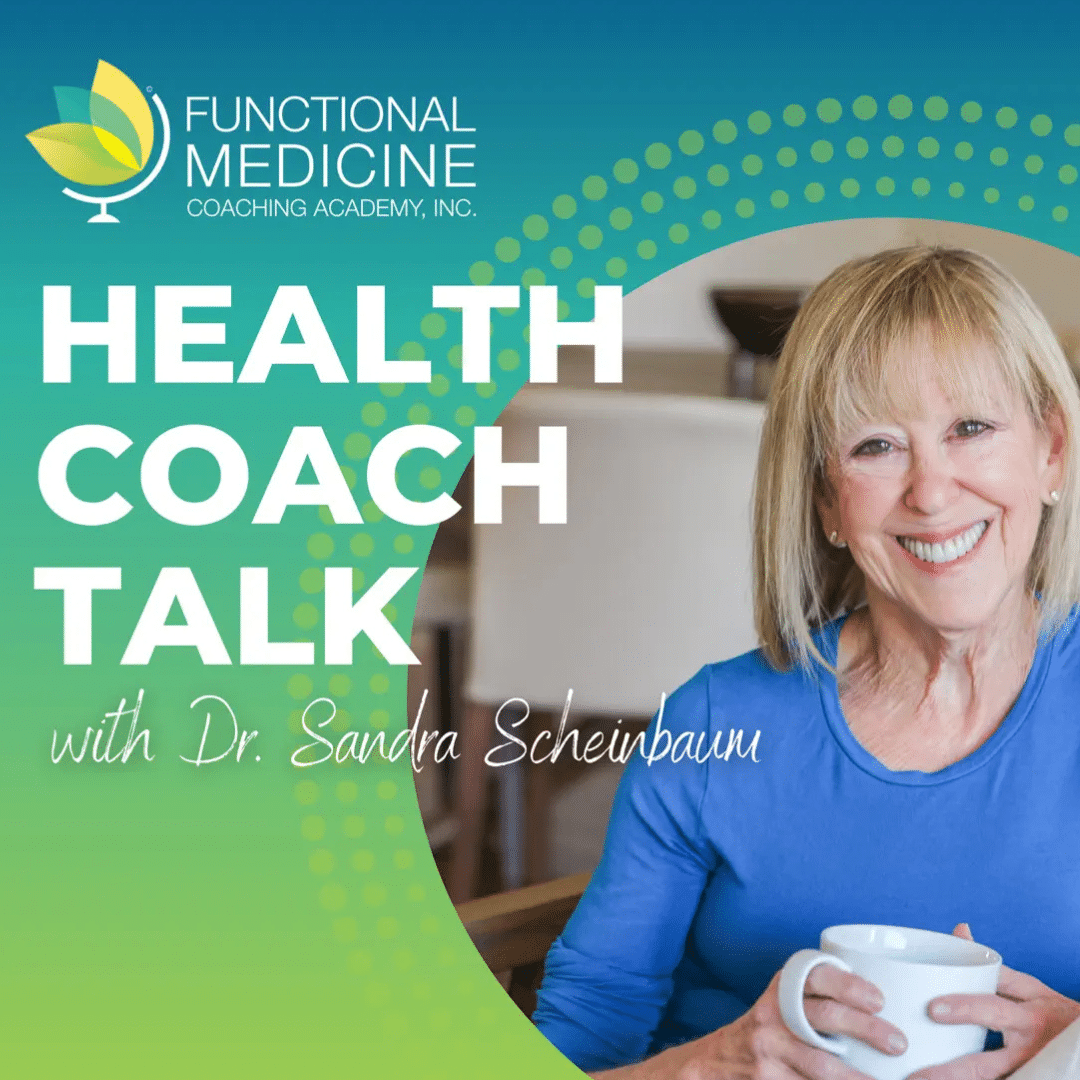
Celebrating 200 Episodes of Health Coach Talk: Our Top 10 Favorite Conversations
Read Full Article: Celebrating 200 Episodes of Health Coach Talk: Our Top 10 Favorite Conversations -
Labs, Supplements, and Legal Liability: Where Coaching Ends and Practicing Medicine Begins
Read Full Article: Labs, Supplements, and Legal Liability: Where Coaching Ends and Practicing Medicine Begins -
From College Student to Functional Health Coach: Maria Falcon, FMCHC
Read Full Article: From College Student to Functional Health Coach: Maria Falcon, FMCHC
